
News
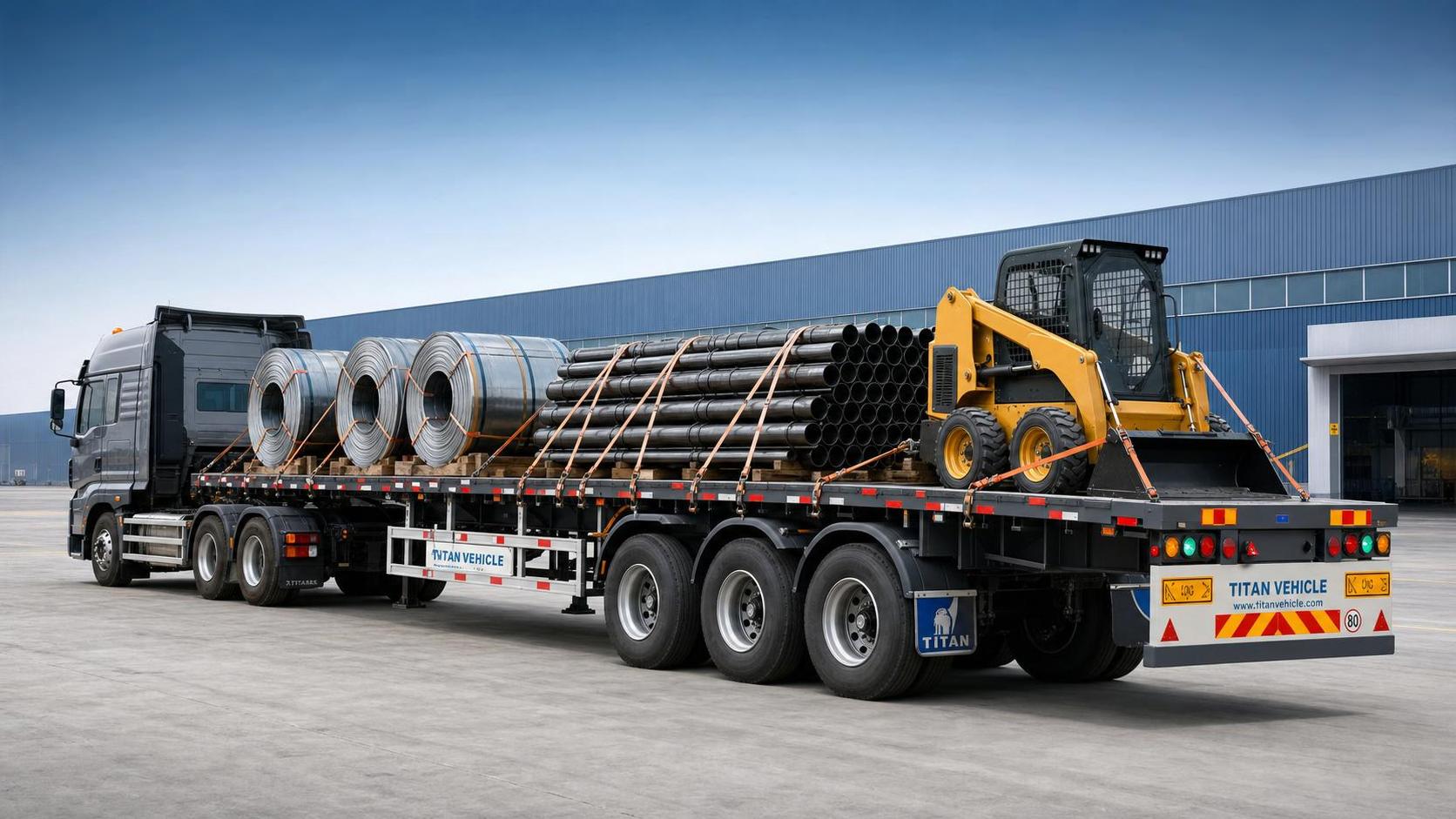
Understanding Flatbed Semi-Trailer load limits starts with a practical fact: capacity is never just a number on paper. It affects route planning, cargo safety, tire stress, braking distance and legal compliance. In engineering transport, where cargo is often heavy, long or unevenly shaped, the right trailer choice can prevent damage, downtime and avoidable operating cost.
A Flatbed Semi-Trailer remains one of the most flexible tools for moving construction equipment, steel products, timber, pipes, pallets and containerized loads. Its open platform makes loading easier, but that same openness requires better judgment on weight distribution, lashing and deck suitability. That is why load limits and cargo use cases should be evaluated together rather than separately.
What load limits really mean in daily transport
When people discuss Flatbed Semi-Trailer capacity, they often focus only on maximum payload. In practice, load limits include several linked factors: gross vehicle weight, axle load, deck strength, suspension rating and local road regulations.
A trailer may physically hold a large machine, yet still exceed legal axle limits after loading. That difference matters. Overloading one axle group can create instability, faster tire wear and penalties, even when the total cargo weight appears acceptable.
For that reason, the useful load limit of a Flatbed Semi-Trailer should be judged in operating conditions, not in showroom language. Cargo dimensions, center of gravity and road surface all change the safe working range.
Common capacity ranges
Capacity varies by axle configuration, frame design and target market. Many standard flatbed units work within medium to heavy payload classes, while reinforced versions support more demanding engineering tasks.
These are broad references rather than fixed rules. Final capacity depends on local legislation, tractor matching and trailer specification details.
Why Flatbed Semi-Trailer selection matters more now
Engineering and infrastructure work increasingly relies on mixed cargo flows. A single operation may move excavator attachments one day, steel coils the next and prefabricated materials after that. Flexibility has become a real operating advantage.
At the same time, compliance pressure is stronger in many markets. Authorities pay closer attention to overload risk, braking performance and cargo securement. Transporters therefore need trailers that fit both the cargo and the regulatory environment.
This is also why sourcing matters. Exporters with stronger commercial vehicle experience can help align trailer specification with road conditions, expected load types and documentation requirements. Companies such as Shandong Livol Truck International Trade Co., Ltd. work across vehicle selection, customization, customs handling and logistics, which becomes useful when transport needs are not standard.
Cargo types that suit a Flatbed Semi-Trailer
The value of a Flatbed Semi-Trailer comes from its ability to handle cargo that does not fit neatly into enclosed transport. Open access from the side, rear and top simplifies loading by crane or forklift.
Construction machinery and attachments
Mini excavators, skid steer loaders, compact rollers and machine attachments are typical loads. Here, deck strength and tie-down position matter as much as payload. Metal tracks or point loads can damage a lighter platform.
Steel, rebar and fabricated sections
Steel cargo is dense and unforgiving. Even a short bundle may create very high localized weight. A Flatbed Semi-Trailer used for steel should have a strong frame, reliable lashing points and stable suspension under concentrated load.
Timber, panels and long materials
Long cargo often fits flatbeds better than box trailers. Timber, boards and structural members need enough deck length, side support planning and secure tensioning to avoid movement during braking or cornering.
Pipes, containers and palletized goods
Some cargo is not especially heavy but is awkward in shape. Pipes can roll, containers require locking compatibility and palletized goods may need weather protection planning. The trailer must suit the loading method as well as the cargo.
Key factors behind safe loading
Safe use of a Flatbed Semi-Trailer depends on how the cargo sits on the deck. The same weight can be safe in one position and risky in another.
- Check axle balance before departure, not after loading is complete.
- Keep the center of gravity low whenever possible.
- Match lashing equipment to cargo shape, surface and expected road vibration.
- Inspect deck condition, especially on trailers used for steel or tracked equipment.
- Review bridge, slope and turning limits on routes with oversized cargo.
In actual use, mistakes often happen with concentrated loads. A machine body positioned too far forward can overload the kingpin area. Bundled steel placed without spacers can create deck stress and lashing instability.
How to match the trailer to the job
Choosing the right Flatbed Semi-Trailer is less about buying the highest-rated unit and more about matching recurring cargo patterns. A heavier trailer may carry more, but it can also reduce net payload efficiency on lighter jobs.
A practical evaluation usually starts with five questions:
- What are the heaviest and longest loads moved most often?
- Are loads evenly distributed or concentrated in short sections?
- Will loading be done by crane, ramp or forklift?
- Do routes include weak roads, long descents or port access controls?
- Is customization needed for suspension, deck height or lashing layout?
This is where a supplier with broad commercial vehicle resources can add value. With access to brands such as FOTON, SHACMAN and SINOTRUK, plus supporting export services, specification matching can be handled more accurately from the beginning.
When customization becomes necessary
Standard flatbeds are suitable for many jobs, but not all. Repeated transport of compact heavy equipment, abnormal width cargo or harsh site conditions may require reinforced beams, upgraded axles or different suspension arrangements.
Customization is also relevant for export markets. Road rules, customer loading habits and maintenance conditions vary. Choosing the wrong configuration can create spare parts issues and reduce uptime later.
Common operating mistakes that raise risk
Some problems are easy to overlook because the trailer still appears functional during loading.
- Using total payload as the only decision metric.
- Ignoring deck contact pressure from narrow or tracked loads.
- Underestimating cargo shift on rough roads or emergency braking.
- Choosing tie-down points based on convenience instead of load path.
- Matching a heavy Flatbed Semi-Trailer with an unsuitable tractor head.
These issues do not only affect safety. They also influence maintenance cost, tire life, loading time and claims exposure when cargo arrives damaged.
A practical way to move forward
A well-chosen Flatbed Semi-Trailer supports more than transport capacity. It improves predictability across loading, route approval, delivery timing and equipment protection. That is especially important in engineering transport, where cargo variety is high and operating margins can be tight.
The most useful next step is to review real cargo records rather than estimated averages. List actual load weights, dimensions, loading methods and road conditions. From there, compare axle configuration, deck structure, suspension and securement options against daily work.
If transport tasks involve export supply, mixed fleet planning or non-standard requirements, it also makes sense to discuss configuration details early with an experienced vehicle exporter. Better specification decisions at the start usually lead to safer hauling, smoother customs processing and fewer adjustments after delivery.
Search Starts Here