
News
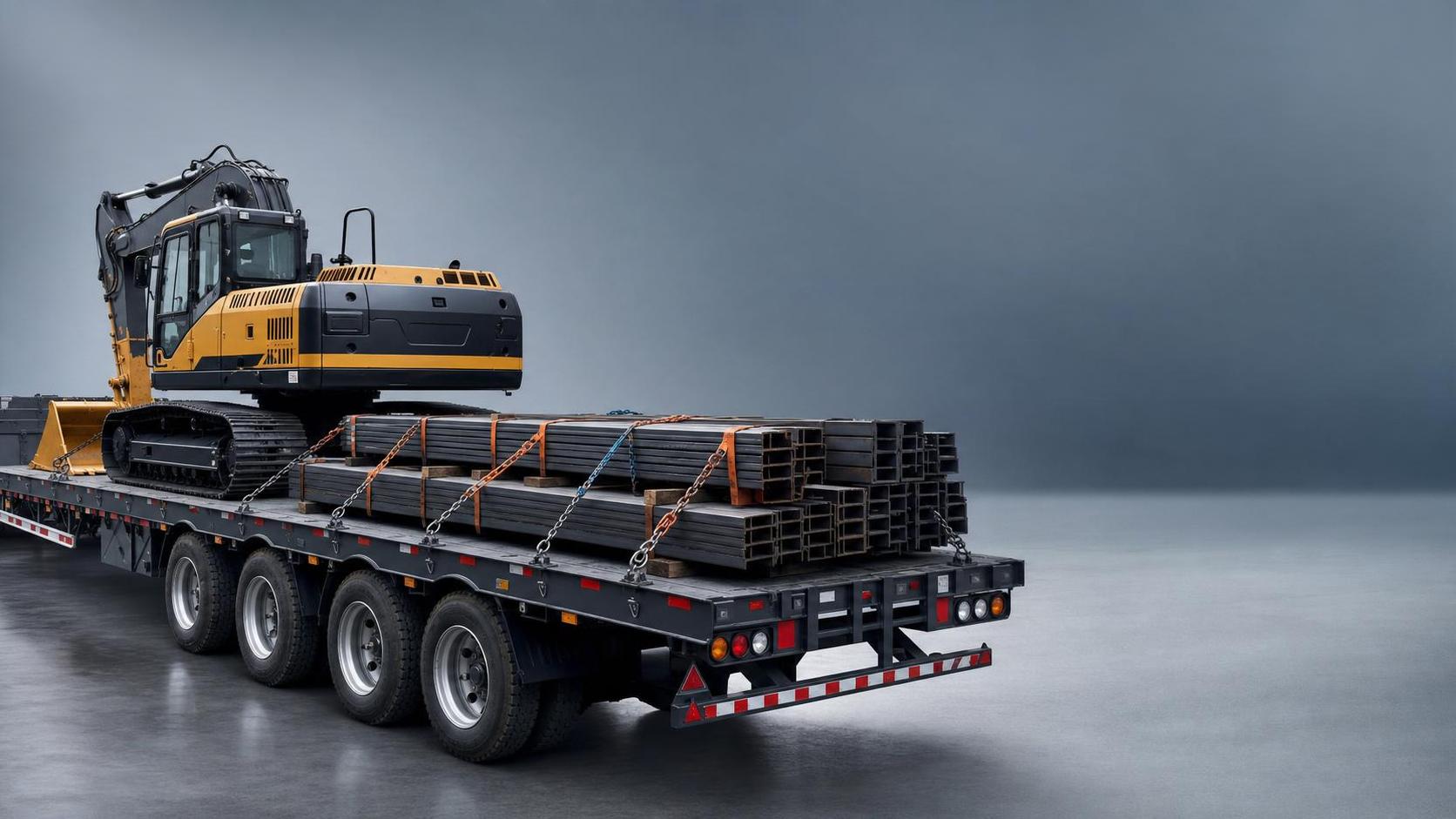
Why Deck Length Matters in Flatbed Semi-Trailer Planning
Choosing a Flatbed Semi-Trailer is not only about rated payload. Deck length directly affects axle loading, cargo balance, route compliance, and unloading efficiency.
That is why deck selection should start with the cargo profile, not with habit or price alone.
In practical transport work, a longer deck can improve flexibility. It can also create avoidable risk if the cargo weight distribution is poor.
A shorter Flatbed Semi-Trailer may look less versatile. Yet for dense freight, it often performs better in stability, turning radius, and legal load placement.
This makes deck length a technical decision tied to cargo geometry, center of gravity, support points, and regional transport rules.
For machinery, steel, building materials, and oversized loads, the wrong deck length can increase empty space, overhang issues, and tie-down complexity.
The better approach is simple. Match the Flatbed Semi-Trailer deck to the actual cargo footprint, weight map, and delivery conditions.
Core Load Limit Factors Beyond Rated Capacity
Many buyers first check the gross payload rating. That matters, but it is only one part of the technical picture.
Actual Flatbed Semi-Trailer load limits depend on how weight sits across the kingpin, trailer axles, and deck structure.
A heavy load placed too far forward can overload the tractor interface. A rear-biased load can exceed axle limits or reduce steering control.
From a technical review standpoint, five variables deserve close attention:
- Cargo length, width, height, and total mass
- Center of gravity location and support spacing
- Deck material strength and crossmember design
- Axle group position and legal axle load thresholds
- Lashing points, blocking needs, and loading equipment access
This also means two Flatbed Semi-Trailer units with the same nominal payload may behave very differently in real operation.
A technical evaluation should therefore compare usable load area, structural distribution, and legal loading window, not brochure numbers alone.
How to Match Deck Length to Cargo Type
Different cargo types place very different demands on a Flatbed Semi-Trailer. Deck length should follow cargo behavior during loading, transit, and unloading.
Machinery and equipment
Excavators, rollers, and industrial equipment are usually dense and compact. Their weight often concentrates on tracks, wheels, or frame contact points.
In this case, a very long Flatbed Semi-Trailer may not be ideal. Unused rear deck length can complicate balancing without adding real transport value.
A medium deck often works better when the machine footprint fits cleanly between support zones and axle distribution stays compliant.
Steel coils, plate, and structural steel
Steel products create a different challenge. They may be short in length, but they are extremely heavy and sensitive to point loading.
For these loads, deck strength, dunnage planning, and axle positioning matter more than maximum deck extension.
A shorter or standard-length Flatbed Semi-Trailer often gives better control, especially when load concentration must stay near the structural center.
Building materials
Pipes, rebar, timber, panels, and precast materials vary widely. Some are long but relatively light. Others are heavy and brittle.
Here, the right Flatbed Semi-Trailer depends on both length and support requirements. Long materials need enough deck contact to prevent flexing and bounce.
If the cargo is fragile, extra deck length can reduce overhang and improve securing angles. That can lower damage risk on uneven roads.
Oversized or irregular freight
Oversized cargo needs the most careful deck selection. Length alone is not enough. Width, height, escort rules, and route permits all affect feasibility.
For this category, a Flatbed Semi-Trailer should be reviewed as part of a full transport plan, including turning space and bridge restrictions.
Typical Deck Length Logic in Real Operations
There is no single best deck length. Still, some practical patterns appear again and again in fleet use.
Even so, these patterns should guide the decision, not replace engineering review. A Flatbed Semi-Trailer must still match local limits and actual load maps.
Common Mistakes When Selecting a Flatbed Semi-Trailer
One common mistake is choosing the longest deck available, assuming it covers every future scenario. In reality, that often reduces efficiency for dense loads.
Another mistake is focusing only on gross tonnage. Legal axle limits and cargo support points usually determine the true working limit.
A third issue is ignoring loading equipment. Forklift approach, crane reach, and ramp angle can change which Flatbed Semi-Trailer layout is workable.
More recently, route restrictions have become a stronger factor. Urban projects, port access, and cross-border transport may punish over-dimensioned configurations.
- Do not equate longer deck length with higher safe payload.
- Do not evaluate cargo by total weight only.
- Do not ignore center of gravity movement during braking.
- Do not overlook tie-down geometry and deck friction.
A Practical Evaluation Checklist
A useful Flatbed Semi-Trailer review should be systematic. The goal is to confirm fit, compliance, and long-term operating efficiency.
- Measure the cargo footprint, including any removable attachments.
- Map the weight concentration and expected support points.
- Check legal axle load rules in the planned service markets.
- Compare deck length with loading and unloading site conditions.
- Confirm lashing positions, blocking options, and deck material strength.
- Review turning radius, reversing space, and bridge access limits.
- Test whether the chosen Flatbed Semi-Trailer still works for backhaul cargo.
This checklist helps reduce mismatch risk before procurement. It also supports clearer communication between the buyer, operator, and body specification team.
Supply, Customization, and Technical Support Considerations
A sound specification is only useful if supply and execution are reliable. That is especially true for export projects and fleet standardization programs.
Shandong Livol Truck International Trade Co., Ltd. supports commercial vehicle buyers with integrated selection and export coordination across multiple applications.
Based in Shandong, China, the company is an authorized domestic and overseas dealer for FOTON, SHACMAN, and SINOTRUK.
Its nationwide authorized 4S network and available inventory help shorten lead times and support more stable delivery planning.
For customers evaluating a Flatbed Semi-Trailer solution, practical support matters just as much as product data.
That includes configuration review, customization, export documents, customs coordination, logistics planning, and after-sales response.
Conclusion: Choose the Deck for the Load, Not the Other Way Around
The right Flatbed Semi-Trailer is the one that matches cargo dimensions, weight distribution, route limits, and handling conditions in one workable package.
A longer deck can be useful, but only when the cargo truly needs that space and the axle loads remain under control.
In daily transport operations, good deck selection improves safety, reduces wasted capacity, and lowers the risk of non-compliant loading.
If you are reviewing a Flatbed Semi-Trailer for machinery, steel, construction materials, or project cargo, start with the load map first.
Then confirm the trailer specification, structural layout, and support service behind it. That is the most practical way to make a sound transport decision.
Search Starts Here