
News
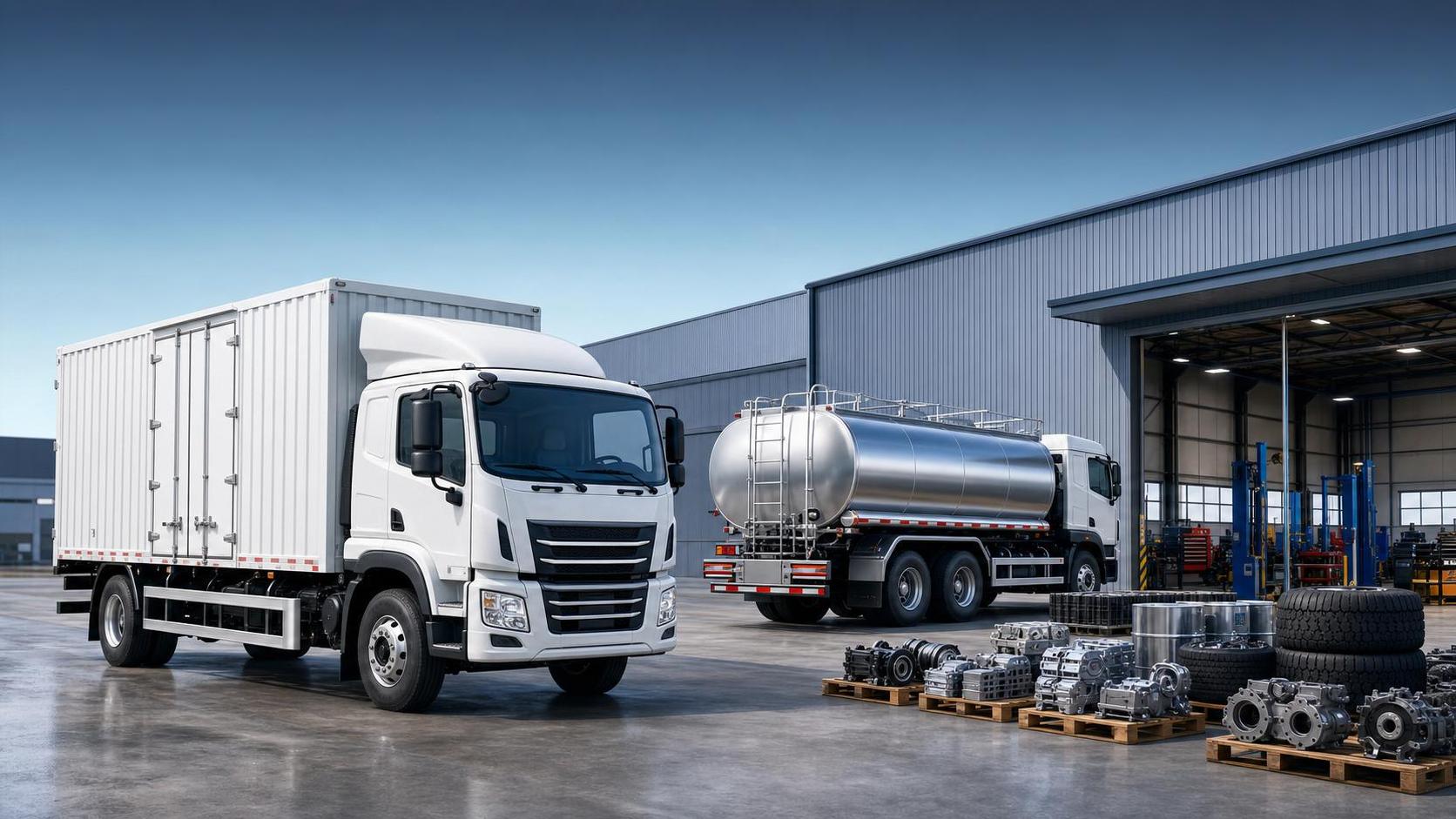
Why does a 4_2 Cargo Truck cost more or less than expected over time?
The quoted price is only one part of the budget. For a 4_2 Cargo Truck, the real decision starts with total operating cost.
A lower sticker price can look attractive. Yet fuel burn, service intervals, tire wear, downtime, and spare parts access often change the final result.
In engineering transport, daily reliability matters as much as purchase cost. A truck that misses jobs can become expensive very quickly.
That is why many buyers compare a 4_2 Cargo Truck across three layers: acquisition, running cost, and resale or lifecycle value.
In practice, the best choice is rarely the cheapest unit. It is usually the model that stays productive with predictable expenses.
For imported commercial vehicles, supply stability also matters. Exporters with authorized channels, stock availability, and documentation support can reduce hidden delays and administrative cost.
What should be included in the purchase cost of a 4_2 Cargo Truck?
Purchase cost is not just the chassis price. A useful comparison includes every amount paid before the truck enters service.
A typical 4_2 Cargo Truck budget often includes body configuration, engine power level, transmission choice, axle ratio, and tire specification.
It may also include export packing, inland transport, customs documents, port handling, and shipping arrangements.
If the truck needs a special cargo body, cold chain box, dropside, or reinforced platform, the upfront number rises further.
A better way to compare options is to separate base vehicle cost from specification-driven additions. That makes approvals cleaner and easier to justify.
More careful buyers also ask whether the supplier is factory-authorized. That often affects documentation quality, parts traceability, and response speed after delivery.
Companies such as Shandong Livol Truck International Trade work through authorized channels for FOTON, SHACMAN, and SINOTRUK, which helps make cost comparisons more transparent.
How much does fuel really change the economics of a 4_2 Cargo Truck?
Fuel is usually the largest ongoing expense. Even a small gap in consumption can outweigh a modest difference in purchase price.
For a 4_2 Cargo Truck, fuel use depends on engine displacement, load pattern, road condition, stop-and-go frequency, and driver behavior.
Two trucks with similar rated payload may perform very differently. One may save fuel on highways, while the other handles urban delivery more efficiently.
This is where application matching becomes important. An overpowered truck adds cost. An underpowered truck may burn more fuel under strain.
A practical evaluation should look at expected annual mileage, average payload, terrain, and idle time. Without those inputs, fuel comparisons are often misleading.
- Urban routes usually increase fuel cost because of frequent braking and acceleration.
- Long-distance routes may favor a different gearbox and axle ratio.
- Poor driver training can erase the advantage of an efficient 4_2 Cargo Truck.
- Excessive empty return trips make fuel cost per delivered ton much higher.
A useful internal check is cost per kilometer and cost per ton-kilometer. Those figures reveal whether fuel efficiency truly supports the business case.
Where do maintenance and downtime usually become the hidden cost?
Maintenance is often underestimated because it arrives gradually. Yet across the service life of a 4_2 Cargo Truck, it can strongly affect cash flow.
Routine items are predictable. Oil, filters, brake components, clutch parts, tires, and suspension wear should be planned from the start.
The more expensive risk is unplanned downtime. A truck waiting for parts, workshop access, or technical support does not generate revenue.
That is why parts availability matters almost as much as the truck itself. A cheaper vehicle can cost more if replacement parts arrive slowly.
Authorized dealer networks and established 4S support can reduce this risk. They improve access to genuine parts, service records, and faster problem diagnosis.
In cross-border deals, after-sales clarity is essential. Confirm who supports claims, where parts are stocked, and how technical questions are handled.
More experienced buyers treat downtime as a budget line, not as a surprise. That approach usually leads to better model selection.
Is a premium brand always the safer financial choice?
Not always. The safer financial choice is the truck with the strongest fit between duty cycle, support network, and lifecycle cost.
A premium configuration may deliver higher uptime, stronger resale value, and better driver acceptance. Those points can justify a higher entry price.
At the same time, paying for unused capability weakens return on investment. For moderate loads and standard routes, a simpler 4_2 Cargo Truck may perform better financially.
The more useful comparison is between operating scenarios, not just brands. Consider expected service years, annual mileage, route intensity, and local repair conditions.
Chinese commercial vehicle brands have become a serious option in many markets because they balance acquisition cost with workable parts and service ecosystems.
When sourced through an exporter with stable inventory and full-process support, the transaction risk also becomes easier to control.
A simple way to compare two options
- Estimate landed purchase cost for each 4_2 Cargo Truck.
- Project annual fuel expense using actual route assumptions.
- Add scheduled maintenance and likely wear parts.
- Assign a downtime cost per day.
- Subtract expected resale or residual value after the planned service period.
This method is not complicated, but it changes decisions. It moves the discussion from headline price to useful financial performance.
What mistakes often distort a 4_2 Cargo Truck cost comparison?
One common mistake is comparing trucks with different body specs as if they were equal. Payload design and route demands must match.
Another is ignoring administrative and delivery risk. Delayed customs papers or weak export coordination can add cost before operation even begins.
Some buyers also assume all spare parts are interchangeable or equally available. In reality, parts access differs by brand, model, and market.
Fuel estimates are also often too optimistic. Test figures rarely match congested roads, overloaded trips, or inconsistent driving habits.
The last mistake is treating after-sales support as a soft benefit. For a working 4_2 Cargo Truck, support quality directly affects operating cost.
- Do not approve based on ex-factory price alone.
- Do not ignore route-specific fuel assumptions.
- Do not separate vehicle choice from service access.
- Do not overlook documentation, delivery timing, and parts planning.
So how should the final decision be framed?
A sound decision on a 4_2 Cargo Truck should answer a simple question: which option delivers the most predictable cost over its planned working life?
That means combining purchase price, freight and documentation, fuel use, maintenance intervals, downtime risk, and residual value into one view.
It also means checking whether the supplier can support the transaction beyond delivery. Inventory depth, authorized brand access, and after-sales coordination reduce uncertainty.
For buyers reviewing FOTON, SHACMAN, or SINOTRUK options, a structured exporter can help align specification, delivery, and support with the intended workload.
The next practical step is to map your actual route profile, annual mileage, payload range, and service expectations, then compare each 4_2 Cargo Truck on that basis.
Once those inputs are clear, the most economical choice usually becomes easier to defend and easier to operate.
Search Starts Here