
News
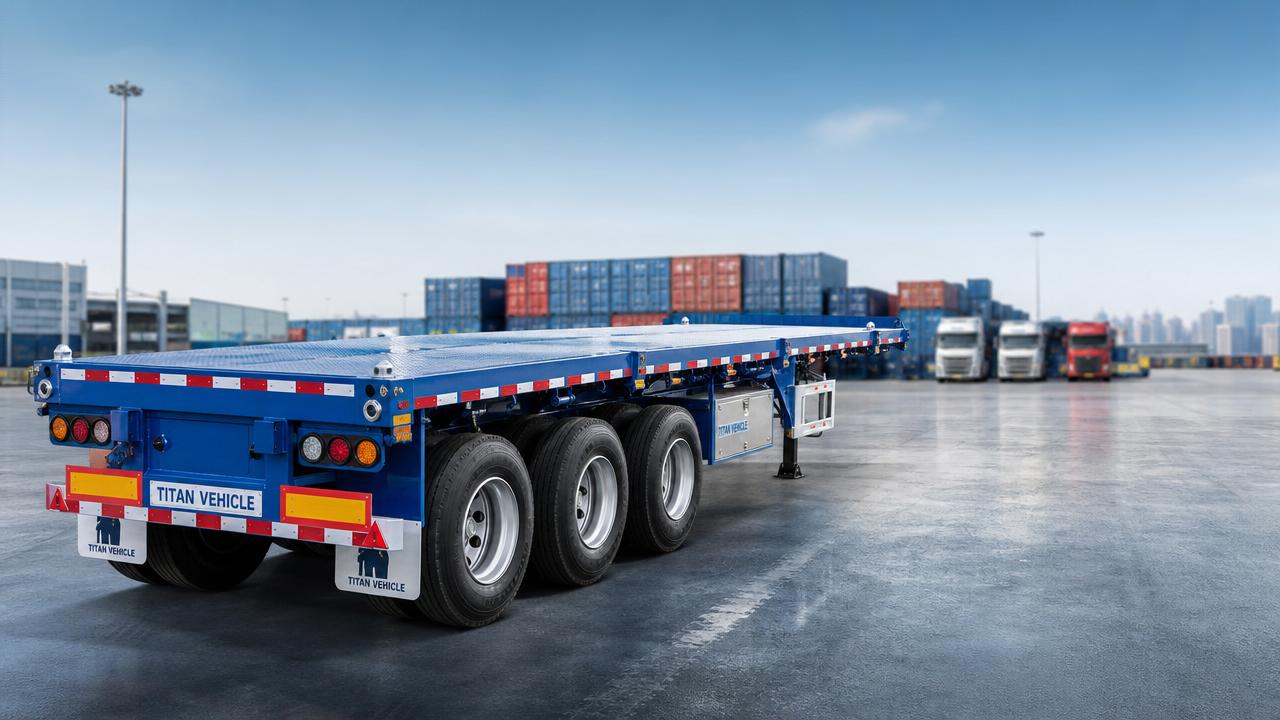
Choosing the right Flatbed Semi-Trailer is not only about the purchase price.
It also involves load capacity, axle configuration, materials, compliance, customization, delivery time, and long-term operating costs.
Understanding these cost factors before buying helps avoid hidden expenses and improves value across the trailer’s service life.
As an experienced commercial vehicle exporter in China, Shandong Livol Truck supports global sourcing, professional guidance, and efficient export solutions.
Why a Flatbed Semi-Trailer Cost Checklist Matters
A Flatbed Semi-Trailer is used for steel, machinery, containers, construction materials, timber, and oversized cargo.
Different cargo types create different requirements for structure, suspension, tires, braking, and securing points.
A low initial quotation may become expensive if it lacks proper reinforcement or local compliance documents.
A checklist makes comparison easier because every supplier is reviewed against the same technical and commercial points.
It also reduces uncertainty during export, customs clearance, registration, and after-sales service planning.
Core Flatbed Semi-Trailer Cost Factors to Check
Use the following checklist before confirming a Flatbed Semi-Trailer order, especially for cross-border purchase and fleet expansion.
- Confirm rated payload and cargo density before selecting frame thickness, because overbuilding increases cost while underbuilding shortens working life.
- Check main beam height, web plate, flange plate, and welding quality to judge the real strength of the Flatbed Semi-Trailer.
- Compare axle quantity, axle brand, and axle load rating, as these choices affect price, road legality, and maintenance cost.
- Review mechanical, air, or bogie suspension options according to road condition, cargo weight, and local repair capability.
- Verify tire size, tire brand, and spare tire quantity, since cheaper tires may increase downtime on long-distance routes.
- Evaluate braking system components, including ABS requirements, air chambers, valves, and pipelines for safety and regulatory compliance.
- Specify deck plate material, thickness, anti-slip surface, and coating level to match loading tools and weather exposure.
- Inspect twist locks, rope hooks, stake pockets, and lashing rings when the Flatbed Semi-Trailer handles containers or irregular cargo.
- Ask for local road regulation matching, including overall length, axle spacing, lighting, reflectors, underrun protection, and registration documents.
- Calculate total landed cost, not only factory price, by adding freight, insurance, port charges, customs duties, and inland transport.
Frame Material and Structural Design
The frame is the core of any Flatbed Semi-Trailer cost decision.
High-strength steel usually costs more, but it improves durability and may reduce empty weight.
Standard carbon steel can be suitable for common cargo and moderate operating conditions.
However, heavy machinery, concentrated loads, and rough roads often require reinforced beams and stronger cross members.
Check whether the quotation includes reinforcement around the kingpin, landing gear, suspension brackets, and rear loading area.
These areas receive high stress during turning, braking, loading, and uneven-road operation.
Axle, Suspension, and Tire Configuration
Axle configuration directly affects the price of a Flatbed Semi-Trailer and its legal payload.
A three-axle design is common for general logistics and container transportation.
Four-axle or special multi-axle designs may be needed for heavy construction equipment and higher axle-load rules.
Mechanical suspension is usually cost-effective, easy to repair, and suitable for many developing markets.
Air suspension costs more, but it improves cargo protection, ride quality, and loading height control.
Tire cost should be reviewed by brand, ply rating, size, availability, and expected service mileage.
Flatbed Semi-Trailer Customization Costs
Customization can make a Flatbed Semi-Trailer more productive, but every change should support real cargo needs.
Common options include container locks, removable side stakes, front boards, toolboxes, ramps, extra lashing points, and widened platforms.
A trailer used for containers may need twelve twist locks and proper spacing for 20-foot and 40-foot containers.
A trailer used for machinery may need rear ramps, reinforced deck plates, and stronger support at loading points.
Ask whether customized drawings, production photos, and final inspection records are included before shipment.
Compliance, Documentation, and Export Expenses
A Flatbed Semi-Trailer must match the destination market’s road and registration rules.
Compliance issues can create storage charges, rework costs, delayed registration, or failed inspection after arrival.
Confirm lighting standards, reflective markings, braking requirements, dimensions, axle loads, and VIN plate information early.
Export documents may include commercial invoice, packing list, certificate of origin, bill of lading, and inspection documents.
Shandong Livol Truck helps coordinate vehicle selection, customization, documentation, customs clearance, and logistics for international orders.
This support helps reduce mistakes during export and improves delivery reliability.
Application Scenarios and Buying Priorities
Construction Materials and Steel Transport
For steel bars, pipes, plates, and cement products, structure strength and cargo securing points are critical.
Choose a Flatbed Semi-Trailer with reinforced beams, reliable lashing rings, and a deck suitable for forklift loading.
Container and General Cargo Logistics
Container transport requires accurate twist-lock layout, stable chassis geometry, and legal overall dimensions.
A Flatbed Semi-Trailer for mixed cargo should balance tare weight, payload, and deck flexibility.
Machinery and Engineering Equipment
Engineering machinery creates concentrated loads that may damage weak deck sections or cross members.
Consider reinforced loading zones, ramps, stronger suspension, and durable paint for harsh operating environments.
Common Hidden Costs and Risk Reminders
Ignoring road conditions: A low-spec Flatbed Semi-Trailer may work on highways but fail quickly on mining roads or rural routes.
Overlooking spare parts: Uncommon axle, valve, or suspension parts may increase downtime and repair costs in the destination market.
Choosing only by tare weight: A lighter Flatbed Semi-Trailer is useful, but unsafe weight reduction can weaken the frame.
Missing corrosion protection: Poor blasting, painting, or coating can shorten service life in coastal, rainy, or chemical-exposure areas.
Forgetting loading equipment: Forklifts, cranes, ramps, and cargo straps should match the trailer deck and securing design.
Practical Steps Before Confirming an Order
- List the main cargo types, maximum load, operating roads, annual mileage, and loading equipment before asking for a quotation.
- Request a technical drawing, detailed specification sheet, axle brand, tire brand, suspension type, and paint process description.
- Compare at least two Flatbed Semi-Trailer configurations by total landed cost instead of factory price only.
- Confirm production time, inspection process, shipping schedule, warranty terms, and available after-sales support before payment.
- Keep all agreed technical details in the contract, including dimensions, payload, accessories, documents, and packaging method.
How Shandong Livol Truck Supports Reliable Sourcing
Shandong Livol Truck International Trade Co., Ltd. is based in Shandong, China.
The company exports commercial vehicles and engineering vehicle solutions with strong industry resources and global trade experience.
It is an authorized domestic and overseas dealer for FOTON, SHACMAN, and SINOTRUK.
Large authorized 4S store networks and sufficient inventory help support stable supply and fast delivery.
For Flatbed Semi-Trailer purchasing, the team can assist with model selection, configuration review, customization, export documents, and logistics.
Strict quality control and professional after-sales coordination help improve confidence for international vehicle sourcing.
Summary and Next Step
A Flatbed Semi-Trailer should be evaluated through payload, structure, axles, suspension, tires, compliance, customization, and total landed cost.
The best choice is not always the cheapest quotation, but the configuration that fits the actual work cycle.
Before buying, prepare cargo information, route conditions, destination rules, and expected delivery schedule.
Then request a complete Flatbed Semi-Trailer specification and cost breakdown for accurate comparison.
For reliable sourcing from China, Shandong Livol Truck can provide practical guidance and integrated export support.
Search Starts Here