
News
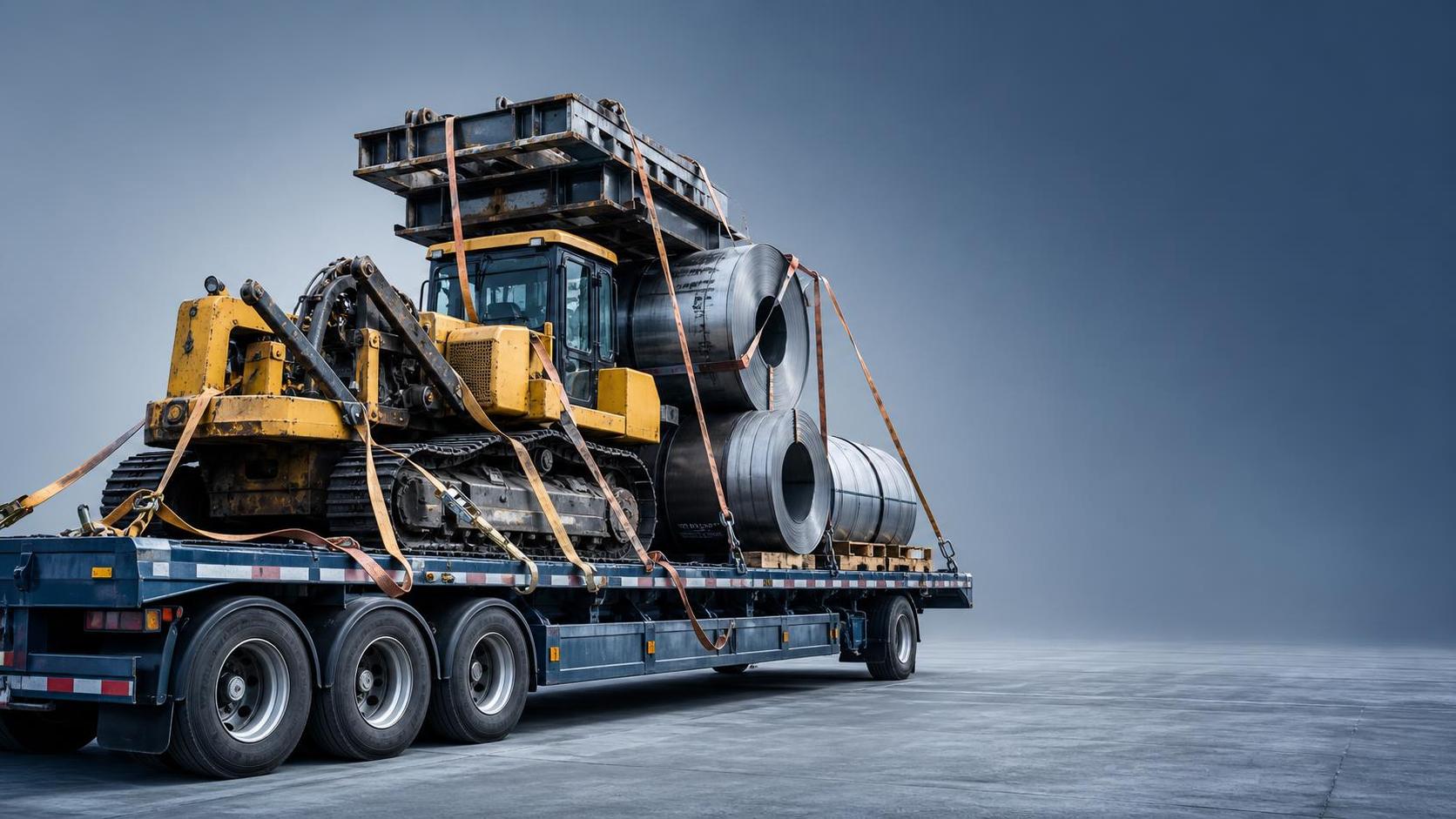
Why does a flatbed semi-trailer become unstable so quickly when loading goes wrong?
A flatbed semi-trailer does not have side walls doing any work for you. Stability depends heavily on where the weight sits, how it is spread across the deck, and whether the cargo can stay exactly where it was placed once the truck brakes, turns, climbs, or hits rough pavement.
That is why a load can look acceptable while parked and still become a problem on the road. A machine that is slightly too high, steel bundles stacked too far to one side, or cargo placed with too much weight behind the axle group can all change how the trailer reacts. Operators usually notice the result as trailer sway, delayed steering response, one side leaning more in turns, uneven braking feel, or repeated strap loosening after a short distance.
In day-to-day work, the biggest mistake is treating load securement and load stability as the same thing. Securement keeps cargo from falling off. Stability starts earlier, with load position, center of gravity, and axle balance.
What is the most common loading mistake operators make?
The most common mistake is poor weight distribution, especially concentrating too much mass in one short section of the deck. On a flatbed semi-trailer, that can overload one axle area, reduce traction where you need it, and make braking less predictable.
This often happens with dense cargo such as coils, stone, equipment, engines, or packed pallets. The load may be within total gross weight, but still be badly placed. Total weight alone is not enough. You need to consider:
- how much weight is carried by the tractor drive axles,
- how much is carried by the trailer axle group,
- whether the deck is balanced left to right,
- and whether the heaviest items are spread over the proper support area.
A practical check is simple: if the heaviest cargo is all sitting in one zone because it was easier to load that way, the trailer is already more likely to handle poorly.
How does loading too high affect trailer stability?
A high center of gravity is one of the fastest ways to reduce stability. The higher the load sits, the more leverage it has during cornering, lane changes, and emergency avoidance. Even when the cargo is secured correctly, a tall load creates more body roll and increases rollover risk.
Operators run into this with stacked materials, machinery on blocking that lifts it too far off the deck, or mixed cargo where lighter freight ends up under heavier freight just to make the top surface look even. That kind of neat-looking stack can drive badly.
If you have to carry a tall load, keep the densest items as low as possible, minimize unnecessary dunnage height, and avoid sharp steering inputs. The issue is not just legal height. It is how much the load raises the center of gravity of the full combination vehicle.
Is side-to-side imbalance really that serious?
Yes. A flatbed semi-trailer can feel stable enough in a straight line while still being dangerously uneven from left to right. Side-to-side imbalance increases lean in turns, places uneven stress on tires and suspension, and can make the trailer react differently when one side hits a bump or shoulder edge.
This is common with equipment loaded off-center, lumber packs not aligned to the deck centerline, or mixed loads where operators fill open space without rechecking balance. You do not need a dramatic shift to create trouble. A modest offset becomes much more serious when the load is tall or the road is uneven.
A good field habit is to look at the trailer from the rear before departure. If the suspension looks visibly compressed more on one side, or the deck line appears to lean, stop and correct the load before securing it for travel.
Can the wrong securement method reduce stability even if the cargo does not fall off?
Absolutely. Stability is reduced the moment cargo can move, even slightly. It does not need to come loose completely. A few centimeters of shift during braking or a curve can change axle loading and side balance enough to affect control.
Common securement mistakes include using too few tie-downs, placing straps at weak angles, failing to block rolling cargo, and securing over unstable stacking rather than securing each heavy unit properly. Friction helps, but it is not a substitute for restraint. Smooth steel on smooth deck surfaces is especially unforgiving.
If the load can roll, slide, tip, or settle, think beyond straps. Chocks, blocking, anti-slip material where appropriate, and correct contact points matter because they control movement before it builds momentum.
Which cargo types create the most stability problems on a flatbed?
The difficult loads are usually the ones that are dense, tall, narrow, top-heavy, or able to move internally. Machinery, steel products, pipe, precast components, timber packs, containerized equipment, and irregular industrial items all deserve extra attention.
The issue is not just weight. Shape matters. So does contact area with the deck. A compact heavy item on a small footprint behaves very differently from the same weight spread across a wide base.
What loading errors lead to brake imbalance or poor handling?
Poor handling often starts with axle imbalance. If the load is too far forward or too far back, braking force is no longer working with the vehicle in the way it was designed to. You may see tire scrub, longer stopping distance, drive axle traction loss, or a trailer that feels pushy under braking.
Another mistake is ignoring how the cargo will settle after the first few kilometers. Timber, bagged materials, and stacked goods can compress and lower unevenly. When that happens, straps lose tension and the center of gravity can shift at the same time. That combination catches operators out because the truck left the yard feeling normal.
A recheck shortly after departure is not just about retightening straps. It is also the first chance to catch a balance change before it becomes a road incident.
How can an operator tell before departure that the load is wrong?
You usually get clues before the truck moves. The problem is that people rush past them. Before leaving, look for these warning signs:
- One side of the trailer sits lower than the other.
- The heaviest item is not near the planned load center.
- Blocking or dunnage is uneven in height or not fully supporting the cargo base.
- Straps are carrying the shape of the load instead of controlling it.
- There are visible gaps that suggest the cargo can settle after movement starts.
- The driver cannot explain where the main weight is sitting relative to the axles.
If any of those are present, the answer is not “drive carefully and see.” Reposition first. Stability problems are cheaper to fix in the loading area than on the roadside.
Does speed or road type change how serious a loading mistake becomes?
Very much. A marginally stable load may survive smooth, low-speed yard movement and still be unsafe on highways, ramps, rough regional roads, or construction access routes. Curves, crosswinds, potholes, hard braking, and sudden lane corrections amplify whatever weakness was already built into the loading arrangement.
That matters for operators because route conditions should influence loading decisions. If the job includes mountain roads, uneven surfaces, or repeated stops in traffic, you need a more conservative setup: lower center of gravity, tighter weight balance, and securement that can tolerate repeated dynamic forces.
What is the safest loading sequence for better flatbed semi-trailer stability?
The safest sequence is to plan the weight before the first lift, not after the deck is already half full. In practice, that means knowing which items are heaviest, where their center of mass sits, and how they should align over the trailer support area.
A reliable working order looks like this:
- Identify the heaviest and tallest pieces.
- Place heavy items low and close to the intended load center.
- Balance left to right before filling open deck space.
- Add secondary cargo only after the main weight is stable.
- Apply blocking and securement based on movement risk, not appearance.
- Recheck suspension level, strap angles, and visible load lean before departure.
That sequence sounds basic, but many stability issues begin when loaders chase speed and convenience instead of load order.
If the load already feels unstable on the road, what should the driver do?
Do not try to “drive through” it. Reduce speed smoothly, avoid sudden steering input, and move to a safe stopping area as soon as possible. An unstable flatbed semi-trailer can get worse fast under braking or cornering, especially if the cargo has already started to shift.
Once stopped, check for changed strap tension, leaning cargo, broken blocking, deck movement marks, and axle or tire signs of overload on one side. If the load position has changed, retightening alone may not solve it. The cargo may need to be reloaded or redistributed before the trip continues.
A useful rule is this: if the handling feels different enough that you are questioning it, treat that as evidence, not guesswork. Most serious load stability incidents start with early warning signs that were noticed but not acted on.
Search Starts Here