
News
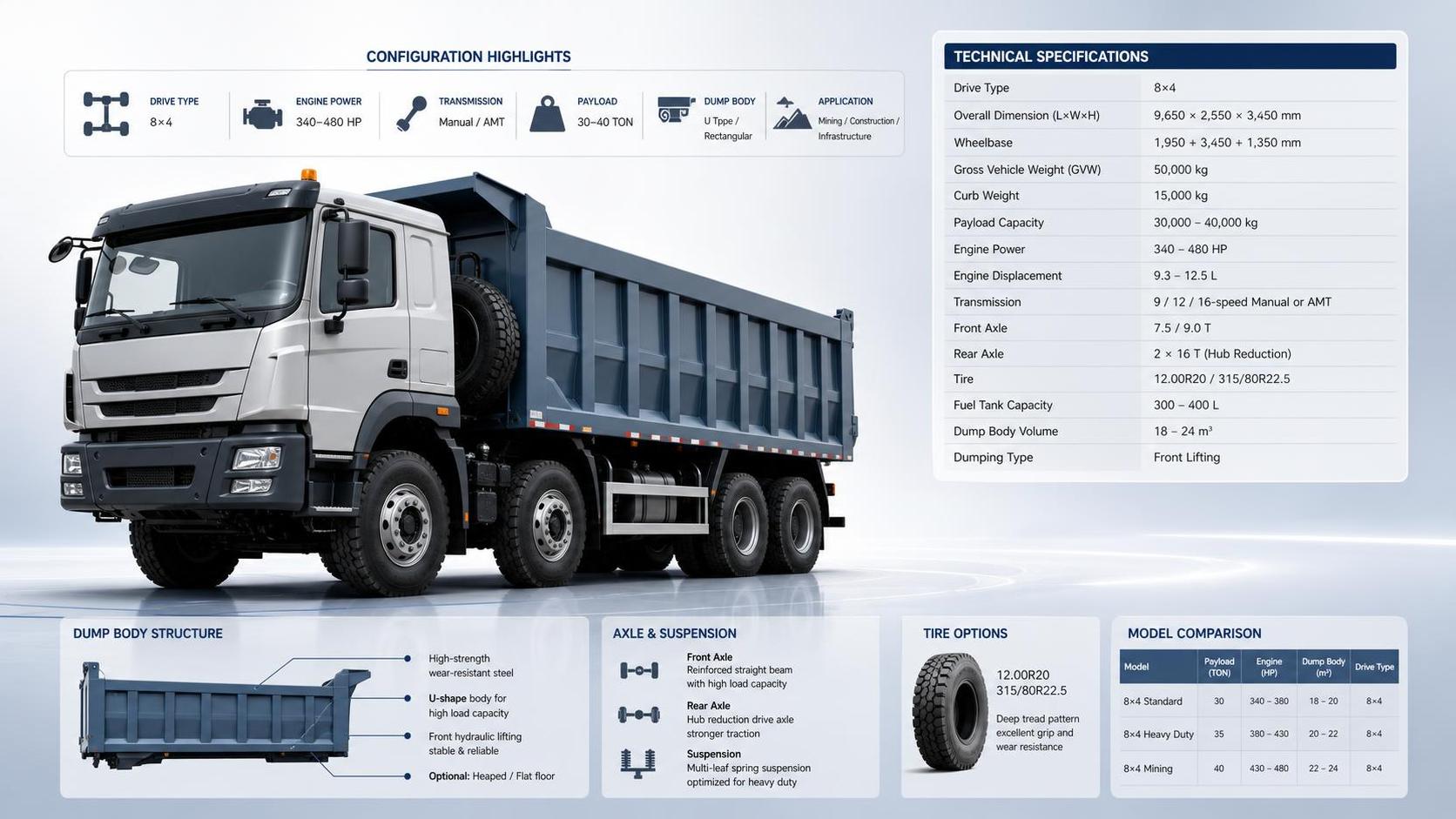
Why does the configuration list matter before you compare models?
For a business evaluator, the Cangshan Vehicle Configuration List is not just a technical attachment. It is the document that tells you what the vehicle actually is, what it can be fitted with, and whether the quoted model matches the job you are buying it for.
That matters because two vehicles can look almost identical in a brochure while differing in axle layout, engine match, loading structure, cab equipment, or optional systems. Those differences affect project suitability, operating cost, delivery scope, and even whether the truck can be registered or accepted by the end user in the target market.
If you read the list well at the start, model selection becomes a filtering exercise instead of a guessing exercise. You stop comparing names and start comparing usable specifications.
What should you look at first on a Cangshan Vehicle Configuration List?
Start with the identity block of the vehicle. Before reading any optional item, check whether the basic platform is already right for the job. In practice, this means confirming the model code, vehicle type, drivetrain layout, intended use, and major assembly combination.
A quick first-pass review usually includes these points:
- Model designation and series
- Vehicle category or application type
- Engine, gearbox, and axle pairing
- Drive form such as 4x2, 6x4, or other layouts listed in the document
- Cab type and key structural configuration
- Main dimensions and weight-related fields
If any of those are wrong, the rest of the list becomes less important. A well-equipped truck on the wrong chassis is still the wrong truck.
How do you separate standard equipment from optional equipment?
This is one of the most common reading mistakes. Evaluators sometimes assume that every item appearing on the list is included in the quoted unit. It often is not.
When reading the Cangshan Vehicle Configuration List, check how the document marks equipment status. Some items are basic configuration, some are selectable, and some are available only under a certain chassis or cab combination. If the list shows multiple choices for the same section, such as tire specification, suspension form, or cabin interior package, do not treat that line as confirmed content until the selected code or final version is identified.
A useful working habit is to divide the list into three groups during review:
That simple split makes later comparison much cleaner.
Which technical fields deserve the closest attention during evaluation?
Not every line carries equal weight. For early model selection, the most decision-sensitive fields are the ones that affect application fit, cost, and downstream changes. Focus on the items that are difficult or expensive to correct after ordering.
Usually that means the powertrain, axle ratio, suspension arrangement, frame or body-related structure, tire specification, and load-bearing information. For engineering vehicles, these fields often decide whether the unit is suitable for rough site conditions, gradient work, long-haul transfer, urban restriction environments, or payload-heavy duty cycles.
Cab trim, multimedia, or cosmetic accessories may still matter, but they rarely outweigh a wrong drivetrain or structural setup. A practical evaluator reads the hard mechanical and application fields first, then checks comfort and convenience items after the core fit is clear.
How can you tell whether a listed configuration really matches the operating scenario?
Read the list against the job, not in isolation. A configuration list only becomes useful when each key field is tied back to route conditions, loading method, site access, climate, maintenance capability, and expected utilization.
For example, the same model family may be acceptable for one buyer and completely unsuitable for another depending on whether the vehicle will run mainly on paved roads, mixed construction routes, quarry conditions, or municipal transfer work. The list helps you judge this by showing the structural and mechanical choices behind the vehicle, not just its commercial name.
A useful way to read it is to ask four direct questions:
- Does the drivetrain fit the road and load pattern?
- Does the suspension and axle setup support the working environment?
- Do the dimensions and structure fit local operating limits and site access conditions?
- Will the selected options create easier service support or more complexity in the target market?
If you cannot answer those four questions from the document, the list has not been fully interpreted yet.
What are the most common mistakes when reading the Cangshan Vehicle Configuration List?
The biggest mistake is treating the list as a product brochure instead of a selection control document. Once that happens, people read for highlights instead of for exclusions and dependencies.
Other frequent mistakes include comparing two lists line by line without checking whether they are built on the same vehicle platform, overlooking option dependency between major systems, and paying too much attention to engine output while ignoring the rest of the driveline match.
Another common issue is assuming that similar naming means similar usable capability. In engineering vehicle procurement, a small change in axle, tire, or frame-related configuration can alter field performance, payload practicality, and maintenance planning more than a sales name suggests.
Can you compare two models fairly using the configuration list alone?
You can compare them meaningfully, but only if you normalize the comparison. A raw side-by-side reading is often misleading because one list may include more optional content, a different cab level, or a different application assumption.
The better approach is to compare by function. Put both models under the same intended operating condition, then compare the fields that directly affect that condition. If the task is heavy site transport, compare structural and driveline fit first. If the task depends on long transport intervals and easier operator use, then service access and cab-related configuration deserve more attention.
In other words, do not ask which list looks better. Ask which list is more aligned with the actual work.
What should a business evaluator do when the list includes codes, abbreviations, or unclear option names?
Do not guess. Internal codes often carry very specific meaning, especially for assemblies, ratios, or package-level options. A wrong assumption here can distort the whole evaluation.
The right move is to trace each unclear item back to the matching technical description, option explanation, or quotation attachment used in the same transaction set. In a real export workflow, that usually means checking the configuration sheet together with the formal quotation, order confirmation draft, and any option selection notes attached to the model.
If one code changes the application outcome, such as a tire type or axle ratio, flag it as a decision item rather than a clerical detail. That keeps the review focused on business risk instead of formatting issues.
How does the configuration list affect total cost, not just purchase price?
A lower base price can become the more expensive choice if the configuration creates extra adaptation cost, weaker parts commonality, or more difficult support after delivery. The list gives early warning signs of that.
Look for items that influence the full-use cost of the vehicle: tire type, assembly matching, optional systems that affect maintenance routines, and any non-standard combination that may complicate spare parts planning. For export buyers, configuration choices can also affect documentation scope, lead time, and how easily the vehicle fits the expected delivery package.
This is where experienced evaluators slow down. They know that the list is not only about what is installed, but also about what must be supported later.
Which documents should be checked together with the configuration list?
The configuration list is stronger when read as part of a document set. On its own, it shows technical content. Together with commercial and delivery documents, it shows whether that content is actually what will be supplied.
At minimum, align it with:
- The quotation or proforma details
- Model or option selection notes
- Order confirmation draft
- Any specification comparison sheet used internally during evaluation
The goal is simple: the same vehicle identity, the same major assemblies, and the same option choices should appear consistently across all decision-stage documents. When they do not, the configuration list becomes the place where you detect the mismatch early.
When is the list detailed enough to support model selection?
It is detailed enough when you can answer three business questions without filling the gaps with assumptions: what vehicle is being offered, what exact major configuration it carries, and whether that configuration fits the intended use case.
If the document still leaves uncertainty around major systems, option status, or application-defining fields, the evaluator does not yet have a stable basis for selection. That is the point where clarification should be requested on specific fields, not by asking for a general “better spec.” Specific questions get specific answers; vague requests usually do not.
What is the most practical way to use the list during early procurement screening?
Use it as a rejection tool before using it as a preference tool. Screen out models that fail the basic application fit, structural match, or required option logic. Only after that should you rank the remaining candidates on comfort, commercial terms, or secondary preferences.
That sequence saves time and reduces decision noise. In engineering vehicle selection, the costly mistakes usually happen because teams compare acceptable and unacceptable models in the same pool for too long.
A solid reading principle is this: if a line on the Cangshan Vehicle Configuration List changes the vehicle’s working ability, support difficulty, or scope of supply, it deserves attention before price comparison. That one rule keeps the evaluation grounded in operational reality.
Search Starts Here