
News
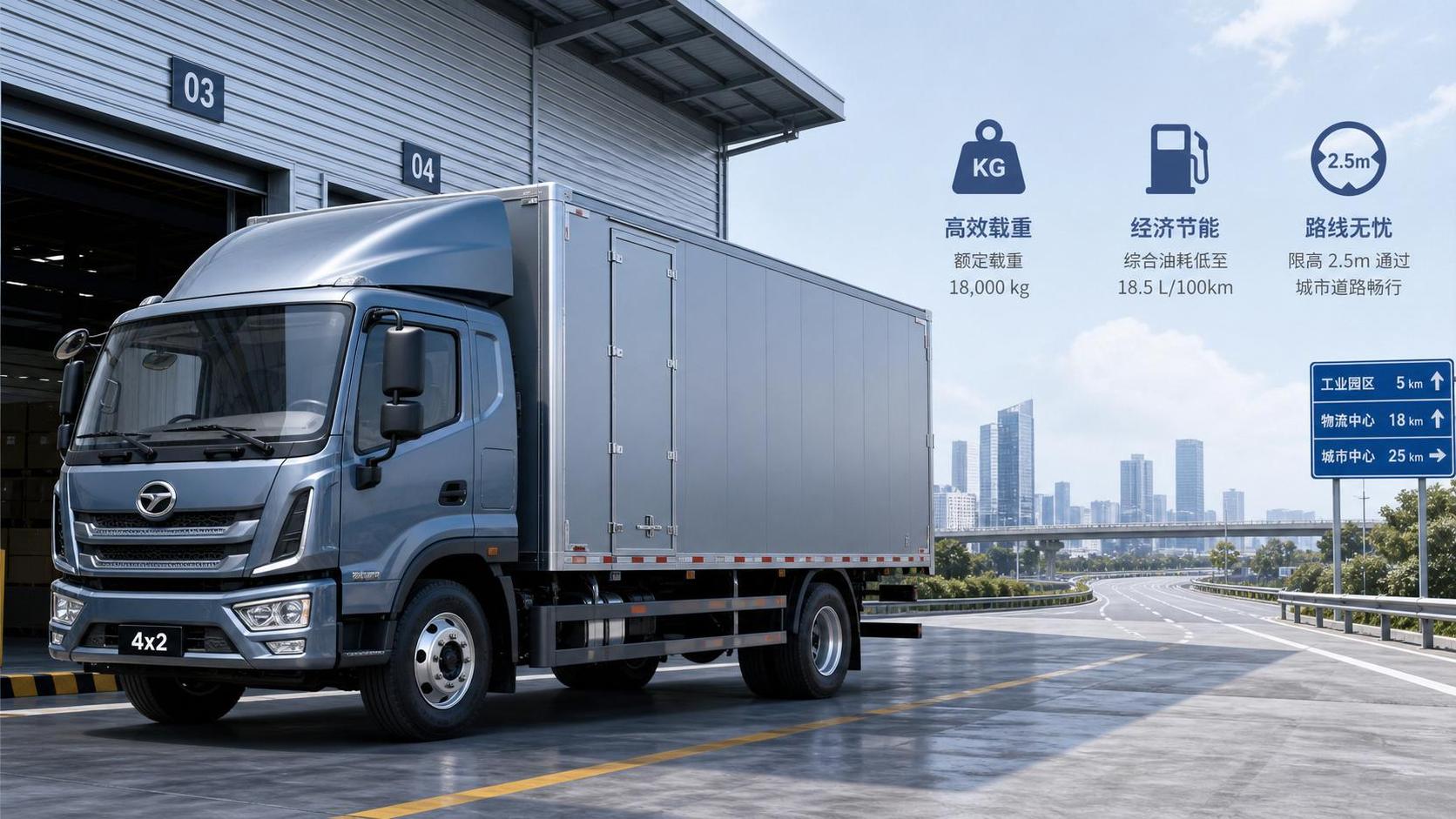
4x2 Cargo Truck Payload, Fuel Use, and Route Limits Explained
Understanding a 4x2 Cargo Truck starts with three essentials: payload, fuel consumption, and route restrictions.
These factors shape safety, operating cost, and delivery speed in daily transport.
A 4x2 Cargo Truck is common in urban delivery, regional freight, retail distribution, and light industrial logistics.
It offers a practical balance between carrying ability, maneuverability, purchase cost, and service access.
Still, real performance depends on axle rating, body size, road profile, and how the load is managed.
This guide explains how a 4x2 Cargo Truck works in actual transport conditions and what limits deserve attention.
What a 4x2 Cargo Truck Actually Means
The term 4x2 describes wheel arrangement.
The truck has two axles and four wheel positions, with one driven axle.
In most models, the rear axle provides traction, while the front axle handles steering.
This setup keeps the chassis simpler than multi-drive trucks and usually lowers fuel use and maintenance needs.
A 4x2 Cargo Truck is not built for severe off-road work.
It is built for paved roads, mixed regional routes, warehouse access, and city distribution where turning space matters.
That also means it performs best when the route, load, and body type match the axle design.
Payload: The First Number to Get Right
Payload is the maximum cargo weight a 4x2 Cargo Truck can legally and safely carry.
It is different from gross vehicle weight rating, or GVWR.
GVWR includes the truck itself, body structure, fuel, cargo, passengers, and extra equipment.
A simple formula helps.
Payload equals GVWR minus curb weight minus body and accessory weight.
In practice, the usable payload of a 4x2 Cargo Truck often becomes lower after customization.
A box body, refrigeration unit, tail lift, tool cabinet, or reinforced floor all reduce remaining cargo capacity.
What affects payload most
- Axle load rating and suspension design
- Chassis length and cargo body material
- Engine and transmission weight
- Fuel tank size and spare equipment
- Local legal limits on axle and total weight
Even when the total weight looks acceptable, poor load distribution can still overload one axle.
That is a common reason for tire failure, brake stress, and roadside penalties.
For a 4x2 Cargo Truck, front axle underloading can also weaken steering control.
Practical payload checks before dispatch
- Confirm cargo weight from packing data, not guesswork.
- Check body weight after modifications.
- Review axle limits, not only total vehicle weight.
- Place heavier items low and near the center.
- Use a weighbridge when cargo density varies.
From a cost perspective, accurate loading protects tires, brakes, wheel bearings, and fuel efficiency.
That makes payload control one of the easiest ways to improve transport reliability.
Fuel Use: What Changes Consumption in Real Routes
Fuel use is the next key factor when evaluating a 4x2 Cargo Truck.
Manufacturer figures help, but actual consumption depends on route conditions and operating habits.
A lightly loaded truck on flat highways will behave very differently from one stopping every few minutes in traffic.
Main fuel drivers
- Payload weight and cargo shape
- Stop-and-go traffic frequency
- Road gradient and surface condition
- Engine displacement and gear ratios
- Driver acceleration and idling time
- Tire pressure and alignment condition
For a 4x2 Cargo Truck, fuel economy is often strongest on medium-distance paved routes.
That is where lower drivetrain complexity becomes a real advantage.
However, overloading usually removes that advantage quickly.
More throttle, longer braking, and harder hill starts all increase fuel burn.
Simple ways to control fuel cost
- Match engine power to route demand.
- Avoid unnecessary idling during waiting time.
- Keep tires inflated to the correct working pressure.
- Plan deliveries to reduce repeated congestion zones.
- Maintain injectors, filters, and air intake regularly.
In daily operations, route planning matters almost as much as engine specification.
A well-matched 4x2 Cargo Truck often lowers cost more through scheduling than through hardware changes alone.
Route Limits: Where a 4x2 Cargo Truck Works Best
Route limits are not only about road signs.
They include bridge weight rules, city access windows, axle restrictions, turning radius, slope demands, and surface grip.
This is where many buyers overfocus on engine power and forget legal access.
A 4x2 Cargo Truck may have enough power for the load but still be limited by road policy.
Common route restrictions to check
- Maximum gross vehicle weight on bridges
- Urban delivery time restrictions
- Low-clearance tunnels and warehouse gates
- Steep ramps in industrial parks
- Mud, gravel, or wet surfaces with poor traction
Because only one axle is driven, a 4x2 Cargo Truck has traction limits on slippery or loose ground.
That does not make it unsuitable.
It simply means route assessment must include road condition, weather, and loading pattern.
In real business, the better signal is repeatability.
If the same route includes soft shoulders, steep loading bays, or tight village turns, configuration should reflect that.
How to Choose the Right 4x2 Cargo Truck Configuration
Choosing the right 4x2 Cargo Truck is less about the highest specification and more about fit.
The best setup matches average load, route profile, cargo volume, and service conditions.
Focus on these decision points
- Wheelbase for cargo length and turning needs
- Engine output for flat or hilly routes
- Transmission ratio for city or regional duty
- Cargo body type for dry goods, drinks, parcels, or cold chain
- Brake and suspension setup for repeated loading cycles
If cargo is bulky but light, body volume may matter more than axle capacity.
If cargo is dense, payload margin becomes the priority.
This is also where a professional supplier adds value.
Shandong Livol Truck International Trade Co., Ltd. supports full-process vehicle selection, customization, documentation, customs clearance, and logistics.
As an authorized dealer for FOTON, SHACMAN, and SINOTRUK, the company offers stable supply and practical configuration support.
That matters when a 4x2 Cargo Truck must meet local road rules and delivery targets at the same time.
A Quick Working Checklist Before Final Selection
Seen together, these points give a clearer picture than brochure data alone.
A 4x2 Cargo Truck performs best when payload, fuel use, and route limits are reviewed as one system.
Final Takeaway
A 4x2 Cargo Truck is a smart solution for many delivery and regional freight tasks.
Its strength comes from efficiency, easy maneuvering, and strong suitability for paved transport routes.
The key is to stay realistic about payload, disciplined about fuel control, and careful about route restrictions.
When those three areas are aligned, the truck becomes safer, more economical, and more dependable in daily work.
Before making a final decision, compare actual cargo patterns, legal road limits, and service support in your market.
That approach leads to a 4x2 Cargo Truck configuration that works well not only on paper, but on the road every day.
Search Starts Here