
News
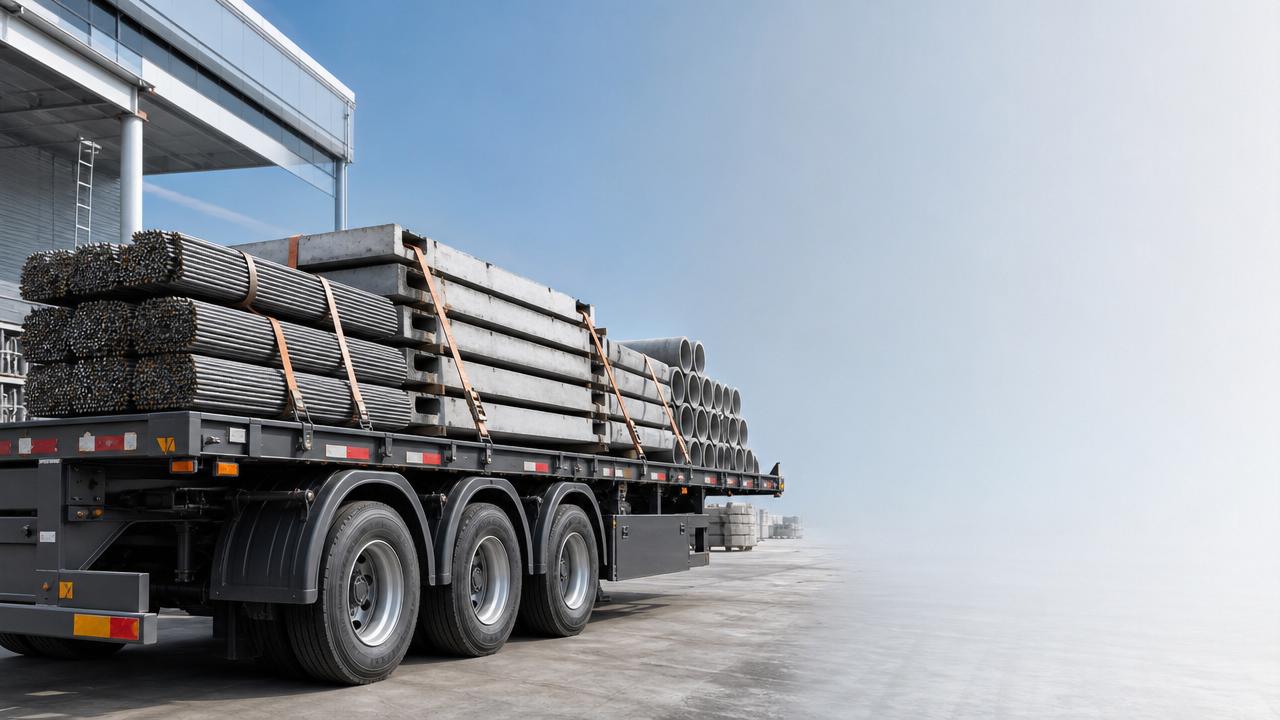
As construction projects demand faster delivery, higher payload efficiency, and safer cargo handling, the Flatbed Semi-Trailer is becoming a strategic asset in material transport. In 2026, buyers and fleet decision-makers will focus more on durability, compliance, customization, and total operating cost. Understanding these trends can help companies choose the right equipment and build a more competitive, reliable supply chain.
Why the Flatbed Semi-Trailer remains critical in construction material transport
For construction fleets, transport equipment is no longer a simple carrying tool. It directly affects project timelines, crane utilization, loading efficiency, road compliance, and cargo safety. A Flatbed Semi-Trailer is especially valuable because construction materials vary widely in length, shape, density, and loading method.
Steel coils, rebar bundles, formwork panels, precast components, timber, pipes, bagged cement pallets, and machinery attachments all create different transport demands. Decision-makers therefore need trailer solutions that balance payload, structural strength, deck usability, and service life rather than chasing only the lowest purchase price.
- Open deck loading supports forklifts, cranes, and side loading, which is essential at busy construction yards and temporary project sites.
- Flexible cargo securing points make it easier to handle mixed loads without changing transport equipment for every shipment.
- A properly specified flatbed helps reduce loading delays, cargo movement risk, and maintenance costs caused by over-stressing the chassis.
What changes in 2026 procurement priorities
Compared with earlier buying cycles, 2026 purchasing decisions are becoming more data-driven. Fleet managers are asking sharper questions: How long will the main beam last under repeated heavy loads? Is the suspension optimized for paved roads, mixed-road quarry transport, or regional highways? Can the trailer match local axle-load rules and permit requirements?
This shift matters because the wrong Flatbed Semi-Trailer specification may look affordable at contract signing but become expensive through tire wear, cracked weld points, unstable handling, and delayed customs or registration approval.
Which market trends are shaping Flatbed Semi-Trailer demand in 2026?
Several forces are influencing how construction transport companies and project contractors buy trailers in 2026. These trends go beyond simple fleet expansion. They reflect pressure from infrastructure schedules, cross-border delivery, compliance checks, and the need to protect margins in volatile freight markets.
Core demand drivers
- Higher infrastructure activity is increasing the movement of steel, cement products, and prefabricated construction parts.
- Regional projects require faster turnaround, pushing operators to prioritize loading convenience and fleet uptime.
- Export buyers are paying more attention to documentation, homologation compatibility, and spare parts access before placing orders.
- Customers increasingly request customized deck length, axle layout, suspension type, and cargo securing configuration for specific job profiles.
The table below summarizes the main 2026 trends influencing Flatbed Semi-Trailer procurement decisions in construction material transport.
For enterprise buyers, the message is clear: a Flatbed Semi-Trailer should be selected as part of a transport system, not as a standalone asset. Matching cargo profile, road conditions, and compliance demands is now the real source of cost control.
Which application scenarios need different Flatbed Semi-Trailer configurations?
Not every construction logistics task requires the same trailer setup. A buyer transporting long steel bars across highways faces different challenges from a quarry supplier hauling dense palletized blocks over mixed roads. This is why specification discipline matters.
Typical construction transport scenarios
The following comparison helps decision-makers align Flatbed Semi-Trailer configuration with actual site and cargo conditions.
This scenario-based approach prevents two common mistakes: under-specifying the trailer for demanding routes, or over-specifying it and locking unnecessary capital into assets that do not generate proportional value.
Questions buyers should ask before finalizing a configuration
- What are the heaviest regular loads, not just the average loads?
- Will loading be done mainly by crane, forklift, or manual securing teams?
- How often will the trailer run on rough roads, gradients, or construction detours?
- Do local regulations limit trailer length, axle count, or gross combination weight?
- What spare parts and maintenance support are realistically available in the destination market?
What technical points matter most when choosing a Flatbed Semi-Trailer?
Technical evaluation should go beyond headline payload figures. In construction material transport, long-term value depends on how the trailer handles repeated loading cycles, uneven surfaces, braking stress, and side impact during loading operations.
Key specification areas
- Main beam structure: The beam design influences bending resistance and fatigue performance under concentrated loads such as steel bundles or precast parts.
- Axle and suspension layout: This affects ride stability, load distribution, tire wear, and suitability for highways or mixed-road applications.
- Deck design: Anti-slip surfaces, reinforced flooring, and practical lashing layouts improve loading speed and cargo restraint quality.
- Brake and lighting systems: These are essential for regulatory approval, road safety, and cross-border acceptance.
- Corrosion protection: Paint quality and surface treatment affect service life, especially in humid, coastal, or high-dust environments.
How to evaluate durability instead of relying on brochure language
Enterprise buyers should request detailed configuration confirmation, inspect welding consistency, review steel grade transparency where available, and verify whether the deck and chassis match the real cargo pattern. A Flatbed Semi-Trailer that frequently carries concentrated heavy loads needs a different structural logic than one carrying lighter palletized materials.
It is also useful to assess maintainability. Can wear parts be replaced without long downtime? Are standard consumables available in the destination country? Can the trailer integrate easily with the tractor units already in the fleet? These questions reduce future operational friction.
How should enterprise buyers compare cost, value, and alternatives?
The lowest initial quotation rarely tells the full story. For a Flatbed Semi-Trailer used in construction logistics, total cost should include repair frequency, spare consumption, cargo claims, idle time during maintenance, and any permit or modification costs after arrival.
Cost comparison factors that actually affect fleet profitability
The table below shows how decision-makers can compare trailer offers beyond purchase price alone.
Alternatives such as sidewall trailers, lowbeds, or skeletal trailers may fit certain tasks better, but for general construction materials that require top and side access, the Flatbed Semi-Trailer remains one of the most versatile options. The key is not to compare categories loosely; it is to compare them against loading method, cargo geometry, route profile, and utilization rate.
What compliance and export details should not be overlooked?
Compliance mistakes can erase any savings achieved at the purchasing stage. For overseas buyers, construction transport equipment must align with destination-market requirements related to dimensions, axle loads, braking systems, lighting, reflective markings, and registration documentation.
Practical compliance checklist
- Confirm legal limits on overall length, height, and axle distribution before production or shipment.
- Verify required lighting positions, conspicuity markings, and electrical interface compatibility.
- Check whether local authorities require specific documentation for customs clearance, registration, or inspection.
- Review landing gear, kingpin, suspension, and tire specifications for compatibility with the operating market.
This is where an experienced export partner becomes important. A supplier that understands both vehicle configuration and international trade execution can reduce avoidable delays caused by incomplete documents, mismatched specifications, or poor shipment coordination.
How can the procurement process be made faster and safer?
For enterprise decision-makers, speed matters, but rushed buying often creates hidden risk. The better approach is structured procurement: clarify cargo needs, shortlist the right Flatbed Semi-Trailer configuration, verify export details, and lock delivery milestones before production or dispatch.
A practical purchasing workflow
- Define cargo categories, route conditions, annual tonnage, and loading methods.
- Confirm key trailer parameters such as deck length, axle count, suspension type, and target payload range.
- Review destination compliance requirements and necessary shipping documents early in the process.
- Evaluate delivery schedule, spare parts planning, and after-sales communication channels.
- Finalize customization details only after matching them to the real project or fleet task.
Why supply capability matters as much as product choice
Many buyers face pressure from project schedules, financing windows, or contract mobilization dates. In such cases, supply reliability becomes a commercial issue, not just a logistics issue. A delay in trailer delivery can postpone material movement, site mobilization, and downstream subcontractor activity.
Shandong Livol Truck International Trade Co., Ltd. supports buyers with a professional export team, multi-step service coordination, and experience in vehicle selection, customization, documentation, customs clearance, and logistics. As an official authorized domestic and overseas dealer for FOTON, SHACMAN, and SINOTRUK, the company also benefits from broad industry access, authorized 4S store resources across China, and stable inventory support for faster response.
FAQ: what do buyers often ask about a Flatbed Semi-Trailer?
How do I choose the right Flatbed Semi-Trailer for steel, cement products, and mixed construction cargo?
Start with the heaviest and most difficult cargo, not the easiest one. If your fleet handles long steel, dense pallet loads, and occasional precast materials, prioritize frame strength, tie-down layout, and axle configuration. Then confirm whether the same trailer must also operate on rough access roads or mostly paved highways. The right choice comes from the harshest regular operating condition.
What are the most common procurement mistakes?
Three mistakes appear often. First, buying only on price and ignoring lifecycle cost. Second, selecting a standard Flatbed Semi-Trailer without adapting it to actual cargo dimensions and loading methods. Third, overlooking import compliance, which may cause rework, registration delays, or extra expense after arrival.
How important is customization for construction material transport?
It is important when cargo or route conditions are specialized. Customization can include deck length, reinforcement, suspension choice, lashing arrangement, stake pockets, or other practical features. The goal is not to customize everything, but to customize only what improves safety, loading speed, compliance, or utilization.
How can delivery risk be reduced for overseas orders?
Work with an exporter that can coordinate the full process from specification confirmation to documentation and shipping. Clear technical confirmation, stable inventory access, realistic delivery schedules, and organized customs and logistics support all help reduce uncertainty. This is especially important when trailers are needed for time-sensitive construction contracts.
Why choose us for your 2026 Flatbed Semi-Trailer sourcing plan?
When you are evaluating a Flatbed Semi-Trailer for construction material transport, you need more than a catalog. You need a partner that understands commercial vehicles, export execution, configuration matching, and delivery discipline. Shandong Livol Truck International Trade Co., Ltd. combines commercial vehicle industry strength with practical global trade experience to support that process.
- Authorized dealer resources connected to major Chinese commercial vehicle brands including FOTON, SHACMAN, and SINOTRUK.
- Broad authorized 4S store network and sufficient inventory support to improve supply stability and delivery responsiveness.
- Professional export service covering vehicle selection, customization coordination, documentation, customs clearance, and logistics planning.
- Strict quality control and after-sales support designed to help overseas buyers manage operational risk more effectively.
If you are preparing a 2026 procurement plan, you can contact us for specific support on parameter confirmation, Flatbed Semi-Trailer selection, delivery lead time, route-based configuration advice, destination compliance review, customization options, spare parts planning, and quotation discussion. A focused technical and commercial review at the start can save significant time and cost later in the project cycle.
Search Starts Here