
News
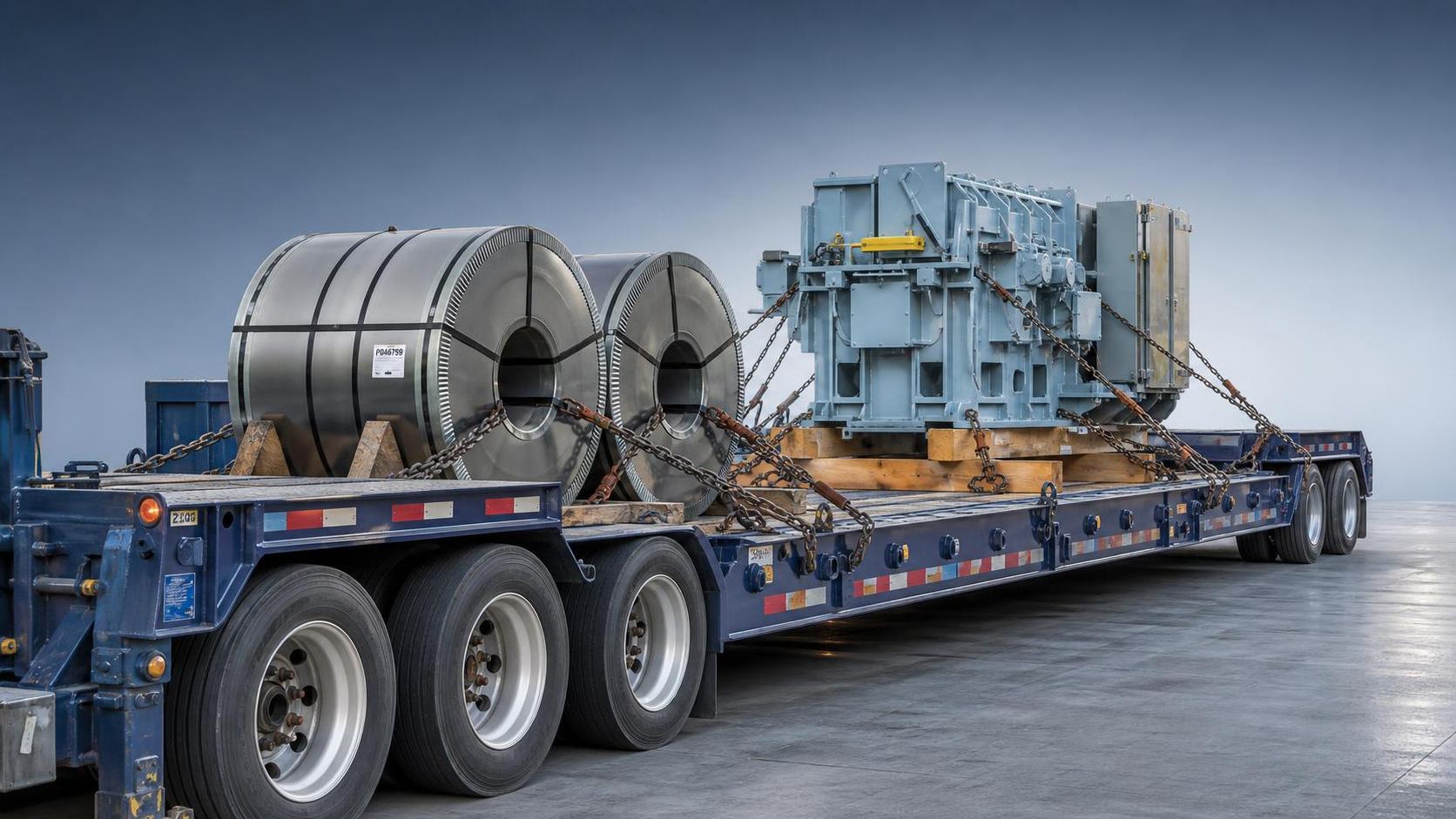
Start with the trailer’s actual job, not the dispatch note
Steel coils and industrial machinery both go on a flatbed, but they do not stress a trailer in the same way. A coil puts a lot of weight into a very small footprint. Machinery often brings awkward centers of gravity, hard edges, protruding parts, and tiedown challenges. Before you inspect anything else, confirm what you are really hauling: coil orientation, unit weight, number of pieces, loading method, blocking needs, overall dimensions, and whether the cargo will sit directly on the deck or on timbers, saddles, or skids.
That one step changes the rest of the checklist. A flatbed that looks fine for palletized cargo can still be the wrong tool for a heavy coil if the deck, tiedown layout, or load concentration is poor. Operators sometimes look at gross payload first and stop there. That is where trouble starts.
Check whether the deck can take concentrated weight
With steel coils, deck condition matters more than people admit. You are not just asking whether the trailer can carry the total weight. You are asking whether the floor structure can handle where that weight lands.
- Look for cracked wood, delaminated sections, soft spots, bent crossmembers, or repaired areas under the deck.
- Pay attention to sections around the axle group and the forward third of the deck, where heavy loads are often placed.
- If the load will sit on dunnage or saddles, make sure the contact points spread the force instead of creating two knife-edge pressure lines.
- If machinery has steel tracks, narrow feet, or rigid skids, inspect the exact landing points before loading.
A common mistake is assuming a clean-looking deck is a strong deck. Cosmetic condition tells you very little. What matters is whether the floor and supporting members are sound enough for point loading. If you already know the cargo is unusually dense, ask for the loading sketch or weight distribution plan before the forklift or crane arrives. It is much easier to move a drawing than a damaged trailer.
Inspect the frame, gooseneck, and landing gear for stress or past overload
Heavy machinery and coils expose weakness fast. Walk the trailer with your eyes low enough to catch twist, sag, or fresh distortion. Focus on the main beams, neck area, suspension hangers, and the transition points where cracks usually begin.
What you are trying to spot is not just severe damage. Hairline cracking near welds, uneven deck height side to side, or landing gear that no longer sits square can all point to previous overload or impact. If the landing legs are stiff, bent, or sinking unevenly under empty trailer weight, do not ignore it. Once a heavy unit is loaded, that small sign can turn into a serious handling problem or unloading issue.
Do not treat tiedown points as unlimited anchor points
For this kind of work, the tiedown system is the job. Check every anchor point you expect to use: winches, chain slots, D-rings, stake pockets if they are part of the restraint plan, and any dedicated coil securement features if fitted.
You want to know three things: are the points structurally sound, are they in the right positions for the cargo, and do they allow proper restraint angles? A trailer may have plenty of attachment points and still be awkward for securing a machine with a high center of gravity. If all your chains end up too shallow or crossing around fragile components, the setup is wrong even before tensioning starts.
- Reject anchor points that are cracked, elongated, heavily corroded, or visibly bent.
- Check winch tracks and sliding winches for deformation and free movement.
- Make sure chain binders, straps, edge protection, and blocking materials match the cargo type.
One practical rule: if the securement plan depends on “making it work” after the load is already on the deck, stop and reset. Steel coils and machinery do not forgive improvised tiedown geometry.
Look at load distribution before thinking about legal payload
Operators usually know the gross weight. Fewer check how that weight will split across the tractor drives, trailer axles, and kingpin. With coils especially, a small shift forward or back can change axle loading a lot. With machinery, uneven left-right balance can also become a serious issue.
Before loading, confirm:
- The weight of each piece, not just the total shipment.
- The planned position of each item on the deck.
- Whether the loading equipment can place the cargo accurately without dragging it across the floor.
- Whether the route includes bridge, axle, height, or width restrictions that change your loading decision.
If a machine has attachments, detachable counterweights, or a boom position that changes balance, inspect the cargo in the exact transport configuration. The shipping weight on a document may not match the piece that actually shows up in the yard.
Pay close attention to tires, wheels, and suspension
Heavy concentrated loads expose weak tires fast, and flatbed work often involves rough yards, uneven loading surfaces, and long highway runs afterward. That combination is hard on running gear.
Check for uneven tread wear, sidewall damage, cuts, bulges, exposed cords, and signs of underinflation. Then look beyond the tires. Inspect wheel rims for cracks or impact marks, verify lug hardware condition, and look at suspension components for broken leaves, leaking air bags, loose fasteners, damaged torque arms, or shifted alignment.
If one axle position already shows irregular wear before loading, do not assume it will finish the trip because the tire still has tread. Under a heavy steel coil, a marginal tire becomes a roadside event. Under tall machinery, suspension weakness also affects stability in cornering and braking.
Test brakes and air lines with the cargo type in mind
A Flatbed Semi-Trailer carrying dense steel or top-heavy machinery needs more than a quick glance at the brake chambers. Check service brakes, parking brakes, air hoses, gladhands, chambers, slack adjusters if fitted, and visible line condition. Listen for leaks. Watch for slow pressure build or poor release.
The reason this matters is simple: cargo securement and braking work together. Even a properly chained load sees extra forward force if the trailer brakes are uneven or delayed. Machinery with a high center of gravity will also shift more aggressively during harsh or unbalanced braking. If the trailer has ABS warning issues, solve them before dispatch, not after loading.
Make sure the deck surface matches the cargo
Not every deck gives the same friction. Oil, mud, rainwater, loose scale from steel, and worn timber all change how the cargo behaves. For coils, poor friction increases dependence on blocking and securement. For machinery, slippery surfaces make precise placement harder and can let skids walk during the first few kilometers if the tiedowns settle.
Sweep the deck. Remove loose debris. If there is oil or hydraulic leakage from previously carried equipment, clean it properly before the next load. Also inspect whether the cargo itself is leaking grease, cutting fluid, or hydraulic oil onto the contact area. That detail is often missed during rushed loading.
Check blocking, dunnage, and contact protection before the crane starts
A lot of load failures start with bad timber, not bad chains. Dunnage should be dry enough, structurally sound, and sized for the load path it will carry. Crushed or split timber under a coil can change tiedown tension. Weak blocking under machinery feet can tilt the unit and make retightening necessary before the truck even reaches the gate.
Confirm dimensions and route-related clearance issues
This is where machinery usually creates problems. A trailer may be mechanically ready, but the load still may not be road-ready. Check loaded height, width, overhang, and the position of removable parts. Mirrors, guards, handrails, hydraulic arms, and exhaust stacks are easy to overlook in a busy yard.
If the route or destination market requires permit-based movement for over-dimension cargo, the documents must match the actual loaded configuration. Do not rely on the machine’s brochure dimensions. Measure the shipping setup that will be on the trailer, including dunnage height.
Inspect lighting, markings, and anything the road inspector will see first
When the cargo is valuable and heavy, it is easy to focus only on structural items and forget the basics that stop a truck before it gets far. Check lights, reflectors, conspicuity markings, license plate visibility, mudflaps if fitted, and any warning flags or boards needed for the load shape. On machinery shipments, tiedowns or tarps sometimes cover lamps or plates after loading. Catch that before departure.
Do one last walk-around after tensioning and again after short travel
The pre-load inspection is only half the job. After the cargo is on the trailer, recheck deck deflection, suspension squat, securement angles, and any contact point where the load may have settled unevenly. Look for chains touching hoses, straps cutting across sharp corners, or blocking that has shifted under pressure.
Then plan an early stop after initial travel. Heavy cargo often beds in during the first part of the trip. That is when loose binders, crushed dunnage, and slight load movement show up. Catching it early is routine good practice, not a sign that the first securement was poor.
A practical loading order that works in the yard
If you want a usable sequence, keep it simple. Verify cargo details first. Inspect deck and frame second. Check tiedown points and securement gear before the load arrives. Then review axle distribution, running gear, and brakes. Clean the deck, set dunnage and blocking, and only then bring in the forklift or crane.
That order saves time because it catches the expensive problems early: wrong trailer, weak deck section, poor anchor layout, or a running gear issue that should have been fixed before loading. With steel coils and machinery, most bad outcomes are visible in advance if the operator checks the trailer as a load platform, not just as a vehicle waiting for freight.
Search Starts Here