
News
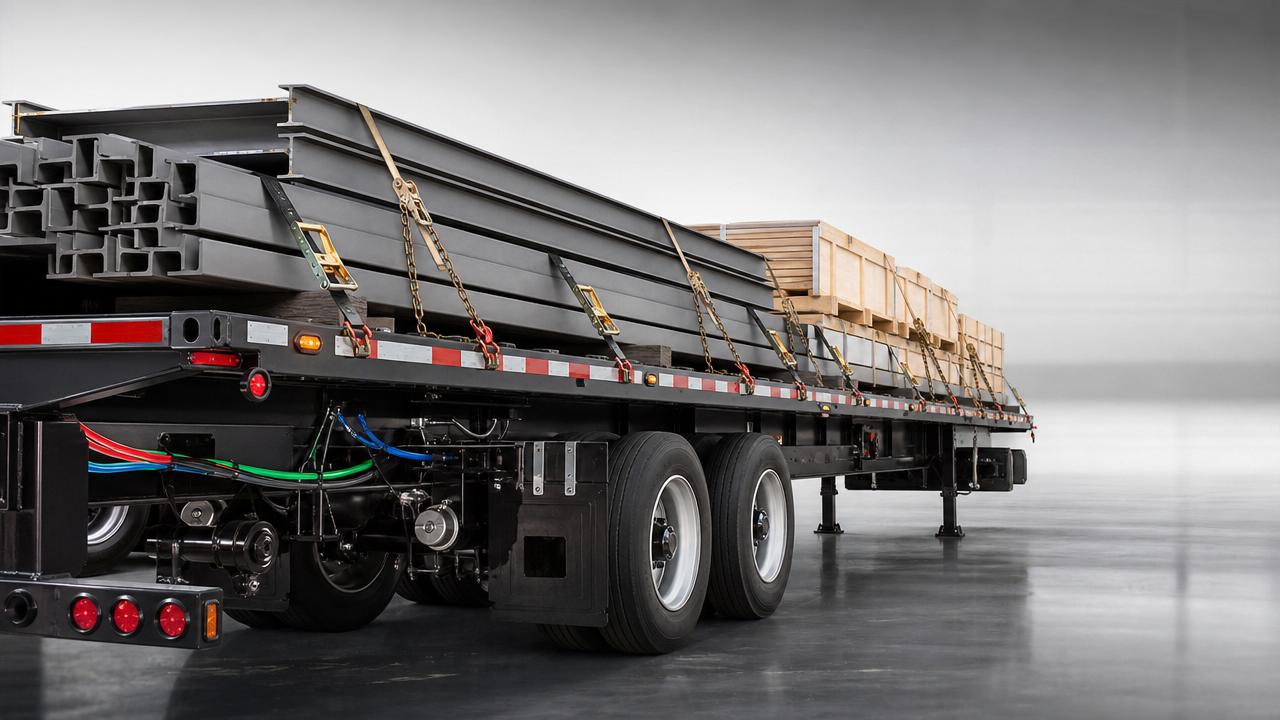
Before taking a Flatbed Semi-Trailer on long-distance routes, operators should inspect key areas that directly affect safety, cargo security and road performance. From tire condition and brake response to load distribution and fastening points, every detail matters on extended trips. A careful pre-trip check not only helps prevent costly breakdowns and delays, but also ensures more efficient and reliable transport from departure to destination.
Why is a pre-trip inspection so important for a Flatbed Semi-Trailer on long-distance routes?
A long route puts continuous stress on every working part of a Flatbed Semi-Trailer. Unlike short-haul operations, long-distance transport exposes the trailer to more braking cycles, changing weather, uneven road surfaces, heavy cargo shifts, and longer hours of vibration. Small problems that seem manageable in a yard or on local roads can quickly turn into serious failures hundreds of kilometers away.
For operators, the inspection is not just about legal compliance. It is about reducing roadside stops, cargo claims, tire blowouts, brake overheating, unstable handling, and missed delivery windows. A Flatbed Semi-Trailer often carries oversized machinery, construction materials, steel products, containers, or equipment with high value and irregular shapes. That means the trailer itself and the cargo restraint system must work together under real road conditions, not just look acceptable when parked.
A disciplined check before departure also protects operating cost. When a driver identifies worn suspension parts, weak air lines, damaged deck sections, or loose fasteners early, the business avoids emergency maintenance, recovery expenses, and customer dissatisfaction. For companies involved in engineering vehicles and heavy transport, this preparation is part of professional fleet management, not an optional extra.
What should operators check first on the tires, wheels, and axle area?
The tire and axle system is one of the first places to inspect because it directly affects stability, braking distance, rolling resistance, and fuel use. On a Flatbed Semi-Trailer, uneven loading or poor road conditions can accelerate wear on one side, so operators should never rely on a quick visual glance alone.
Start with tire pressure and confirm that it matches the trailer load and manufacturer recommendation. Underinflated tires build heat quickly on highways, while overinflated tires can reduce grip and increase irregular wear. Then check tread depth and look for cuts, bulges, exposed cords, punctures, or embedded objects. Any sign of sidewall damage deserves attention before departure, especially for long runs in hot weather.
Wheel nuts should be tight and free from rust trails that suggest movement. Inspect rims for cracks or deformation. In the axle area, look at hubs, seals, and bearings for grease leakage or overheating marks. Suspension parts such as leaf springs, equalizers, bushings, U-bolts, and air suspension components should be checked for looseness, cracking, or air loss. If one axle appears to sit unevenly, the Flatbed Semi-Trailer may already have a balance or suspension issue that will become worse on the road.
Operators should also pay attention to alignment clues. Feathered tread, shoulder wear, or repeated wear on one tire position can indicate axle misalignment, bent components, or poor load distribution. These are not cosmetic issues. On long-distance routes, they can increase drag, reduce control, and shorten tire life dramatically.
How do you check whether the brake and air system is ready for a long trip?
A Flatbed Semi-Trailer may travel through city traffic, mountain roads, and high-speed highways on the same route, so consistent brake performance is critical. The air brake system should be checked carefully before the trailer leaves the yard. Begin by examining air hoses and couplings for cracks, abrasion, leaks, and secure connections between tractor and trailer. Damaged lines can lead to delayed braking or complete air loss.
Then inspect brake chambers, slack adjusters, drums or discs, and linings or pads. Excessive wear, contamination, or uneven contact means the trailer may not brake evenly under load. An operator should also verify that the parking brake holds properly and that the service brake responds smoothly without pulling or lagging. If the trailer has ABS or other brake monitoring features, warning indicators should be checked before departure.
Heat is another hidden issue. If the Flatbed Semi-Trailer recently came in from service or short transfer movement, compare wheel-end temperatures carefully. A hot hub or brake assembly may indicate a dragging brake, bearing problem, or adjustment issue. Taking a few extra minutes to investigate can prevent a dangerous failure later.
How should cargo positioning and load distribution be checked on a Flatbed Semi-Trailer?
This is one of the most important questions because a Flatbed Semi-Trailer can perform well mechanically and still become unsafe if the load is positioned incorrectly. Operators should confirm total cargo weight, axle load distribution, deck contact points, center of gravity, and the effect of load placement on tractor-trailer balance.
The weight should be distributed so that no axle group is overloaded and the kingpin load remains appropriate for the tractor. If cargo is too far forward, steering and tractor stress may become a problem. If it is too far rearward, trailer sway and poor braking balance can occur. Tall or irregular cargo should be checked for center-of-gravity risk, especially when the route includes curves, ramps, or crosswinds.
The deck itself also matters. Operators should inspect the flatbed floor for cracked welds, rotten wood sections, bent cross members, or damaged steel areas that could reduce support under concentrated loads. Machinery, steel coils, pipes, pallets, or prefabricated construction materials all create different pressure points. A load may look secure at the loading site but still settle after the first hours of transport if the contact surface is weak or uneven.
When available, route planning should be linked to load planning. Bridge restrictions, road gradients, border checks, and weather conditions all influence how conservative the operator should be with cargo position and height. On long-distance jobs, safe loading is not only about staying within legal dimensions. It is about maintaining road manners throughout the full trip.
What should be examined in tie-down points, fasteners, and cargo restraint equipment?
Cargo restraint is a major safety factor for every Flatbed Semi-Trailer, especially when carrying engineering equipment, building materials, or other freight exposed to wind and vibration. Operators should inspect chains, straps, binders, hooks, winches, edge protectors, and anchor points before departure. If one restraint component fails, the whole load can shift and create a cascading problem.
Start with anchor points and tie-down rails. Look for deformation, corrosion, broken welds, or wear that reduces rated strength. Then inspect straps for cuts, fraying, melted sections, damaged stitching, or hardware distortion. Chains should be free from stretching, cracks, bent links, and severe rust. Ratchets and binders must lock properly and hold tension after test tightening.
Operators should also verify that the restraint method matches the cargo type. For example, machinery with wheels or tracks often needs blocking and direct tie-down, not only top straps. Steel products may need anti-slip materials and edge protection to avoid cutting the restraint. Long items such as pipes or beams require special attention to forward movement under braking. A Flatbed Semi-Trailer used on long-distance routes should leave with a securing plan that considers emergency maneuvers, not just normal cruising.
After loading, it is wise to recheck tension after the first short distance because cargo often settles. On extended trips, operators should plan scheduled stop points for restraint inspection, especially after rough roads or weather changes.
What common mistakes do operators make before sending a Flatbed Semi-Trailer on a long route?
One common mistake is focusing only on the cargo and ignoring the trailer structure. Operators may verify the load straps but fail to notice a cracked deck plate, leaking air hose, worn suspension bushing, or damaged landing gear. Another mistake is checking components visually without confirming actual working condition, such as assuming brakes are fine because nothing looks broken.
A second major error is poor load distribution. Even experienced teams sometimes concentrate too much weight over one axle group or fail to account for load shift after the first braking event. This can change handling, increase tire wear, and put the Flatbed Semi-Trailer at higher rollover risk on turns or uneven roads.
A third mistake is using worn or mismatched restraint equipment. Old straps, low-grade chains, missing edge protectors, or anchor points with unknown condition should never be treated as acceptable because the route is urgent. Long-distance work creates repeated movement, and weak restraint equipment usually fails when vibration and sudden braking combine.
Finally, operators often underestimate documentation and route readiness. Permit requirements, cargo dimensions, weather alerts, emergency contact details, spare tire condition, lighting function, reflective markings, and tool availability should all be confirmed. A reliable trip depends on operational readiness as much as mechanical readiness.
Which quick checklist helps confirm whether a Flatbed Semi-Trailer is truly ready to depart?
A practical readiness review can help operators avoid missing critical points under time pressure. The following checklist works well before a long-distance run:
- Tires are inflated correctly, free from cuts, bulges, and abnormal wear.
- Wheel nuts, hubs, bearings, and axle components show no looseness, leakage, or heat damage.
- Brake chambers, air lines, couplings, and brake friction parts are in sound condition.
- Lights, reflectors, conspicuity tape, and electrical connections function properly.
- Deck, frame, cross members, landing gear, and weld areas show no structural concern.
- Cargo weight and position are verified against legal and operational limits.
- Tie-down points, chains, straps, binders, and anti-slip materials are matched to the cargo.
- Route plan, permits, weather, service stops, and emergency support contacts are confirmed.
This kind of routine makes a Flatbed Semi-Trailer easier to manage consistently across different cargo types and route conditions. It also helps new operators build better habits and gives fleet managers a clearer basis for supervision.
When should operators ask for technical support or supplier advice before the trip?
If the Flatbed Semi-Trailer will carry unusually heavy, tall, long, or irregular engineering cargo, technical confirmation is recommended before dispatch. The same applies when the trailer has repeated tire wear patterns, unstable tracking, suspension imbalance, air system leaks, or visible frame stress. These are warning signs that basic daily inspection may not be enough.
Operators and fleet owners should also seek advice when choosing a trailer specification for export projects, construction transport, or cross-border logistics. Deck length, axle configuration, suspension type, braking system, and load securing options all affect long-distance suitability. Working with an experienced commercial vehicle exporter can make these decisions easier, especially when stable supply, authorized product channels, documentation support, and after-sales service are important.
Shandong Livol Truck International Trade Co., Ltd., based in Shandong, China, provides commercial vehicle export support backed by authorized cooperation with FOTON, SHACMAN and SINOTRUK, broad 4S network resources, available inventory, and practical overseas service experience. For buyers or operators evaluating a Flatbed Semi-Trailer for demanding routes, it is useful to discuss cargo type, average distance, road conditions, axle needs, customization options, spare parts support, and delivery schedule before finalizing a solution.
What should you confirm first if you need a better long-distance transport solution?
If you want a Flatbed Semi-Trailer that performs reliably on long-distance routes, start by confirming a few practical questions: what cargo will be carried most often, what is the typical weight range, how long are the routes, what road conditions are common, and what local compliance standards apply. From there, check whether the current trailer specification, restraint method, and maintenance routine truly match those needs.
The safest and most efficient operation comes from combining a suitable Flatbed Semi-Trailer with disciplined inspection, correct loading, and dependable supply and service support. If you need to confirm specifications, customization direction, delivery cycle, export documents, pricing, or cooperation terms, it is best to discuss the operating scenario in detail first. That approach leads to better equipment selection and more dependable long-distance transport results.
Search Starts Here