
News
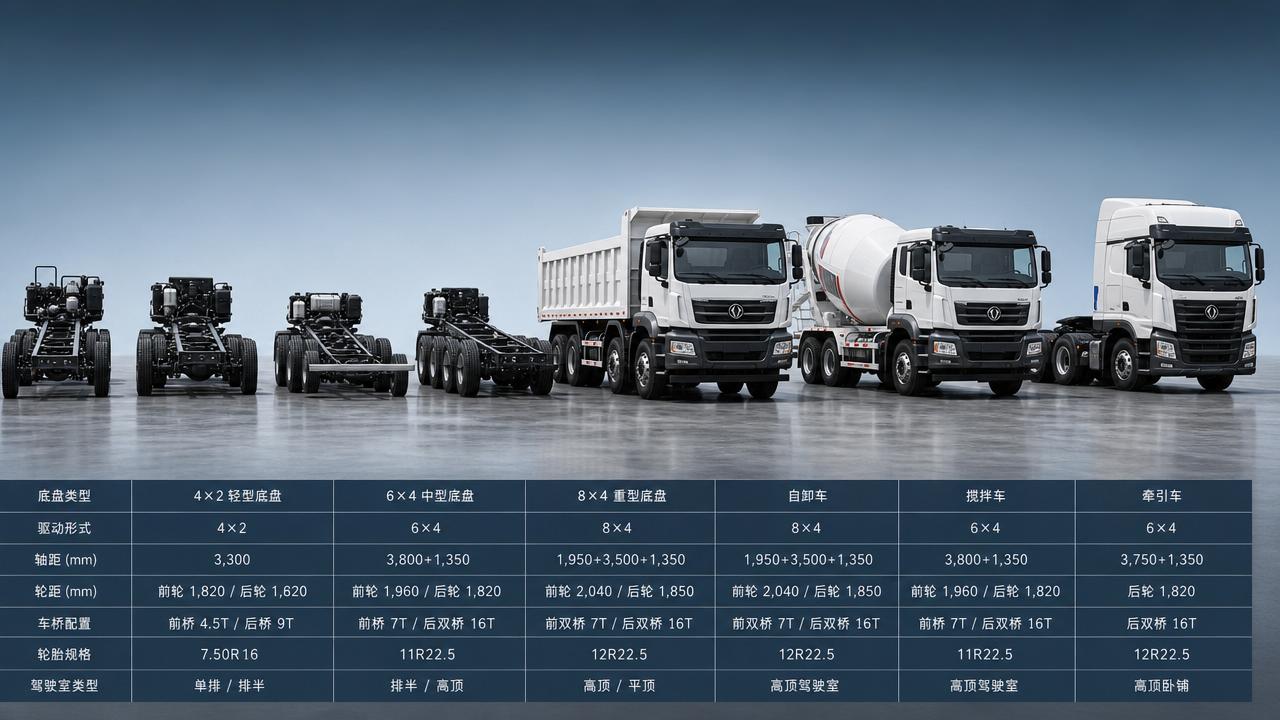
Before comparing commercial vehicle models for procurement or fleet planning, reviewing the Cangshan Vehicle Configuration List can help business evaluators identify key differences in specifications, capacity, compliance and operating suitability. This article explains how to read configuration details efficiently, avoid costly selection mistakes and make more informed decisions when assessing engineering vehicle options across different brands and applications.
For business evaluators, the challenge is rarely a lack of model choices. The real issue is translating technical configuration data into a sound procurement decision. A wheelbase difference of 300 mm, an axle ratio change from 4.8 to 5.26, or a payload variation of 2–5 tons can significantly affect productivity, fuel consumption, route suitability, and long-term operating cost.
When the Cangshan Vehicle Configuration List is used correctly, it becomes more than a specification sheet. It becomes a decision tool for comparing dump trucks, mixers, cargo chassis, tractor heads, and other engineering vehicle platforms across brands such as FOTON, SHACMAN, and SINOTRUK. For companies evaluating imports from China, a clear understanding of configuration logic also reduces documentation errors, misaligned expectations, and delivery risk.
Why the Cangshan Vehicle Configuration List Matters in Engineering Vehicle Evaluation
In engineering vehicle procurement, a model name alone is not enough. Two units that appear similar in photos may differ in engine output, suspension structure, gross vehicle weight rating, emission level, cab design, and PTO compatibility. The Cangshan Vehicle Configuration List helps evaluators compare these variables in a structured way before requesting quotations or approving purchase orders.
This is especially important in B2B purchasing cycles that typically involve 3–5 review stages: technical screening, cost evaluation, compliance check, supplier confirmation, and logistics planning. If configuration details are not verified during the first 2 stages, the final selection may lead to costly body modification, underperformance on site, or delays of 2–4 weeks during export preparation.
What business evaluators should identify first
The first review should focus on application fit. In engineering vehicle projects, the most critical baseline is whether the chassis and drivetrain suit the actual workload. A 6x4 dump truck for quarry hauling, for example, should not be assessed by the same criteria as a 4x2 urban construction support truck. The Cangshan Vehicle Configuration List makes this distinction visible if you know where to look.
- Drive type: common layouts include 4x2, 6x4, 8x4, each suitable for different road and payload conditions.
- Engine power band: many engineering applications fall within 220–480 hp depending on terrain and body type.
- Wheelbase and overhang: these affect body installation, turning radius, and bridge weight distribution.
- Axle capacity: front and rear axle ratings must match the target load profile rather than only nominal payload.
- Cab and control features: sleeper or day cab, air suspension seat, visibility package, and safety support matter in shift-based operation.
How configuration misunderstanding creates procurement risk
A frequent mistake is comparing price before comparing configuration depth. A lower-priced chassis may use a lighter suspension pack, smaller fuel tank, or different gearbox ratio. On paper, the difference may seem minor. In service, that difference can mean 10–15% more refueling frequency, reduced climbing performance, or earlier wear under severe site conditions.
Another common issue is assuming one brand’s specification terminology matches another’s exactly. In cross-brand comparisons involving FOTON, SHACMAN, or SINOTRUK, similar labels may still represent different standard equipment, optional features, or market-specific compliance settings. That is why the Cangshan Vehicle Configuration List should be reviewed line by line rather than scanned only for engine horsepower and selling price.
Core data points to verify before model comparison
Before moving to commercial negotiation, evaluators should confirm at least 6 key items: engine model, transmission type, axle ratio, tire specification, GVW rating, and body adaptation interface. In many engineering projects, 1 mismatch among these 6 items is enough to affect operating suitability or local registration compliance.
How to Read the Cangshan Vehicle Configuration List Efficiently
An effective reading method saves time and improves decision quality. Rather than reviewing the full sheet from top to bottom, start by grouping configuration items into five practical blocks: powertrain, chassis, dimensions, compliance, and operational equipment. This method works well when comparing 2–6 candidate models in one evaluation round.
The table below shows how business evaluators can translate the Cangshan Vehicle Configuration List into procurement-relevant comparison criteria for engineering vehicles.
The key conclusion is that the Cangshan Vehicle Configuration List should be read as an operating profile, not as a static technical document. A good evaluator links each line item to 1 of 3 outcomes: can the vehicle do the job, can it be legally used in the target market, and can it be maintained efficiently during the first 12–24 months.
A practical 4-step reading method
- Confirm application category: dump transport, concrete support, municipal engineering, cargo conversion, or tractor operation.
- Mark non-negotiable parameters: payload class, drive type, compliance requirements, and body interface limits.
- Compare operating variables: horsepower, torque, tank size, tire pattern, suspension type, and maintenance accessibility.
- Check export readiness: documents, lead time, optional equipment, and compatibility with destination-country rules.
Configuration lines that deserve extra attention
Some lines on the Cangshan Vehicle Configuration List are more important than they first appear. Transmission model matters because a 10-speed manual and a 12-speed heavy-duty option can behave very differently under overloaded starts or mountain routes. Tire size also matters because 12.00R20 and 315/80R22.5 may affect both ground clearance and replacement availability in local markets.
Fuel tank volume is another hidden cost factor. A tank in the 300–400 L range may work for local site rotation, but long-haul construction supply routes may require 500–800 L depending on average daily distance. Similarly, a chassis prepared with PTO or hydraulic take-off points can shorten body installation time by several days after arrival.
Key Comparison Areas Across Engineering Vehicle Models
Once the Cangshan Vehicle Configuration List has been read correctly, the next task is structured comparison. Business evaluators should avoid reviewing 20 parameters with equal weight. In real purchasing decisions, 4 major comparison areas usually account for most outcomes: performance suitability, structural endurance, compliance fit, and lifecycle serviceability.
1. Performance suitability for working conditions
Performance should match the job rather than exceed it blindly. For example, a mine-support dump application with steep gradients may justify 380–480 hp and a stronger axle ratio. A lighter construction support route on mixed paved roads may operate efficiently with 240–340 hp. Overspecification can increase initial cost and fuel use, while underspecification causes reduced cycle efficiency and clutch or gearbox stress.
2. Structural endurance under load and terrain
Frame strength, spring pack design, and axle rating are central in engineering vehicle use. A vehicle exposed to broken roads, uneven quarry ramps, or repeated full-load tipping needs stronger structural reserves than a municipal construction support vehicle. Even a 1–2 leaf difference in spring specification can change long-term stability under repetitive heavy cycles.
3. Compliance and destination-market fit
Different markets may require left-hand or right-hand drive, specific lighting layouts, emission stages, or braking configurations. Evaluators should confirm these points before finalizing the shortlist. If not checked early, the wrong version may require modification after production or become difficult to register on arrival, affecting project schedules by several weeks.
4. Serviceability and parts continuity
For fleet buyers, uptime matters as much as specification. Standardized tire size, common filter references, accessible service points, and reliable parts availability all influence operational cost over the first 50,000–100,000 km. This is why model comparison should include not only the truck itself but also the supplier’s export coordination and after-sales support capability.
The table below can be used as a practical scoring framework when comparing engineering vehicle options based on the Cangshan Vehicle Configuration List.
A weighted review helps procurement teams avoid overemphasizing unit price. If 2 vehicle options differ by only 3%–5% in purchase cost but one is clearly better in compliance readiness and parts continuity, the higher-value choice often produces lower risk across the first full operating year.
Common Mistakes When Using the Cangshan Vehicle Configuration List
Even experienced buyers can misread configuration sheets when handling multiple brands, applications, and destination markets at the same time. The most common errors do not come from complex engineering details. They usually come from assumptions, incomplete verification, or comparing unlike vehicles under the same template.
Comparing nominal payload instead of full working configuration
Payload should never be judged in isolation. A nominal carrying figure does not fully reflect axle distribution, body type, road condition, or legal weight restrictions. In some cases, a vehicle with slightly lower nominal payload can deliver better real-world efficiency because it has a more suitable transmission ratio and stronger suspension for repetitive heavy cycles.
Ignoring body installation and application interfaces
Many engineering vehicles are sold as chassis for local body building or specialized conversion. If the Cangshan Vehicle Configuration List is checked without confirming frame length, PTO provision, rear overhang, and mounting space, the result may be costly rework. In export business, this issue can delay commissioning by 7–20 days after vehicle arrival.
Assuming all export versions are identical
A domestic-market standard version may differ from an export-configured unit in emission settings, electrical details, warning devices, and climate adaptation. For hot regions, cooling reserve and air-conditioning performance may matter more. For remote routes, fuel filtration and service access may become critical. These differences should be clarified before confirmation, not after shipment booking.
A simple error-control checklist
- Verify 8 basics: drive type, wheelbase, hp, gearbox, axle ratio, tire size, tank volume, and cab version.
- Confirm body compatibility in writing if the truck will carry a tipper body, mixer drum, crane, or tank module.
- Check destination-country requirements at least 1 time before PI approval and 1 time before shipment.
- Request clear optional-equipment marking so standard and optional items are not mixed in the final offer.
How an Experienced Export Partner Supports Better Model Decisions
Understanding the Cangshan Vehicle Configuration List is only part of the decision. The other part is working with a supplier that can interpret configuration data in the context of export execution, brand differences, and project timelines. For engineering vehicle buyers, this support reduces both technical uncertainty and transaction friction.
Shandong Livol Truck International Trade Co., Ltd., based in Shandong, China, operates as an official authorized domestic and overseas dealer for FOTON, SHACMAN, and SINOTRUK. With authorized 4S store resources across China and sufficient inventory, the company is positioned to support stable supply, faster matching of required specifications, and practical communication around vehicle selection and customization.
For business evaluators, this matters because configuration review often overlaps with 5 operational tasks: selecting the right model, confirming optional equipment, preparing export documents, arranging customs procedures, and planning logistics. A supplier with a professional export team can coordinate these steps more efficiently, reducing the chance of mismatch between ordered configuration and delivered vehicle.
Value beyond the specification sheet
A capable exporter does more than send a catalogue. It helps clarify whether a 6x4 or 8x4 layout is more suitable, whether a specific axle ratio fits mountain hauling, whether a right-hand-drive requirement affects lead time, and whether local service planning should influence component selection. This type of support can save 1–2 evaluation cycles and improve procurement confidence.
Typical support areas during engineering vehicle export
In practical terms, buyers often need assistance with model comparison, customization alignment, documentation accuracy, customs coordination, and logistics scheduling. These areas are especially important when the order includes multiple vehicle types or project-based delivery windows. In such cases, a well-managed export process is as important as the truck specification itself.
The Cangshan Vehicle Configuration List is a valuable starting point for any serious engineering vehicle comparison, but its real value appears only when the data is interpreted in relation to application, compliance, durability, and lifecycle service. For business evaluators, careful review of 6–8 core parameters can prevent expensive mistakes and create a more reliable procurement shortlist.
If you are comparing FOTON, SHACMAN, or SINOTRUK engineering vehicle options for export, Shandong Livol Truck International Trade Co., Ltd. can help you assess configuration details, clarify model differences, and match the right vehicle to your project and market requirements. Contact us now to discuss your target application, request a customized solution, or get detailed support on commercial vehicle selection and export delivery.
Search Starts Here