
News
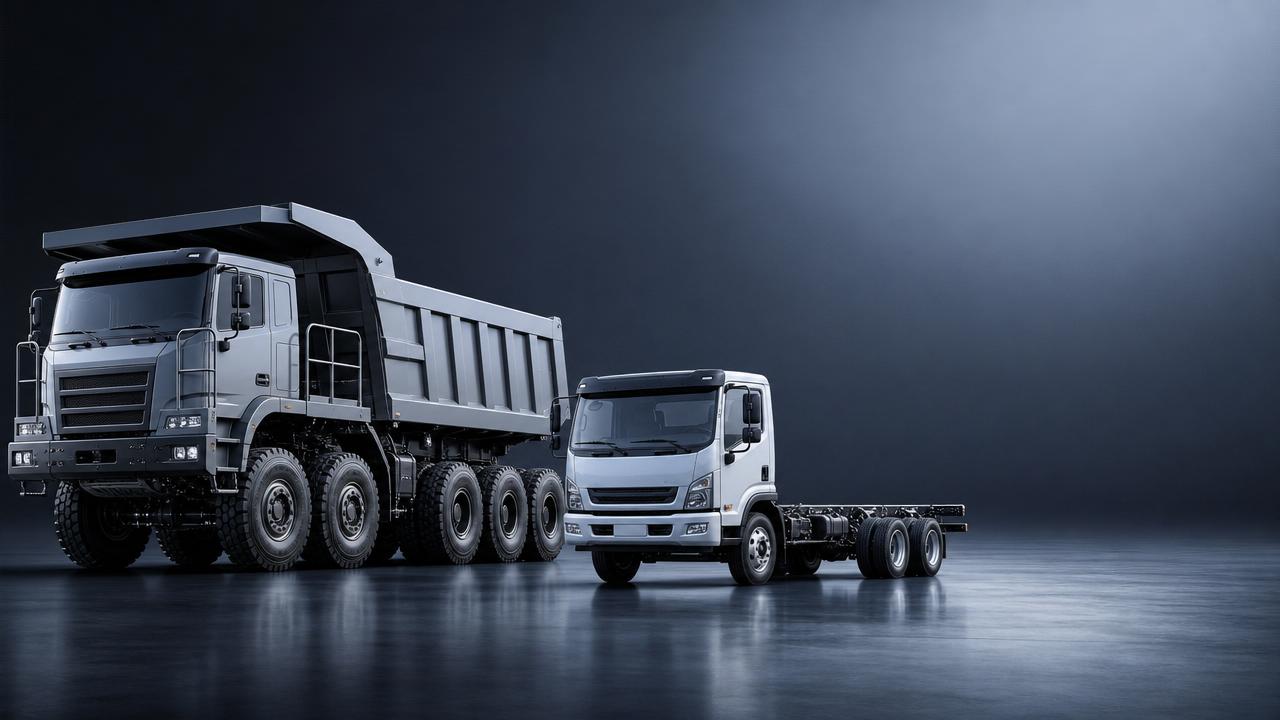
For business decision-makers evaluating commercial vehicle sourcing, the Cangshan Vehicle Configuration List offers more than technical data—it reveals how product planning aligns with market demand, operational efficiency, and fleet performance. In the engineering vehicle sector, every configuration choice reflects a commercial logic: axle capacity points to load strategy, engine matching suggests terrain intent, cabin options indicate operator expectations, and chassis layout often reveals target project scenarios. Reading the Cangshan Vehicle Configuration List through this practical lens helps turn a specification sheet into a decision tool for sourcing, deployment, lifecycle cost control, and long-term fleet planning.
Why the Cangshan Vehicle Configuration List matters in engineering vehicle sourcing
In engineering vehicle procurement, a configuration list is rarely just a catalog. The Cangshan Vehicle Configuration List can reveal whether a product line is built for mining haulage, urban construction support, regional infrastructure delivery, or mixed-duty contracting. This matters because engineering vehicle usage varies sharply by road quality, payload pattern, climate, maintenance conditions, and legal weight limits. A truck designed for one environment may underperform or create unnecessary cost in another.
Product planning becomes visible when configurations are compared as a system rather than as isolated features. A broad spread of wheelbase options, multiple horsepower bands, and differentiated suspension setups usually signals that the supplier understands distinct site conditions. By contrast, overly narrow configuration planning may indicate limited adaptation. For international buyers, this is especially important when selecting export-ready engineering vehicles from major Chinese brands such as FOTON, SHACMAN, and SINOTRUK, where platform commonality and market-specific customization often determine supply stability and after-sales efficiency.
When the Cangshan Vehicle Configuration List points to heavy-duty construction scenarios
One of the clearest signals in the Cangshan Vehicle Configuration List is how well the lineup supports heavy-duty construction work. If the list emphasizes reinforced chassis frames, high-torque engines, robust rear axles, and dump-oriented transmission matching, that usually indicates planning for earthmoving, aggregate transport, and high-frequency loading cycles. In such scenarios, durability under overload risk and repeated low-speed start-stop operation matters more than highway fuel economy alone.
Another clue is tire and suspension selection. Larger off-road capable tires, multi-leaf spring packs, and stronger approach and departure angles often suggest work on uneven temporary roads. For engineering sites where road compaction is poor and vehicle loading is inconsistent, the Cangshan Vehicle Configuration List should be read as evidence of whether the vehicle was planned for rough-ground stability rather than only nominal payload figures.
Core judgment points for heavy-duty site use
- Engine torque curve suitability for climbing and loaded starts
- Axle ratio matching for low-speed traction versus road speed
- Frame reinforcement and suspension durability under repetitive impact
- Body and tipping system compatibility for dump applications
- Service accessibility for high-utilization construction cycles
When the Cangshan Vehicle Configuration List suggests urban engineering and municipal support use
Not every engineering vehicle works on remote or harsh terrain. In urban construction, road maintenance, utility support, and municipal logistics, the Cangshan Vehicle Configuration List may reveal a different planning logic. More compact dimensions, optimized turning radius, lower step-in cabins, and smoother driveline calibration often indicate suitability for dense traffic, frequent stop-and-go operations, and shorter route cycles.
Here, the right configuration is often not the most powerful one. Instead, decision quality depends on matching legal compliance, maneuverability, fuel efficiency, and driver convenience. If the Cangshan Vehicle Configuration List includes options for different body interfaces, PTO compatibility, or lighter-duty axle arrangements, it may indicate strong adaptation for mixers, cranes, utility service bodies, and special-purpose municipal conversions.
Core judgment points for urban engineering duty
- Wheelbase and body length fit for restricted urban access
- Fuel consumption balance under frequent idling and short-distance work
- Cab ergonomics that reduce fatigue in repeated daily dispatch
- Compatibility with specialized engineering equipment or body upfits
When the Cangshan Vehicle Configuration List reveals regional transport and mixed-road deployment strategy
Many engineering fleets operate between quarries, batching plants, ports, industrial parks, and construction zones. This mixed-road pattern combines paved transport with partial rough access. In these conditions, the Cangshan Vehicle Configuration List should be reviewed for compromise configurations: enough power for payload movement, sufficient chassis strength for occasional harsh surfaces, and acceptable fuel economy for medium-distance transport.
If the list includes several drivetrain combinations but keeps parts common across models, it often indicates mature product planning. That means the platform was likely developed not just for isolated applications, but for scalable deployment across regional projects. This reduces spare parts complexity, simplifies driver familiarization, and lowers service downtime—three factors that matter as much as the purchase price in engineering vehicle operations.
How scenario differences change what the Cangshan Vehicle Configuration List should be telling you
A useful way to interpret the Cangshan Vehicle Configuration List is to compare scenario requirements directly. The same nominal payload class may need very different engineering logic depending on usage intensity, road quality, climate, and body application.
Practical adaptation advice based on the Cangshan Vehicle Configuration List
To turn the Cangshan Vehicle Configuration List into actionable sourcing guidance, it helps to evaluate each configuration against operating reality rather than brochure expectations. The following checks can improve decision accuracy:
- Map duty cycle first: compare average distance, site gradient, load frequency, and road condition before selecting horsepower or axle layout.
- Check body compatibility: in engineering vehicles, chassis-body matching often determines reliability more than headline engine output.
- Review service logic: a good configuration list should support maintenance access, parts availability, and platform standardization.
- Look for export readiness: documentation support, homologation understanding, and logistics coordination matter for cross-border delivery.
- Prioritize lifecycle economics: fuel use, tire wear, driveline stress, and uptime usually outweigh minor upfront savings.
This is where an experienced exporter adds value. Shandong Livol Truck International Trade Co., Ltd., based in Shandong, China, combines authorized access to FOTON, SHACMAN, and SINOTRUK with a large domestic 4S network, available inventory, and a professional export team. That combination supports not only model supply, but also practical matching between configuration, application, documents, customs procedures, and final delivery.
Common misreadings hidden inside the Cangshan Vehicle Configuration List
A frequent mistake is assuming that a higher specification always means a better engineering vehicle. The Cangshan Vehicle Configuration List may include powerful and highly reinforced options, but if the real task is short-range urban support or light regional distribution, those choices can increase fuel cost, tire wear, and empty-vehicle inefficiency without delivering useful output.
Another common oversight is ignoring body integration and regulatory context. In engineering applications, the truck chassis is only part of the solution. The final working value depends on axle load legality, turning limitations, superstructure matching, and the local availability of maintenance parts. A well-read Cangshan Vehicle Configuration List should therefore be treated as a product planning map, not just a parts description.
It is also easy to underestimate the role of standardization. When multiple projects run in parallel, fleets benefit from shared components, familiar controls, and repeatable service routines. If the Cangshan Vehicle Configuration List shows strong platform commonality across different duty levels, that can be a major operational advantage.
What to do next with the Cangshan Vehicle Configuration List
The best next step is to review the Cangshan Vehicle Configuration List against real operating scenarios: construction site haulage, municipal engineering support, mixed-road material delivery, or special-body conversion. Focus on how each configuration supports payload consistency, route conditions, maintenance capability, and compliance requirements. That approach will quickly show which options are commercially efficient and which are simply over-specified.
For buyers seeking dependable Chinese engineering vehicles with stable supply and full export support, working with an authorized and experienced exporter reduces both sourcing risk and communication cost. Shandong Livol Truck International Trade Co., Ltd. provides vehicle selection support, customization coordination, documentation, customs clearance, logistics, and after-sales service across international markets. If you are comparing the Cangshan Vehicle Configuration List with actual project needs, a structured consultation can help translate configuration data into a practical procurement plan with faster delivery and stronger long-term fleet value.
Search Starts Here