
News
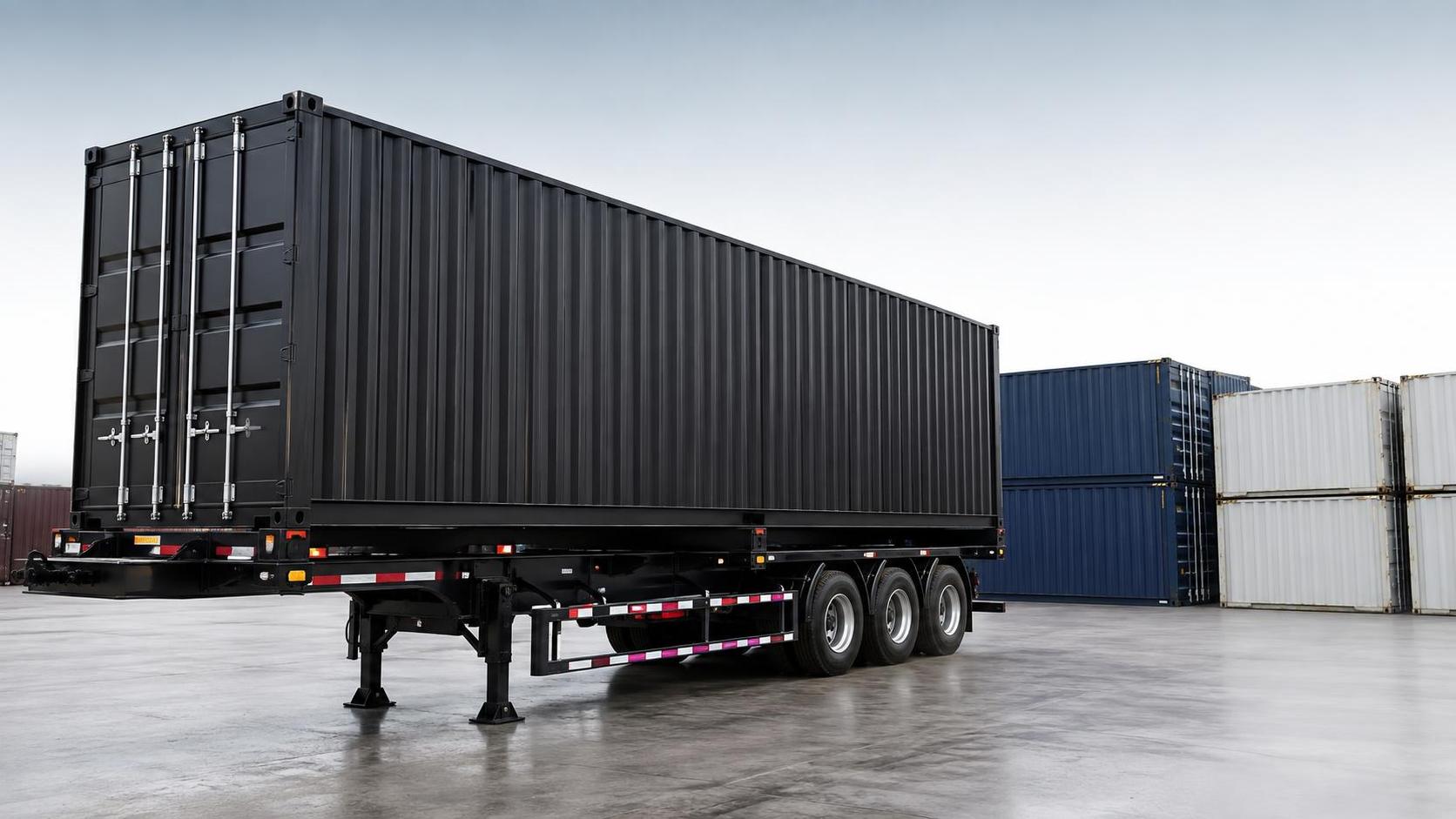
Most Skeleton (Container) Semi-Trailers are designed to carry standard intermodal containers rather than every container length available in the market. The most common compatible sizes are 20-foot and 40-foot containers. Many configurations also accommodate 40-foot high-cube containers, while 45-foot containers require a chassis with the correct length, locking points, and legal road dimensions. Smaller units, twin 20-foot combinations, and non-standard domestic containers depend on the specific frame design.
The container’s nominal length is only the starting point. Safe compatibility is determined by the relationship between the container’s corner castings and the trailer’s twistlocks, the chassis length, the kingpin position, axle arrangement, payload rating, and the dimensional rules in the operating area. Two trailers may both be advertised as “40-foot container chassis,” yet one may be intended for a single 40-foot box while another is built for a 20-foot container, a 40-foot container, or both.
Common Container Sizes and Their Compatibility
International containers are generally built around standardized corner castings and lifting points. A skeleton trailer uses these reinforced corner areas to secure the container through twistlocks or similar locking devices. The body length, width, and height of the container must therefore match the available locking positions and the clearance around the chassis.
The dimensions in the table are nominal references. Actual corner-to-corner measurements, container type, and manufacturer tolerances should be confirmed from the container’s data plate or shipping documentation. The trailer should be selected using the position of the corner castings, not simply the outside wall length.
Why 20-Foot and 40-Foot Containers Are the Normal Choices
A 20-foot container is supported at four corner castings near the ends of its lower frame. A suitable chassis places its locking devices under those points and keeps the load centered over the trailer structure. Some 20-foot containers have a different underside arrangement around the center area, so a chassis designed for a single 20-foot container may include a center support or additional locking position. This feature is especially relevant when the container is heavily loaded.
A 40-foot container uses the longer standard spacing between its corner castings. On a multi-purpose chassis, the forward and rear locking devices are moved, folded, or extended to meet this spacing. The mechanism must lock positively in the selected position; a sliding rail that is not fully engaged can create movement, impact loads, and abnormal stress in the frame.
For transport planning, a 40-foot high-cube container usually fits the same length configuration as a standard 40-foot container. Its additional height does not automatically require a longer chassis. It does, however, increase the overall height of the loaded vehicle. This can affect clearance at gates, warehouse doors, bridges, loading areas, and overhead utility equipment. The height of the tractor, suspension condition, tire size, and container condition all contribute to the final road height.
When a 45-Foot Container Fits
A 45-foot container is longer than the common 40-foot format and should not be assumed compatible because its width and corner-lock design resemble other ISO equipment. The chassis needs an appropriate extension or a dedicated 45-foot arrangement. That arrangement must support the container without leaving an uncontrolled section of the frame beyond the locking area.
Some 45-foot containers include design features intended to fit within road-length limits, such as a reduced-width end structure or a specific gooseneck arrangement. Those details affect whether the container can be carried on a particular chassis and whether the combination remains legal on a given route. The relevant measurement is the complete tractor, chassis, and container combination, including front clearance and rear projection.
Before dispatching a 45-foot unit, compare the container’s corner-casting layout with the chassis drawing. Confirm that the extension is mechanically locked, that the rear locking devices are rated for the intended load, and that the container does not interfere with mudguards, rear underride protection, lighting, or coupling components.
Can a Skeleton Trailer Carry Two 20-Foot Containers?
A trailer that carries two 20-foot containers is not necessarily the same as a trailer carrying one 40-foot container. The two 20-foot boxes may be placed end to end, but their combined load distribution, center gap, locking arrangement, and permitted overall length must all be considered. A tandem-20 configuration normally needs locking points for both containers and a frame designed to transmit forces through the positions between them.
The weight distribution can change significantly when one container is heavy and the other is lightly loaded. If the chassis is used with only one 20-foot container, the selected locking position should place the load where the axle group and kingpin receive an acceptable share of the total weight. A trailer approved for two 20-foot containers may still require a specific position for a single box.
Never substitute a 40-foot container for two 20-foot units without checking the chassis instructions. The outer length may appear similar, but the locking points beneath the container are different. Likewise, adding an unsupported adapter or using a lock that was not supplied for the chassis can alter both restraint performance and load height.
Container Length Is Only One Part of Fit
Several specifications are often read separately even though they determine compatibility together.
- Corner-casting spacing: The distance between the container’s lower corner castings must match the trailer’s twistlock positions. A close-looking overall length does not compensate for incorrect spacing.
- Chassis adjustment range: Sliding or extendable sections need enough travel for the intended container sizes. The usable range is limited by the lock positions, not merely by the visible length of the rails.
- Frame and twistlock rating: A chassis may physically accept a container while still being unsuitable for its gross weight. Structural rating, twistlock capacity, axle rating, suspension rating, and kingpin rating must be considered as one load system.
- Container tare and cargo weight: The legal and technical load is the combined weight of the container and its contents. A high-cube container is not automatically heavier when empty, but its greater internal volume can encourage a payload that exceeds the road or chassis limit.
- Kingpin and axle position: The same container may be within the trailer’s payload rating but cause an axle overload if the cargo center of gravity is too far forward or rearward.
- Clearance: The container must clear the tractor, fifth wheel, chassis crossmembers, tires, mudguards, and rear equipment throughout turning, braking, and suspension movement.
A container’s internal cubic capacity also does not indicate how much cargo may be legally loaded. Dense materials can reach the permitted gross weight before the available space is filled. Light, bulky cargo may occupy the container while remaining below the weight limit. Cargo placement inside the box therefore affects axle loads even when the container size and chassis position are correct.
Fixed, Sliding, and Extendable Chassis Designs
A fixed 20-foot chassis is generally straightforward: its locking points are positioned for one container length, with limited flexibility for other equipment. A fixed 40-foot chassis is similarly intended for a particular length and may not provide the correct support for a 20-foot box.
Sliding and extendable skeleton trailers are used where more than one container format is required. Their advantage is operational flexibility, but that flexibility creates more points that require inspection. Extension beams, locking pins, twistlock handles, wear plates, and stop positions should be clean and free from deformation. The extension should be adjusted on level ground when possible, then secured according to the chassis manufacturer’s operating procedure.
Some designs use a gooseneck tunnel or raised front section to accommodate the underside of particular containers. A container can have the correct nominal length and still fail to sit properly if its underside fittings conflict with that structure. This is one reason a dimensional drawing or a physical fit check is more reliable than a sales description alone.
How to Confirm Compatibility Before Delivery
Start with the exact container type: standard dry van, high cube, refrigerated unit, tank container, open-top container, or another specialized format. Their external dimensions, underside equipment, center of gravity, and gross weight may differ. Record the nominal length, gross mass, tare mass, and the locations of the lower corner castings.
Then obtain the chassis specification, including its permitted container positions, maximum gross combination weight, axle capacities, kingpin rating, tare weight, and extension limits. A chassis drawing should show the distance between twistlocks and any restrictions for single 20-foot, twin 20-foot, 40-foot, or 45-foot operation.
Finally, calculate the complete loaded combination. Include tractor weight, chassis tare, container tare, cargo weight, fuel, and any equipment carried on the vehicle. Review axle distribution rather than checking gross weight alone. Confirm the loaded width, height, length, and rear overhang against the route requirements. Port terminals, inland depots, and public roads may apply different operational restrictions, so a configuration accepted inside a yard is not automatically suitable for road transport.
Common Compatibility Errors
One frequent error is treating “40-foot compatible” as proof that every 40-foot unit will fit. A high-cube container may use the same basic length position, while a specialized container can have different underside details or additional equipment that needs clearance.
Another error is measuring the container’s side walls instead of the locking geometry. Corner castings are the load-bearing reference points. Paint buildup, damaged castings, bent twistlock heads, or debris in the lock pockets can prevent full engagement even when the dimensions appear correct.
It is also easy to focus on the container and overlook the tractor. A taller container on a high fifth-wheel tractor may exceed the route’s height limit. A long container on a chassis with the wrong kingpin setting may create excessive rear projection or poor axle balance. Tire size and suspension height can change the final dimensions as well.
The most reliable selection therefore matches four items at the same time: the container’s locking layout, the chassis adjustment and ratings, the loaded weight distribution, and the legal dimensions of the complete vehicle. For most general intermodal work, 20-foot and 40-foot containers are the baseline formats. A 40-foot high cube commonly uses the 40-foot locking position, while 45-foot, twin-20, short, and specialized containers require confirmation from the actual chassis design and operating route.
Search Starts Here