
News
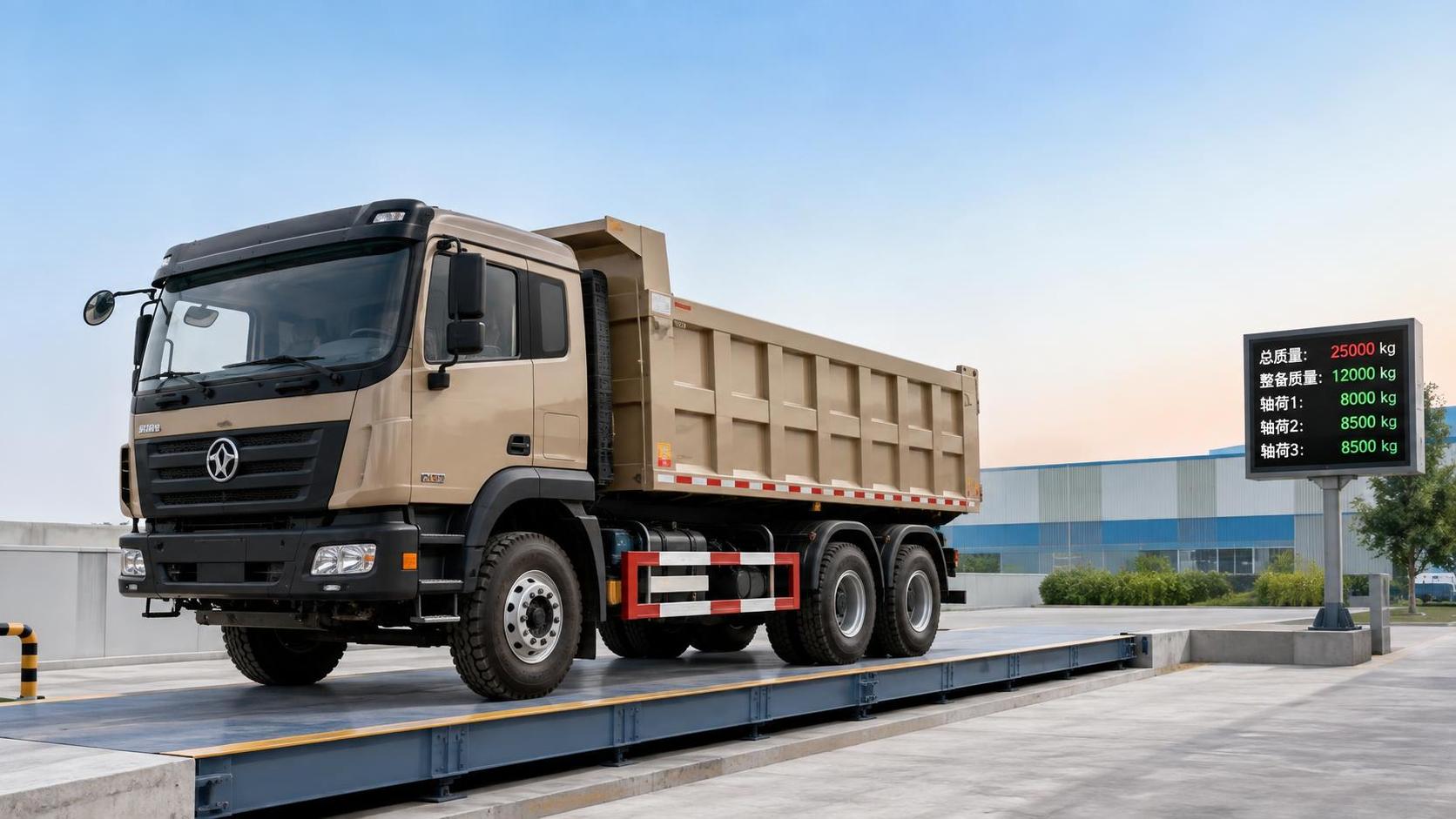
How to Verify Payload Data in the Cangshan Vehicle Configuration List
For procurement teams sourcing commercial and engineering vehicles, payload is rarely just one number on a quotation. It affects route planning, chassis selection, body design, legal operating limits, tyre choice, and ultimately the economics of every trip. A truck that appears suitable on paper can become a poor fit if its listed payload is based on an incomplete kerb-weight calculation, a different body specification, or a gross vehicle weight rating that does not match the destination market’s registration limits.
The Cangshan Vehicle Configuration List can be a useful starting point for reviewing a vehicle’s build specification, but it should not be treated as a stand-alone confirmation of legal carrying capacity. Buyers need to read it alongside the chassis data, body information, axle ratings, tyre specifications, and local transport rules. This is especially true for engineering vehicles, where a tipper body, mixer drum, crane, water tank, or specialized equipment can materially change the usable payload.
The practical question is not simply “How much can this truck carry?” A better question is: “What can this exact vehicle, in its final delivered configuration, legally and safely carry on our intended roads?”
Start by separating the three weights that are often confused
A configuration list may show several weight-related fields, and misunderstandings often begin when those fields are treated as interchangeable. Procurement staff should identify the meaning and source of each figure before comparing vehicles.
The basic relationship is straightforward: payload equals permitted gross vehicle weight minus actual unladen weight. In real procurement work, however, neither part of that equation should be accepted without context. A six-wheel chassis may be listed with an attractive theoretical payload, then lose a meaningful portion of it after installation of a heavy steel tipper body, larger fuel tank, hydraulic system, toolbox, spare wheel carrier, protective guards, or job-specific equipment.
This is why “chassis payload” and “completed truck payload” should never be compared as if they were the same figure. If the Cangshan Vehicle Configuration List identifies a chassis model but does not clearly state the finished body arrangement, the payload figure remains provisional.
Read the configuration list as a build record, not a sales summary
A good verification process begins by confirming that all documents refer to the same vehicle configuration. The model name alone is not enough. Commercial truck platforms can be offered with different wheelbases, cab types, axle arrangements, engines, transmissions, suspension packages, frame thicknesses, fuel capacities, and body interfaces. Small changes can affect both kerb weight and axle loading.
When reviewing the Cangshan Vehicle Configuration List, match the following details against the quotation, technical drawing, proforma invoice, and any bodybuilder specification:
- Vehicle model, drive configuration, and axle layout, such as 4x2, 6x4, 8x4, or all-wheel-drive variants;
- Wheelbase and rear overhang, which influence body length and axle distribution;
- Cab version, including sleeper arrangement and roof height where applicable;
- Engine and transmission selection, since optional powertrains may have different weights;
- Front and rear axle ratings;
- Tyre size, ply rating or load index, and wheel specification;
- Fuel tank capacity, battery configuration, air tanks, and auxiliary equipment;
- Body type, body material, floor thickness, sidewall design, hydraulic system, and installed accessories.
The body specification deserves particular attention on engineering applications. A light-duty bulk-material body and a reinforced rock tipper body may share similar external dimensions but differ substantially in their own weight. Likewise, a truck intended for sand, aggregate, demolition material, or wet soil may need different body strength and wear protection. Choosing the lightest possible body merely to maximize rated payload can be a false economy if the structure is not appropriate for the material being loaded.
Check axle loads before accepting the overall payload figure
A vehicle can remain below its GVWR and still be improperly loaded if too much weight is concentrated on one axle group. This is common with tippers, concrete mixers, truck-mounted cranes, and vehicles carrying dense materials. Aggregate, scrap, ore, wet sand, and construction debris do not always distribute evenly during loading or tipping operations.
The configuration list should therefore be reviewed for individual front and rear axle capacities, not only total vehicle mass. Those axle ratings must be compatible with the installed tyres, rims, suspension, and intended loading pattern. A stated axle capacity is not a licence to ignore the limiting component. If tyres fitted to the vehicle have a lower combined load capability than the axle rating, the tyre specification becomes the practical constraint.
Ask for an axle-load distribution drawing or calculation when the vehicle carries a specialized body or fixed equipment. For example, a rear-mounted crane, a large water tank, or a mixer drum may shift a high proportion of static weight to the rear axles. The effect changes again once the body is loaded. A calculation cannot replace a weighbridge check after completion, but it can reveal an unsuitable layout before production or shipment.
Do not overlook steering-axle loading
Buyers often focus on rear axle overload because that is where most cargo sits. Yet an underloaded front axle can also create handling, braking, and steering concerns, particularly with a heavy rear body and an empty or partly loaded truck. The correct configuration needs a sensible weight balance throughout the operating cycle: empty, partly loaded, fully loaded, and during body lifting where relevant.
Clarify which version of kerb weight is being used
Kerb-weight terminology varies. One document may describe a chassis with standard equipment; another may describe a completed vehicle with basic fuel and tools. Some markets use a defined reference condition for fluids and driver weight, while others apply a different registration convention. The label alone is not sufficient.
A useful request is to ask the supplier to state the estimated or measured weight with inclusions clearly listed. Does it include the cargo body? Is the fuel tank full, partially filled, or empty? Are spare tyres included? What about a PTO, hydraulic oil tank, tarpaulin system, toolbox, fire extinguisher, side guards, snow chains, or export-required accessories? These are ordinary items, but collectively they can make a difference to the payload available for revenue-generating cargo.
For a vehicle still under customization, it is reasonable to work from an estimated completed weight, provided the assumption is documented. Before final acceptance, the stronger approach is to obtain a final configuration confirmation and, where the commercial arrangement allows, a weighbridge record for the finished vehicle. If a final weighing document is unavailable before shipment, the purchase documents should at least identify which party is responsible if the delivered configuration materially differs from the agreed specification.
Compare rated payload with the local operating limit
Manufacturer ratings are only one part of the decision. Road regulations, bridge limits, axle restrictions, seasonal rules, route permits, and local registration categories may reduce the load that can be legally carried. These limits can differ from one country to another and sometimes from one route to another. Import regulations may also require specific documents or technical declarations for vehicle registration.
For this reason, buyers should establish a “usable payload” figure for the intended operation rather than relying on the highest number shown in a configuration sheet. The usable figure should account for the lower of the applicable vehicle rating, axle-related limits, tyre capacity, body suitability, and local legal limits. If the truck will pull a trailer, the calculation must also consider gross combination weight, coupling capacity, trailer axle ratings, and local combination rules.
This check is not administrative detail. A vehicle designed around the wrong legal payload may require fewer tonnes per trip than expected, disrupting fleet productivity calculations from the first month of operation.
Look for discrepancies that deserve a written answer
Most discrepancies are not necessarily signs of poor quality or bad intent. They often result from a configuration revision, a translated document, a generic template, or the use of chassis information before body installation. Still, they should be resolved before the order is released.
Be cautious when the payload is unusually round while the vehicle carries many options, when the listed vehicle weight does not appear to include the body, or when the total axle ratings are inconsistent with the stated gross vehicle weight. Also flag any mismatch between the configuration list and the visible details on body drawings, such as different tyre sizes, an added spare wheel, changed tank capacity, or a revised hydraulic arrangement.
A written clarification should identify the exact model and configuration reference, not merely state that the vehicle “meets requirements.” The supplier should confirm the final GVWR, the estimated or actual completed kerb weight, the payload basis, individual axle ratings, and the list of options included in that calculation. This creates a much more useful record than a verbal assurance.
Build verification into the purchasing workflow
The most reliable process is to review payload early, then revisit it after final configuration changes. During initial selection, use the Cangshan Vehicle Configuration List to screen whether the platform, axle layout, and basic weight ratings fit the job. Before production, compare the selected chassis with the bodybuilder’s drawings and optional-equipment list. Before shipment, confirm that the documentation reflects the completed vehicle as supplied.
For international orders, document coordination matters as much as engineering review. An exporter with access to authorized vehicle channels can help ensure that model information, configuration records, commercial documents, and shipping arrangements are aligned. Shandong Livol Truck International Trade Co., Ltd. works with authorized FOTON, SHACMAN, and SINOTRUK dealer networks and supports vehicle selection, customization, export documentation, customs clearance, and logistics. That kind of coordination is particularly useful when a buyer is comparing several chassis and body alternatives rather than purchasing an off-the-shelf unit.
The final decision should rest on the actual operating requirement: material density, loading method, road condition, route restrictions, body durability, and expected duty cycle. A higher advertised payload is worthwhile only when the finished truck can carry it legally, distribute it safely across its axles, and withstand the work it will do. Verifying those points in the configuration list before ordering is far easier than correcting an unsuitable specification after the vehicle reaches site.
Search Starts Here