
News
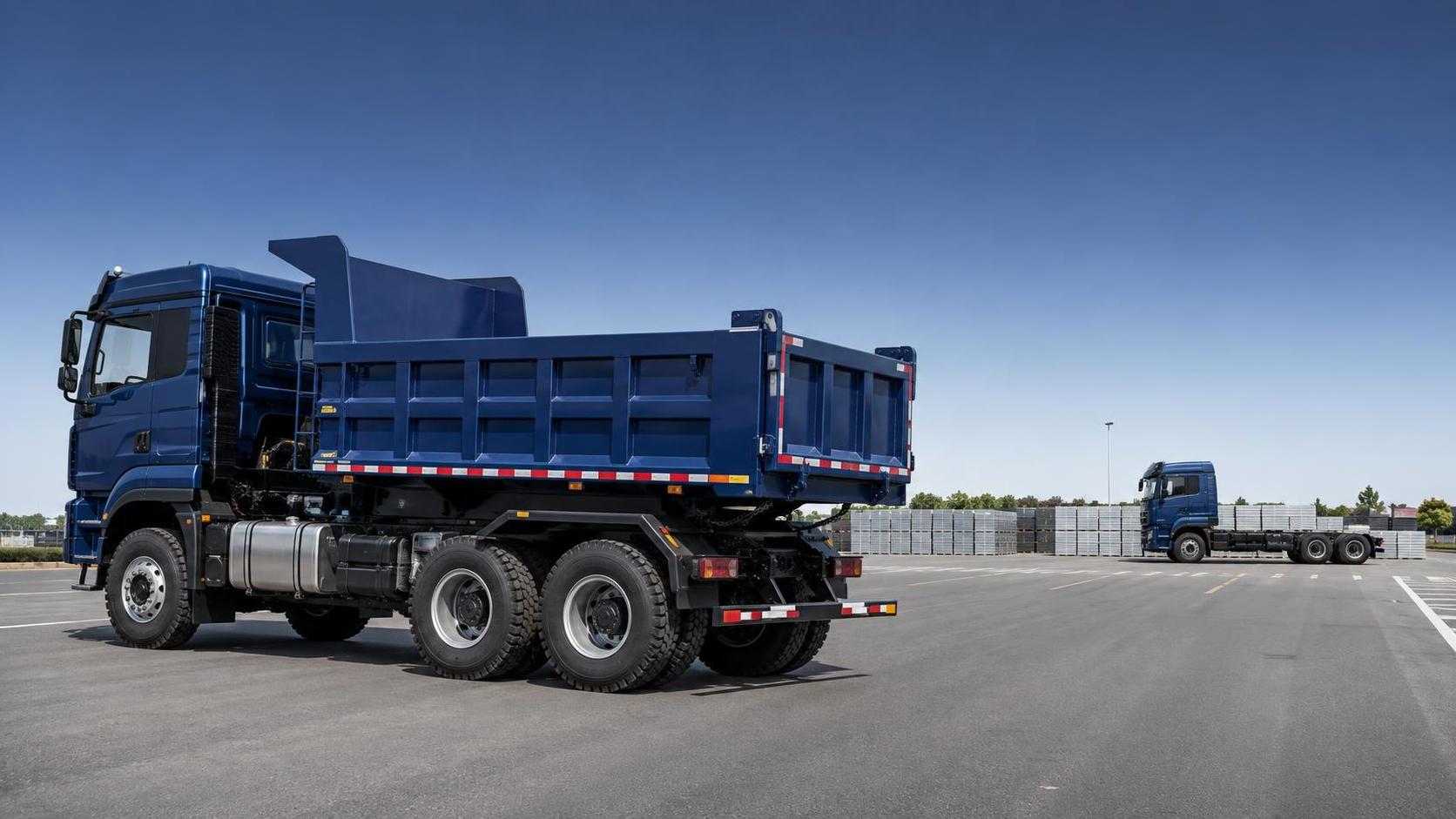
A configuration list is most useful when it is treated as a decision tool rather than a catalogue. For fleet planning, the Cangshan Vehicle Configuration List should be read against the work the vehicle must perform: payload, road conditions, operating hours, body requirements, fuel strategy, driver needs, and local registration rules. The right choice is rarely the version with the highest rated specification. It is the version whose chassis, axle ratings, powertrain, cab, and equipment match the actual duty cycle without adding avoidable purchase cost or operating complexity.
This becomes important when a fleet plan looks sound on paper but breaks down in operation. A truck selected mainly for its headline engine output may carry too little under legal axle limits. A low-cost chassis may require unsuitable modifications for the intended body. A vehicle with a long-range fuel package may sacrifice payload or leave less room for a body-mounted system. Reading the configuration list in the right sequence prevents these conflicts before purchase orders are issued.
Start with the job, not the vehicle code
Configuration sheets often contain multiple model codes, wheelbase options, engine ratings, tire specifications, axle ratios, cab layouts, and optional equipment lines. Beginning with those codes can lead planners to compare trucks that are technically different but operationally equivalent, or trucks that look similar but are unsuitable for the same route.
Define each fleet role first. A useful planning description is specific enough to rule out unsuitable configurations:
- What will the vehicle transport: bulk material, equipment, containers, general cargo, liquids, or a specialized body?
- What is the normal payload, and what is the highest payload that may occur in regular service?
- Will the vehicle mainly run on paved highways, construction access roads, urban delivery routes, mixed roads, or unpaved sites?
- How many stops, loading cycles, and operating hours are expected in a working day?
- Will the body be installed locally, supplied with the vehicle, or transferred from an existing fleet unit?
- Are there bridge limits, city access restrictions, gross vehicle weight limits, or axle-load rules that affect the route?
A fleet may need several answers rather than one “standard truck.” For example, a tractor assigned to long-distance freight should be evaluated differently from a tipper serving short-haul earthmoving work, even if both appear in the same configuration family. Separate the roles before comparing models. This avoids selecting a single compromise configuration that is only partly suitable for every task.
Read the list in the order that exposes constraints
When reviewing the Cangshan Vehicle Configuration List, start with the items that cannot be corrected easily after delivery. Cosmetic options, entertainment systems, and trim details can be reviewed later. Chassis architecture, rated masses, wheelbase, driveline layout, and cab type should drive the first selection round.
1. Identify the chassis format and drive layout
The axle arrangement determines the vehicle’s basic carrying and traction capability. A 4x2, 6x2, 6x4, 8x4, or all-wheel-drive layout is not simply a size progression. It changes the number of driven axles, axle load distribution, maneuverability, maintenance requirements, and suitability for loose or steep terrain.
For road-focused freight, a configuration with fewer driven axles may offer lower weight and simpler running gear where traction demand is limited. Construction work, difficult site access, frequent starts under load, or loose surfaces may justify additional driven axles. Do not assume that a higher axle count automatically permits a higher practical payload. Legal gross weight, individual axle limits, tire ratings, body weight, and loading position still govern what can be carried.
2. Check rated weights before looking at engine power
Configuration lists may show gross vehicle weight, curb weight, front and rear axle ratings, and combinations of chassis capacity and recommended application. These figures must be interpreted together. A body, hydraulic equipment, fuel, spare wheel, tools, driver, passengers, and accessories all reduce the remaining payload.
Ask for the expected completed weight, not only the chassis curb weight. This is particularly important for tippers, mixers, cranes, tankers, recovery bodies, insulated bodies, and any installation with pumps, power take-off equipment, or reinforced subframes. A chassis that appears adequate in a catalogue can become overloaded after the working body is fitted.
Load distribution matters as much as total mass. A rear-heavy body may overload rear axles before the total gross vehicle weight is reached. A long item carried forward can increase front axle loading and affect steering behavior. The configuration list provides the starting limits; body design and loading practice determine whether those limits remain workable.
3. Match wheelbase to body length and turning space
Wheelbase is often treated as a simple measure of vehicle length, but it affects several planning decisions. It influences usable body length, frame space, turning radius, axle loading, ride behavior, and the location of auxiliary equipment. A longer wheelbase can support a longer body or more cargo volume, yet it can make site access and urban maneuvering more difficult. A short wheelbase can be easier to position at restricted sites but may limit body layout or create less favorable load distribution.
Before shortlisting a wheelbase, prepare a basic body layout showing load area, mounting points, tank locations, crane position if applicable, and rear overhang. Confirm that there is sufficient frame space for batteries, air tanks, exhaust treatment components, spare wheel carriers, and required body equipment. These details are where apparently suitable configurations are often rejected late in the procurement process.
Choose the powertrain from route behavior
Engine output alone does not describe operating suitability. The correct engine and transmission combination depends on gross weight, gradient, road speed, start-stop frequency, climate, altitude, and the expected balance between fuel economy and trip time.
Axle ratio deserves careful attention because it affects launch performance, gradeability, cruising engine speed, and fuel use. A shorter ratio may help a heavily loaded vehicle start and climb more confidently, while a taller ratio may better support higher-speed highway work. The appropriate choice cannot be separated from tire rolling radius, transmission ratios, and the typical gross combination weight.
Transmission selection should also reflect the work pattern. Manual, automated manual, and automatic transmissions can each be appropriate depending on route complexity, driver familiarity, load changes, and traffic conditions. The configuration list may show transmission options without explaining their practical limits. Confirm the intended use with the supplier when the vehicle will face severe grades, repeated low-speed maneuvering, or specialized power take-off operation.
Do not treat the cab as a secondary purchase decision
Cab selection affects driver retention, fatigue, safety, operational flexibility, and vehicle cost. A day cab may be appropriate for local work with fixed return schedules. A sleeper cab may be necessary where duty periods include overnight travel or long waiting times. The larger cab is not always the better fleet choice: it can add weight, increase purchase cost, and reduce available frame space in some applications.
Look beyond the number of berths. Check cab access height, visibility around the vehicle, mirror arrangement, storage, climate control suitability, seat specification, and the placement of controls used during loading or body operation. In municipal, construction, or multi-stop work, repeated entry and exit can make cab access more relevant than sleeper capacity. In long-distance operations, storage and rest arrangements can matter more than exterior dimensions.
Also consider who will operate the fleet. A technically capable vehicle can still create avoidable downtime if drivers are unfamiliar with its transmission behavior, braking systems, differential locks, or body controls. Planning for handover, operator orientation, and maintenance documentation should begin while configurations are still being compared.
Separate standard equipment from confirmed deliverable content
A common procurement mistake is assuming that every item shown in a list is included in every vehicle. Configuration documents may distinguish between standard equipment, optional equipment, packages, application-dependent equipment, and market-specific versions. Some items may also depend on chassis choice, wheelbase, axle layout, or local requirements.
Create a controlled specification sheet for each shortlisted vehicle. It should state not only the model designation but also the exact selected components and unresolved points. At minimum, record:
- Chassis model, drive layout, wheelbase, cab version, and tire specification;
- Engine model, rated output, torque information where available, transmission, and axle ratio;
- Front and rear axle ratings, suspension type, braking arrangement, and fuel tank capacity;
- Body interface requirements, including power take-off, hydraulic provisions, subframe conditions, and electrical connections;
- Safety and compliance equipment required for the destination market or operating route;
- Items that are standard, selected optional equipment, excluded equipment, or still subject to confirmation.
This document should be shared with the body builder, operations team, maintenance lead, and purchasing team before the final order. It is easier to resolve a conflict between a tank position and a body bracket at this stage than after a vehicle has been built or shipped.
Build a comparison that reflects total operating fit
Fleet planners often compare purchase price, payload, and engine output because those figures are easy to see. A more useful comparison gives each vehicle a role-specific score based on the factors that affect the fleet’s actual workload. The scoring does not need to be complex, but it should reveal trade-offs clearly.
For a highway tractor, payload capability, fuel range, driveline suitability, service access, and driver accommodation may receive more weight. For a construction chassis, traction, frame arrangement, axle capacity, suspension, body integration, and ground clearance may be more decisive. For an urban delivery vehicle, turning radius, cab access, body dimensions, and route restrictions may outweigh maximum power.
Keep “required” and “preferred” features separate. A required feature is a condition without which the vehicle cannot perform the job legally, safely, or practically. A preferred feature improves comfort, appearance, or convenience but should not override essential compatibility. This distinction prevents optional equipment from obscuring a basic mismatch in payload, axle rating, or body fit.
Questions that should be resolved before issuing an order
A configuration list can narrow the options, but final fleet planning requires confirmation of the exact production specification. Before committing, make sure the following questions have a clear written answer:
- Is the listed configuration available for the intended destination and planned delivery period?
- Does the completed vehicle, including body and equipment, remain within relevant gross weight and axle-load limits?
- Has the body builder reviewed the chassis drawing, mounting requirements, and location of installed components?
- Are the tire size, load rating, and tread pattern appropriate for the route and surface conditions?
- Does the fuel, emissions, electrical, and safety equipment package suit the operating environment and local rules?
- Which maintenance parts are specific to the chosen powertrain, axle, cab, or option package?
- Are any listed features conditional options that require separate confirmation on the purchase specification?
The final order should refer to a complete approved specification rather than relying only on a general configuration list or a model name. This protects the fleet plan from ambiguity, especially where several similar variants share a commercial designation.
Practical questions during configuration review
Can a higher-rated chassis always carry more saleable payload?
No. The finished body weight, fuel capacity, auxiliary equipment, axle-load distribution, legal limits, and route restrictions may reduce usable payload. A higher-rated chassis can be valuable for durability or body support, but it does not automatically improve the amount of cargo that can be carried in service.
Should one configuration be used across the entire fleet?
Standardization can simplify parts planning, driver training, and maintenance, but it should not force one vehicle into incompatible jobs. Standardize where duty cycles are genuinely similar. Keep separate configurations where route access, body type, load profile, or terrain creates materially different requirements.
What is the best way to use the Cangshan Vehicle Configuration List with a local body builder?
Provide the selected chassis details early, including wheelbase, frame arrangement, axle ratings, power take-off needs, electrical interface requirements, and the position of tanks and exhaust components. Ask the body builder to confirm mounting, load distribution, clearance, and service access before the chassis specification is finalized.
Search Starts Here