
News
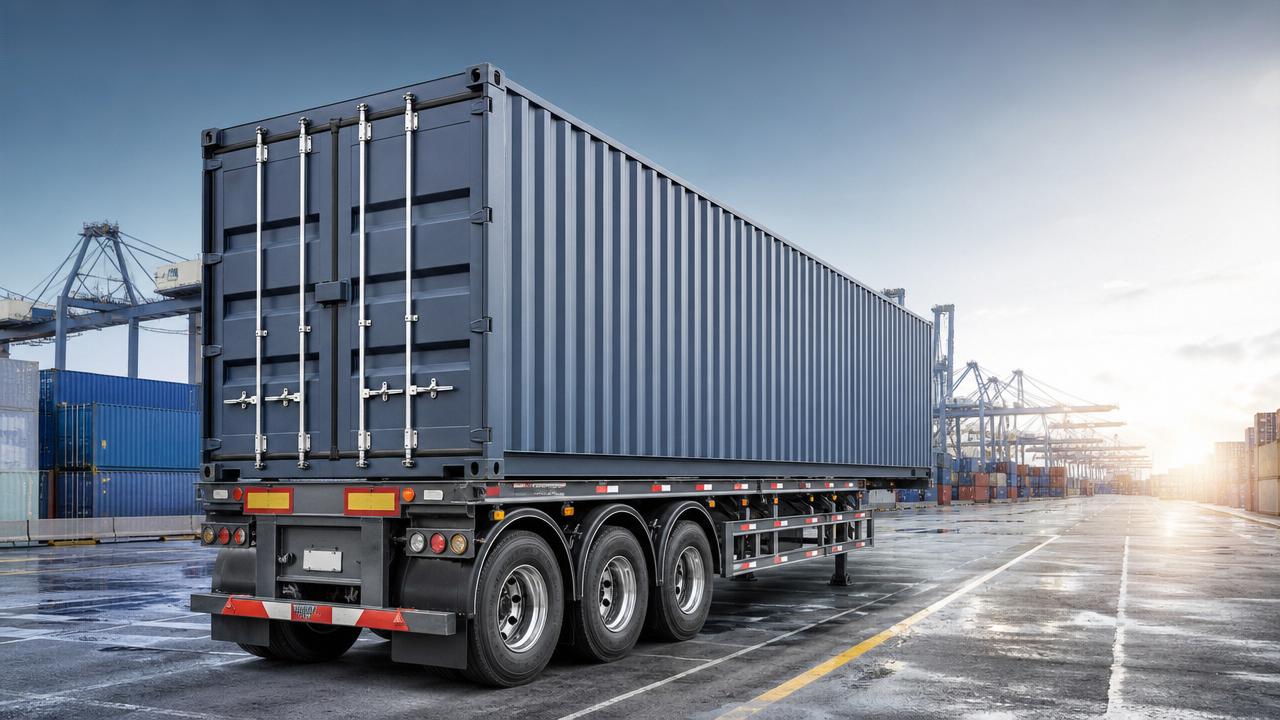
Before signing off on a Skeleton (Container) Semi-Trailer purchase, financial approvers need a clear view of the real cost drivers behind the quotation. Beyond the initial price, factors such as material grade, axle configuration, payload capacity, compliance standards, customization and long-term operating efficiency can significantly affect total investment. Understanding these points helps decision-makers reduce budget risk and approve the right trailer with greater confidence.
Understanding the Role of a Skeleton (Container) Semi-Trailer
A Skeleton (Container) Semi-Trailer is a specialized transport trailer designed to carry standard shipping containers efficiently across ports, inland depots, logistics parks and industrial corridors. Unlike box trailers or flatbeds, its frame is built around container locking points and structural support zones, which reduces dead weight while maintaining the strength required for containerized cargo. For companies involved in port transport, intermodal logistics, engineering supply chains and regional freight distribution, this trailer type is an essential productivity asset rather than a simple equipment purchase.
For financial approvers, the relevance goes beyond transport function. A Skeleton (Container) Semi-Trailer often sits at the center of cost control because it influences capital outlay, maintenance expense, route flexibility, compliance exposure and long-term resale value. A low quotation may look attractive at approval stage, but if the trailer is built with weaker steel, non-optimized axle selection or unsuitable container compatibility, the business can face unplanned operating costs soon after delivery.
Why Cost Evaluation Has Become More Important in the Engineering Vehicle Sector
In the engineering vehicle and commercial transport sector, buyers are under pressure from several directions at once: freight margins are tighter, compliance requirements are stricter, cross-border logistics schedules are less forgiving and fleet utilization targets are higher than in the past. Under these conditions, trailer selection affects not only procurement budgets but also fleet reliability and cargo movement efficiency.
This is why the cost review of a Skeleton (Container) Semi-Trailer should be treated as a total business decision. Financial approval should account for how the trailer will be used in real service conditions, whether in port shuttle operations, long-distance road transport, heavy container movement for industrial materials or mixed-route regional delivery. In each case, the “right cost” is not always the lowest purchase price. It is the price that matches the duty cycle, legal framework and earning model of the fleet.
Main Cost Factors Behind the Quotation
1. Steel grade and frame structure
The frame is the core cost element of a Skeleton (Container) Semi-Trailer. High-tensile steel usually costs more upfront, but it may provide better load performance, structural stability and lower tare weight. For financial reviewers, the question is whether the material specification supports the actual loading pattern. A trailer handling frequent 40-foot container movements on uneven roads requires different structural confidence than one used only on short paved port routes.
Lower-cost frames can reduce budget pressure initially, yet they may lead to fatigue cracks, deformation or welding issues under heavy use. This is especially important in export markets where trailers often face high temperatures, long distances or poor road surfaces. A properly engineered frame can improve service life and lower the cost per operating year.
2. Axle configuration and suspension system
Axle brand, axle capacity and suspension design have a direct impact on price and a long-term impact on maintenance. Two-axle, three-axle and multi-configuration options are priced differently because they serve different payload and compliance needs. Mechanical suspension often has a lower acquisition cost and is easier to maintain, while air suspension can support better ride performance, cargo protection and some route-specific legal requirements.
From an approval perspective, the key is matching axle specification to payload reality. Over-specification increases capital cost without always creating practical return. Under-specification can result in tire wear, axle stress, downtime and compliance risks. A quotation should therefore be examined in relation to average gross load, road conditions and local axle load regulation.
3. Container compatibility and twist-lock layout
Not every Skeleton (Container) Semi-Trailer is configured for the same mix of 20-foot, 40-foot or multiple container operating modes. Some customers require fixed-length solutions, while others need extendable or multifunction container chassis. The twist-lock arrangement, frame spacing and support structure all influence manufacturing complexity and cost.
Financial approvers should ask whether the trailer configuration aligns with the company’s container mix. A lower-priced trailer with limited compatibility may restrict operational flexibility and reduce fleet utilization. By contrast, a slightly higher investment in a more adaptable model may improve dispatch efficiency and reduce the need for separate units.
4. Braking, tires and safety components
Cost differences also come from braking systems, tire quality, landing gear, king pin specification, lighting systems and reflective safety details. These may appear secondary in a quotation review, but they strongly affect operating reliability and regulatory acceptance. High-quality tires and braking components usually reduce roadside failures and support safer long-haul use.
If the trailer will operate in demanding engineering and logistics environments, cutting too deeply on safety components can create hidden expenses. Brake servicing, tire replacement frequency and part failure rates all influence annual operating cost more than many first-time buyers expect.
5. Surface treatment and corrosion protection
A Skeleton (Container) Semi-Trailer used near ports, coastal zones or humid regions needs reliable anti-corrosion treatment. Shot blasting quality, primer system and topcoat finishing affect both appearance and durability. Better coating processes raise production cost, but they can reduce corrosion-related maintenance and preserve resale value.
For companies planning multi-year ownership, paint and anti-rust quality should be viewed as an asset protection factor. Rust damage is not only cosmetic; it can accelerate structural deterioration and lower buyer confidence when the trailer is sold or traded later.
Industry Overview of Cost Drivers
The table below helps financial decision-makers connect common specification areas with their likely business impact when assessing a Skeleton (Container) Semi-Trailer investment.
Where the Business Value Is Created
The value of a well-matched Skeleton (Container) Semi-Trailer is not limited to moving containers from point A to point B. It creates value by increasing loading efficiency, reducing empty-weight penalties, supporting legal road operations and improving trailer uptime. In commercial vehicle fleets, this translates into better revenue days per month and lower repair disruptions.
For financial managers, it is useful to evaluate whether the trailer supports the company’s broader business model. If the fleet serves multiple customers with different container requirements, flexibility has measurable value. If the business depends on intensive utilization with limited maintenance windows, durability is more important than the lowest acquisition figure. If the operation is export-oriented or cross-border, documentation, specification clarity and compliance readiness also become part of the cost equation.
Typical Use Cases and What They Mean for Approval
Different operating scenarios change what “cost-effective” means. The same Skeleton (Container) Semi-Trailer may be excellent for one fleet and unsuitable for another.
Practical Review Points Before Final Approval
A strong approval process should compare quotations on a specification-equal basis. Financial teams should request a detailed build sheet rather than reviewing only a headline price. This should cover steel specification, beam dimensions, axle brand and tonnage, brake system, tire model, suspension type, container lock arrangement, electrical system, landing gear and paint process.
It is also wise to test the quotation against expected lifecycle cost. Ask how often the trailer will operate, what road conditions it will face, how long the ownership period will be and whether resale value matters. A Skeleton (Container) Semi-Trailer approved for five to eight years of active use should not be judged by the same standard as a unit intended for light seasonal service.
Supplier capability matters as well. A reliable exporter with stable inventory, formal authorization and professional documentation support can reduce hidden transaction risk. Shandong Livol Truck International Trade Co., Ltd., based in Shandong, China, operates as an authorized dealer for FOTON, SHACMAN and SINOTRUK and supports customers with vehicle selection, customization, export documentation, customs clearance and logistics coordination. For overseas buyers, this kind of structured support can shorten delivery cycles and reduce administrative uncertainty around commercial vehicle procurement.
Common Approval Mistakes to Avoid
One common mistake is approving a Skeleton (Container) Semi-Trailer based only on initial purchase savings without checking whether specifications have been downgraded. Another is assuming all container chassis are functionally equal. Differences in axle setup, locking configuration, frame design and anti-corrosion treatment can create major performance gaps over time.
A third mistake is ignoring after-sales and parts support. Even a well-built trailer needs periodic service items. If replacement parts are difficult to source or documentation is incomplete, downtime costs can erase any price advantage from the original order. For financial approvers, the best discipline is to review not only the cost to buy, but the cost to keep productive.
A Balanced Path to Approval
Approving the right Skeleton (Container) Semi-Trailer means balancing budget discipline with operational reality. The most useful quotation is one that clearly matches the intended load profile, compliance needs, route environment and ownership period. When material quality, axle configuration, safety systems, container compatibility and supplier support are reviewed together, decision-makers gain a far more accurate picture of true investment value.
For finance-led approvals, the goal is not simply to reduce the invoice amount. It is to secure a trailer solution that protects cash flow, supports business continuity and delivers dependable service over time. If your team is reviewing options for a Skeleton (Container) Semi-Trailer, a detailed specification comparison with an experienced commercial vehicle export partner is the most reliable next step before final sign-off.
Search Starts Here