
News
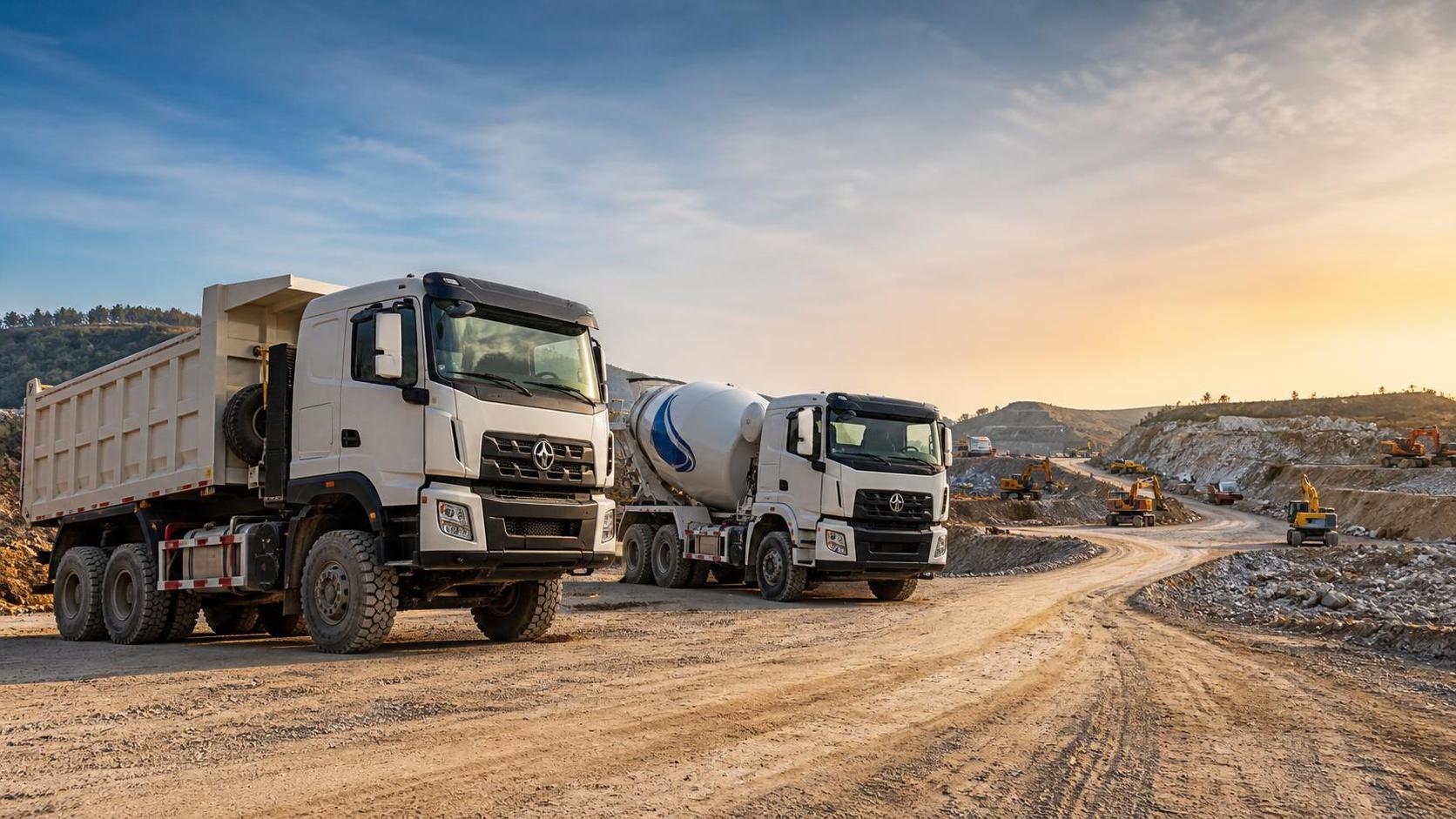
A construction project can lose time before the first machine even reaches the site. The problem often begins during fleet selection: a quotation shows a truck model name, a payload figure, and a few optional features, but the actual work involves steep access roads, loose aggregate, long waiting periods, limited fuel supply, changing weather, and different materials moving in both directions.
Many project managers encounter the same frustration. A vehicle that looks suitable on paper may be poorly matched to the route, the loading equipment, or the daily working rhythm. A dump truck may have a body volume that encourages overloading with light but bulky material. A tractor unit may have enough rated power but unsuitable axle ratios for repeated hill starts. A concrete mixer may meet nominal capacity requirements while creating maintenance difficulties because the specified components do not align with local service capability.
A Cangshan Vehicle Configuration List can make these decisions more controlled when it is treated as a working comparison document rather than a catalog to browse at the end of procurement. It gives the project team a way to connect vehicle specifications with actual site conditions, operational risks, and delivery requirements before an order is finalized.
Start with the work cycle, not the vehicle name
The first question should not be “Which truck model do we need?” It should be “What must the vehicle do during a normal operating cycle?” On a construction site, one cycle may include loading, a short paved road section, a rough temporary access road, unloading on uneven ground, queuing near a batching plant, and returning empty. Each part places different demands on the vehicle.
Before reviewing configurations, write down the operating conditions in plain language. This keeps the discussion tied to the job instead of drifting into broad claims about horsepower, body size, or brand preference.
- What material will be carried: soil, crushed stone, sand, concrete, equipment, water, fuel, or mixed construction supplies?
- Will loads be weighed consistently, or is there a risk that operators will fill by volume?
- How long is the transport route, and how much of it is unpaved, congested, steep, or seasonally affected?
- Does the truck spend more time traveling, waiting, tipping, pumping, or working from a stationary position?
- Are low overhead clearances, narrow turning areas, weak bridges, or restricted urban roads part of the route?
- Will the vehicle work as a single unit, or must it remain compatible with trailers, loading equipment, tanks, or site dispatch procedures?
This information is more useful than a vague description such as “heavy-duty site work.” Two projects can both use dump trucks but require very different configurations. A short-haul aggregate operation with repeated loading and tipping usually needs a different balance of drivetrain, suspension, body construction, and tire selection than a project moving spoil over longer public-road sections.
Read the configuration list as a matching tool
A configuration list normally contains far more detail than a project team needs for its first review. The practical task is to separate items that change site performance from items that are merely descriptive. The most important fields usually concern the chassis, engine, transmission, axle arrangement, suspension, tires, body or equipment interface, cab arrangement, and optional equipment.
Do not assume that two vehicles with a similar appearance are operationally equivalent. A similar cab and wheelbase can be paired with different engines, transmissions, axle load ratings, fuel tank arrangements, brake systems, and suspension types. Those differences can affect route suitability, maintenance planning, legal operation, and driver workload.
A Cangshan Vehicle Configuration List becomes valuable when each selected line can be linked to a requirement from the work cycle. If the team cannot explain why a particular axle arrangement, fuel tank capacity, or transmission option was selected, the choice may be based on assumptions rather than project need.
Resolve payload and body-volume confusion early
Payload planning is where many fleet mismatches begin. Construction materials do not behave the same way. Excavated soil may vary widely in moisture content. Sand, aggregate, demolition material, and wet clay can each change the practical load carried in a body of the same volume. A body that appears efficient for one material may create a routine overloading risk with another.
Use the rated vehicle limits as the controlling reference, then consider material density and loading practice. The loading equipment operator also matters. If a wheel loader uses a standard bucket size, the number of passes needed to load the vehicle should be discussed with the site team. A truck body should not be selected in isolation from the loader bucket, weighbridge process, or dispatch controls.
For mixed-duty projects, it may be better to define separate operating rules or assign different truck configurations to different materials rather than trying to make one body size handle every situation. A fleet does not have to be identical to be manageable. It needs clearly defined roles, compatible maintenance requirements, and a dispatch method that prevents the wrong truck from being sent to the wrong loading point.
Match the drivetrain to the route’s hardest moment
Vehicle specifications are often compared under ideal conditions: level road, steady speed, nominal load, and no interruptions. Construction routes rarely remain ideal. The decisive moment may be a loaded restart on a gradient after rain, a soft exit from a quarry, a tight turn before a tipping point, or a slow climb after the road surface has been damaged by repeated traffic.
When studying engine and drivetrain entries, focus on the hardest recurring part of the route rather than the easiest part. Peak engine power is useful, but it does not answer every operational question. Low-speed torque behavior, gear spacing, clutch demands, axle ratio, traction arrangement, and braking support may matter more on a site with frequent stops and gradients.
Ask the transport or site operations team to describe where trucks currently slow down, spin, queue, struggle to turn, or require assistance. These observations are often more reliable than a generic route label such as “off-road” or “mountainous.” They show where configuration choices must be conservative.
When road travel and site work are both significant
Some projects require trucks to travel substantial distances on public roads before entering difficult work areas. In that situation, an extreme configuration for either end of the route may create a compromise elsewhere. A heavily site-focused arrangement can increase wear or fuel use during longer road travel, while a road-focused specification may reduce confidence on damaged temporary roads.
The useful approach is to identify the non-negotiable condition. If access to the site is impossible without a certain traction or ground-clearance requirement, that condition must lead the decision. If the route is predominantly paved and site access is controlled, road efficiency may carry more weight. The configuration list should support this discussion, but it cannot replace a route review.
Turn optional features into operating decisions
Optional equipment often creates unnecessary debate because it is reviewed as a list of extras. Instead, classify each option by the problem it solves. A cab protection feature may matter where loading equipment operates close to the truck. A larger fuel arrangement may matter where refueling access is limited. A body heating, covering, hydraulic, or safety-related option may depend on material type, climate, or site rules.
For every option, record one of three decisions: required for the intended work, useful but not essential, or not suitable for this project. This prevents optional items from being added simply because they are available, while also reducing the chance that a critical item is omitted during a late-stage price comparison.
It is also sensible to distinguish between factory-installed equipment and locally added equipment. Any body, tank, crane, mixer drum, or specialized attachment must be reviewed together with chassis capacity, mounting requirements, hydraulic interfaces, electrical connections, and expected axle loading. The basic truck specification may be appropriate, yet the completed vehicle can still be unsuitable if the body integration is not properly assessed.
A practical review sequence before confirming a vehicle
Once the key fields have been narrowed down, use a simple sequence that allows technical, operational, and procurement decisions to meet in the same place.
- Define the mission. Identify material, expected loading method, route type, travel distance, terrain, unloading method, operating hours, and seasonal conditions.
- Mark the critical specifications. Pull the relevant chassis, payload, drivetrain, axle, tire, cab, and body-interface details from the Cangshan Vehicle Configuration List.
- Compare against site constraints. Check the selected configuration against road width, grade, surface condition, turning space, loading equipment, height restrictions, and refueling arrangements.
- Review completed-vehicle compatibility. If specialized equipment will be fitted, confirm that the chassis arrangement supports the intended installation and operating load distribution.
- Ask for clarification on unclear entries. Configuration terminology can vary. Confirm exactly what is included rather than assuming an abbreviation or option code means the same thing across all versions.
- Freeze the specification in writing. The final order description should reflect the agreed configuration, not only a broad model designation.
This sequence is especially important when several people influence the purchase. The site team may prioritize mobility, finance may focus on the initial equipment scope, maintenance may look at serviceability, and procurement may compare quotations. A shared configuration review reduces the chance that each group is approving a different interpretation of the same vehicle.
Verify availability without changing the requirement
One common pressure point is inventory. A closely available vehicle may look almost identical to the required configuration, but “almost” can conceal a difference that affects the project. Before accepting a substitute, compare the changed item against the work cycle. A different fuel capacity may be manageable; a different axle arrangement, tire type, gearbox, or body preparation may not be.
Authorized vehicle channels and experienced export teams can help verify model details, available configurations, documentation requirements, and delivery arrangements. That support is most useful when the project team provides a clear specification brief rather than only asking for a general recommendation. The clearer the operational information, the easier it is to identify whether an available unit is genuinely suitable or merely similar.
Keep a record of substitutions, especially where multiple units will be deployed. Small configuration differences can complicate spare-parts planning, driver familiarization, tire management, and maintenance scheduling. Standardization is helpful, but it should follow operational fit rather than force every role into one specification.
Signs that the matching process needs another review
Pause before procurement if the selected vehicle is being justified mainly by body volume, advertised engine power, or a familiar model name. Those are starting points, not enough evidence for a site-specific decision. Review the configuration again if the route changes, the material changes, a specialized body is added, or the project moves from dry-season access to wet-season conditions.
The same applies when internal discussions produce statements such as “it should be fine,” “the body is large enough,” or “the truck has plenty of power.” These phrases often indicate that a critical relationship has not been checked. The better question is whether a particular specification supports a particular task under the expected conditions.
Used this way, a Cangshan Vehicle Configuration List is not just an administrative attachment to a purchase order. It becomes a decision record: one that links each vehicle to the material it carries, the route it travels, the equipment it works with, and the constraints the project must manage every day.
Search Starts Here