
News
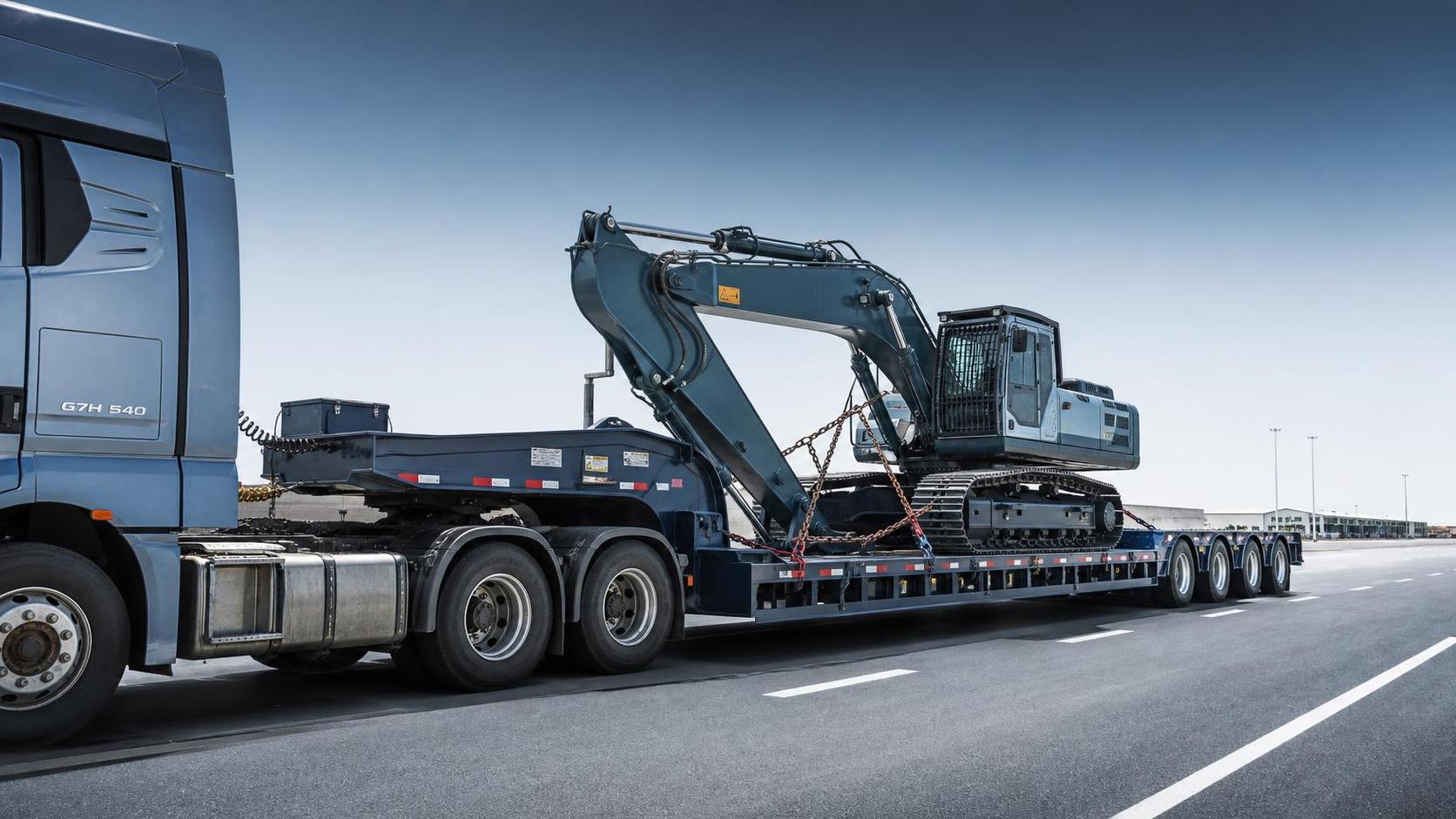
How Payload Distribution Affects Flatbed Semi-Trailer Stability
A Flatbed Semi-Trailer can be correctly specified, mechanically sound, and loaded within its stated payload capacity, yet still become difficult to control if the cargo is placed badly. This is one of the practical facts that operators sometimes learn only after experiencing trailer sway, poor steering response, repeated axle-weight issues, or a load shift during braking.
Payload distribution determines how much weight reaches the tractor’s steer axle, drive axles, trailer axles, and suspension system. It also changes the rig’s center of gravity, its resistance to rollover, and the forces acting on cargo restraints. For engineering equipment, fabricated steel, long machinery components, palletized construction materials, and other irregular loads, a safe gross vehicle weight is only the starting point. The position, height, shape, and restraint of that weight matter just as much.
The operating objective is not simply to put the load “in the middle.” It is to place the cargo so that axle loads remain acceptable, the tractor retains adequate steering traction, the trailer remains balanced, and the load can withstand the forces generated by transport. Exact legal limits and loading rules vary by country, route, axle configuration, and permit conditions, so operators should always confirm local requirements before dispatch.
The Load Path: Why Position Changes Everything
A semi-trailer does not carry its cargo through one support point. The payload is shared mainly between the trailer axle group and the fifth wheel, which transfers part of the vertical load into the tractor. Moving cargo forward increases the load imposed on the tractor’s drive axles and, depending on the tractor-trailer geometry, may influence front-axle loading. Moving cargo rearward shifts more load toward the trailer axle group and reduces the load carried through the fifth wheel.
This is a lever-arm problem. A heavy machine placed only a short distance forward or rearward can create a meaningful change in axle weights because its mass acts through the distance between the load’s center of gravity and the trailer support points. Operators should therefore think about the load’s actual center of gravity, not merely its visible length or the position of its outer edges.
For example, a long item may appear evenly placed on the deck while most of its mass sits at one end. A generator package, crane component, tracked machine, or steel assembly often has an uneven internal weight distribution. If the heaviest section is not identified before loading, a visually neat arrangement can still overload one axle group or leave the tractor too lightly loaded for stable steering.
Forward-biased loads
Too much weight toward the front of the trailer can overload the tractor drive axles, fifth wheel, trailer frame area near the kingpin, or individual tires and suspension components. It can also produce poor ride behavior because the tractor and trailer suspensions are operating outside their intended balance. While additional drive-axle load can improve traction in some conditions, excess load is not a stability solution. It raises component stress and may breach road limits even when the total combination weight appears acceptable.
Rear-biased loads
A heavily rear-biased load places more demand on trailer axles and may reduce the vertical load transferred to the tractor. If the steer axle becomes too lightly loaded, steering precision and front-tire grip can deteriorate, particularly on wet pavement, uneven worksite roads, or during emergency braking. A driver may notice a vague or wandering steering feel before the problem becomes obvious.
Rear loading can also amplify trailer movement. When the trailer’s mass is concentrated far behind the kingpin, lateral motions have a larger moment arm. That does not guarantee sway in every situation, but it gives road inputs, crosswinds, steering corrections, and uneven surfaces more opportunity to disturb the combination.
Stability Is More Than an Axle-Weight Calculation
Axle loading is essential, but it is not the whole picture. A flatbed carrying a low, compact load can behave very differently from the same trailer carrying an equally heavy but tall or asymmetrical item. The center of gravity affects how much lateral acceleration the combination can tolerate before tires lose grip, suspension travel becomes excessive, or rollover risk increases.
A high center of gravity is especially relevant when transporting construction machinery, tanks, site modules, bundled pipe, cable reels, precast elements, and equipment mounted on skids. During a turn, a lane change, or an evasive maneuver, the load wants to continue moving in a straight line. Its height above the deck creates a rolling force around the trailer tires. The higher the mass sits, the more carefully speed, route geometry, and side-to-side placement must be managed.
The same principle applies to lateral imbalance. If a dense item is positioned close to one side rail, the trailer suspension and tires on that side can carry a greater static share of the weight. On a crowned road or a cambered worksite track, this imbalance becomes more pronounced. A trailer may look level at the loading point but lean noticeably once it enters a different road environment.
Dynamic forces expose loading mistakes
A stationary load can seem secure until the vehicle starts moving. Braking pushes cargo forward. Acceleration and uphill travel create rearward forces. Cornering moves the load sideways, while potholes, bridge joints, and rough access roads repeatedly load and unload the suspension. These effects act together rather than separately.
That is why tie-downs should not be treated as a final cosmetic step after cargo placement. Their arrangement must match the expected directions of force. Blocking, friction management, direct lashings, top-over lashings, chains, straps, edge protection, and anchor-point ratings all need to suit the load and the applicable cargo-securing rules. A stable weight distribution reduces the demand placed on restraints, but it never replaces proper securing.
Common Loading Situations That Create Risk
Certain mistakes occur repeatedly because they are easy to make under time pressure. One is loading a machine based on deck space rather than weighing or estimating its true center of gravity. Another is placing the cargo where it is easiest for a forklift or crane to access, then assuming that the axle group will absorb the difference.
- Placing a concentrated heavy item directly over, or well behind, the trailer axle group without checking individual axle effects.
- Loading tall equipment off-center to create clearance for a second item.
- Treating multiple pallets as identical when their weights vary substantially.
- Ignoring fuel, mounted equipment, spare wheels, crane attachments, or other tractor and trailer tare-weight differences.
- Using dunnage that is too narrow, uneven, damaged, or poorly positioned for the load’s bearing points.
- Making a late load adjustment without reassessing lashing angles and anchor-point capacity.
With long cargo, several smaller adjustments can be safer than one large shift. Moving a load gradually and checking axle weights where scales are available provides much better control than relying on visual judgment alone. For repeated routes and repeat cargo types, a fleet can develop verified loading layouts, but those layouts should be reviewed whenever trailer configuration, tractor wheelbase, axle spacing, cargo dimensions, or payload changes.
A Practical Pre-Dispatch Check
Before leaving the loading area, operators should be able to answer a few practical questions. Where is the cargo’s center of gravity? Is the weight centered laterally? Which axle group is likely to receive the greatest load? Does the fifth-wheel load leave the tractor with predictable steering and traction? Are tire condition, inflation pressure, suspension condition, and deck structure suitable for the actual loading arrangement?
Where certified scales are accessible, measuring the tractor steer axle, drive axle group, trailer axle group, and gross combination weight is preferable to assumption. The results should be compared with the vehicle manufacturer’s ratings, tire and axle limitations, registration limits, route restrictions, and applicable legal rules. A scale ticket does not confirm that cargo securement is correct, but it is one of the most useful tools for verifying the loading plan.
The driver’s route also belongs in the stability assessment. Tight roundabouts, steep grades, side slopes, poor pavement, temporary construction diversions, high crosswind exposure, and soft site surfaces may require a more conservative loading arrangement or operating speed. A load that is manageable on a straight highway may be unsuitable for the final kilometers into a quarry, wind farm, port yard, or remote construction project.
Trailer Specification and Loading Need to Be Matched
Not every flatbed is configured for the same work. Deck length, axle count, axle spacing, suspension type, frame design, kingpin position, landing gear location, tire specification, stake pockets, lashing rings, and twist-lock arrangements all affect what can be transported and how it should be loaded. A trailer suitable for distributed steel products may not be the right configuration for a concentrated piece of engineering machinery, even if the total payload is similar.
This is where early technical discussion is useful. Shandong Livol Truck International Trade Co., Ltd. works with commercial vehicle buyers requiring complete export support, from vehicle selection and configuration through documentation, customs clearance, and logistics coordination. As an authorized dealer for FOTON, SHACMAN, and SINOTRUK, the company can help buyers examine the relationship between tractor specification, trailer application, intended cargo, and destination-market requirements rather than treating the tractor and Flatbed Semi-Trailer as isolated purchases.
For international projects, the questions become broader: What axle arrangement is accepted locally? Are there limits on overall dimensions or axle-group loading? Will the trailer operate mainly on paved roads, mixed roads, or unpaved worksites? Is a standard flatbed sufficient, or are ramps, reinforced deck sections, additional lashing points, side extensions, or other application-specific features necessary? These should be confirmed against project documents and local transport rules, not guessed after the equipment arrives.
Better Distribution Starts Before the Cargo Reaches the Deck
Safe loading is easier when the loading team receives complete cargo information in advance: verified weight, dimensions, center-of-gravity details where available, lifting points, support locations, packaging condition, and restraint requirements. The dispatcher should also know the tractor and trailer configuration, not just the nominal payload rating.
For operators, the useful habit is simple: do not judge stability only by whether the load fits, whether the deck looks level, or whether the total weight appears acceptable. Check where the mass is acting, how it is shared across the combination, and what will happen when the vehicle brakes, turns, or reaches uneven ground. That discipline prevents many avoidable incidents before the trailer leaves the yard.
A stable transport setup is usually the result of several correct decisions made together: appropriate equipment, known cargo weight, controlled fore-and-aft placement, lateral balance, proper securement, axle verification, and a route plan that reflects real operating conditions. When any one of those elements is uncertain, the loading plan deserves another review.
Search Starts Here