
News
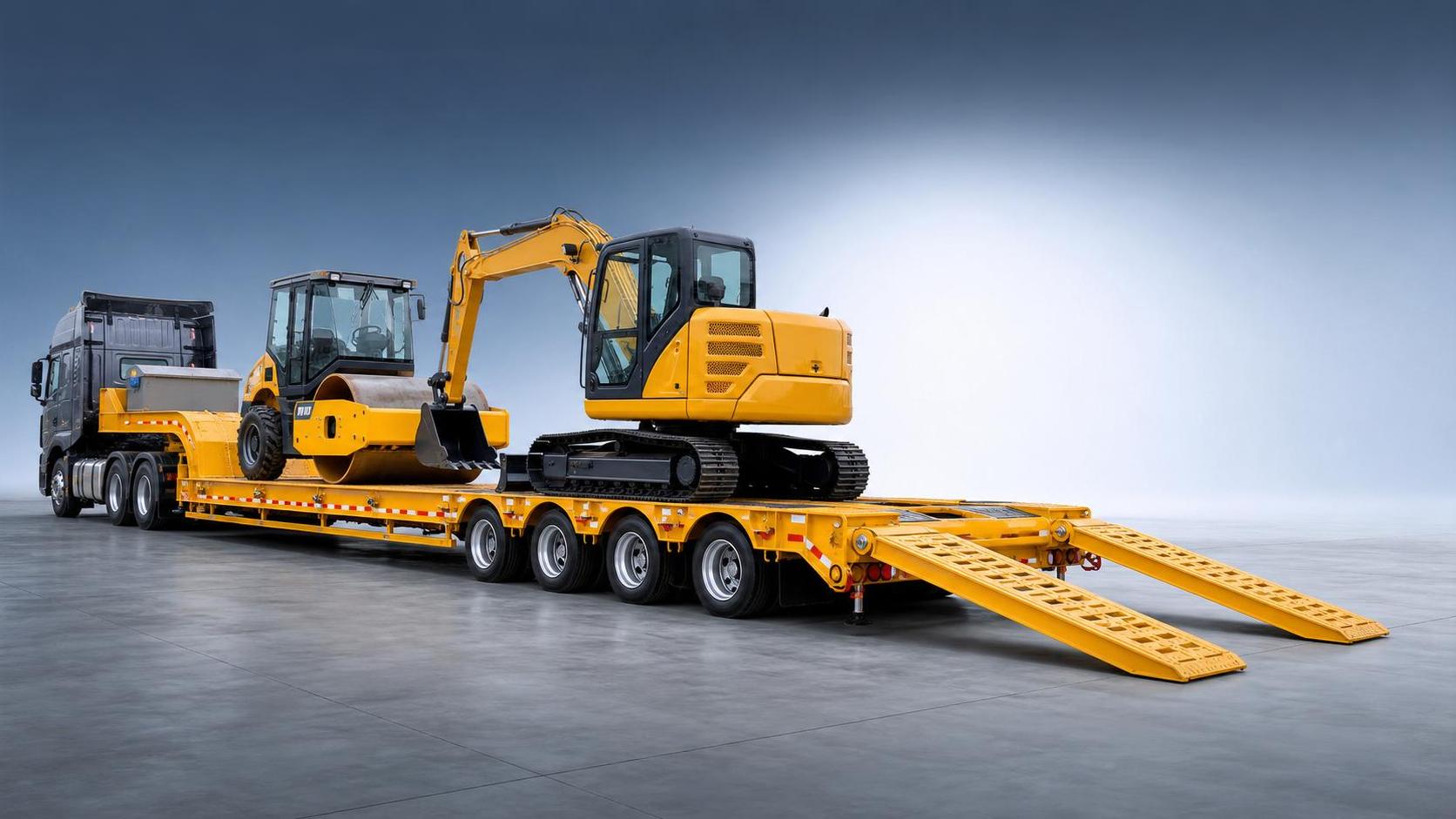
Low Plate Trailer Applications: When Lower Deck Height Improves Loading Efficiency
For operators handling heavy equipment, a Low Plate trailer often changes the whole loading routine.
The lower deck reduces ramp angle, improves machine stability, and helps control loading speed.
It also makes it easier to move tall equipment while staying within road height limits.
In engineering transport, that combination matters every day.
A Low Plate trailer is not just about carrying weight.
It is about making loading smoother, reducing avoidable risk, and improving fleet productivity.
When the job involves excavators, rollers, pavers, or compact loaders, deck height becomes a practical advantage.
Understanding the best Low Plate applications helps users choose a trailer that fits real site conditions.
Why Low Plate Design Improves Daily Loading
The biggest advantage of a Low Plate trailer starts before transport even begins.
A lower deck creates a gentler loading angle.
That means tracked and wheeled machines can climb ramps with less bouncing and less wheel slip.
This matters even more on muddy ground or uneven work yards.
A steep approach angle often creates stress at three points.
The machine undercarriage, the ramp contact point, and the operator’s control during transition.
With a Low Plate setup, all three become easier to manage.
The machine stays flatter during loading.
The center of gravity shifts less dramatically.
That helps improve loading confidence and overall efficiency.
Key efficiency benefits in real operations
- Shorter loading preparation time on busy job sites.
- Lower risk of belly contact for low-clearance machines.
- Better loading stability for compact and mid-size equipment.
- More usable transport height for taller machines.
- Less operator stress during repeated daily loading cycles.
In practical terms, a Low Plate trailer often saves minutes on every load, and those minutes add up fast.
Best Low Plate Applications in Engineering Vehicle Transport
Not every trailer type works equally well across engineering transport tasks.
A Low Plate trailer performs best where loading angle, machine height, and frequent movement all matter.
Several applications stand out clearly.
Excavators and mini excavators
Excavators are one of the most common Low Plate loads.
Their track design benefits from a lower climbing angle, especially on steel ramps.
A Low Plate trailer also helps when carrying machines with booms folded but still relatively tall.
This is especially useful for urban projects with strict bridge or overhead limits.
Road rollers and compactors
Rollers require stable straight loading.
Because of their dense weight and drum design, sudden angle changes can feel uncomfortable during ramp entry.
A Low Plate trailer keeps this movement smoother and more predictable.
That helps improve both speed and confidence on repetitive paving schedules.
Skid steer loaders and compact wheel loaders
Compact machines are moved often, sometimes several times in one day.
That makes loading efficiency more important than many buyers expect.
A Low Plate trailer reduces the stop-and-correct behavior common with steeper trailer decks.
The result is faster repositioning between municipal, landscaping, and utility jobs.
Pavers, milling machines, and specialty road equipment
Specialty road machinery often has sensitive structures and strict transport requirements.
A Low Plate trailer helps protect low-clearance sections during loading.
It also offers more flexibility where legal transport height is a concern.
For road contractors, this can simplify planning across different routes and job stages.
When Lower Deck Height Solves Common Loading Problems
Many loading problems are not caused by trailer strength.
They are caused by geometry.
That is why a Low Plate design becomes valuable in daily engineering transport.
Problem 1: Ramp angle is too steep
Steep ramps reduce traction and increase machine pitching.
A Low Plate trailer lowers the deck, so the approach becomes more gradual.
This is one of the clearest reasons operators prefer Low Plate solutions.
Problem 2: Equipment height is close to legal limits
Some machines fit the weight limit but not the height envelope.
A Low Plate trailer creates extra height margin without changing the machine itself.
This can reduce permit pressure and route restrictions in many markets.
Problem 3: Repeated loading slows down the crew
Frequent loading exposes every inefficiency.
If each cycle includes corrections, hesitation, or ramp alignment trouble, time gets lost quickly.
A Low Plate trailer shortens that cycle by making the loading path simpler.
For site teams, that often matters as much as transport capacity.
How to Choose the Right Low Plate Trailer for the Job
Choosing a Low Plate trailer should start with the actual loading pattern, not only payload numbers.
A few practical checks make the decision clearer.
Check machine dimensions first
Measure transport height, width, track or wheel base, and ground clearance.
These numbers affect deck fit and loading angle more than many users expect.
A Low Plate trailer works best when the machine matches the deck structure correctly.
Review route and regulatory limits
Transport height rules differ by country and project route.
Lower deck height can create useful legal margin, but it should be checked against local conditions.
This is especially important for cross-border or long-distance engineering transport.
Match ramp type to equipment behavior
Some equipment loads best with wider ramps.
Other machines need stronger support at concentrated contact points.
The best Low Plate result comes from treating deck height and ramp design as one system.
That reduces loading surprises at the job site.
Think about service support and delivery reliability
In actual business, trailer choice also depends on supply stability and after-sales support.
Shandong Livol Truck International Trade Co., Ltd. provides integrated export support for commercial vehicle solutions.
Based in Shandong, China, the company brings strong industry resources and solid global trade experience.
As an authorized dealer for FOTON, SHACMAN, and SINOTRUK, it supports customers with vehicle selection, customization, documents, customs clearance, and logistics.
That matters when a Low Plate trailer is part of a broader engineering transport solution.
Practical Safety and Efficiency Tips for Low Plate Use
Even the best Low Plate trailer performs well only when loading practice is consistent.
A few habits improve both safety and speed.
- Park on firm, level ground before deploying ramps.
- Inspect ramp locking points before every loading cycle.
- Keep tracks or tires aligned through the full ramp transition.
- Distribute machine weight according to axle and deck design.
- Secure the load immediately after final positioning.
- Review overhead clearance before route departure, even with a Low Plate trailer.
These steps sound simple, but they are usually where loading quality is won or lost.
Conclusion: Where a Low Plate Trailer Delivers the Most Value
A Low Plate trailer is most valuable when loading angle, transport height, and repeated machine movement all affect performance.
For excavators, rollers, compact loaders, and road equipment, the lower deck often improves both safety and daily efficiency.
That is why Low Plate applications remain important across engineering vehicle transport.
The right choice comes from matching the trailer to machine dimensions, route limits, and real loading conditions.
When that match is right, a Low Plate trailer does more than carry equipment.
It helps crews load faster, move with more confidence, and keep projects on schedule.
If your work involves frequent machinery transport, evaluating a Low Plate solution is a practical next step.
Search Starts Here