
News
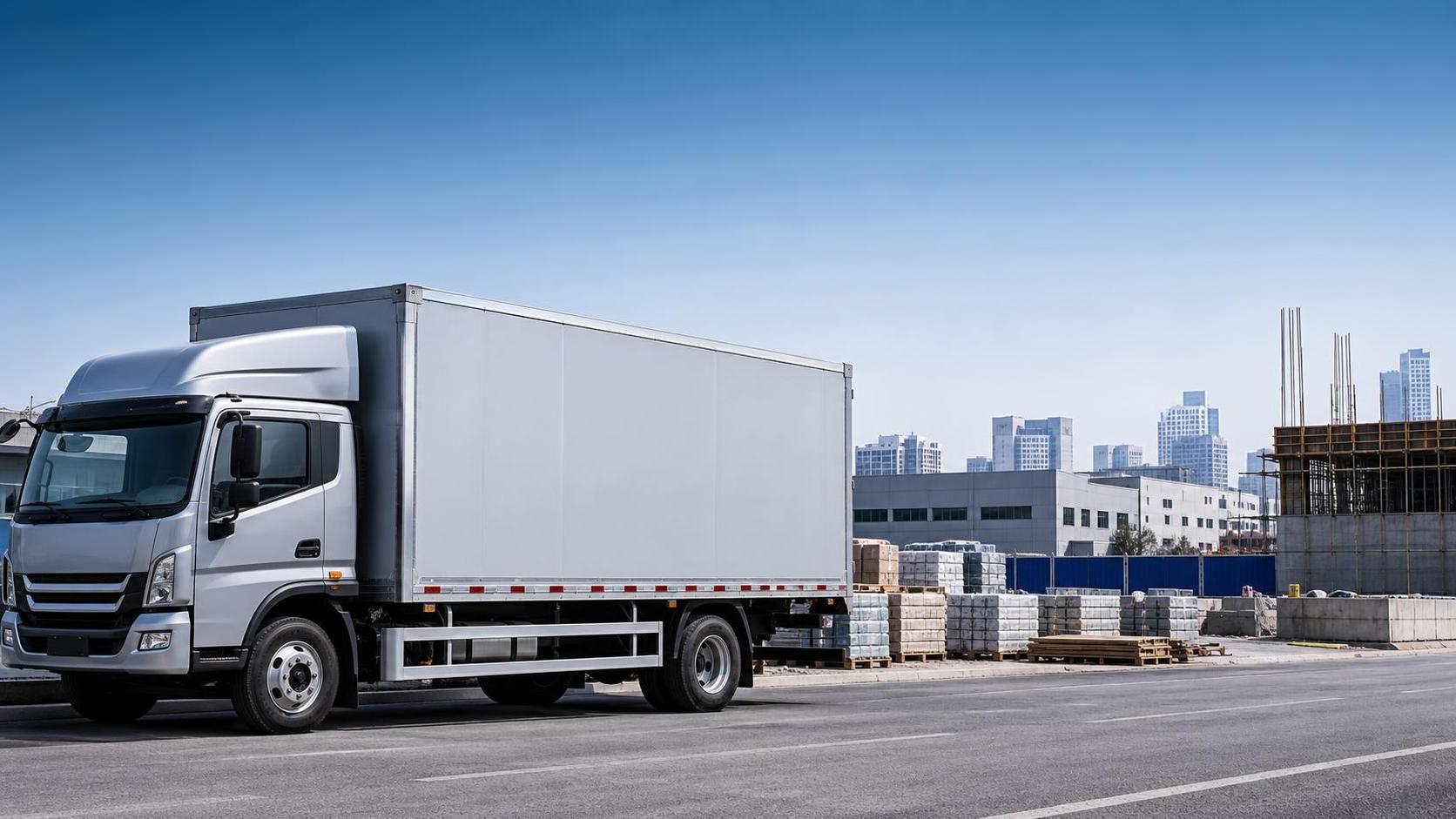
Choosing the right vehicle can directly affect delivery speed, operating cost and jobsite efficiency. For many urban logistics and site supply tasks, a 4_2 Cargo Truck offers a practical balance between payload, maneuverability and access where roads are tight, loading points are irregular and turnaround time matters. The question is not whether this configuration is universally better. It is whether the job profile favors a truck that can move enough goods without becoming oversized for the route, the site entrance or the daily schedule.
That distinction matters in real procurement work. A vehicle that looks efficient on paper can become expensive if it struggles with city restrictions, spends too much time waiting for unloading space, or cannot safely enter partially developed construction areas. In those situations, a 4_2 Cargo Truck often becomes the more sensible option.
Why the 4×2 layout fits urban work better than many buyers expect
A 4×2 truck has two axles, with one driven axle. In urban and near-urban operations, that simpler drivetrain is often enough. Many delivery routes and site supply runs do not require the extra traction of a 6×4 or all-wheel-drive setup. What they do require is lower overall vehicle complexity, easier maneuvering through narrow streets, fewer weight penalties from additional driveline components, and a body size that can still carry meaningful loads.
For business evaluators, the appeal is usually operational rather than technical. A 4×2 truck can be a better choice when the route includes frequent stops, urban loading bays, underground or low-clearance access constraints, temporary site entrances, or mixed use between warehouse distribution and construction support. The vehicle does not need to be the largest in the fleet. It needs to complete more trips with fewer complications.
This is especially relevant where road regulations, bridge limits, neighborhood access rules or congestion patterns make larger multi-axle trucks less efficient. The advantage is not only turning radius. It is often the whole operating rhythm: easier dispatching, simpler driver adaptation, more flexible body design and, depending on local maintenance conditions, lower service burden.
When it becomes the better choice for urban delivery
Urban delivery is rarely just about carrying capacity. It is about how much usable payload can be moved within a restricted environment. A 4_2 Cargo Truck tends to make more sense when shipments are moderate in volume, delivery frequency is high, and route efficiency depends on entering places that heavier trucks handle poorly.
Typical examples include retail replenishment, packaged food and beverage distribution, hardware delivery, building material dispatch to inner-city projects, municipal support supply, and warehouse-to-branch transfer. In these applications, loading and unloading may happen in front of shops, behind commercial buildings, inside fenced compounds or near roadside worksites. A truck that is too long or too heavy can lose time even before cargo moves.
A common evaluation mistake is to compare trucks only by maximum payload. That misses the point. If a larger truck carries more on a single trip but faces route restrictions, slower access and longer unloading times, its theoretical advantage may not hold in daily operations. A smaller or mid-sized 4×2 platform can deliver better utilization across a full week simply because it is easier to deploy.
This is also where body configuration matters. The same chassis can serve different purposes depending on whether the operator needs a box body, stake cargo bed, van body, wing opening body or dropside arrangement. For urban work, loading practicality often matters as much as axle layout.
Where it works well for site supply
Construction and engineering supply create a different set of demands. Not every jobsite needs a heavy-duty off-road truck. In fact, many projects operate within paved urban zones, industrial parks, utility corridors or partially completed developments where access is uneven but not extreme. In those cases, a 4_2 Cargo Truck can be well matched to the task.
It is often suitable for moving tools, palletized materials, cable drums, packaged cement products, light steel components, scaffolding parts, electrical equipment, plumbing materials and replacement parts between warehouse, contractor yard and project site. For these tasks, regular and predictable movement is more important than deep off-road capability.
The key phrase is site supply, not bulk earthmoving. If the project involves mud-heavy terrain, steep unprepared access roads or consistently overloaded conditions, a 4×2 truck may not be the right fit. But where materials are staged on developed roads and the challenge is reaching multiple urban sites quickly, the 4×2 layout often offers enough capacity without the operating penalties of a larger heavy-duty truck.
Signals that a heavier configuration may be unnecessary
Several practical signs suggest that moving up to a larger axle configuration may not deliver a real return.
- Your routes are mostly paved, with only short low-risk site access sections.
- Daily loads are consistent but not near the upper edge of heavy truck capacity.
- Dispatch reliability matters more than peak single-trip tonnage.
- Drivers regularly deal with urban turning constraints and tight unloading spaces.
- Fleet maintenance simplicity is a procurement priority.
- Customers or sites require faster response, not just larger loads.
In these situations, the extra axle and drivetrain hardware of a heavier truck can become cost without enough operational benefit. That does not make bigger trucks inefficient in general. It simply means the duty cycle may not justify them.
What buyers should verify before deciding
The most useful purchase discussions usually begin with route and cargo details, not brand names. Before selecting a 4_2 Cargo Truck, evaluators should check several practical points that affect whether the truck will actually fit the work.
Start with load profile. Is the cargo dense or bulky? Is it palletized, loose, fragile or crane-loaded? A truck can have acceptable gross vehicle capacity and still be poorly matched to the cargo shape or loading method. Then look at route conditions: road width, gradients, stop frequency, legal restrictions, low bridges, gate dimensions and typical parking conditions during unloading.
Engine and transmission choice should reflect start-stop usage rather than only highway performance. In many urban fleets, drivability at low and medium speeds matters more than top-end power. Suspension setup, frame strength and tire specification also need to match the actual duty cycle. Site supply work that includes occasional rough access may require reinforced choices even if the truck remains 4×2.
Another point that often gets underestimated is local compliance. Body dimensions, axle load limits, emissions rules, lighting requirements and import documentation can vary significantly by market. These are not details to leave until shipment is ready. They should shape the vehicle specification early.
The export and specification side is part of the decision
For cross-border buyers, truck selection is rarely just about the chassis. It is also about whether the supplier can translate operating needs into a viable export configuration. That includes matching the truck to local use conditions, confirming available body options, checking required documents, and aligning delivery timing with project schedules.
This is where an experienced commercial vehicle exporter can reduce procurement friction. Shandong Livol Truck International Trade Co., Ltd., based in Shandong, China, works as an authorized domestic and overseas dealer for FOTON, SHACMAN and SINOTRUK, with a broad 4S network in China and established inventory support. In practical terms, that matters because business evaluators often need more than a quotation. They need clear coordination on vehicle selection, possible customization, documentation, customs procedures and logistics planning.
For a buyer assessing 4×2 cargo trucks for urban delivery or site supply, that support can help avoid common mismatches: a body built for the wrong cargo type, a specification that does not align with destination market requirements, or a delivery schedule that slips because paperwork and logistics were treated as afterthoughts. The truck itself is only one part of a usable solution.
A simple comparison mindset helps
This kind of comparison is often more useful than debating truck size in the abstract. The right answer depends on where the vehicle spends most of its time, not where it looks most impressive in a specification sheet.
So when is it the better choice?
A 4_2 Cargo Truck is usually the better choice when your operation sits in the middle ground: too demanding for small vans or pickups, but too access-sensitive or too schedule-driven for larger heavy configurations to work efficiently. It suits urban delivery networks that depend on route agility and site supply work that requires dependable movement of materials without full off-road duty.
If the vehicle will spend most of its life on paved roads, enter constrained sites, handle mixed cargo and support high-frequency dispatch, the 4×2 format deserves serious consideration. If the job regularly pushes into overloaded conditions, poor traction and undeveloped terrain, it may not.
The most reliable next step is to confirm three things before comparing offers: actual load profile, route restrictions and destination market requirements. Once those are clear, choosing the right chassis, body type and export arrangement becomes far more straightforward.
Search Starts Here