
News
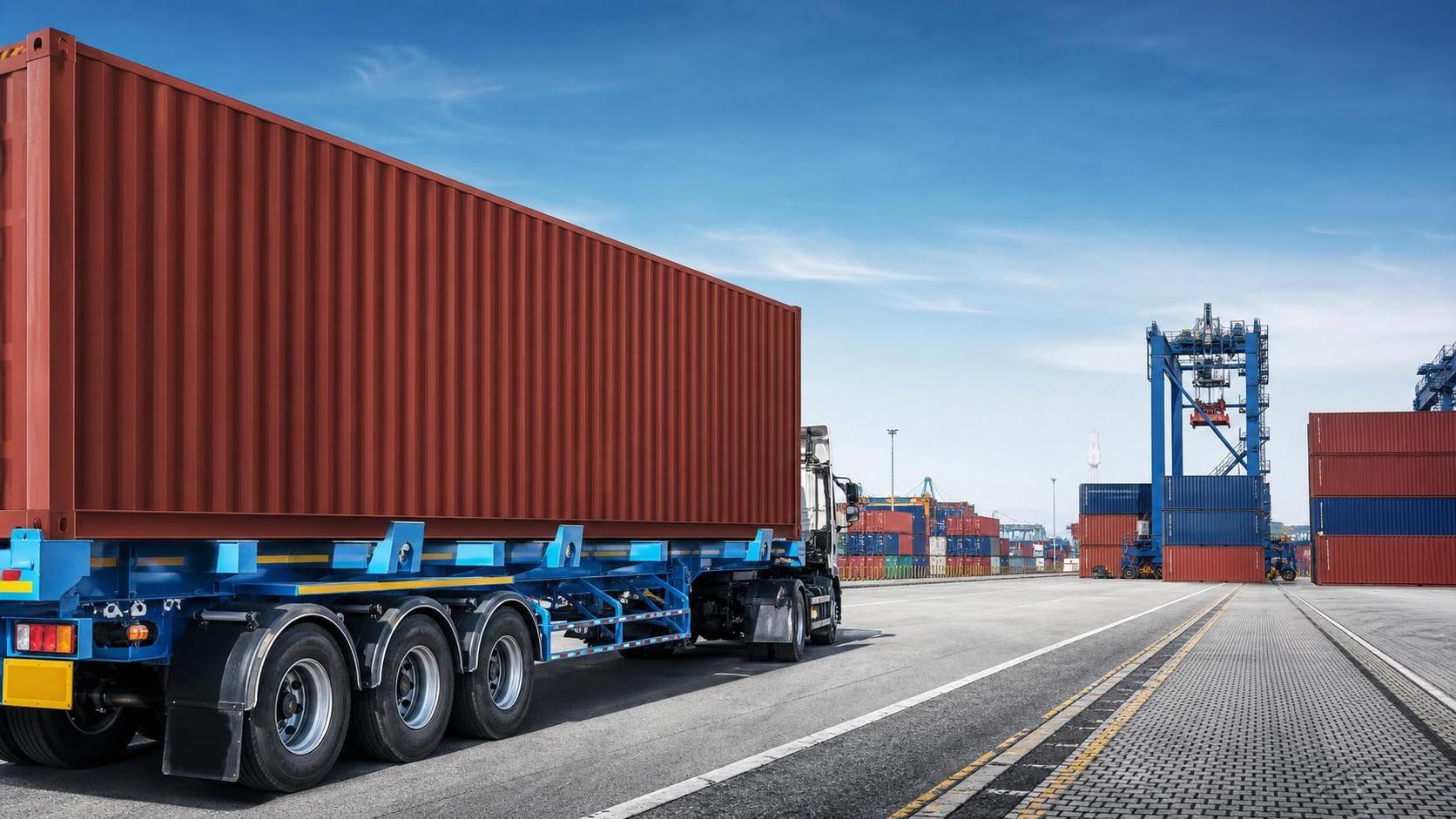
Skeleton Container Semi-Trailer: Key Load and Route Limits to Check First
Before selecting a Skeleton (Container) Semi-Trailer for port, highway, or intermodal operations, several checks should come first.
Load capacity, container fit, axle layout, and legal route limits shape real operating performance more than brochure specifications do.
If these points are reviewed early, fleets reduce overload exposure, avoid route violations, and make procurement decisions with fewer hidden costs.
That matters even more when a Skeleton (Container) Semi-Trailer is expected to serve different ports, highways, depots, and inland transfer routes.
Start With the Actual Payload, Not the Rated Number
The first question is simple: what will the trailer carry in daily work, not only in ideal conditions?
A Skeleton (Container) Semi-Trailer may look suitable on paper, yet still fail once tare weight, cargo density, and axle law are added together.
Rated capacity should always be compared against gross combination weight, tractor capability, and regional enforcement practices.
In practical use, container payload is only one part of the equation. The trailer’s own weight directly affects legal loading room.
A lighter chassis can improve payload efficiency, but only if structural strength remains adequate for repeated heavy-duty cycles.
For this reason, frame material, cross-member design, and reinforcement around twist lock zones deserve close attention.
Load Checkpoints That Matter First
- Trailer tare weight versus target payload
- Axle group capacity under local regulations
- Kingpin load transfer to the tractor
- Container center-of-gravity behavior during braking and turning
- Frame fatigue margin for high-frequency terminal work
A good technical review should treat every Skeleton (Container) Semi-Trailer as part of a full transport system, not as a standalone asset.
Check Container Compatibility Before Specifying Axles
The next step is confirming what container sizes and configurations the trailer must handle.
Many buyers focus on axle count first, but compatibility errors usually appear earlier and cause immediate operating restrictions.
A Skeleton (Container) Semi-Trailer may be configured for one 20-foot container, one 40-foot container, or mixed 20/40-foot applications.
Some operations also require 45-foot compatibility, gooseneck tunnel support, or multi-position locking for different box lengths.
This is where twist lock layout becomes critical. The wrong spacing can limit usable container types even when the frame looks correct.
More importantly, mismatch between container type and support points can create unstable load distribution and accelerated structural wear.
For intermodal routes, compatibility should also include crane handling, terminal standards, and loading workflow speed.
Compatibility Items to Verify
- Supported container lengths and ISO corner alignment
- Twist lock quantity, position, and operating reliability
- Neck structure for high-cube or tunnel containers
- Rear overhang impact on loading docks and ferry ramps
- Fit with terminal lifting and handling procedures
A Skeleton (Container) Semi-Trailer that fits actual container flow will usually outperform a higher-rated model with poor compatibility.
Axle Configuration Changes More Than Capacity
Axle selection is not only about carrying more weight. It also changes tire wear, turning radius, maintenance cost, and road access.
A two-axle Skeleton (Container) Semi-Trailer may work well for lighter regional runs and lower tare weight targets.
A three-axle version often supports broader payload needs, but can face route limitations in tight yards or older infrastructure.
For severe-duty applications, axle spacing, suspension type, and brake specification deserve the same attention as axle count.
Air suspension can improve cargo stability and ride quality, especially on mixed-quality roads and high-frequency highway transport.
Mechanical suspension may remain attractive where simplicity, ruggedness, and easier field maintenance are higher priorities.
Recent operating trends also show stronger demand for balance between payload, compliance, and long maintenance intervals.
Key Axle and Running Gear Questions
- Does axle count match legal gross weight on target routes?
- Will axle spacing satisfy bridge and road authority rules?
- Is the suspension suitable for port pavement, highways, and inland roads?
- Are tire size and load index aligned with operating temperatures and speeds?
- Is the brake system ready for local compliance and service support?
This is often where one Skeleton (Container) Semi-Trailer specification clearly separates itself from another.
Route Limits Often Decide the Right Trailer
Even a technically strong trailer can become inefficient if route restrictions were not reviewed in advance.
A Skeleton (Container) Semi-Trailer must comply with road laws on overall length, axle load, gross weight, turning envelope, and height.
Those limits vary by country, by province, and sometimes by road class or corridor designation.
That means the same trailer may be efficient on one route and restricted on another only a few hundred kilometers away.
Bridge formulas, toll classifications, and seasonal road rules can also change the usable payload of the whole combination.
In actual business, route suitability should be tested against the regular lanes that generate most annual mileage.
When route data is clear, choosing the right Skeleton (Container) Semi-Trailer becomes much more objective.
Durability, Compliance, and Service Access Should Be Reviewed Together
A technical decision should not stop at payload and dimensions. Long-term reliability still affects total operating cost.
On a Skeleton (Container) Semi-Trailer, repeated stress usually appears around the neck, suspension mounts, landing gear, and rear structure.
Welding quality, steel grade, corrosion protection, and brake line routing all deserve direct inspection.
This also means compliance documentation should be available without delay, especially for export, customs, and local registration processes.
Reliable supply support matters as well. Parts access, service response, and technical documentation reduce downtime after delivery.
For cross-border buyers, a supplier with strong inventory and export coordination can shorten deployment time significantly.
Shandong Livol Truck International Trade Co., Ltd., based in Shandong, China, provides commercial vehicle export support with stable supply capability.
As an authorized dealer for FOTON, SHACMAN, and SINOTRUK, the company supports selection, customization, documents, customs clearance, and logistics.
That integrated process is valuable when a Skeleton (Container) Semi-Trailer must meet both technical and trade compliance requirements.
A Practical Evaluation Sequence
To keep evaluation efficient, use a simple order and remove uncertain items early.
- Confirm container types, loading pattern, and target lanes.
- Calculate legal payload with tractor, trailer, and route rules combined.
- Match axle layout to road law, yard space, and maintenance conditions.
- Review structure, suspension, brakes, and corrosion protection details.
- Check documentation, supply lead time, and after-sales support.
This sequence helps turn a general product search into a sharper technical decision.
In the end, the best Skeleton (Container) Semi-Trailer is the one that stays compliant while carrying real loads on real routes.
When load limits, container compatibility, axle configuration, and route restrictions are checked first, procurement becomes faster, safer, and easier to defend.
Search Starts Here