
News
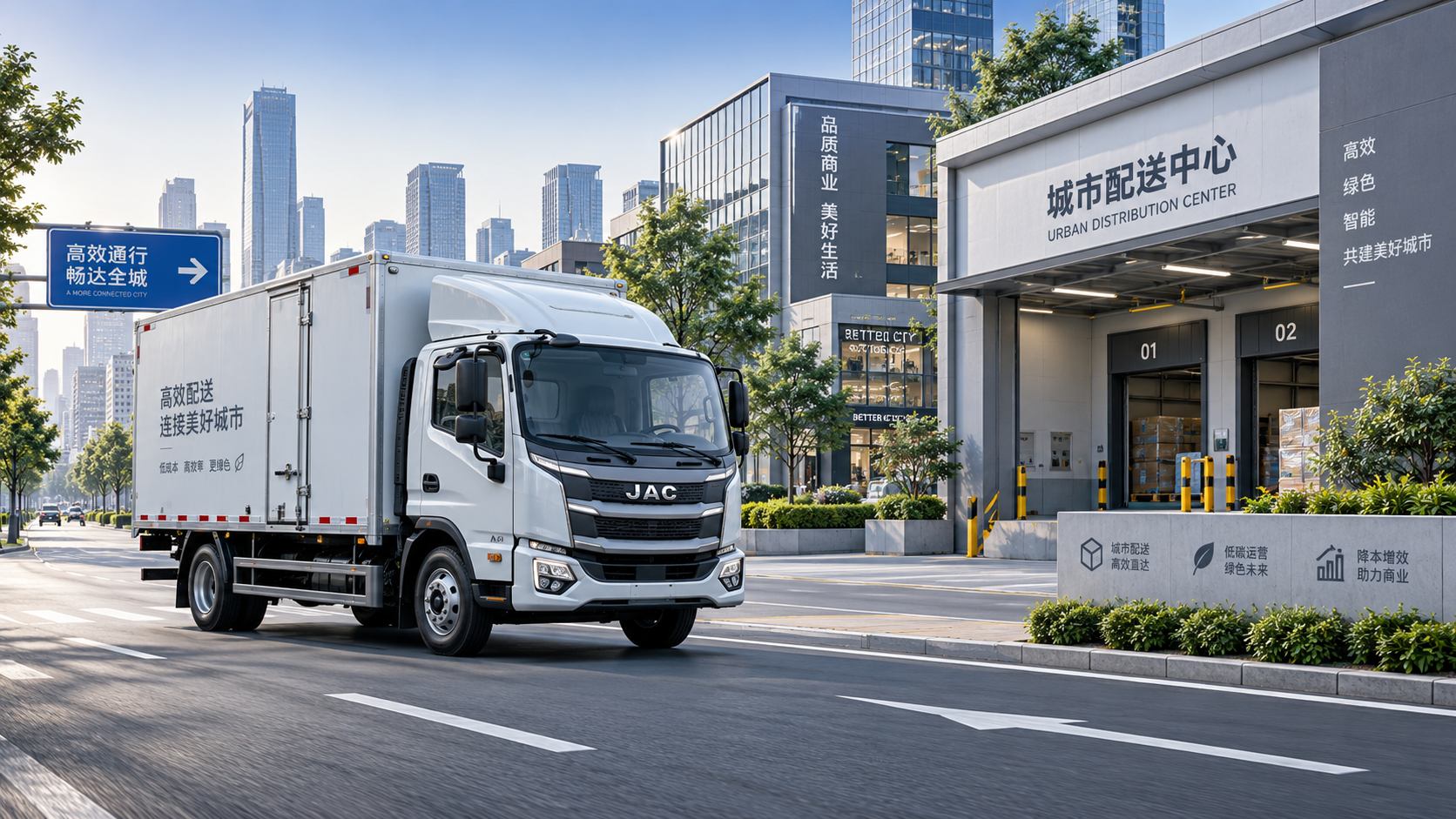
A 4_2 Cargo Truck can lower urban delivery costs, but only when its body size, payload, route pattern, and loading process match the work being done. The financial benefit does not come simply from buying a smaller truck. It comes from reducing failed access, avoiding underused capacity, improving daily trip completion, and keeping operating costs predictable.
For city distribution, the cheapest vehicle to purchase is not always the cheapest vehicle to operate. A truck that carries more than the route requires may consume more fuel, take longer to park and unload, and spend more time waiting outside restricted streets. A truck that is too small may require extra trips, create missed delivery windows, or force the business to use outside transport during peak periods. A 4_2 Cargo Truck sits between those two risks for many urban delivery operations.
The term generally describes a two-axle commercial truck with four wheel positions, commonly used for regional and city distribution. Exact permitted dimensions, gross vehicle limits, body options, and access rules vary by market, so the cost decision should start with the actual delivery environment rather than a generic vehicle specification.
Cost per delivery is shaped by time as much as fuel
Fuel is visible on a monthly report, but urban delivery cost is often driven just as strongly by time. Congestion, narrow access roads, loading-bay queues, parking restrictions, and multiple stops can make a route expensive even when the distance is short.
A suitably configured 4_2 Cargo Truck can improve route time because it is generally easier to position than a larger rigid truck. Better maneuverability can reduce the time spent circling for access, reversing into difficult unloading areas, or transferring goods to smaller vehicles at the edge of a dense district. When each stop takes less time, one truck may complete more planned drops within the same working shift. That lowers the labor, vehicle, and overhead cost allocated to each delivery.
This advantage has a clear boundary. If most deliveries are made to warehouses with wide yards, high-volume docks, and predictable unloading appointments, a larger vehicle may move more goods for only a modest increase in route cost. In that case, choosing a 4_2 truck simply for easier urban access can create a capacity constraint without solving a real operational problem.
Payload utilization determines whether the truck is earning its place
A common procurement error is to compare truck prices and rated payloads without examining average loaded weight and cube on real routes. A vehicle can leave the depot appearing full while still using only a small share of its legal payload because cartons, pallets, or irregular freight occupy the body before reaching the weight limit. Conversely, dense products can reach weight limits while leaving unused body volume.
A 4_2 Cargo Truck needs a body specification that reflects which limit is reached first. For bulky but light consumer goods, an appropriately sized enclosed van body may allow better cubic utilization while retaining manageable urban dimensions. For dense packaged materials, beverage distribution, industrial parts, or palletized goods, the required chassis capacity, axle loading, and body tare weight deserve closer attention. A heavy body, tail lift, refrigeration equipment, or elaborate internal fit-out can reduce the useful payload available for saleable freight.
The financial question is not “What payload can this truck carry?” It is “How much revenue-generating freight will it carry on a normal route, and how often will it leave with unused capacity?” A truck that is consistently half-loaded can still be correct if city access enables a higher number of deliveries. But if it is both underloaded and unable to make additional drops, the fleet is carrying excess fixed cost.
The purchase price is only one part of the approval case
Capital cost matters, especially when several vehicles are being replaced at once. Yet an urban truck should be assessed through total cost of ownership over its intended service period. That means looking beyond the chassis invoice to the costs that change with daily operation.
Fuel consumption depends on route speed, idling, stop frequency, load, body aerodynamics, driver behavior, and traffic conditions. A city truck often spends more time accelerating, braking, and idling than cruising. The relevant comparison is therefore not a headline fuel figure but expected consumption on the intended route profile. A vehicle that performs well on an open-road duty cycle may not produce the same cost outcome on a heavily congested multi-drop route.
Maintenance is another variable that needs route context. Urban work brings repeated braking, clutch operation where applicable, steering inputs, curb exposure, and frequent door or tail-lift use. The truck should be selected with serviceability in mind: access to routine parts, a practical maintenance schedule, and a support arrangement that does not leave the vehicle off the road for extended periods. Downtime is costly because it can trigger rented replacements, delayed deliveries, overtime, or lost customer confidence.
Body equipment should be treated as part of the vehicle investment, not as an afterthought. A tail lift can reduce manual handling and make deliveries possible where no dock is available, but it adds purchase cost, weight, inspection needs, and maintenance exposure. Refrigeration supports controlled-temperature distribution, but it affects body weight, fuel demand, and maintenance planning. Side doors may save time on certain delivery patterns but offer little value when all freight is unloaded from the rear. Each option should have a route-level reason behind it.
Access restrictions can change the calculation overnight
Urban restrictions are often the factor that makes a larger truck look productive on paper but inefficient in service. Low bridges, street width, delivery time windows, weight limits, emissions rules, and loading-zone constraints can limit where and when a vehicle works. When a truck cannot reach the final delivery point, its nominal payload becomes less valuable because freight must be transferred, hand-carried farther, or redelivered.
Before approving a model, map the routes that account for the largest share of delivery cost or delivery failures. Include customer access points, not just main roads. A route survey should identify difficult turns, height restrictions, curbside unloading conditions, building access, and places where drivers regularly wait. Dispatch teams often know these issues, but they may not appear in financial reports unless late deliveries and overtime are traced back to their cause.
Body length and height deserve as much attention as the chassis. An oversized body can turn an otherwise practical 4_2 truck into a poor fit for city streets. A shorter body may reduce capacity but improve parking and reverse access enough to prevent repeated route delays. The best decision is usually the smallest body that consistently accommodates the planned load and required handling equipment.
Driver productivity is a measurable operating expense
Driver cost should not be reduced to wages. It includes the productive use of each shift, overtime caused by route delays, safety-related incidents, training time, and the operational disruption created when a route cannot be completed. A truck that is comfortable to operate, has good outward visibility, and suits the delivery environment can make daily work more consistent. That does not mean convenience alone justifies the cost; it means driver usability should be assessed as part of route performance.
Loading design is closely linked to productivity. A poorly organized cargo body creates extra handling at every stop. If mixed orders are loaded without a practical sequence, drivers may need to move freight repeatedly to reach the next consignment. Internal load restraint, shelving where appropriate, pallet access, anti-slip flooring, and door configuration can reduce this wasted effort. The value is greatest on high-stop routes, where a few extra minutes at each delivery becomes a significant daily cost.
There is also a safety and damage dimension. Goods that shift during repeated urban braking may lead to damaged product, claims, rework, or delays. Selecting the right restraint system and body layout is less visible than selecting engine or cab options, but it can protect both freight value and delivery reliability.
Do not assume one truck can serve every city route
A 4_2 Cargo Truck is often a strong fit for mixed urban and suburban distribution, but it is not automatically the best answer for every route. Very dense city-center work with low shipment sizes may be better handled by smaller vans or light trucks. Large-volume intercity replenishment may favor a higher-capacity vehicle feeding a local delivery fleet. Temperature-controlled goods, construction supplies, and high-value equipment may each require a different body, security arrangement, or loading method.
The cost-effective fleet is frequently a combination of vehicle sizes rather than a single standard truck. Standardization can simplify maintenance, driver training, and parts stocking, but forcing all freight onto one vehicle class can hide inefficiency. The approval decision should consider the role the truck will play: primary multi-drop delivery vehicle, regional feeder, backup unit, dedicated contract route vehicle, or a flexible asset covering changing demand.
For businesses importing vehicles, the choice also includes supply continuity and post-delivery support. An authorized exporter with access to suitable FOTON, SHACMAN, and SINOTRUK configurations can help align chassis, body requirements, documentation, and shipping arrangements with the intended market. Shandong Livol Truck International Trade Co., Ltd. provides this type of export coordination, including vehicle selection, customization, documentation, customs clearance, and logistics. The practical value is not brand placement alone; it is reducing the risk that a vehicle arrives with an unsuitable configuration or incomplete delivery process.
Build the approval around route economics, not brochure comparisons
A sound purchasing review begins with recent operating records. Use a representative group of routes rather than the busiest day or the lightest week. Compare loaded weight, cargo volume, number of stops, average route duration, failed or delayed deliveries, fuel use, overtime, maintenance events, and reliance on rented or outsourced vehicles. This produces a clearer picture of where current costs arise.
Then test the proposed truck against the work that is actually performed. Ask whether it can access the difficult delivery points, whether its body can carry the normal load without excessive empty space, and whether its equipment removes a real handling problem. Estimate how many trips or deliveries it can complete under normal conditions. A modest improvement in route completion can be more valuable than a small reduction in purchase price, while a vehicle that creates an extra daily trip can quickly erase an initial saving.
Finally, separate essential requirements from attractive options. Essential requirements are those tied to legal operation, route access, payload, freight protection, and required unloading. Optional items should be approved only when they improve measurable productivity, reduce damage exposure, or support a service obligation. This distinction prevents a specification from becoming expensive without becoming more useful.
The right 4_2 Cargo Truck is not simply the one with the largest stated capacity or the lowest acquisition cost. It is the one that carries the typical urban load efficiently, reaches delivery points without routine exceptions, stays available for work, and completes enough productive stops to control the full cost of distribution.
Search Starts Here