
News
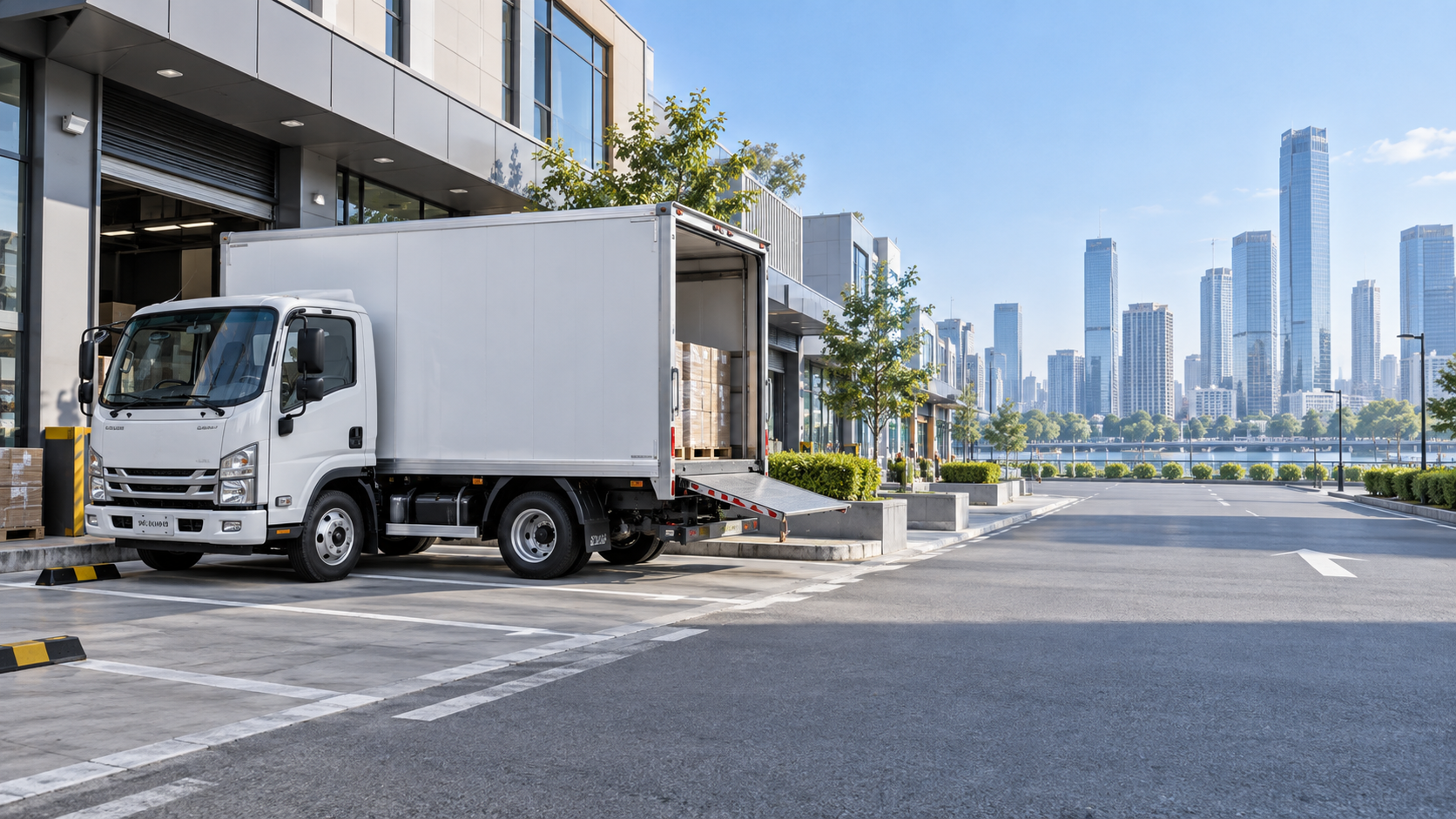
A 4x2 cargo truck is often a strong fit for urban deliveries with frequent stops, but only when the delivery pattern matches the truck’s real working envelope. Its main advantage is not simply that it is smaller than a heavy multi-axle truck. The practical benefit is that a two-axle configuration can reduce turning difficulty, simplify loading-zone access, lower drivetrain drag, and make repeated stop-start operation less tiring to manage.
That said, a 4x2 truck is not automatically the best “city truck.” A vehicle that is short enough for narrow streets may still be too tall for a covered dock, too long for curbside unloading, too lightly specified for dense payloads, or too highly geared for repeated acceleration. The correct decision depends less on the truck label than on the relationship between route geometry, cargo density, daily stop count, body design, and local access rules.
The configuration works best when access matters more than maximum payload
“4x2” generally describes a truck with two axles and one driven rear axle. In urban cargo work, this layout is commonly used for rigid trucks that sit between light delivery vehicles and larger distribution trucks. Compared with a longer 6x2 or 6x4 rigid vehicle, a 4x2 normally has a shorter wheelbase, lower unladen mass, fewer tyres, and less mechanical complexity. Those characteristics can be useful where drivers repeatedly enter loading bays, reverse into alleys, negotiate roundabouts, and park in marked delivery zones.
The configuration is particularly suitable where freight is spread across many stops rather than moved in one or two large drops. Parcel distribution, packaged food, retail replenishment, maintenance supplies, beverage deliveries, and non-palletised mixed loads can all create this operating pattern. In such work, the time lost at each stop can become more important than a small difference in maximum legal payload.
A 4x2 truck becomes less suitable when the route combines city streets with consistently high payloads, rough construction access, soft ground, steep ramps, or poor winter traction conditions. Rear-wheel drive is adequate for normal paved urban work, but it does not provide the traction reserve of all-wheel drive or the load distribution of an additional axle. If the truck routinely departs the road network or carries dense cargo close to its gross vehicle weight limit, the apparent simplicity of a 4x2 can become a constraint.
Frequent stops expose the details that brochure specifications do not
Urban delivery is hard on components because the truck rarely operates at a stable cruise. It accelerates, brakes, idles, turns, reverses, climbs kerbs or dock ramps, and may run auxiliary equipment for long periods. A vehicle selected only by rated payload and cargo-body volume can perform poorly in this cycle even if it appears economical on paper.
Engine and transmission matching deserve close attention. For dense stop-start work, a truck needs predictable low-speed response rather than a powertrain calibrated mainly for long-distance road speed. Excessively tall gearing may lower engine speed on open roads, but it can make repeated pull-aways feel sluggish when the truck is loaded. Constant harsh acceleration to compensate for unsuitable gearing raises fuel use and adds stress to the clutch, driveline, tyres, and brakes.
Automated manual transmissions can reduce pedal workload and fatigue in congested traffic, but their suitability depends on low-speed calibration, hill-hold performance, and how smoothly they handle repeated reversing. In delivery operations, a transmission that shifts well at highway speed but hesitates during dock manoeuvres can frustrate drivers and slow every stop. A conventional manual gearbox may remain appropriate where drivers need direct control on steep loading ramps or uneven service roads, provided clutch durability and driver comfort are properly considered.
Brake specification is also more relevant than it may appear. Repeated deceleration loads the service brakes far more heavily than steady highway use. The truck should have a braking system appropriate to its permitted operating weight, with engine braking or other retardation support where route gradients justify it. Brake maintenance intervals, pad availability, and the condition of loading-yard surfaces should be treated as operational issues rather than workshop details.
Turning circle is only one part of urban manoeuvrability
A compact 4x2 chassis can make city work easier, but operators should not assume that every 4x2 body will be agile. Wheelbase, cab-overhang design, rear overhang, body length, tail-lift position, and steering lock all affect usable manoeuvrability. A long box body can swing wide at the rear even when the chassis itself has a relatively tight turning circle.
The critical measurements are those found on the actual route:
- clear width at depot gates and customer entrances;
- turning room at loading docks, alleyways, and service lanes;
- available curb space for tail-lift operation;
- height clearance under bridges, canopies, and covered loading areas;
- road camber, ramp angle, and ground clearance at access points;
- space needed to open rear doors or deploy a tail lift safely.
A common selection error is to assess only whether the truck can physically reach the customer site. The more important question is whether it can complete the delivery without occupying a traffic lane for too long, reversing repeatedly, blocking pedestrians, or requiring unsafe manual handling. A 4x2 truck may fit through an entrance but still be operationally inefficient if its body configuration makes unloading difficult.
Cab visibility matters in this environment. Frequent stops mean frequent interaction with cyclists, pedestrians, parked vehicles, warehouse staff, and other delivery vehicles. A low, forward cab position, properly adjusted mirrors, reversing camera coverage, proximity alerts, and effective side visibility can reduce blind-spot exposure. These systems do not replace observation and safe reversing procedures, but they can make the vehicle more manageable in the situations where urban damage claims and near-misses often occur.
Payload must be assessed against cargo density, not body volume alone
Urban delivery fleets often need body volume, but volume can be misleading. A large dry-freight body may be necessary for cartons, lightweight consumer goods, or furniture. Yet the same body can encourage overloading when used for beverages, paper products, metal components, bagged materials, or other dense loads. A 4x2 truck can be legally and mechanically appropriate for a bulky load while becoming unsuitable once the cargo density rises.
The decision should begin with the heaviest realistic route, not the average route. Consider the combined mass of the chassis, body, tail lift, refrigeration unit if fitted, fuel, driver, handling equipment, load restraints, and cargo. Payload figures quoted for a bare chassis are not the same as available payload after body installation.
Axle loading is equally important. In multi-drop work, the load distribution changes after every delivery. If heavy pallets are loaded too far rearward, the rear axle can approach its limit before total vehicle weight does. If weight is removed from the rear and the remaining cargo is poorly secured, steering-axle loading and vehicle balance may also be affected. Load plans should account for the order of drops, not only the initial loading arrangement.
This is one reason why body layout deserves early attention. Side access, roller shutters, internal load-securing rails, movable bulkheads, pallet stops, and properly positioned tie points can make it easier to maintain a safe load arrangement throughout the route. The right body can improve delivery speed without forcing a larger truck into streets where it does not belong.
Body choice can determine whether frequent-stop work is efficient
A box body with rear doors is simple and secure, but it may slow deliveries where drivers need quick access to mixed consignments. A curtain-sided body can improve side loading where space permits, though side access is not always safe or practical on busy streets. A box body with a tail lift is valuable where customers lack dock equipment, but it adds weight and requires clear space behind the vehicle. Refrigerated bodies introduce further considerations: insulation thickness reduces internal volume, refrigeration equipment increases unladen weight, and door openings must be managed to protect temperature control.
For some city routes, a smaller body with better internal organisation produces more completed deliveries than a larger body that is difficult to load, park, or unload. The useful metric is not how much cargo can theoretically fit inside. It is whether the truck can carry the planned route, access every stop, and complete the work within the available driving and service time.
Frequent-stop routes also create repeated opportunities for cargo damage. Loose cages, unsecured pallets, and poorly restrained mixed loads shift during braking and cornering. This can damage freight, increase unloading time, and create a serious risk when doors are opened. Load restraint should be treated as part of vehicle selection: the body must provide usable anchor points and enough internal structure for the cargo type being carried.
Fuel economy should be judged by idle time, acceleration, and auxiliary loads
Fuel consumption in city distribution cannot be inferred from open-road performance. Congestion, traffic signals, queuing at customer sites, cold starts, idling, air-conditioning use, refrigeration demand, and repeated acceleration all influence consumption. A modestly powered 4x2 may use fuel efficiently if it is correctly matched to the payload and route. An underpowered truck, however, can lose that advantage if it must work constantly at high engine load or if drivers compensate with aggressive throttle input.
Idle reduction deserves practical attention. Drivers need a workable way to remain comfortable and safe during waiting periods without leaving the engine running unnecessarily. The right solution depends on climate, cab equipment, battery capacity, refrigeration requirements, and local anti-idling restrictions. It is not enough to tell drivers to reduce idling if the vehicle specification does not support the operating routine.
Tyre selection is another overlooked factor. Urban routes involve kerb contact, tight turns, potholes, frequent braking, and low-speed manoeuvres. A tyre selected only for low rolling resistance may not provide the sidewall durability or tread robustness required for kerb-heavy work. Conversely, an overly aggressive tyre pattern can add noise and rolling resistance on paved routes. The appropriate tyre is the one that matches the surface conditions and load profile, not simply the cheapest replacement option.
Driver workload is a legitimate selection criterion
Repeated urban stops create fatigue in ways that are not always visible in distance-based planning. Climbing in and out of the cab, checking clearance, handling documents, securing loads, operating a tail lift, managing traffic, and reversing into constrained spaces all add physical and mental demand. A truck that is technically capable but awkward to enter, difficult to see from, or poorly arranged for paperwork and storage can reduce consistency over a full shift.
Useful features include safe cab steps, durable grab handles, a seat with effective adjustment, practical mirror positioning, easy-to-reach controls, and clear instrument displays. These are not luxury considerations where the vehicle stops dozens of times. They affect how quickly and safely routine tasks can be completed.
Cab comfort should not be confused with unnecessary specification. The relevant question is whether the cab supports the actual duty cycle. A truck used for short-radius routes may not require the same sleeping or long-haul amenities as an interstate vehicle, but it does need ergonomics that reduce repetitive strain and support alertness in dense traffic.
Local rules may outweigh mechanical suitability
Before committing to a 4x2 cargo truck, the operating area must be checked for vehicle-class restrictions, weight limits, height limits, low-emission requirements, delivery-hour controls, noise rules, and access restrictions around pedestrian zones. These rules differ between jurisdictions and can change according to road, district, or time of day.
The truck’s registered gross weight, body dimensions, emission configuration, and equipment can all affect where it may operate. A vehicle that is ideal for warehouse-to-store distribution can become impractical if it is excluded from central delivery areas during the required service window. Route planning should therefore be completed before finalising wheelbase, body length, and gross vehicle weight specification.
Where urban access is tight, it may be more effective to use the 4x2 truck for depot-to-neighbourhood replenishment and complete the final delivery stage with smaller vehicles. That is not a failure of the 4x2 concept. It reflects the point at which cargo consolidation benefits are overtaken by last-mile access constraints.
When a 4x2 cargo truck is the right answer
A 4x2 cargo truck is a sound choice for frequent-stop urban work when the payload remains within a two-axle legal and practical limit, the body is sized for real access conditions, and the route is predominantly paved. It is especially credible where operators need more capacity and durability than a van can provide, but do not need the length, axle capacity, or traction capability of a larger rigid truck.
It is less convincing when delivery loads are consistently dense, customer sites have poor access, the route includes unstable surfaces or demanding gradients, or local regulations make a smaller vehicle necessary for the final kilometre. The key is to avoid treating 4x2 as a complete specification. Wheelbase, cab design, powertrain calibration, body equipment, payload distribution, and route constraints determine whether the truck will make frequent stops efficiently or merely fit the category on paper.
For urban distribution, the best vehicle is rarely the one with the highest rated capacity. It is the one that can be loaded safely, driven comfortably, parked legally, unloaded quickly, and returned to the depot without turning routine city work into a sequence of avoidable delays.
Search Starts Here