
News
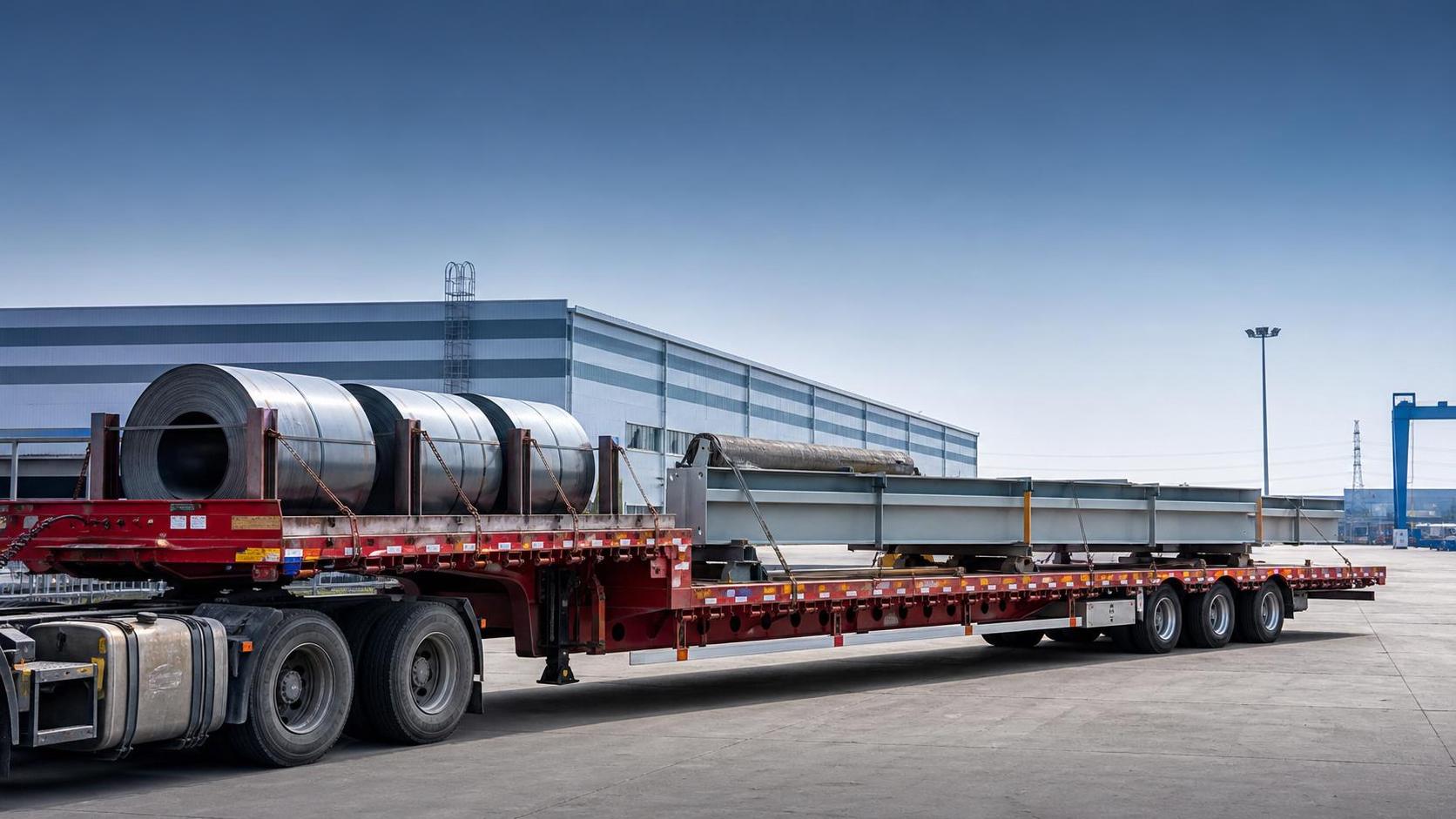
Deck length is often the first number checked in a Flatbed Semi-Trailer specification sheet. It is visible, easy to compare, and closely tied to cargo layout. Yet in real engineering transport, load capacity usually matters more because it affects legality, structural safety, operating cost, and route flexibility at the same time.
A longer trailer does not automatically carry more useful freight. If axle layout, frame strength, suspension design, and tare weight are not matched properly, extra deck space may become underused space. That is why capacity and length should be reviewed as a combined engineering decision, not as isolated dimensions.
For projects involving machinery, steel sections, construction materials, or containerized equipment, the right Flatbed Semi-Trailer configuration depends on how weight is distributed and how often loading conditions change. In cross-border and export markets, those decisions also influence compliance documents, customs handling, and transport planning.
Why this comparison matters in engineering transport
Engineering vehicle operations rarely move idealized cargo. Loads may be dense, oversized, irregular, or sensitive to axle pressure. In those conditions, deck length helps with arrangement, but load capacity decides whether the trailer can actually work within safe and legal limits.
This has become more important as logistics networks serve mixed cargo types. One day the trailer may carry rebar bundles. The next day it may move compact equipment or palletized industrial parts. A specification that looks generous on paper can become inefficient if its usable payload is too limited.
That is also why many fleet evaluations now look beyond basic dimensions. They compare frame section design, cross-member spacing, axle count, braking setup, tire ratings, and suspension durability before deciding whether a Flatbed Semi-Trailer fits the job.
Deck length is important, but only in the right context
Deck length matters because cargo still needs physical space. Longer items such as pipes, prefabricated components, timber, and some machinery frames cannot be handled efficiently on a short platform. In these cases, the deck determines whether the load can be placed securely and balanced correctly.
However, available deck space is not the same as practical carrying ability. If a trailer offers a long deck but reaches axle or gross weight limits too quickly, much of that length becomes operationally irrelevant. This is common with dense materials that occupy little space but create high point loads.
Longer decks may also introduce trade-offs. They can increase curb weight, reduce maneuverability in tight sites, and create more sensitivity to poor load placement. In some regional road conditions, a shorter but stronger Flatbed Semi-Trailer delivers better daily performance.
When deck length deserves priority
- Transporting long structural materials that cannot be segmented.
- Handling mixed cargo that needs spacing for lashing and access.
- Moving equipment with a long footprint but moderate weight.
- Planning multi-stop delivery where loading order affects unloading efficiency.
Why load capacity usually has greater operational impact
Load capacity goes beyond one headline payload number. It reflects how the Flatbed Semi-Trailer frame, axles, suspension, landing gear, kingpin area, and deck structure handle weight over time. This is what protects against fatigue, deformation, uneven tire wear, and unstable braking.
In practice, capacity determines whether the trailer remains productive under real working stress. A trailer that carries heavier loads safely can reduce trip frequency, improve fuel use per ton moved, and lower the risk of overload penalties or unexpected maintenance stops.
It also directly affects compatibility with the tractor unit. If the Flatbed Semi-Trailer payload is high but the tractor’s fifth-wheel load, engine output, or braking match is poor, the combination becomes inefficient. Capacity should therefore be assessed at combination level, not trailer level alone.
Capacity is more than gross weight
Two trailers can share the same nominal rating and perform very differently. One may support concentrated machine loads better because of stronger beam sections and better cross-member design. Another may be better for evenly distributed cargo but less suitable for heavy equipment with narrow contact points.
That difference matters in engineering transport, where loads are rarely uniform. Static rating, dynamic rating, and load distribution tolerance should all be reviewed before treating one specification as equal to another.
The balance changes with cargo type
A useful way to compare deck length and load capacity is to start from cargo density and geometry. Light but oversized freight usually pushes length higher in the decision. Dense freight often shifts attention toward payload, frame durability, and axle compliance.
For example, steel coils, stone products, and compact industrial equipment may fit easily within a moderate deck. Their challenge is not space but structural loading. In that case, a stronger Flatbed Semi-Trailer with optimized axle spacing is more valuable than an extended platform.
By contrast, long fabricated beams or multiple machinery modules may require extra deck area even when total weight remains manageable. Here, load securing positions, overhang rules, and turning space become central to the evaluation.
A practical cargo-based view
- Dense cargo: prioritize payload, axle rating, and frame integrity.
- Long cargo: prioritize usable deck space and secure load positioning.
- Mixed cargo: balance deck flexibility with realistic gross weight limits.
- Heavy machinery: review point-load tolerance and loading angle requirements.
Specification details that often decide the outcome
Many selection errors happen because buyers compare only brochure figures. A Flatbed Semi-Trailer should also be examined for beam material, cross-member layout, floor thickness, suspension type, braking configuration, and tire capacity. Those details explain whether the trailer will remain reliable after repeated heavy service.
Route conditions matter as well. Rough roads, mining access roads, port yards, and construction sites place different stress on the trailer. A design that performs well on paved regional transport may not last under severe torsional loads or frequent uneven loading.
This is where experienced supply partners add value. Shandong Livol Truck International Trade Co., Ltd. works with major Chinese commercial vehicle brands including FOTON, SHACMAN, and SINOTRUK, while supporting export documentation, customization, and logistics coordination. In trailer selection, that type of support helps align the specification with destination regulations and actual operating demands rather than catalog assumptions.
How to evaluate a Flatbed Semi-Trailer more accurately
A better evaluation starts with real load data instead of generic preference. List the heaviest common cargo, the longest common cargo, the most frequent route condition, and the applicable road limits. Then compare trailer options against those four realities.
It also helps to review the worst-case loading pattern rather than the average one. Many trailers work well in average conditions. Problems appear when the cargo is short, dense, and placed imperfectly, or when the route includes poor surfaces and repeated stop-start cycles.
- Check legal gross weight and axle load rules in target markets.
- Verify net payload after deducting tare weight.
- Assess whether cargo creates uniform or concentrated loading.
- Confirm compatibility with the intended tractor unit.
- Review lashing points, floor design, and maintenance access.
- Consider parts availability and after-sales support for export use.
What usually matters most
In most engineering transport cases, load capacity carries more decision weight than deck length. The reason is simple: space is valuable only when the trailer can safely and legally support the load placed on that space. Capacity influences safety, uptime, compliance, and cost per delivered ton.
That does not reduce the importance of length. It means length should be judged through the lens of actual cargo geometry and loading practice. The best Flatbed Semi-Trailer is rarely the longest one. It is the one whose structure, deck, and axle system match the transport task with the fewest compromises.
A sound next step is to compare two or three trailer configurations against real shipments, not just brochure dimensions. When load distribution, route condition, and regulatory limits are reviewed together, the right choice becomes clearer and more defensible.
Search Starts Here