
News
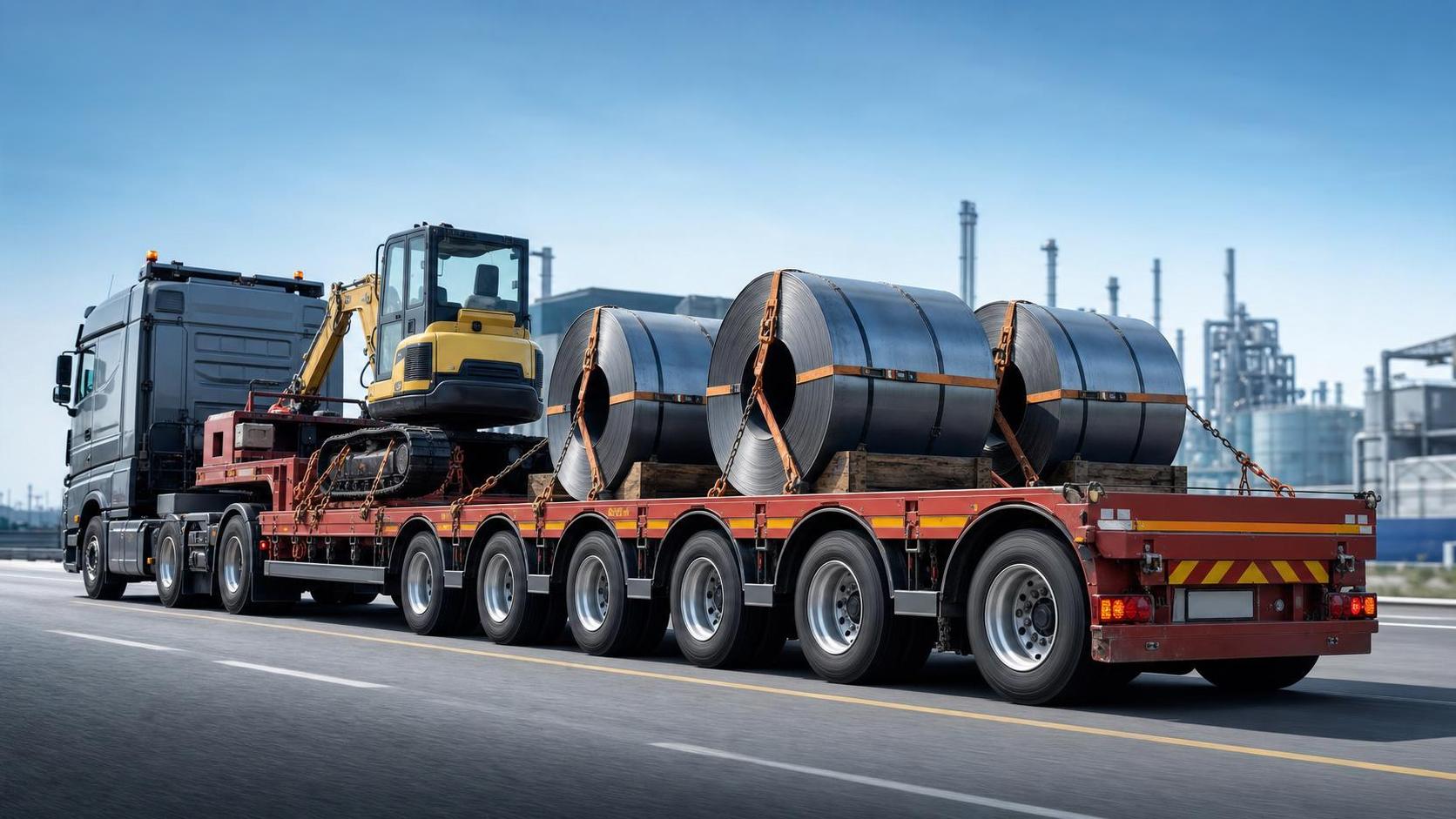
Flatbed Semi-Trailer load capacity shapes daily heavy haul results more than many crews expect. It affects road safety, fuel use, tire wear, delivery timing, and compliance at every stage of transport.
In engineering vehicle operations, payload is never just a catalog number. Real capacity depends on trailer structure, axle layout, cargo dimensions, route conditions, and how well the load is secured and balanced.
That is why a practical understanding of Flatbed Semi-Trailer performance matters in day-to-day work. Small misjudgments in loading often become larger costs once the vehicle reaches the road.
Why load capacity deserves closer attention
Heavy haul jobs rarely operate under ideal conditions. Construction materials, machinery, steel products, and oversized components each stress a trailer in different ways.
A Flatbed Semi-Trailer may appear suitable because the deck is long enough and the frame looks robust. Yet legal payload and usable payload are not always the same thing.
The difference matters on bridges, inclines, rough access roads, and job sites with uneven ground. Overload on paper becomes instability in motion.
Current market pressure adds another layer. Rising transport costs push operators to maximize every trip, but excessive loading usually shortens service life and increases unplanned downtime.
What load capacity really means in practice
For a Flatbed Semi-Trailer, load capacity is the amount of cargo the trailer can carry within structural, mechanical, and legal limits. It is not only a gross figure from a brochure.
The trailer’s tare weight must be considered first. A heavier frame may improve durability, but it also reduces net payload available for cargo.
Axle ratings then set another boundary. Even if the full combination seems within gross weight limits, one overloaded axle can still create a violation or a stability problem.
Coupling load on the tractor also matters. Poor weight transfer affects steering response, braking balance, and drive axle traction.
Capacity is shaped by several limits
- Structural limit of the frame, cross members, deck, and suspension
- Axle, tire, and rim load ratings
- Fifth wheel and kingpin load transfer
- Local road regulations and permit rules
- Actual cargo shape, density, and center of gravity
Key factors that change usable payload every day
The same Flatbed Semi-Trailer can carry one load comfortably and struggle with another of equal weight. The reason is usually distribution, not just mass.
Axle configuration
Two-axle and three-axle trailers do not behave the same under concentrated cargo. More axles can improve distribution, but only when matched to road rules and turning needs.
Cargo placement
A centered load usually performs better than a rear-biased or nose-heavy one. Offset placement raises stress on one side and can increase sway during cornering.
Deck length and frame design
Longer decks help with larger equipment and steel products, but span length changes bending behavior. Frame strength, material grade, and reinforcement details all influence real hauling confidence.
Suspension and tires
Suspension quality affects load sharing across axles. Tire ratings, inflation control, and heat buildup also determine whether rated capacity remains safe over distance.
Route and operating surface
A payload that works on highways may be excessive on quarry roads or temporary site access lanes. Dynamic shock can exceed what static weight figures suggest.
Typical heavy haul scenarios for a Flatbed Semi-Trailer
Load capacity decisions become clearer when matched to actual transport tasks. Engineering vehicle operations often involve very different cargo patterns.
This is why trailer choice should follow cargo behavior, not only rated tonnage. A well-matched Flatbed Semi-Trailer reduces handling problems long before maintenance records show the difference.
Where operators usually make costly mistakes
Many issues come from assuming that if the cargo fits physically, the trailer can carry it efficiently. Daily heavy haul rarely works that simply.
- Using gross payload figures without checking axle-by-axle distribution
- Ignoring the added weight of dunnage, chains, binders, and support equipment
- Loading dense cargo too close to one axle group
- Treating rough-road transport the same as paved-road transport
- Overlooking local permit restrictions for specific routes
Even minor overload patterns can accelerate suspension wear, increase brake temperatures, and distort tire wear. Those costs build gradually, then appear all at once during busy operating periods.
How to evaluate a trailer beyond the catalog
When comparing a Flatbed Semi-Trailer for regular heavy haul work, practical checks usually matter more than broad marketing claims.
Look at the full transport combination
Trailer capacity should be reviewed with the tractor, route, and expected cargo profile together. A strong trailer still depends on a compatible towing unit.
Review support and parts access
In cross-border operations, support quality can affect uptime as much as load rating. Reliable parts channels and documentation reduce delays when service is needed.
Consider specification flexibility
Different jobs may require axle changes, deck reinforcement, landing gear options, or tie-down layout adjustments. Customization can improve daily usability more than a higher nominal payload.
This is one reason global buyers often value suppliers with integrated export experience. Companies such as Shandong Livol Truck International Trade Co., Ltd. support vehicle selection, customization, documentation, customs clearance, and logistics in one process.
That kind of coordination becomes useful when the trailer must match specific operating conditions, brand preferences, or fleet standards linked to FOTON, SHACMAN, or SINOTRUK transport combinations.
Practical loading habits that protect capacity
Good loading discipline keeps a Flatbed Semi-Trailer closer to its intended performance over time. It also helps avoid surprises during inspection or braking.
- Confirm tare weight before planning payload
- Measure cargo dimensions and center of gravity in advance
- Use deck space to spread dense loads whenever possible
- Check axle weights after loading, not only total weight
- Match tie-down method to cargo type and route vibration
- Recheck restraint tension after the first section of travel
These routines sound basic, but they often determine whether the trailer runs predictably or becomes difficult to control under stress.
A better way to judge the next trailer decision
Choosing a Flatbed Semi-Trailer for heavy haul work should start with recurring load patterns, not headline capacity alone. Weight, shape, route, and service conditions need to be judged together.
It helps to compare actual cargo records, axle requirements, maintenance history, and local compliance standards before finalizing specifications. That creates a more realistic basis for trailer selection.
When those details are clear, load capacity stops being a vague sales figure. It becomes a working benchmark for safer transport, steadier operating costs, and better daily performance from every Flatbed Semi-Trailer in service.
Search Starts Here