
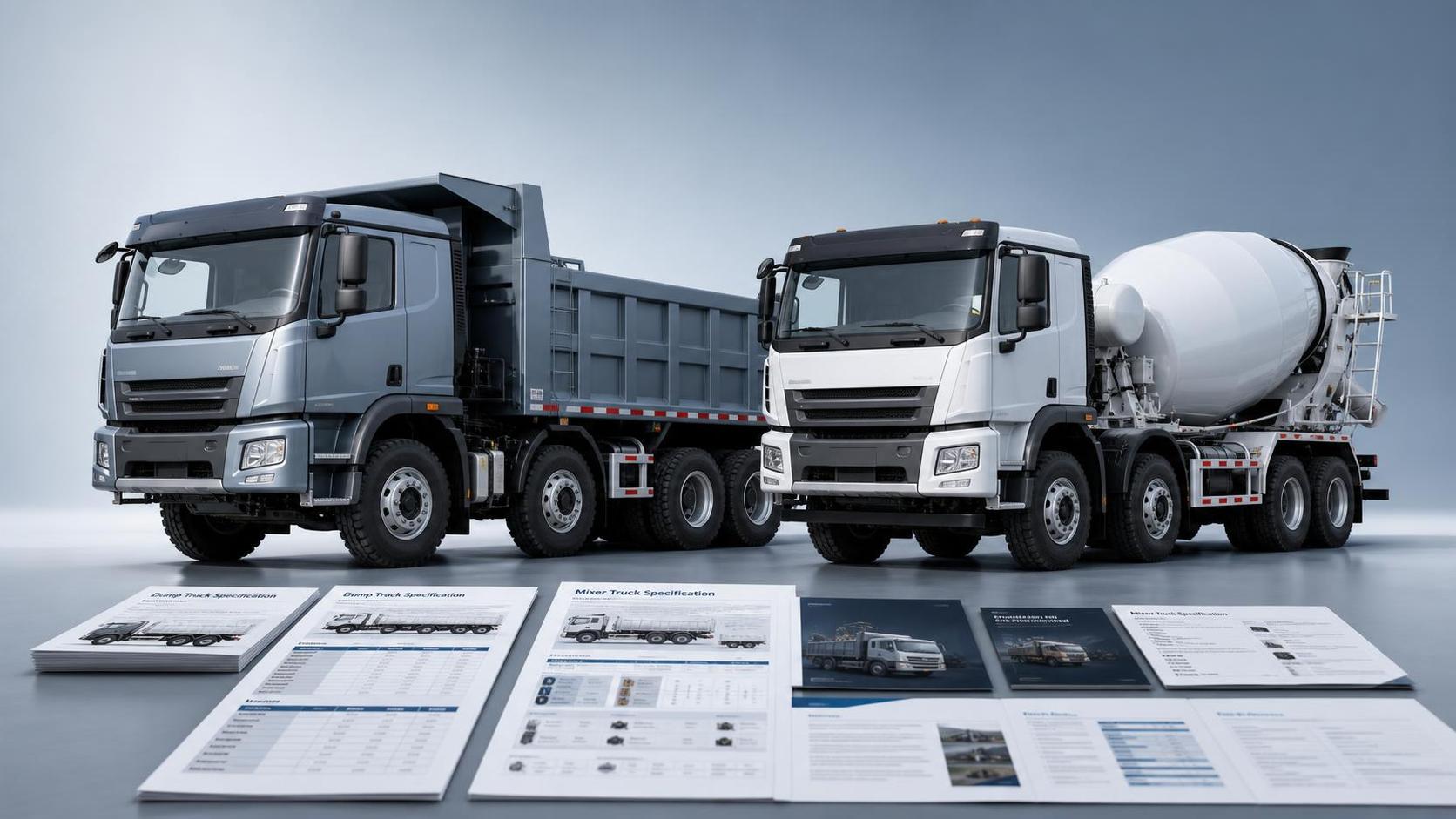
How to Read the Cangshan Vehicle Configuration List Before Comparing Models
A common problem in engineering vehicle sourcing is that model comparison starts too early. Many buyers open two or three brochures, look at horsepower, axle count, or cargo body size, and assume they are already comparing like for like. But once the Cangshan Vehicle Configuration List is involved, it becomes clear that two vehicles with similar names may differ in chassis layout, drivetrain match, suspension form, tire specification, cabin equipment, and optional systems.
That confusion matters because it affects not only purchase decisions, but also transport efficiency, site suitability, maintenance planning, and long-term operating cost. If you are researching dump trucks, mixers, cargo trucks, or other engineering vehicles, learning how to read the Cangshan Vehicle Configuration List first is often the fastest way to avoid comparing the wrong models.
Why model comparison often goes wrong at the beginning
In practice, the first mistake is usually not technical. It is structural. People compare sales names instead of confirmed configurations. A truck model name may sound familiar, but the actual vehicle behind it can vary by engine output, wheelbase, cab type, axle ratio, emission-related equipment, cargo body arrangement, or region-specific option pack. When those details are skipped, the comparison becomes unreliable from the start.
Another common issue is reading the list as if every line carries the same weight. It does not. Some items define whether the vehicle is suitable for the work at all, while others mainly affect comfort, convenience, or secondary preference. If you do not separate core operating specifications from optional or presentation-level details, you can spend a lot of time debating minor features while missing a mismatch in payload structure or drivetrain selection.
This is especially relevant in the engineering vehicle sector, where trucks are chosen for working conditions rather than appearance. Road quality, haul distance, slope, load type, overload risk, maintenance access, local fuel condition, and spare parts availability all influence which configuration makes sense. A configuration list is not just a technical attachment. It is the bridge between a vehicle on paper and the work it will actually do.
What the Cangshan Vehicle Configuration List is really telling you
The Cangshan Vehicle Configuration List should be read as a structured description of the vehicle, not as a simple feature sheet. Its main purpose is to show what the truck is built with, how the major systems are matched, and which parts are standard versus optional. Once you understand that, the list becomes much easier to use during comparison.
Most lists in this category include several layers of information. The first layer identifies the vehicle: model code, vehicle type, drive form, cab version, and sometimes intended body application. The second layer covers the core mechanical match: engine, gearbox, axle, suspension, frame, tires, and dimensions. The third layer usually adds functional and comfort-related items such as air conditioning, seat configuration, multimedia, camera systems, lifting equipment, or hydraulic arrangements. Some lists also include notes, restrictions, or optional items that can easily be missed if you only scan the main table.
When read properly, the list answers three practical questions. First, what is this vehicle physically built as? Second, what kind of job is it matched for? Third, which parts are fixed and which parts may still be adjusted before ordering? Those three questions are far more useful than asking whether one model is simply “better” than another.
Read the list in the right order before comparing models
A useful way to avoid confusion is to stop reading the list from top to bottom as if it were a brochure. Instead, read it in a decision sequence. That means starting with the items that decide job suitability, then moving to durability and efficiency, and only after that reviewing comfort and convenience details.
- Start with vehicle type and intended application. Confirm whether the unit is a dump truck, cargo chassis, tractor head, mixer, or another engineering vehicle format. Some comparisons fail because the vehicles appear similar but are built for different body integration or work cycles.
- Check the drive configuration. Look at whether the truck is 4x2, 6x4, 8x4, or another layout. This affects traction, payload structure, turning behavior, and road suitability. For construction and earthmoving work, this line often matters more than cosmetic cab differences.
- Review wheelbase and overall dimensions. These affect body length, turning radius, stability, and road access. A longer frame may support a useful body arrangement, but it may also be less suitable for tight sites.
- Confirm engine and transmission matching. Do not look at engine power alone. Engine output should be read together with transmission type, gear ratio, and the working condition. A higher figure on paper does not automatically mean better field performance if the drivetrain match is poor for the route and load.
- Check axle ratings and suspension structure. These lines indicate whether the truck is built to carry the planned load repeatedly under the expected road condition. For engineering vehicles, this is often more meaningful than general sales language around heavy-duty capability.
- Look at tire specification and quantity. This influences load support, replacement planning, and site adaptability. Tire details are sometimes treated as secondary, but they directly affect operating practicality.
- Read cabin and control features last. These matter, especially for driver comfort and operational ease, but they should not override core suitability if the truck is being selected for production work.
Common misreadings that lead to bad comparisons
One frequent misunderstanding is treating standard equipment and optional equipment as if they were already confirmed in the same way. A line may appear on the list, but if it is marked optional, region-dependent, or subject to final order confirmation, it should not be used as a guaranteed comparison point. This is where many buyers think they are comparing complete vehicles when they are actually comparing a confirmed unit against a configurable one.
Another mistake is focusing on isolated values without context. For example, engine output alone does not explain gradeability, hauling rhythm, or efficiency. Body dimensions alone do not confirm usable capacity in real working conditions. Cabin type alone does not tell you whether the chassis specification matches the terrain or payload requirement. A configuration list should always be read as a system, not as disconnected numbers.
There is also a language issue in many export transactions. Technical terms in a list may be translated differently across suppliers, markets, or internal teams. A buyer may read one label, while the factory, dealer, and shipping side use a slightly different description for the same part. In that situation, the safe approach is to verify by part function and position in the vehicle, not by wording alone.
How to compare two models using the Cangshan Vehicle Configuration List
If you are deciding between two engineering vehicle models, the best method is to reduce both lists into comparable decision points. This saves time and makes it easier to explain the choice internally to operations, procurement, or management teams.
- Create a core comparison column. Use the following fields first: drive type, wheelbase, engine model, transmission model, axle arrangement, suspension, tire size, rated loading structure, and body compatibility. If any of these differ, note them before looking at secondary features.
- Mark non-negotiable operating requirements. For example, if the truck must work on steep site roads, use a specific axle or drivetrain pattern, fit a certain body type, or meet transport size limitations, highlight those items clearly. A model that misses one non-negotiable item should be removed early.
- Separate standard from optional content. Make a simple note beside each item showing whether it is included, selectable, or unclear. This avoids the common problem of overestimating what is already included in the offer.
- Review service and parts implications. Two configurations may both be workable, but one may align better with available maintenance capability, driver familiarity, or local parts access. That becomes important for engineering fleets where downtime has practical consequences.
- Verify the final list against the application scenario. Before deciding, go back to the work condition itself: load material, route, distance, road quality, weather, and operator expectations. This last check often exposes whether a “better-looking” specification is actually the right one.
This process is simple, but it prevents the most expensive type of confusion: choosing a truck that looks strong on paper yet is mismatched to the job environment.
Which configuration items deserve the most attention in engineering vehicles
For engineering vehicles, some configuration lines consistently deserve priority because they affect the truck's ability to work safely and steadily under load. The first is the chassis and drivetrain combination. This is the base of the whole vehicle. If the drive form, engine, transmission, and axle ratio are not suitable for the duty cycle, the rest of the specification cannot compensate for that weakness.
The second priority is structural compatibility. That includes frame strength, wheelbase, suspension, and whether the chassis suits the intended upper body or work attachment. This matters for dump applications, construction transport, infrastructure support, and other job sites where the truck must handle repeated loading cycles rather than occasional road transport.
The third priority is maintainability. A configuration list does not always state maintainability directly, but it gives clues. Standardized tire size, familiar engine platform, practical cab arrangement, and parts commonly supported in your market can all reduce future friction. Buyers sometimes overlook this because it is less visible during quotation review, yet it affects daily use.
Only after those three areas are understood should comfort and auxiliary items take center stage. Air conditioning, seat layout, camera systems, and cabin equipment are worth checking, especially for driver retention and operational ease, but they should support a sound technical base rather than distract from it.
When it helps to ask for guidance instead of reading alone
Some buyers are fully capable of reading a Cangshan Vehicle Configuration List themselves but still need help translating it into an order decision. That is normal, especially when multiple brands, export terms, and optional specifications are involved. In those cases, support is most useful when it stays practical: confirming what each configuration line means, which items are fixed, which can be customized, and whether the specification suits the working scenario.
For international buyers, this becomes part of the sourcing process rather than a separate step. A company with access to authorized channels, actual vehicle stock, and export handling experience can help reduce interpretation errors by aligning configuration details with ordering, documentation, and shipment preparation. In that context, support is valuable not because the list is impossible to read, but because the final purchase depends on reading it consistently from factory side to delivery side.
That is also where a structured exporter can be useful. Shandong Livol Truck International Trade Co., Ltd. works with FOTON, SHACMAN, and SINOTRUK vehicles and provides assistance across selection, customization, documentation, customs clearance, and logistics. For buyers reviewing engineering vehicle configurations, that kind of support fits best as part of the verification process, especially when there are questions about model differences, available inventory, or export-related confirmation of specifications.
Common Questions
Is the Cangshan Vehicle Configuration List enough to decide which truck to buy?
It is a strong starting point, but it should be matched with your actual operating conditions. The list shows what the truck is configured with, but you still need to judge whether that configuration fits your route, load type, site condition, maintenance capacity, and body application.
What should I check first if two models look almost the same?
Check drive type, wheelbase, engine and transmission matching, axle arrangement, suspension, and tire specification first. Those items usually reveal whether the models are truly comparable or only similar in name.
How do I know whether an item on the list is standard or optional?
Look for notes, remarks, or option markings in the configuration table. If the wording is unclear, ask for confirmation before using that item as a basis for model comparison or budgeting.
Should I compare cabin features before chassis details?
No. Cabin features matter, but for engineering vehicles they should come after core mechanical suitability. A comfortable cab does not correct a mismatch in drivetrain, axle capacity, or body compatibility.
Why do configuration lists sometimes create confusion in export purchases?
Because the same model family can have different specification combinations, and technical wording may vary across markets or translated documents. That is why final verification of configuration details is important before order confirmation.
Conclusion
The most reliable way to compare engineering vehicle models is to read the Cangshan Vehicle Configuration List before you start debating brands or appearances. Once you understand the list as a map of application, drivetrain match, structure, and options, model comparison becomes more accurate and far less frustrating.
If you are reviewing multiple trucks, start with job suitability, separate confirmed items from optional ones, and compare systems rather than isolated figures. That approach usually leads to a clearer shortlist and fewer surprises later in procurement, customization, and delivery.