News
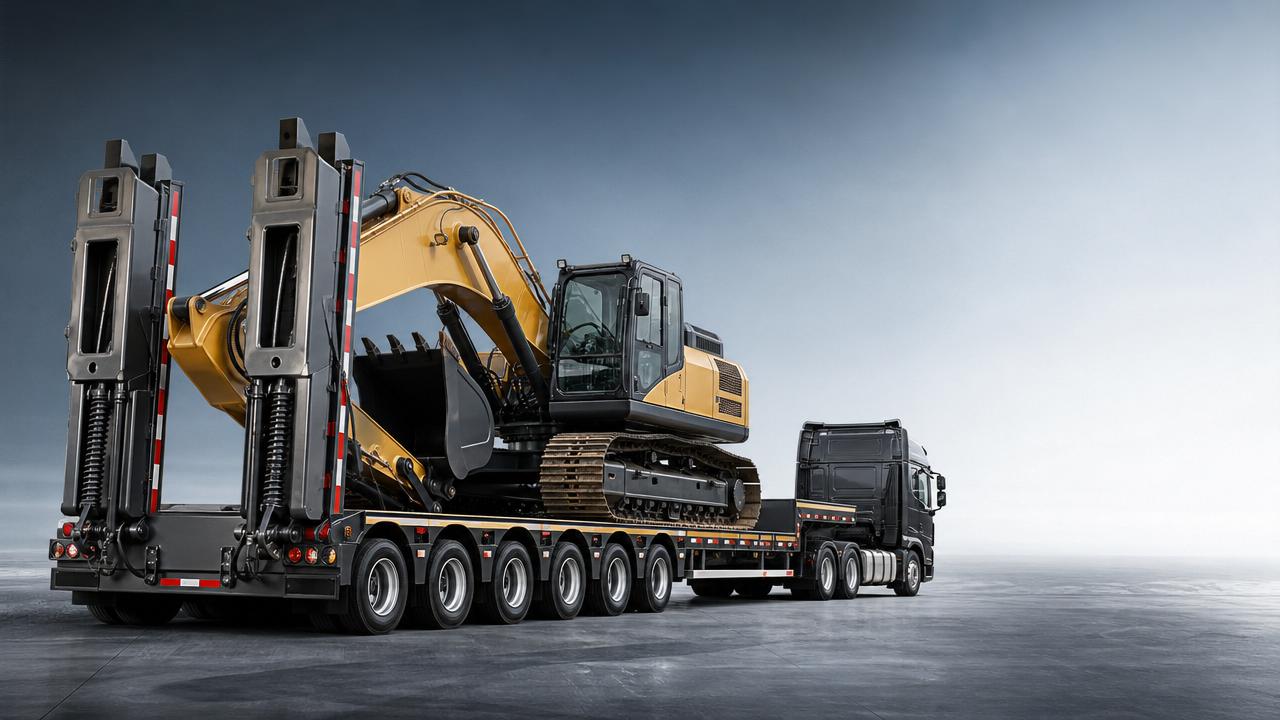
For project managers handling oversized machinery transport, choosing the right trailer can directly affect safety, efficiency, and cost control. A Low Plate trailer is often the best solution when moving heavy equipment with high weight, large dimensions, or challenging loading conditions. Understanding when this trailer type delivers the greatest value helps ensure smoother project execution and more reliable logistics planning.
In engineering vehicle operations, trailer choice is rarely a minor detail. It influences route feasibility, loading time, permit planning, axle load compliance, and even the availability of cranes or ramps on site. For projects with excavators, wheel loaders, drilling rigs, pavers, bulldozers, or compact mining equipment, the right Low Plate configuration can reduce avoidable delays across a 7-day, 30-day, or multi-month schedule.
For B2B buyers and project leaders, the practical question is not whether a Low Plate trailer is useful in general, but when it is the best fit compared with other heavy haul options. That decision depends on machine height, gross transport weight, terrain at loading points, road restrictions, and the urgency of delivery. A poor trailer match can increase mobilization cost by 10% to 25% through rework, escort changes, or inefficient loading methods.
What Makes a Low Plate Trailer Different in Heavy Equipment Transport
A Low Plate trailer is designed with a lowered deck structure that helps move heavy and oversized equipment while keeping overall transport height within practical road limits. In many engineering transport scenarios, reducing deck height by even 200 mm to 400 mm can be the difference between a direct route and a detour that adds 50 to 150 kilometers.
Compared with standard flatbed or higher-deck transport equipment, a Low Plate trailer supports safer center-of-gravity control. This matters when carrying machines that weigh 20 tons, 35 tons, or more, especially when the equipment has an uneven weight distribution because of booms, counterweights, tracks, or attachments.
Core structural advantages
The biggest advantage is deck height. A lower platform helps reduce total loaded height and improves loading stability. It also makes drive-on loading easier for tracked and wheeled equipment, particularly on sites where loading ramps are limited or the ground is not fully paved.
- Lower deck profile for oversized machinery with strict height limits
- Better weight distribution across multiple axles
- Improved loading angle for machinery with low ground clearance
- Greater stability during acceleration, braking, and cornering
Why loading angle matters
A steeper loading angle can damage undercarriage components, attachments, or low-mounted hydraulic lines. For machines such as asphalt pavers, road rollers with accessories, or compact crushers, reducing the ramp angle by 3 to 8 degrees can significantly improve loading safety and reduce setup time.
The comparison below shows where a Low Plate trailer typically performs best in engineering equipment transport planning.
For many project managers, the Low Plate option sits in the practical middle ground. It delivers stronger heavy equipment capability than a general flatbed, while often remaining simpler and more economical than specialized ultra-heavy transport equipment for loads in common construction ranges.
When a Low Plate Trailer Is the Best Choice
A Low Plate trailer becomes the preferred solution when transport challenges combine in more than one dimension. High payload alone does not always require it. The best fit usually appears when weight, machine height, deck loading angle, and route restrictions all need to be managed at the same time.
1. When equipment height is close to road clearance limits
Many engineering machines are not extremely wide, but they become difficult to move because of cab height, upper structure, or mounted equipment. If overall transport height approaches common control thresholds such as 4.0 m, 4.2 m, or local permit limits, a Low Plate trailer can create enough margin to avoid route changes or escort complications.
2. When the machine has a high center of gravity
Machines with tall structures or concentrated upper weight can become unstable on a higher-deck trailer. A lower loading platform reduces lateral movement risk during turns, lane changes, and uneven road transitions. This is especially important for transport speeds that may range from 25 km/h on site roads to 60 km/h or more on approved highways.
3. When loading conditions are rough or temporary
Project sites often lack permanent loading infrastructure. A Low Plate trailer is valuable when loading must take place on compacted soil, gravel, temporary steel plates, or partially completed roads. The lower deck improves machine approach, reducing the need for extra blocking materials, external ramps, or a second handling machine.
4. When moving tracked equipment repeatedly between sites
For contractors that relocate excavators, bulldozers, and drilling units 2 to 6 times per month, loading efficiency has a direct effect on labor planning and machine uptime. A Low Plate setup can cut each loading and securing cycle by 20 to 40 minutes compared with less suitable transport equipment, depending on ramp arrangement and tie-down layout.
The following matrix helps project teams identify common situations where a Low Plate trailer creates measurable operational value.
If two or three of these conditions appear in one move, the case for a Low Plate trailer becomes much stronger. For project-based engineering fleets, this often means lower disruption at the start and end of each machine deployment cycle.
Key Selection Criteria for Project Managers
Selecting a Low Plate trailer should start with a load profile, not a price comparison alone. The right unit for a 22-ton excavator may be insufficient for a 35-ton dozer with attachments, even if both appear similar in deck length requirements. A disciplined review of 4 to 6 technical factors helps avoid under-specification or overbuying.
Load weight and axle distribution
Begin with operating weight, transport weight, and attachment weight. If buckets, blades, hammers, or auxiliary tanks remain installed, total loaded weight may rise by 1 ton to 5 tons. The trailer must be matched to actual transport conditions, not just brochure specifications.
Deck length and usable loading area
A machine may fit overall but still fail to load correctly if track contact points or tire positions fall outside the usable deck zone. Project managers should confirm effective deck length, ramp transition area, and tie-down space. In practice, a few hundred millimeters of missed planning can force repositioning or partial dismantling.
Ground clearance and ramp compatibility
Machines with low belly clearance are vulnerable at the breakover point between ramp and deck. A Low Plate trailer should be checked for ramp angle, rear overhang behavior, and loading support options. This is critical for road construction machines and equipment with rigid underframes.
Route, permits, and local regulations
Transport planning should include road width, bridge load limits, turning radius, and escort rules. In cross-border or export-oriented projects, documentation and compliance can add 3 to 10 working days if information is incomplete. Trailer selection and shipping preparation should therefore be coordinated early.
A practical 5-point review before purchase or dispatch
- Confirm transport weight including attachments and fluids.
- Measure total height, width, and track or wheel footprint.
- Check deck height against route clearance limits.
- Review loading surface conditions at both ends of the move.
- Verify tie-down points, ramp setup, and legal axle distribution.
This review process helps procurement, logistics, and site management work from the same data set. For organizations moving mixed engineering vehicles, it also improves standardization across repeated transport tasks.
Common Risks, Misjudgments, and How to Avoid Them
Even when a Low Plate trailer is the correct category, project teams can still lose time and money through poor execution. In engineering transport, small planning gaps often create larger operational consequences once the machine is already on site or at the port.
Mistake 1: Focusing only on tonnage
A trailer may have enough nominal carrying capacity but still be unsuitable because of deck geometry, height, or axle arrangement. Weight is only one dimension. A 30-ton machine with awkward height or uneven balance can be harder to move than a more compact 35-ton load.
Mistake 2: Underestimating site loading conditions
Many transport plans assume loading on clean, level ground. Real project sites may involve mud, slopes, crushed stone, or temporary haul roads. If the loading zone is not checked in advance, the result may be delayed mobilization, extra equipment rental, or increased safety risk during ramp entry.
Mistake 3: Treating export logistics as a separate issue
For international buyers, trailer procurement and export execution should be connected from the start. Packaging standards, customs documents, inland movement, and port scheduling all affect delivery timing. A gap of even 48 to 72 hours at one handover point can disrupt vessel booking or destination project readiness.
The table below outlines common risk points and the preventive actions that project teams can apply before dispatch.
The key lesson is that transport equipment, site operations, and export coordination should not be managed in isolation. When these three areas are aligned, a Low Plate trailer delivers its full value as part of a complete engineering logistics solution.
Working With a Reliable Commercial Vehicle Export Partner
For buyers managing engineering fleets across regions or countries, the supplier relationship matters as much as the trailer itself. Shandong Livol Truck International Trade Co., Ltd., based in Shandong, China, provides commercial vehicle export solutions backed by practical supply capability and international trade experience.
As an official authorized domestic and overseas dealer for FOTON, SHACMAN, and SINOTRUK, the company supports customers with vehicle selection, customization, documentation, customs clearance, and logistics coordination. This is especially useful for project managers who need one partner to connect product supply with export execution instead of splitting responsibility across multiple vendors.
Why this matters for engineering projects
A large authorized sales and service network inside China, together with available vehicle inventory, helps reduce sourcing uncertainty and supports faster dispatch planning. In project environments where equipment arrival windows can be tight, a stable supply chain can protect construction schedules and improve procurement confidence.
Service elements project teams usually need
- Configuration matching for transport duty and equipment profile
- Customization support for regional operating requirements
- Document preparation for export and customs procedures
- Logistics coordination from inland pickup to overseas shipment
- After-sales communication for long-term fleet operation
For organizations comparing suppliers, this integrated approach can reduce coordination burden across 5 key stages: inquiry, specification review, order confirmation, shipment preparation, and after-sales follow-up. That structure is often more valuable than a low initial quote that leaves technical and export risks unresolved.
Final Considerations for Better Heavy Equipment Moves
A Low Plate trailer is usually the best choice when heavy equipment transport requires a lower deck, better loading access, improved stability, and stronger control over route-related height limits. For project managers, it is most effective in moves involving oversized construction machinery, repeated site transfers, and loading conditions that are less than ideal.
The right decision depends on a clear review of weight, height, deck geometry, axle distribution, and transport workflow. When those factors are checked early, a Low Plate solution can support safer handling, fewer disruptions, and more predictable project logistics from origin to destination.
If you are planning heavy equipment moves or sourcing engineering transport solutions for regional or international projects, contact Shandong Livol Truck International Trade Co., Ltd. to get a tailored recommendation, discuss product details, and learn more about integrated commercial vehicle export solutions.
Search Starts Here