
News
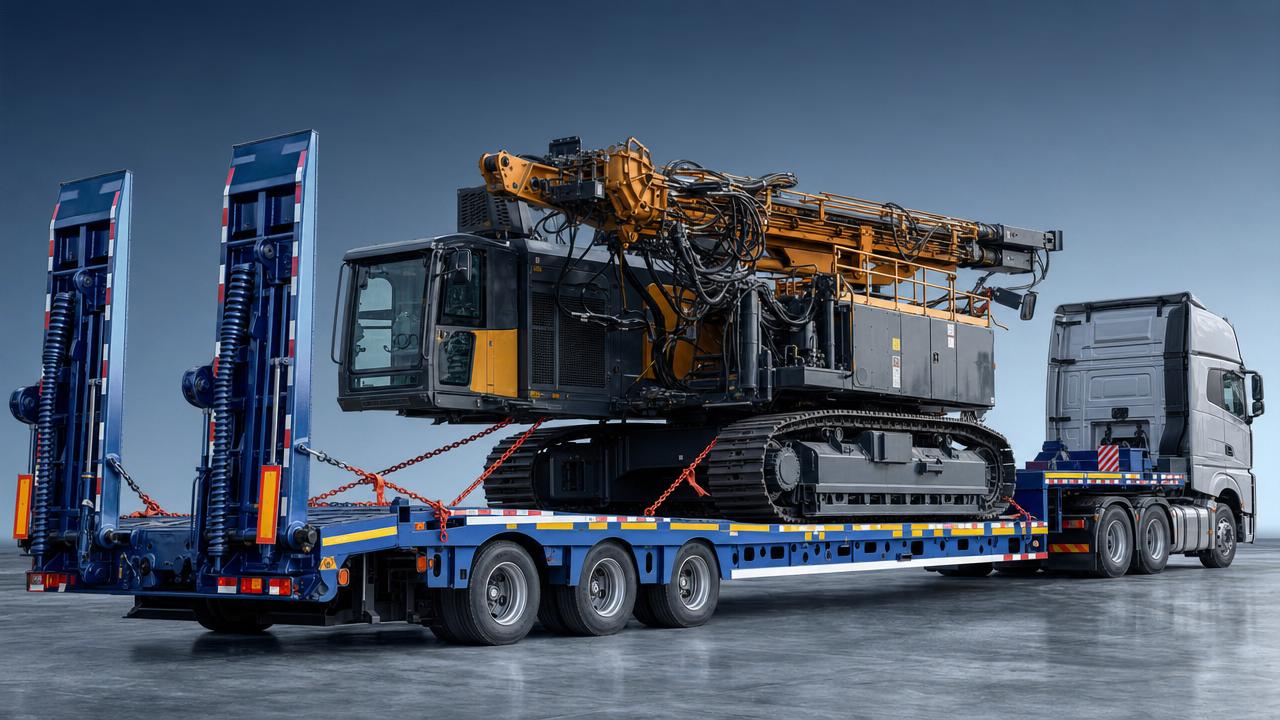
A Flatbed Semi-Trailer case can reveal far more than transport capacity—it highlights the technical decisions behind safe and efficient oversized cargo planning. For technical evaluators, understanding load distribution, route constraints, securing methods, and equipment matching is essential to reducing risk and improving delivery performance. This article explores the practical factors that turn a complex haul into a controlled and reliable operation.
Why does a Flatbed Semi-Trailer case matter in oversized cargo planning?
In the engineering vehicle sector, a Flatbed Semi-Trailer is rarely assessed by deck length alone. Technical evaluation usually starts with cargo geometry, axle load transfer, road conditions, and how the trailer will interact with the tractor, suspension, and braking system.
A real transport case makes these variables visible. It shows whether the selected flatbed configuration can support machine weight concentration, whether turning radius remains acceptable, and whether loading and lashing plans can be executed safely at origin and destination.
For technical evaluators, the value of a Flatbed Semi-Trailer case is practical. It helps verify if a proposed solution will perform under operating constraints rather than only on paper specifications.
- It reveals how cargo center of gravity affects axle distribution and kingpin loading.
- It exposes route limitations such as bridge capacity, road width, gradient, and turning points.
- It clarifies whether standard lashing points, timber blocking, chains, or custom fixtures are required.
- It supports procurement decisions for trailer deck design, suspension type, and tractor matching.
What technical evaluators usually need to confirm first
Before approving an oversized load movement, evaluators typically verify static dimensions, operating weight, load concentration points, and loading method. In many engineering vehicle projects, these details determine whether a standard Flatbed Semi-Trailer is suitable or whether a lower deck or specialized platform is more appropriate.
Which factors define a workable Flatbed Semi-Trailer solution?
A workable solution combines mechanical compatibility with route feasibility. The trailer may be structurally capable, yet still fail the project if axle spacing, legal dimensions, or loading access do not fit the actual movement plan.
The table below summarizes the main evaluation dimensions often used when reviewing a Flatbed Semi-Trailer for oversized engineering cargo.
This kind of matrix helps evaluators move from a generic trailer inquiry to a project-specific decision. It also reduces mismatch between cargo requirements and the final exported configuration.
Load distribution is often the first hidden risk
Oversized cargo may fit on a Flatbed Semi-Trailer by length and width, yet still create unsafe stress concentration. Excavator tracks, transformer feet, bundled steel, and prefabricated structures can place heavy force into small deck zones.
That is why technical teams should ask for the cargo support footprint, not only total weight. A concentrated 30-ton contact area behaves very differently from a uniformly distributed 30-ton load.
Route constraints can invalidate a technically strong trailer
Route review should include bridge load restrictions, toll station passage width, overhead clearance, grade changes, and temporary road conditions near construction sites. A Flatbed Semi-Trailer chosen for open highway operation may face serious issues in port yards, mining roads, or narrow industrial access lanes.
Flatbed Semi-Trailer vs other transport options: how should evaluators compare?
Not every oversized load belongs on a standard flatbed platform. Technical evaluators often compare the Flatbed Semi-Trailer with low bed, drop deck, or modular options depending on height, weight concentration, and legal transport envelope.
The comparison below supports a structured selection process in engineering vehicle logistics.
A Flatbed Semi-Trailer remains attractive when cargo size is large but still within a workable road profile, and when fleet flexibility matters. It can support both project cargo and routine engineering transport if the deck and axle design are selected correctly.
When a standard flatbed is the right decision
- The cargo height remains compliant after loading without forcing complex route detours.
- The load footprint can be supported by reinforced deck sections and proper blocking.
- The operator needs a trailer with wider use across construction, steel, and equipment delivery tasks.
- Loading facilities can handle top loading, side loading, or ramp-assisted machine loading safely.
How should technical evaluators review specifications before procurement?
Procurement of a Flatbed Semi-Trailer should be based on operating duty rather than brochure shorthand. A technically sound review combines payload profile, regional compliance, maintenance access, and tractor compatibility.
A practical evaluation checklist
- Define the actual cargo family. Identify whether the trailer will carry wheeled machines, tracked equipment, structural steel, generators, or mixed project cargo.
- Confirm gross vehicle operating limits. Local regulations on axle load and overall dimensions should be checked before specifying axle count and deck size.
- Review deck details. Ask about beam section, floor material, anti-slip treatment, and reinforcement in high-pressure loading zones.
- Match the trailer to the tractor. Fifth wheel height, braking lines, electrical system, and tractive effort should be reviewed together.
- Evaluate serviceability. Spare parts access, standard running gear, and workshop familiarity affect long-term operating cost.
For export buyers, the process becomes more complex because documentation, logistics timing, and destination road rules must also be coordinated. This is where an experienced exporter can reduce engineering and operational friction.
Why supplier capability changes the technical outcome
Shandong Livol Truck International Trade Co., Ltd. supports customers with full-process coordination, which is highly relevant for Flatbed Semi-Trailer projects tied to engineering vehicles. Technical evaluators often need faster feedback on specification matching, available inventory, lead time, and export documents.
As an authorized domestic and overseas dealer for FOTON, SHACMAN, and SINOTRUK, with extensive 4S store coverage and vehicle inventory in China, the company can help align the trailer decision with tractor selection, parts support, and delivery scheduling. That integration matters when project deadlines are strict.
What can a case review reveal about cost, risk, and implementation?
A Flatbed Semi-Trailer case is useful not only for design review but also for cost forecasting. Technical teams can compare the effect of reinforcement, axle upgrades, escort requirements, and route changes before finalizing procurement.
The table below shows common decision points that influence total project cost and operational risk.
For technical evaluators, this reinforces a simple point: the cheapest flatbed specification is not always the lowest-cost transport solution. Operational reliability usually depends on early technical alignment.
Common implementation mistakes
- Choosing a Flatbed Semi-Trailer by rated payload only, without checking concentrated load zones.
- Ignoring tractor-trailer height match, which can affect stability and kingpin loading.
- Assuming every oversized cargo can be restrained with generic chains and no custom blocking.
- Reviewing export documentation after manufacturing instead of during specification confirmation.
How do compliance and service flow affect export projects?
In cross-border engineering vehicle supply, compliance is not limited to the trailer itself. Technical evaluation also touches documentation accuracy, shipment planning, and destination-side operating conditions.
Typical compliance and delivery checkpoints
- Check applicable road transport requirements in the destination market, including axle load limits and dimensional rules.
- Confirm trailer configuration details in commercial and shipping documents to avoid customs discrepancies.
- Review packaging or protective measures for exposed components during sea or land transit.
- Plan spare parts and after-sales communication before the trailer enters operation.
Because Shandong Livol Truck International Trade Co., Ltd. manages vehicle selection, customization, documentation, customs clearance, and logistics, customers can reduce coordination gaps between the engineering team, procurement team, and export execution team. That is especially useful when a Flatbed Semi-Trailer is part of a larger fleet acquisition involving tractors or construction transport vehicles.
Flatbed Semi-Trailer FAQ for technical evaluators
How do I know whether a Flatbed Semi-Trailer is suitable for oversized equipment?
Start with four checks: total cargo weight, support footprint, loaded height, and route conditions. If the equipment height remains acceptable, the load contact area can be supported, and securing points can be designed properly, a Flatbed Semi-Trailer may be a practical option. If height or concentrated weight is excessive, a low bed alternative should also be reviewed.
What specification details are most often missed during procurement?
The most commonly missed details are deck reinforcement position, fifth wheel height compatibility, axle spacing in relation to regulations, and the number and rating of lashing points. These details directly affect safety, legality, and loading efficiency.
Is a Flatbed Semi-Trailer only for general cargo?
No. In engineering vehicle transport, it is widely used for construction equipment, steel members, generators, and industrial modules. Its suitability depends on cargo profile and route limits, not on a simple general-cargo label.
What should be discussed with the exporter before placing an order?
Technical evaluators should confirm operating cargo types, expected payload range, destination regulations, tractor model match, desired lead time, and any needed customization. It is also helpful to discuss parts support, documentation timing, and shipping method early in the process.
Why choose us for Flatbed Semi-Trailer and engineering vehicle export support?
For buyers evaluating a Flatbed Semi-Trailer in a real project environment, the challenge is rarely limited to product selection. The harder task is connecting specification, availability, export execution, and after-sales support into one controllable process.
Shandong Livol Truck International Trade Co., Ltd. offers practical support for that process through authorized access to FOTON, SHACMAN, and SINOTRUK resources, broad domestic 4S network coverage, stable inventory, and export team coordination. This helps customers shorten confirmation cycles and reduce uncertainty in delivery planning.
If you are reviewing a Flatbed Semi-Trailer for oversized cargo transport, you can contact us to discuss payload range, deck configuration, tractor matching, delivery schedule, destination documentation, customization options, and quotation planning. A clear technical brief at the start usually leads to a safer and more efficient transport solution.
Search Starts Here