News
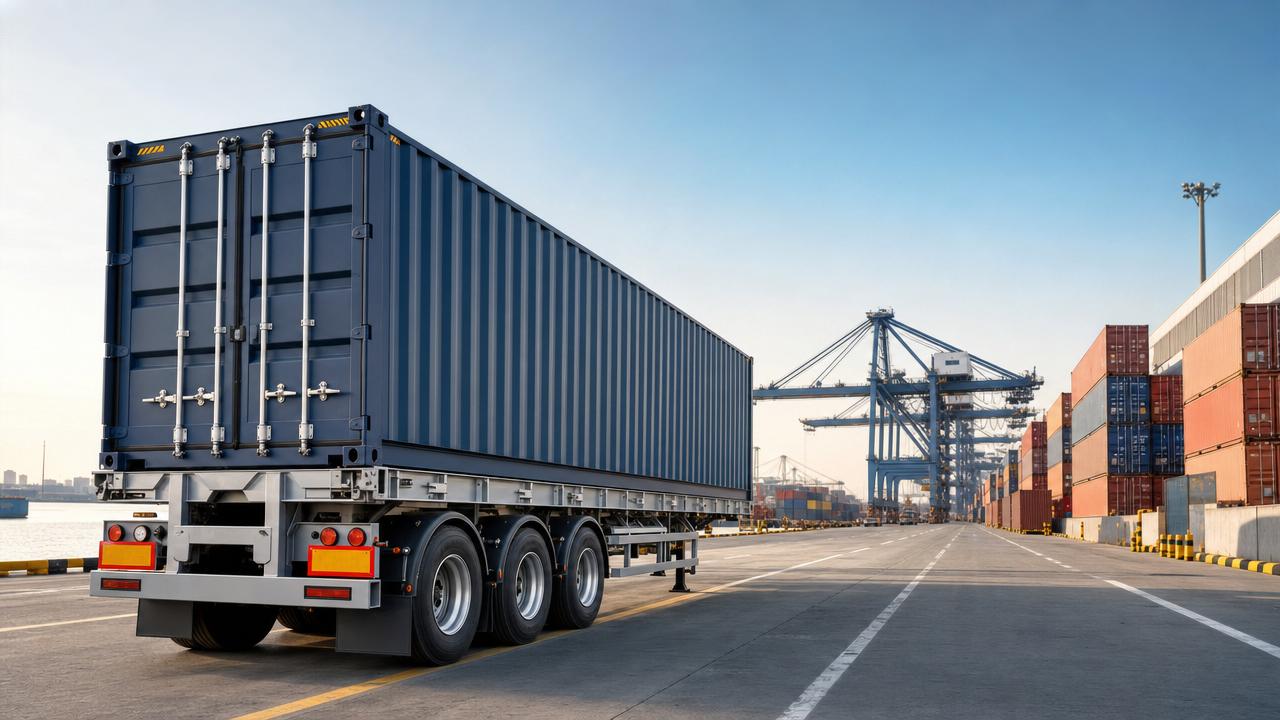
For port haulage projects, choosing the right equipment directly affects turnaround time, operating cost, and delivery reliability. A Skeleton (Container) Semi-Trailer is designed for efficient container transport between terminals, yards, warehouses, and inland logistics hubs, making it a practical asset for project managers who need fast loading, stable performance, and scalable fleet operation. This article explores its best uses in port operations and how selecting a reliable supplier can support safer, smoother, and more cost-effective container movement.
Where a Skeleton (Container) Semi-Trailer Creates the Most Value in Port Haulage
A Skeleton (Container) Semi-Trailer is built with a lightweight frame, container locks, landing gear, axle systems, and braking components for ISO container movement. Unlike flatbed trailers, it is optimized for container fitment rather than mixed cargo loading.
For project managers, its value is not only in transport capacity. It helps reduce loading waiting time, simplify yard dispatching, and improve fleet utilization when container flows are frequent and repetitive.
- Short-distance terminal transfer where containers move between quay cranes, customs areas, inspection points, and temporary storage yards.
- Port-to-warehouse transport for importers, exporters, construction contractors, and industrial logistics operators handling packed containers.
- Inland container depot connection where predictable container sizes require repeatable and stable trailer performance.
- Project cargo support when equipment, materials, or modular units are shipped in standard containers and need rapid onward delivery.
The Skeleton (Container) Semi-Trailer is especially suitable when a project requires high frequency, simple loading procedures, and standardized container handling. It is less suitable when cargo frequently exceeds container dimensions or needs side loading.
Which Port Haulage Scenarios Fit This Trailer Best?
Different port projects have different operating pressure. Some focus on fast vessel discharge, while others need reliable delivery to bonded warehouses or construction sites. The table below helps match trailer use with operating priorities.
The key decision is operational regularity. If containers move in a planned route with standard lifting equipment, the Skeleton (Container) Semi-Trailer often provides a stronger fit than a general-purpose trailer.
High-frequency port shuttles
In busy ports, each minute spent aligning, securing, or waiting can multiply across an entire fleet. A Skeleton (Container) Semi-Trailer improves repeatability because loading points, lock positions, and container dimensions are standardized.
Export and import warehouse routes
For warehouses near ports, dispatch managers need trailers that can handle packed containers without complex cargo handling. This reduces risk during handover and keeps documentation consistent across trips.
Skeleton Trailer, Flatbed, or Low Bed: How Should Project Managers Compare?
A wrong trailer choice can create hidden costs. The issue is not whether one trailer is universally better, but whether the equipment matches container volume, cargo type, loading method, and road conditions.
For port haulage, the Skeleton (Container) Semi-Trailer normally wins when containers are the main cargo unit. For mixed construction logistics, managers may need a combined fleet strategy rather than one universal trailer.
Technical Points That Affect Safety, Uptime, and Operating Cost
The visible frame is only one part of the decision. Project managers should evaluate structural design, container lock layout, axle configuration, suspension type, braking system, tires, landing gear, and corrosion protection.
A Skeleton (Container) Semi-Trailer used in port areas often faces humidity, salt exposure, uneven yards, sharp turning, and repeated coupling. These conditions make build quality and component matching important.
- Frame strength should match intended container weight, road regulations, and operating terrain without unnecessary dead weight.
- Twist locks must align accurately with container corner castings to avoid delays and unsafe securing practices.
- Axles and suspension should be selected according to payload, local road limits, and maintenance accessibility.
- Brake systems should support reliable stopping under loaded conditions, especially in congested port roads.
- Surface treatment should consider corrosion exposure in coastal environments and frequent outdoor parking.
Typical specification discussion points
Exact specifications should be confirmed according to local regulations and cargo weight. The following table gives practical discussion points for procurement meetings and supplier communication.
A well-specified Skeleton (Container) Semi-Trailer should balance strength, tare weight, compliance, and serviceability. Overspecification increases purchase cost, while underspecification may shorten service life.
Procurement Checklist: What to Confirm Before Placing an Order
Project procurement often becomes difficult because several departments evaluate the trailer differently. Operations focuses on speed, finance checks cost, safety teams review compliance, and logistics teams worry about delivery time.
- Define the container mix, including 20ft, 40ft, empty container, loaded container, and any special container types used in the project.
- Confirm road regulations, axle load limits, registration requirements, and trailer dimension restrictions in the destination market.
- Review the operating route, including port yard surfaces, highway distance, turning radius, slopes, and maintenance access.
- Evaluate tractor compatibility, kingpin height, coupling standards, air and electrical connections, and braking interface.
- Ask for clear export documentation, delivery schedule, spare parts support, and after-sales communication responsibilities.
When these points are clarified early, the Skeleton (Container) Semi-Trailer becomes easier to compare across suppliers. It also reduces later disputes about configuration, compliance, or delivery readiness.
Decision questions for internal review
Before budget approval, ask whether the trailer will mainly serve port shuttle work, long-distance container transport, or mixed project logistics. This determines the right balance between durability, weight, and price.
Cost Factors and Alternatives Project Teams Should Not Ignore
The purchase price of a Skeleton (Container) Semi-Trailer is only one part of total cost. Fuel consumption, tire wear, maintenance downtime, corrosion repair, and compliance risk can change the real project budget.
If container haulage is occasional, renting or using a flatbed may be acceptable. If container transport is a core daily task, a Skeleton (Container) Semi-Trailer usually offers better operational focus.
Compliance, Documentation, and Export Delivery Considerations
Port haulage equipment must satisfy both operating and import requirements. Depending on destination country, buyers may need commercial invoices, packing lists, certificates of origin, inspection documents, and vehicle technical files.
A Skeleton (Container) Semi-Trailer may also need to align with local road safety rules, lighting requirements, braking standards, reflective marking practices, and registration procedures. These should be checked before shipment.
- Confirm whether the destination market requires specific inspection documents before customs clearance or registration.
- Check lighting, side protection, rear protection, tire specification, and braking compatibility with local road requirements.
- Prepare technical drawings or configuration sheets when the project owner, port authority, or financer requests formal review.
- Clarify shipping method, packing method, delivery port, and estimated lead time to reduce project schedule uncertainty.
For international procurement, documentation quality matters almost as much as product configuration. Delays in customs clearance can disrupt container movement schedules and increase storage charges.
Common Mistakes When Buying a Skeleton (Container) Semi-Trailer
Many procurement problems are caused by incomplete early communication. A trailer may look correct in a quotation, yet still fail to match the actual project environment.
- Choosing only by price while ignoring axle quality, braking reliability, corrosion exposure, and local spare parts availability.
- Assuming all container trailers fit every container flow without checking 20ft and 40ft loading positions.
- Forgetting tractor compatibility, especially coupling height, air connections, electrical socket type, and braking interface.
- Ignoring road and port yard conditions, which may affect suspension choice, tire wear, frame stress, and maintenance frequency.
Why the cheapest offer may become expensive
A low initial price can be attractive when budgets are tight. However, if the Skeleton (Container) Semi-Trailer needs modification after arrival, the project may face repair costs, idle trucks, and delayed cargo handover.
FAQ for Project Managers Planning Container Trailer Procurement
How do I choose a Skeleton (Container) Semi-Trailer for port haulage?
Start with container size, loading weight, trip distance, road regulations, and tractor compatibility. Then compare frame design, twist lock positions, axle configuration, suspension, braking system, and anti-corrosion treatment.
Is a Skeleton (Container) Semi-Trailer suitable for construction projects?
Yes, when construction equipment, tools, temporary facilities, or materials are shipped in standard containers. It is less suitable for oversized machinery that requires a low bed semi-trailer.
What should be confirmed before export delivery?
Confirm configuration, documents, customs requirements, destination port, shipping method, spare parts support, and local registration rules. Early confirmation reduces clearance delays and project scheduling risks.
Can one trailer carry both 20ft and 40ft containers?
Many designs can be configured for multiple container positions, but the exact layout must be confirmed. Buyers should provide container mix and loading frequency before final quotation.
Why Choose Shandong Livol Truck for Your Container Trailer Solution?
Shandong Livol Truck International Trade Co., Ltd., based in Shandong, China, supports global buyers with commercial vehicle export experience, practical vehicle selection, and integrated project delivery services.
As an official authorized domestic and overseas dealer for FOTON, SHACMAN, and SINOTRUK, we maintain access to commercial vehicle resources, authorized 4S store networks, and sufficient inventory for stable supply.
For a Skeleton (Container) Semi-Trailer project, our team can help review operating routes, trailer configuration, tractor matching, documentation, customs clearance, logistics arrangements, and after-sales support needs.
- Consult us for parameter confirmation, including container size, axle configuration, suspension choice, braking system, and surface treatment.
- Request support for product selection when comparing container trailers, tractor heads, flatbeds, and other engineering vehicle combinations.
- Discuss delivery cycle, export documents, customs clearance preparation, logistics method, and destination compliance requirements.
- Share your port haulage workload, route conditions, budget range, and project timeline to receive a more practical configuration proposal.
If your project depends on reliable container movement, the right Skeleton (Container) Semi-Trailer can improve daily dispatch efficiency and reduce avoidable operating risk. Contact Shandong Livol Truck to discuss specifications, customization, quotation, and export delivery planning for your next port haulage fleet.
Search Starts Here