
News
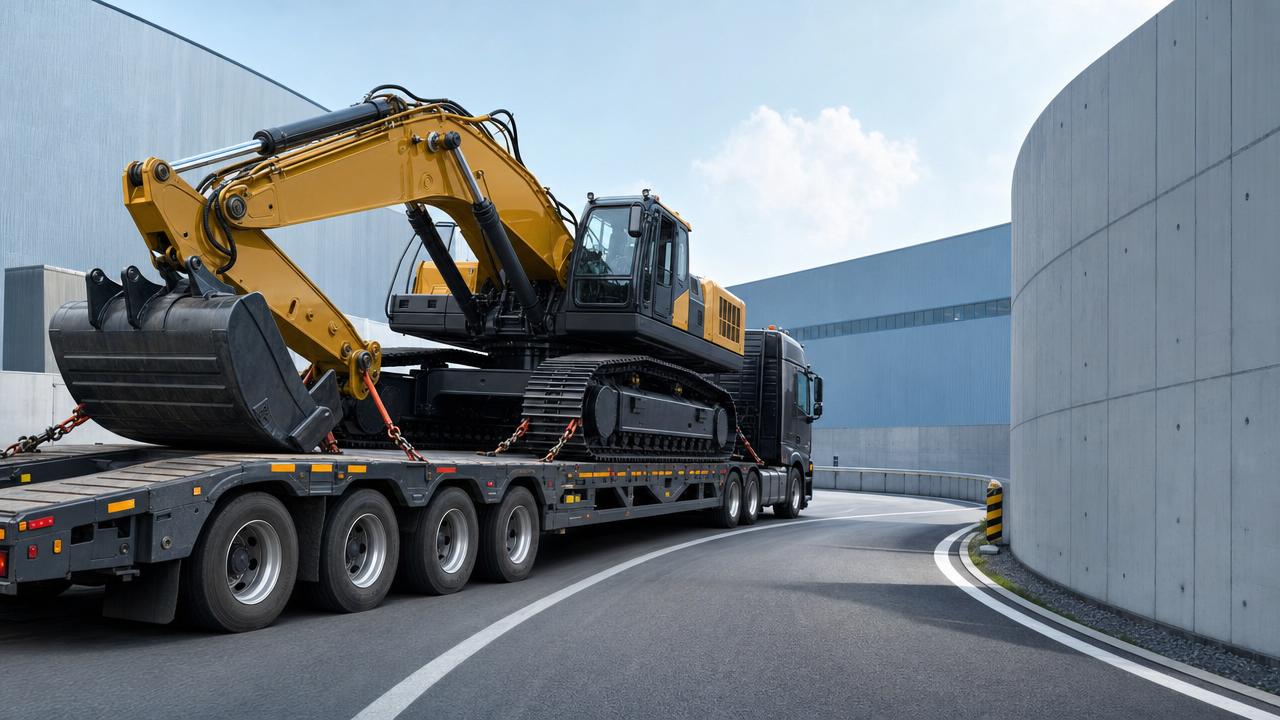
When oversized machinery must pass through narrow roads, sharp turns and height-restricted areas, a Low Plate transport solution becomes essential.
This case shows how route planning, trailer choice and disciplined handling reduce risk, protect equipment and keep delivery on schedule.
In engineering vehicle logistics, the right Low Plate setup is not only about loading weight.
It is about matching cargo dimensions, road limits, turning space and unloading conditions before the journey begins.
Shandong Livol Truck International Trade Co., Ltd. supports global transport projects with reliable commercial vehicle resources, export coordination and practical delivery planning.
Why tight-route jobs require a different Low Plate decision
Not every heavy haul move needs the same trailer, escort level or route survey depth.
A Low Plate transport task becomes complex when cargo height, road width and turning radius conflict with local conditions.
Typical engineering vehicle cargo includes excavators, rollers, drilling rigs, wheel loaders and compact batching units.
These machines may be heavy, but height and overhang often create the bigger problem on tight routes.
A standard flatbed may carry the weight, yet still fail under bridge limits or urban access restrictions.
That is why Low Plate planning must start from the route, not only from the machine specification sheet.
Scenario one: urban delivery with low bridges and narrow access
Urban transport creates the most demanding Low Plate decisions for oversized machinery.
Overpasses, roadside trees, parked vehicles and utility lines reduce tolerance at every step.
Core judgment points
- Loaded height after tire compression and deck settlement
- Turning radius at corners, site gates and roundabouts
- Delivery window allowed by local traffic control
- Need for partial disassembly before loading
In this setting, a Low Plate trailer helps reduce total transport height and improve stability.
However, the lowest deck is not automatically the best choice.
If the access road includes steep ramps, extreme low clearance under the trailer may cause bottoming out.
The best urban solution often combines a Low Plate with route simulation and a timed arrival plan.
Scenario two: industrial park transfer with sharp turns and fixed unloading zones
Industrial parks look easier than city centers, yet many Low Plate jobs fail there due to turning conflicts.
The main road may be wide, but the final 300 meters can decide the success of the whole move.
What must be checked first
The unloading area must be reviewed before trailer dispatch.
Some machines can drive off safely, while others need crane support or a ramp with precise ground bearing capacity.
For plant transfers, a Low Plate often works best when the machine’s center of gravity remains low and centered.
If attachments shift side weight, additional blocking and lashing plans are required.
A route that looks short can still be risky when corners force multi-point turns.
In these cases, steering axle configuration matters as much as deck height.
Scenario three: rural or mountain routes with uneven surfaces
Remote project sites often need a Low Plate because machinery is large and self-driving is inefficient or unsafe.
Still, poor road surfaces change the transport logic completely.
Key risk factors
- Soft shoulders and unstable edge support
- Steep slopes and drainage ditches
- Temporary bridges with uncertain load ratings
- Limited recovery options if a trailer gets stuck
A Low Plate can lower the center of gravity, which helps on uneven roads.
But if the deck sits too low for rough terrain, contact with road crests becomes a real hazard.
For mountain or rural jobs, transport teams often balance low deck height against breakover angle and axle travel.
That balance determines whether the Low Plate remains practical all the way to the site.
How Low Plate needs change across different transport scenes
The same machine may require different Low Plate specifications in different delivery conditions.
This comparison shows why a Low Plate selection should never be made by price alone.
Transport safety depends on route compatibility, not just trailer availability.
Practical Low Plate matching advice for oversized machinery
A good Low Plate plan begins with exact cargo data.
Measured transport dimensions must include attachments, folded parts and real operating weight.
Recommended matching steps
- Confirm machine length, width, height, weight and center of gravity.
- Review route limits for bridge height, road width and turning space.
- Choose a Low Plate deck height that clears both route limits and road profile changes.
- Check axle number, tire condition and braking capacity.
- Plan lashing points based on machine structure, not convenience.
- Confirm unloading method before dispatch.
Where export transport is involved, document accuracy is equally important.
Shandong Livol Truck International Trade Co., Ltd. supports this process with vehicle sourcing, customization, export documentation and logistics coordination.
With authorized access to FOTON, SHACMAN and SINOTRUK resources, stable supply can align with project schedules more effectively.
Common mistakes when planning a Low Plate move on tight routes
Many transport problems come from early assumptions rather than road events.
- Using machine brochure dimensions instead of measured loaded dimensions
- Ignoring suspension movement when estimating total height
- Checking the main route but not the last entry section
- Selecting the lowest Low Plate without studying terrain changes
- Treating all oversized machinery as weight-only cargo
- Leaving permit and escort planning too late
A professional Low Plate operation avoids these errors through pre-checks, route validation and realistic loading plans.
That discipline protects both the cargo and the delivery timeline.
Next-step planning for a safer Low Plate transport project
If a machine must move through tight roads, start with route facts and cargo measurements.
Then compare those conditions against the real capability of the Low Plate trailer, not a generic transport assumption.
The right solution may involve a lower deck, a different axle layout, partial disassembly or a revised unloading plan.
For engineering vehicle export and heavy haul coordination, reliable supply and experienced process support make a measurable difference.
Shandong Livol Truck International Trade Co., Ltd. provides integrated assistance from vehicle selection to logistics execution.
A carefully matched Low Plate strategy helps oversized machinery arrive safely, efficiently and with fewer costly surprises on the road.
Search Starts Here