
News
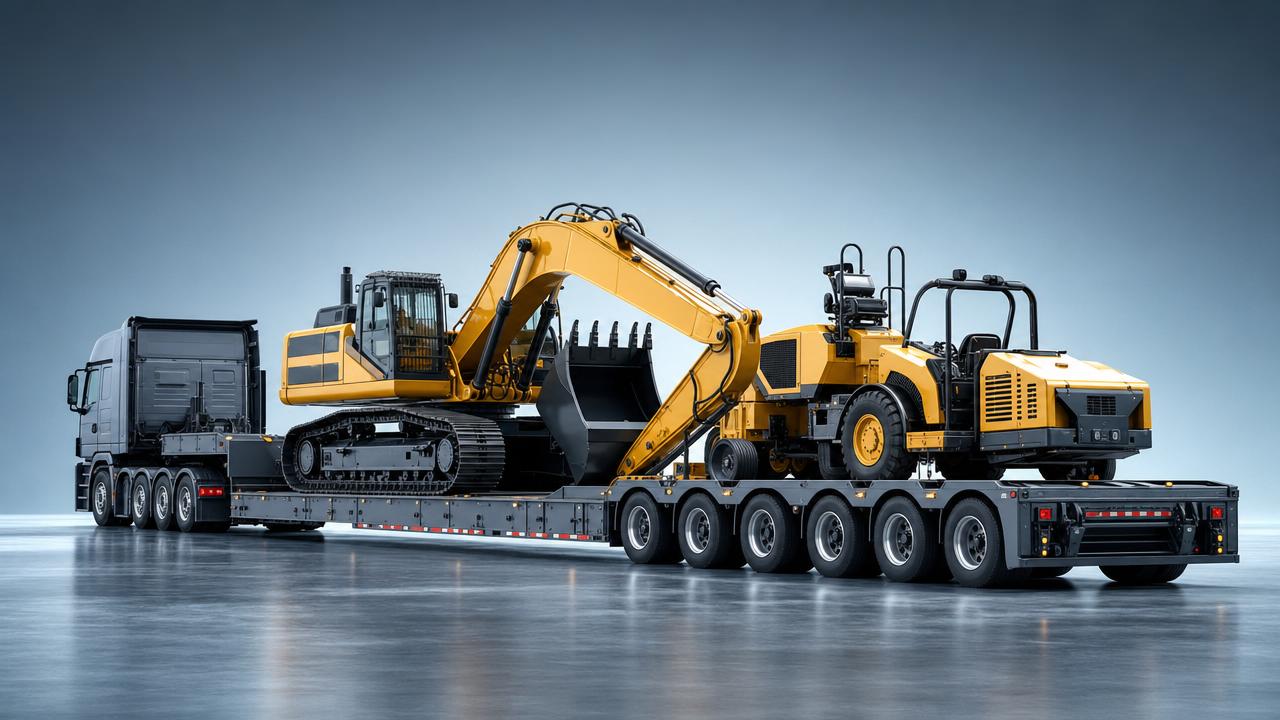
For technical evaluators assessing transport solutions for oversized machinery, choosing the right Low Plate trailer is critical to safety, compliance, and loading efficiency. From excavators and mining equipment to large construction machines, Low Plate configurations help reduce transport height and improve stability. Backed by strong commercial vehicle resources and export experience, Shandong Livol Truck International Trade Co., Ltd. supports global customers with reliable trailer selection and integrated delivery solutions.
Why Application Scenarios Matter More Than Generic Specifications
A Low Plate trailer is rarely selected in isolation. For technical evaluators in engineering vehicle operations, the real question is not simply whether a trailer can carry a machine, but whether it can carry that machine in a specific operating environment, under local road rules, and with acceptable loading risk. The same trailer that performs well for urban construction equipment may be inefficient for quarry machinery, while a model optimized for long-haul mining support may be excessive for short-distance site transfers.
This is why scenario-based evaluation is essential. Oversized machinery transport involves variables such as axle load, deck height, approach angle, tire type, turning radius, route restrictions, loading method, and frequency of relocation. A Low Plate solution should be judged by how well it matches these conditions. Technical teams that focus only on nominal payload often overlook critical differences in machine geometry, jobsite access, and compliance exposure.
In practical procurement and export projects, the best Low Plate choice often emerges from a comparison of use cases rather than from one universal specification sheet. That approach helps reduce rework, loading incidents, permit delays, and operating inefficiency across borders.
Where Low Plate Trailers Are Commonly Used in Oversized Machinery Transport
Low Plate trailers are widely used in engineering vehicle logistics because they lower the center of gravity and create a more manageable transport profile for tall or heavy machines. However, the most suitable use cases can be grouped into several high-frequency business scenarios.
Construction Equipment Relocation
Excavators, bulldozers, wheel loaders, graders, and road rollers are often moved between short-cycle projects. In this scenario, a Low Plate trailer is valued for quick loading, broad machine compatibility, and stable road behavior. Evaluators should focus on ramp angle, deck length, tie-down layout, and how often different machine classes will share the same trailer.
Mining and Quarry Support Transport
Mining environments involve larger payloads, harsher road surfaces, and frequent transport of heavy tracked machines. Here, a Low Plate trailer must be assessed for structural durability, reinforced suspension, axle distribution, and resistance to torsional stress. A technically acceptable road trailer may still underperform if it lacks site-ready strength for rough access routes.
Energy, Infrastructure, and Industrial Projects
Large generators, drilling support units, batching equipment, and plant-related machinery often require transport over longer routes with stricter route planning. In these cases, Low Plate evaluation must include total loaded height, escort requirements, bridge restrictions, and cargo securement for non-standard machine footprints.
Cross-Border Export and Regional Distribution
For exporters and regional distributors, Low Plate selection should also account for destination regulation, spare parts support, and compatibility with local tractors. A trailer suitable in one country may require changes in axle configuration, braking system, lighting standard, or kingpin specification before it becomes commercially practical in another market.
Scenario Comparison Table for Technical Evaluation
The table below helps technical evaluators compare common Low Plate use cases and identify the main decision points before final specification review.
How Requirements Change Across Different Use Cases
Even within the same industry, Low Plate requirements can vary significantly. Technical evaluators should avoid assuming that payload capacity alone determines suitability. The following dimensions often change by scenario.
Transport Height and Center of Gravity
For tall machinery, the main value of a Low Plate trailer is reduced loaded height. This is especially important in regions with low bridge clearance, overhead cable exposure, or strict permit thresholds. In contrast, machines with modest height but extreme mass may require more attention to axle arrangement and deck reinforcement than to deck height alone.
Loading Method and Ground Conditions
A contractor operating on prepared surfaces may prioritize fast rear-ramp loading. A mining operator working on uneven ground may need stronger support at ramp contact points and better frame stability during machine climb-on. When tracked equipment dominates the fleet, deck surface durability and anti-slip performance become more important than they are in mostly wheeled-equipment scenarios.
Trip Distance and Utilization Rate
Short-distance site shuttles generally reward simple, flexible Low Plate configurations that minimize loading time. Long-haul transport places more emphasis on brake reliability, tire wear, suspension consistency, and maintainability. High-utilization fleets should evaluate lifecycle cost and downtime risk, not only acquisition price.
Regulatory Environment
In some markets, the deciding factor is not engineering capability but legal operability. A Low Plate trailer may be technically capable of carrying the machine, yet still create problems if axle grouping, total length, or braking configuration fails local regulation. This is a common issue in export planning and should be checked early.
Best-Fit Recommendations by Machinery Type
Technical evaluators often begin with the machine rather than the route. That is a practical starting point, but machine type should still be tied to use conditions.
Excavators and Tracked Construction Machines
A Low Plate trailer is highly suitable when excavators must be relocated frequently and loaded under variable site conditions. Important checks include deck width, track contact distribution, beavertail design, and whether boom positioning changes the transport envelope. For heavier classes, reinforced main beams and proper axle load sharing are essential.
Loaders, Rollers, and Wheeled Equipment
These machines often benefit from easy roll-on access and efficient dispatch turnaround. In this use case, Low Plate selection should prioritize loading angle, deck traction, and tie-down convenience. If transport frequency is high, small improvements in loading speed can significantly reduce fleet idle time.
Mining Equipment and Heavy Industrial Units
This is the scenario where evaluators must be most cautious. Heavy concentrated loads can exceed what a general-purpose Low Plate is designed to manage. Assessment should include frame section strength, suspension robustness, kingpin load transfer, and whether route surfaces create repeated dynamic stress beyond standard highway assumptions.
Common Misjudgments When Matching Low Plate Trailers to Real Jobs
Many transport issues come from misreading the application rather than from poor manufacturing. Several recurring mistakes deserve attention.
- Choosing by nominal payload only, without reviewing machine weight distribution and point loading.
- Ignoring loaded height until permits or route surveys are already underway.
- Assuming one Low Plate trailer can serve all machinery types equally well in mixed fleets.
- Overlooking ramp geometry, which can create grounding or unsafe loading for long-wheelbase equipment.
- Specifying for highway use while the actual work includes quarry roads, temporary access tracks, or uneven loading areas.
- Failing to check destination-country standards in export projects, especially for brake systems, lighting, and axle arrangements.
For technical evaluators, these are not minor details. They affect utilization, insurance exposure, compliance cost, and the probability of loading delays on actual projects.
A Practical Evaluation Checklist Before Final Selection
Before confirming a Low Plate specification, it is useful to validate a few scenario-driven questions with operations, maintenance, and logistics teams.
How Professional Export Support Improves Scenario Matching
For international buyers, Low Plate selection is not only a product decision but also a supply-chain decision. Trailer specification, tractor matching, spare parts planning, export documentation, and final delivery timing all influence project success. This is especially relevant for technical evaluators who must defend equipment choices internally.
Shandong Livol Truck International Trade Co., Ltd. brings value in this stage through strong commercial vehicle resources, authorized brand support, and practical export experience. As the official authorized domestic and overseas dealer for FOTON, SHACMAN, and SINOTRUK, with a broad 4S network and sufficient vehicle inventory, the company can support customers with stable supply and coordinated delivery. Its export team also helps align trailer and tractor solutions with documentation, customs clearance, logistics planning, and after-sales considerations.
For technical teams, this integrated capability reduces the gap between specification approval and operational deployment. It also helps verify whether a Low Plate configuration that looks suitable on paper will remain suitable after shipping, registration, and field use in the destination market.
Conclusion: Start With the Scenario, Then Confirm the Low Plate Specification
A Low Plate trailer is most effective when selected around a real transport scenario: the machine type, the route environment, the loading method, the legal framework, and the business rhythm of the project. For oversized machinery transport, there is no single best configuration for every operator. The right choice depends on which risks matter most in your application, whether that is transport height, heavy point loading, rapid deployment, export compliance, or rough-road durability.
If you are evaluating Low Plate options for construction, mining, infrastructure, or export distribution, the next step should be a structured review of your machinery list, route limits, local regulations, and tractor compatibility. With experienced supply support and full-process export coordination, Shandong Livol Truck International Trade Co., Ltd. can help turn those requirements into a reliable transport solution that fits your operating scenario rather than forcing your scenario to fit a generic trailer.
Search Starts Here