News
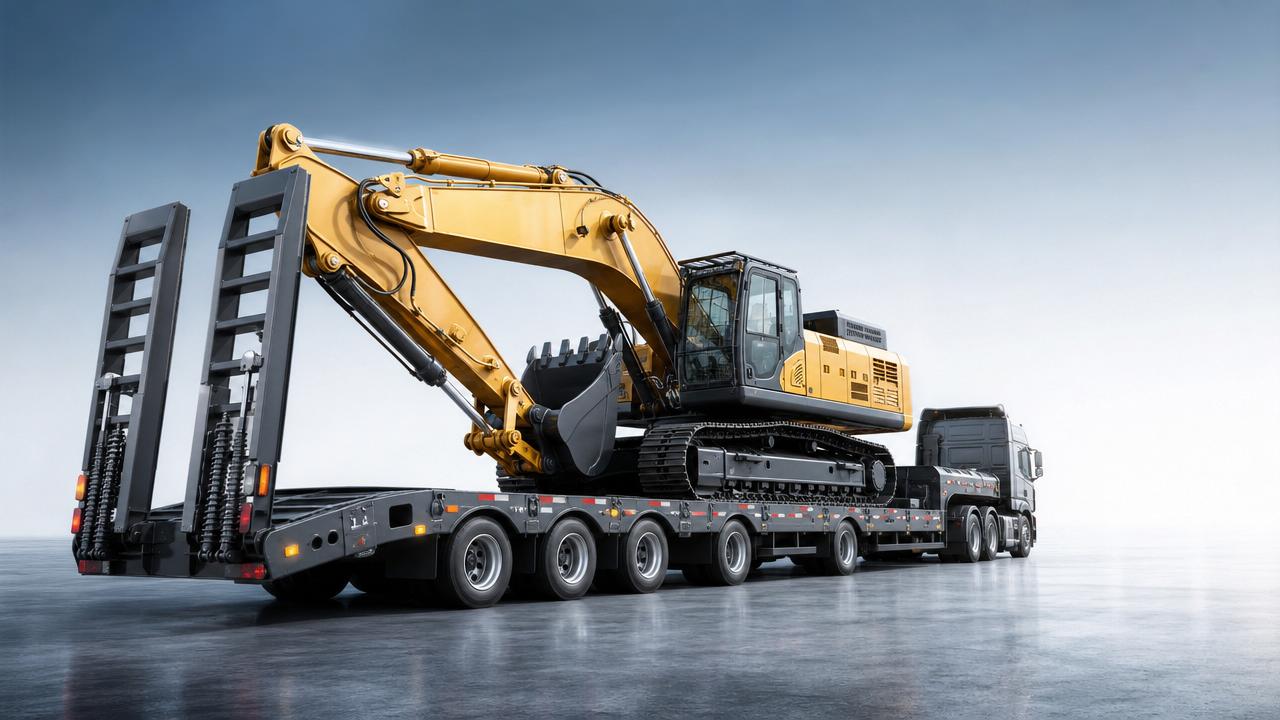
Choosing the wrong Low Plate trailer can quietly disrupt project timelines, increase logistics costs, and delay critical equipment delivery. For business evaluators, understanding the most common selection mistakes is essential to reducing operational risk and improving transport efficiency. This article highlights key decision points that affect trailer performance, compliance, and delivery reliability in engineering vehicle logistics.
In engineering vehicle transport, a Low Plate trailer is not just a carrying platform. It directly affects loading safety, permit approval, route planning, unloading speed, and total landed cost. A poor match between trailer configuration and equipment profile can add 3–10 days to delivery schedules, especially when cross-border paperwork, axle load limits, or port handling constraints are involved.
For business evaluators comparing suppliers, the most costly mistakes rarely start on the road. They begin at the selection stage: choosing by price alone, overlooking deck height, underestimating axle distribution, or ignoring after-sales support. In markets where excavators, rollers, wheel loaders, and other engineering vehicles must move quickly from factory to site, these errors can affect project mobilization, contractor performance, and customer trust.
Why Low Plate Trailer Selection Has a Direct Impact on Delivery Performance
A Low Plate trailer is commonly used to transport heavy and oversized engineering equipment because its lower deck helps control total transport height. That advantage becomes critical when moving machinery through tunnels, under bridges, or across routes with height limits between 4.2 m and 4.8 m, depending on the destination country.
However, not every Low Plate trailer suits every jobsite requirement. A trailer designed for 30–40 tons may be unsuitable for a 55-ton tracked excavator. Likewise, a deck optimized for wheeled machinery may not perform well with steel-track equipment unless the floor structure, traction angle, and load reinforcement are properly matched.
The hidden cost of a wrong specification
Selection mistakes usually create cost in 4 areas: permit delays, loading inefficiency, transport risk, and maintenance interruptions. In practical terms, even a 5% mismatch in payload planning can lead to overloading on one axle group, forcing route changes or reloading at a transfer yard.
- Additional permit review time of 2–7 working days
- Extra crane or ramp adjustment cost during loading
- Higher tire, suspension, or braking wear over long-distance operation
- Increased risk of cargo movement during emergency braking or uneven roads
What business evaluators should measure first
Before comparing brands or quotations, evaluators should confirm 5 baseline factors: equipment operating weight, transport dimensions, route restrictions, loading frequency, and destination compliance. These points are more important than headline price because they determine whether the Low Plate solution will remain reliable over repeated shipments.
The table below shows how common evaluation factors influence equipment delivery outcomes in engineering vehicle logistics.
The key conclusion is simple: delivery reliability starts with specification accuracy. A Low Plate trailer that fits the equipment, route, and compliance environment reduces downstream disruption far more effectively than a low initial purchase price.
The Most Common Low Plate Trailer Selection Mistakes
Many delays in engineering vehicle logistics can be traced back to 6 recurring buying errors. These mistakes appear during quotation comparison, technical review, or supplier communication. For business evaluators, identifying them early can prevent expensive revisions after order confirmation.
Mistake 1: Buying by nominal tonnage only
A trailer labeled for 60 tons does not automatically suit every 60-ton machine. The actual transport result depends on axle spacing, frame reinforcement, center of gravity, and dynamic load during braking or turning. A crawler excavator and a wheel loader with the same weight can distribute force very differently across the deck.
What to check instead
- Operating weight versus transport weight with attachments
- Load concentration points under tracks or tires
- Axle-by-axle bearing limits for the intended route
- Expected transport distance, especially above 500 km
Mistake 2: Ignoring overall transport height
Height control is one of the main reasons companies choose a Low Plate trailer, yet it is often miscalculated. Evaluators sometimes focus on machine height only and forget to add deck height, tire compression variation, and attachment position. A difference of 120–200 mm may decide whether a route is approved or rejected.
Mistake 3: Choosing the wrong ramp and deck layout
Loading efficiency matters when equipment must be dispatched quickly to mines, road projects, or urban construction sites. If the ramp angle is too steep, tracked machinery may scrape, slip, or require auxiliary support. If deck length is too short, boom placement or wheel spacing may become unstable during transit.
Mistake 4: Underestimating compliance differences between markets
Domestic compliance and export compliance are not always identical. Some destinations require closer review of axle load, reflective markings, braking systems, or documentation alignment with customs declarations. A technically acceptable Low Plate trailer can still create shipment delay if its paperwork and destination requirements are not checked in advance.
Mistake 5: Treating after-sales support as optional
In B2B transport operations, downtime after delivery can be as damaging as a delayed shipment. Wear parts, brake components, tires, suspension points, and service response capability should be reviewed before purchase. If replacement parts require 20–30 days to source, even a small repair can interrupt fleet availability.
Mistake 6: Selecting a supplier without integrated export coordination
A capable manufacturer or trader should not only supply the Low Plate unit but also support configuration review, documentation, customs preparation, and logistics planning. When these steps are split among multiple parties, lead time often expands by 1–2 weeks because technical data, shipping schedules, and approval documents are not synchronized.
The comparison below helps evaluators distinguish a high-risk buying approach from a controlled procurement process.
For engineering vehicle buyers, the safest procurement model is not the fastest quotation. It is the one that reduces technical ambiguity before production, shipment, and site delivery begin.
How to Evaluate the Right Low Plate Trailer for Engineering Vehicle Transport
A reliable Low Plate selection process should be practical, document-based, and aligned with real transport scenarios. For most commercial buyers, 4 evaluation stages are enough to improve decision quality without slowing procurement unnecessarily.
Stage 1: Define the equipment transport profile
Start with complete machine data: net weight, working weight, attachment weight, wheelbase or track length, total height, total width, and loading direction. If one trailer will carry 3 or more equipment types, the design should be based on the most restrictive unit, not the average machine.
Stage 2: Match trailer structure to loading reality
Review axle count, frame design, deck material, suspension type, ramp mechanism, and tie-down points. In engineering transport, a trailer that loads in 20 minutes instead of 45 minutes can improve dispatch rhythm significantly, especially when site unloading windows are tight.
Priority checks
- Whether the deck supports concentrated track pressure
- Whether the loading angle suits rollers, pavers, or excavators
- Whether lashing points match the machine’s securement plan
- Whether tire and axle arrangement fit local road conditions
Stage 3: Validate route and compliance conditions
A technically strong Low Plate trailer can still underperform if route restrictions are ignored. Confirm bridge limits, turning radius constraints, port loading requirements, and destination regulations before final approval. For export orders, document consistency between technical specification and shipping papers should be checked at least 2 times before dispatch.
Stage 4: Assess supplier execution capability
Supplier evaluation should include more than factory output. Ask about inventory readiness, customization lead time, export document handling, pre-shipment inspection, and after-sales communication. In many projects, the difference between a smooth and delayed delivery is not the product alone, but whether the supplier can coordinate the full process from selection to port handover.
For example, companies with established stock resources and organized service networks can often reduce dispatch pressure when urgent replacement units or coordinated vehicle solutions are required. This is especially relevant when engineering contractors procure not only Low Plate transport equipment but also related commercial vehicles for integrated fleet planning.
Practical Procurement Guidance for Business Evaluators
Business evaluators need clear criteria that connect technical suitability with commercial performance. A structured review framework helps avoid subjective buying decisions and supports internal approval across procurement, logistics, and project management teams.
A 6-point checklist before order confirmation
- Confirm actual machine dimensions in transport condition, not brochure condition.
- Verify payload margin, ideally with a safety buffer rather than a zero-gap load plan.
- Review route height and axle restrictions for the main operating region.
- Check ramp design and deck structure against the intended machine category.
- Confirm spare parts availability and expected support response time.
- Ensure the supplier can handle documentation, customs support, and shipping coordination.
Why integrated supply matters in cross-border projects
For international engineering vehicle buyers, procurement efficiency often depends on whether one partner can coordinate vehicles, trailers, documents, and logistics together. Shandong Livol Truck International Trade Co., Ltd., based in Shandong, China, serves global customers as a professional commercial vehicle exporter with strong industry capability and extensive trade experience.
As an official authorized domestic and overseas dealer for FOTON, SHACMAN, and SINOTRUK, the company operates a large number of authorized 4S stores across China and maintains sufficient inventory to support stable supply and faster delivery arrangements. For buyers who need practical coordination rather than fragmented sourcing, this type of network can improve timing control across multiple shipment stages.
Its professional export team supports the full process, including vehicle selection, customization, documentation, customs clearance, and logistics. That matters when business evaluators need a supplier able to answer technical questions quickly, align export paperwork accurately, and reduce handover errors that may delay engineering equipment deployment.
When a customized Low Plate solution is the better option
Customization is worth considering when the transport job involves repeated movement of specialized equipment, non-standard dimensions, or mixed fleets. If the same route and equipment class will be used for 12 months or longer, a tailored deck layout or axle arrangement may lower total operating cost compared with repeated adjustments to a standard trailer.
The goal is not to over-specify, but to fit the trailer to the transport mission. For many engineering vehicle operations, the right Low Plate selection should balance 3 things at once: compliance, loading practicality, and lifecycle support.
Conclusion: Better Low Plate Decisions Mean Faster Equipment Delivery
Delayed equipment delivery is often blamed on traffic, customs, or scheduling, but the root cause frequently begins much earlier with the wrong Low Plate trailer decision. When evaluators focus on payload reality, total transport height, axle distribution, ramp usability, compliance review, and supplier execution, they reduce avoidable risk before the first shipment starts.
For engineering vehicle buyers, a sound procurement decision is one that supports safe loading, predictable transit, and dependable arrival at the jobsite. If you are comparing Low Plate options for heavy equipment transport, need coordinated commercial vehicle export support, or want a customized recommendation based on your route and machinery profile, contact Shandong Livol Truck International Trade Co., Ltd. to get a tailored solution and discuss product details with an experienced team.
Search Starts Here