
News
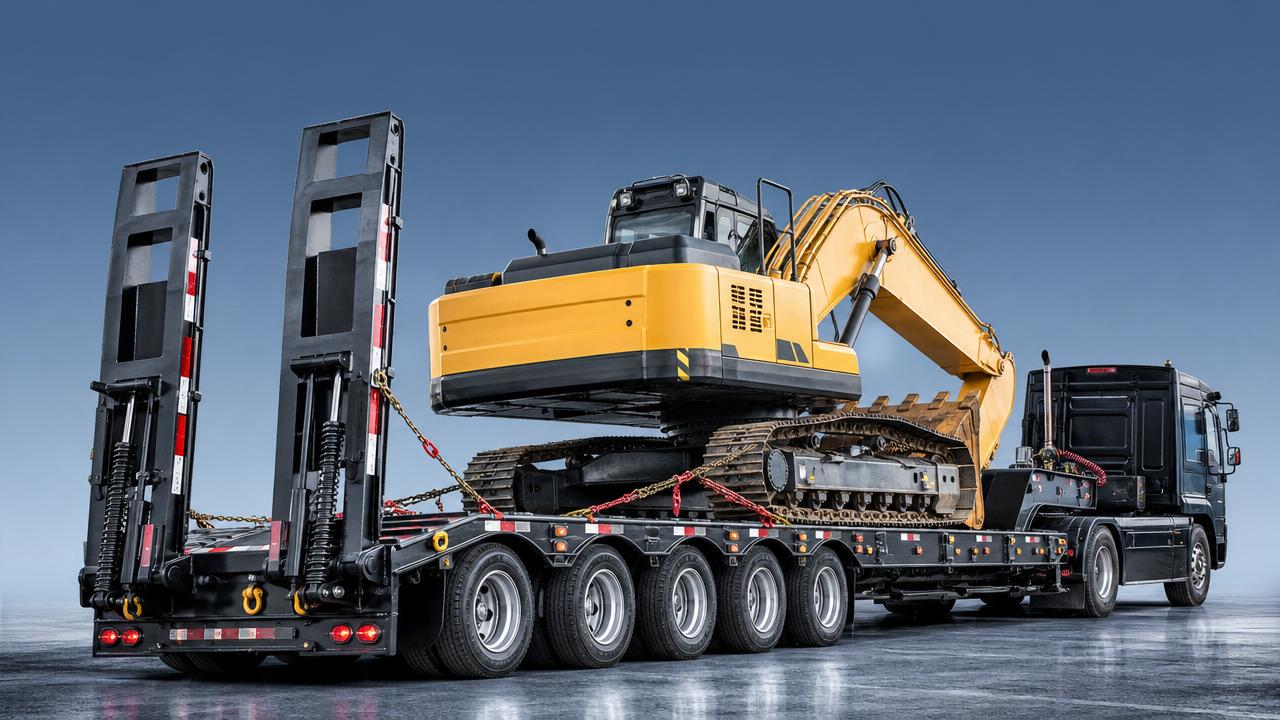
Before moving oversized machinery, thorough Low Plate safety checks are essential to reduce transport risks, protect equipment, and ensure regulatory compliance. For quality control and safety managers, the priority is not simply confirming that a trailer is available. It is verifying that the trailer, the load plan, and the securing method can perform safely under real operating conditions. A structured pre-transport inspection helps prevent brake failures, load shifts, structural damage, route delays, and avoidable compliance problems.
For most heavy equipment moves, the overall judgment is straightforward: if any critical item related to structural condition, braking, tires, load securing, or legal loading limits is uncertain, the Low Plate trailer should not be dispatched until the issue is corrected. A documented inspection process is one of the most effective ways to reduce incident exposure and improve transport reliability.
What Quality and Safety Managers Need to Confirm Before Dispatch
When users search for Low Plate trailer safety checks, they usually want a practical inspection framework. They are trying to confirm what must be checked before heavy equipment transport, which defects are serious enough to stop loading, and how to reduce operational risk without slowing the job unnecessarily.
For quality control personnel and safety managers, the biggest concerns are clear. Will the trailer safely carry the machine weight? Is the braking system dependable? Are tires, suspension, ramps, and locking points in safe condition? Is the load secure against movement during braking, turning, or uneven road conditions? And is the transport plan compliant with regulations, route restrictions, and internal safety procedures?
This means the article should focus less on general trailer definitions and more on decision-critical checkpoints. The most valuable content includes pre-loading inspection steps, defect criteria, load securement verification, documentation control, and operational best practices that help managers approve or reject a transport arrangement with confidence.
Why Low Plate Trailer Inspections Matter More for Heavy Equipment
A Low Plate trailer is commonly used for excavators, loaders, rollers, cranes, and other oversized machinery because its lower deck height improves stability and helps meet height restrictions. But the same jobs that make this trailer type useful also increase the safety burden on the inspection process.
Heavy equipment creates concentrated axle loads, dynamic shifting forces, and high stress on the trailer frame. If the load is slightly off-center, if tie-down points are weak, or if tires and brakes are already near their wear limit, the transport risk rises quickly. Small defects that might seem manageable on lighter cargo can become serious hazards on a heavy haul job.
From a management perspective, a failed inspection is cheaper than a roadside incident. Delays caused by rework, enforcement stops, cargo damage, or accidents usually cost far more than the time needed for a disciplined pre-dispatch check. That is why Low Plate safety checks should be treated as a control point, not an administrative formality.
Start With Capacity, Load Distribution, and Trailer Match
The first question is whether the selected Low Plate trailer is actually suitable for the equipment being moved. This requires confirming the machine’s operating weight, transport weight, dimensions, ground contact points, center of gravity, and any attachments that affect balance or height.
Do not rely only on nominal trailer rating. Safety managers should compare actual equipment weight against the trailer’s rated payload, axle configuration, tire rating, kingpin capacity, and legal road limitations. Overloading may not always be obvious during loading, but it increases stress on the frame, suspension, tires, and braking system throughout the journey.
Load distribution is equally important. A machine positioned too far forward can overload the tractor or kingpin. Positioned too far back, it can reduce steering stability or overload rear trailer axles. The correct balance should be established before loading begins, with clear reference points for final machine placement.
Attachments such as buckets, booms, blades, or counterweights should also be checked. Sometimes a transport problem is not the machine itself, but the way accessories change overall dimensions, front-to-rear balance, or tie-down options. If necessary, removable parts should be detached and shipped separately.
Inspect the Structural Integrity of the Low Plate Trailer
Structural condition is one of the most important approval factors. Before dispatch, inspect the main frame, gooseneck, deck surface, cross-members, welds, side rails, outriggers if applicable, and the loading ramps. Look for cracks, deformation, corrosion, loose fasteners, or signs of previous impact damage.
Pay special attention to high-stress zones. Areas around suspension mounts, ramp hinges, neck connections, and tie-down anchor points often experience repeated loading cycles. Even a small crack in these locations can worsen quickly when transporting heavy machinery over long distance or rough road surfaces.
The deck must also be fit for contact loading. If the floor plate is bent, slippery, broken, or badly worn, traction during loading is reduced and point loading may become unsafe. A damaged deck can also compromise the stability of tracks or tires once the machine is in place.
Ramps should be checked for alignment, locking function, hydraulic or mechanical support condition, and anti-slip performance. Many loading incidents happen before the trailer even leaves the yard. A Low Plate trailer that passes road checks but fails during loading still represents an unacceptable safety risk.
Do Not Approve Transport Until Brakes and Air Systems Are Verified
For heavy equipment transport, brake condition is a go or no-go item. Inspect service brakes, parking brakes, brake chambers, hoses, air lines, couplings, valves, and warning systems. Air leaks, slow pressure build-up, inconsistent brake response, or visible damage to hoses and connectors should trigger immediate corrective action.
Brake testing should go beyond a visual walkaround. Confirm that pressure reaches the required operating range, that the parking brake holds effectively, and that the trailer responds correctly during controlled brake application. Uneven braking across axles can increase stopping distance and destabilize a loaded trailer.
Safety managers should also verify compatibility between tractor and trailer braking systems. A mechanically sound Low Plate trailer can still perform poorly if air or electrical connections are mismatched, poorly maintained, or not tested before departure. Functional integration matters as much as component condition.
If the route includes slopes, urban congestion, or frequent stops, braking performance becomes even more critical. In such cases, inspection standards should be stricter, not relaxed. Route difficulty should influence the level of scrutiny before approval.
Tires, Wheels, and Suspension Need Closer Attention Than Many Teams Give Them
Tires are often checked quickly, but for heavy haul operations they deserve a more disciplined review. Inspect tread depth, inflation pressure, sidewall damage, cuts, bulges, irregular wear, valve condition, and any evidence of heat-related degradation. Also confirm that tire specifications match the expected load.
One weak tire can compromise the entire transport. Underinflation increases heat build-up and wear. Overloading accelerates failure risk. Uneven tire condition can also indicate hidden alignment or suspension issues that affect stability under load. This is why tire checks should be documented, not assumed.
Wheel fasteners, rims, hubs, and bearings should be examined for looseness, cracks, oil leakage, abnormal noise, or heat. If the trailer has been operating continuously on demanding routes, wheel-end checks become especially important before another heavy equipment assignment.
Suspension components, including springs, air bags, torque arms, equalizers, and shock-related hardware, should be inspected for damage or wear. A compromised suspension system affects load distribution, ride stability, and braking behavior. For safety managers, this is not a maintenance detail. It is a transport control issue.
Load Securing Is the Core Risk Control, Not a Final Step
Many transport incidents involve cargo movement, and most of them are preventable. Before dispatch, verify that the heavy equipment has dedicated securing points, that the selected chains or straps meet required working load limits, and that binders, hooks, and connectors are undamaged and correctly matched.
Securing should be based on the machine type, weight, and movement risk. Tracked equipment, wheeled equipment, articulated machines, and machines with movable booms or attachments often require different restraint strategies. Following a generic tie-down pattern without considering equipment geometry is a common mistake.
Each tie-down should be inspected for angle, tension, contact protection, and anchor integrity. Weak anchor points, poor chain angles, or unsecured attachments can allow gradual movement under vibration, cornering, or emergency braking. Once a heavy machine shifts, secondary damage often follows quickly.
Where applicable, wheel chocks, blocking materials, locking pins, and hydraulic arm supports should also be checked. Safety managers should confirm that moving parts are lowered, isolated, or mechanically restrained as required. Securement is not complete until all machine movement modes have been addressed.
A best practice is to require a second-person verification before departure. The loader operator or driver may complete the initial securement, but an independent checker often identifies missing tension, unsecured accessories, or poor anchor selection before the trailer reaches public roads.
Electrical Systems, Lighting, and Visibility Are Part of Compliance
Lighting and electrical checks are sometimes treated as routine, but they are essential for road legality and transport safety. Inspect brake lights, turn signals, side markers, reflectors, license plate lights, warning beacons if required, and all electrical connectors between tractor and trailer.
For oversized loads, visibility equipment may also include warning boards, flags, escort requirements, and route-specific markings. A Low Plate trailer carrying heavy equipment can be mechanically ready and still fail operationally if the transport does not meet visibility and warning standards.
Check that mudguards, conspicuity markings, and side protection elements are present where required. If transport will continue into low-light or poor weather conditions, lighting reliability becomes even more important. Minor electrical faults should be corrected before dispatch, not managed on the road.
Confirm Loading Procedure, Route Conditions, and Site Interfaces
Safe transport starts before the machine is on the trailer and continues until final unloading. That is why pre-transport checks should include the loading area, unloading site, route survey, bridge or height restrictions, turning radius constraints, and ground bearing conditions for both ends of the trip.
Even a properly inspected Low Plate trailer can become unsafe if loading occurs on uneven ground, if ramp deployment space is inadequate, or if the route includes restrictions not reflected in the transport plan. Safety managers should review operational interfaces, not only vehicle condition.
Communication between dispatcher, driver, loader operator, and site representatives should be confirmed in advance. Who approves machine positioning? Who verifies final dimensions? Who signs off on securement? Ambiguity in responsibilities often leads to missed checks and inconsistent control.
If permits are required for weight, width, height, or escort, they should be verified before movement begins. Last-minute assumptions create preventable delays and may force risky adjustments under time pressure. A complete route and permit review is one of the most valuable preventive actions available.
Use a Practical Inspection Checklist With Clear Stop Criteria
For quality and safety teams, the best system is one that can be repeated consistently. A practical Low Plate inspection checklist should include trailer identification, maintenance status, structural condition, brakes, tires, suspension, ramps, lighting, securement devices, load dimensions, permits, and final approval signatures.
Just as important as the checklist itself are the stop criteria. Teams should define which defects require immediate repair, which items require supervisor review, and which issues can be managed with documented corrective measures. Without clear thresholds, inspections become subjective and inconsistent.
Photographic records can also improve accountability, especially for international projects, subcontracted haulage, or higher-risk machinery. Photos of machine placement, tie-down configuration, trailer condition, and permit documentation help support traceability and post-transport review.
Inspection data should feed back into supplier and carrier evaluation. If a particular trailer model, operator, or subcontractor repeatedly fails checks, that trend is valuable management information. Strong safety performance comes from system learning, not single-event reactions.
How Reliable Equipment Partners Support Safer Low Plate Transport
For companies sourcing commercial vehicles and transport equipment internationally, trailer quality and service support matter as much as price. A reliable exporter should help buyers evaluate specification fit, compliance documentation, spare parts access, and after-sales responsiveness for demanding working conditions.
Shandong Livol Truck International Trade Co., Ltd. provides integrated support for commercial vehicle sourcing with experience in global trade, customization, logistics coordination, and documentation. With authorized access to leading Chinese commercial vehicle brands and a stable supply network, the company supports buyers seeking dependable transport solutions for practical operating needs.
For safety-conscious buyers, the value is not only in obtaining equipment quickly. It is in selecting the right configuration, maintaining traceable quality standards, and reducing the risk of operational mismatch after delivery. That approach is especially relevant for fleets handling heavy equipment and project cargo.
Final Takeaway for Safer Heavy Equipment Moves
The most effective Low Plate safety checks focus on the issues that actually cause transport failure: wrong trailer selection, poor load distribution, structural defects, brake weakness, tire and suspension problems, inadequate securement, and incomplete route or permit planning. These are the areas that deserve the closest review.
For quality control and safety managers, the right standard is simple. If the trailer, the load plan, or the securing method cannot be verified with confidence, transport should not proceed. A disciplined inspection process protects people, equipment, schedules, and compliance performance at the same time.
In heavy equipment transport, safety is rarely the result of one component. It comes from alignment between machine, trailer, route, documentation, and execution. A strong pre-dispatch Low Plate inspection is the point where that alignment is confirmed.
Search Starts Here