
News
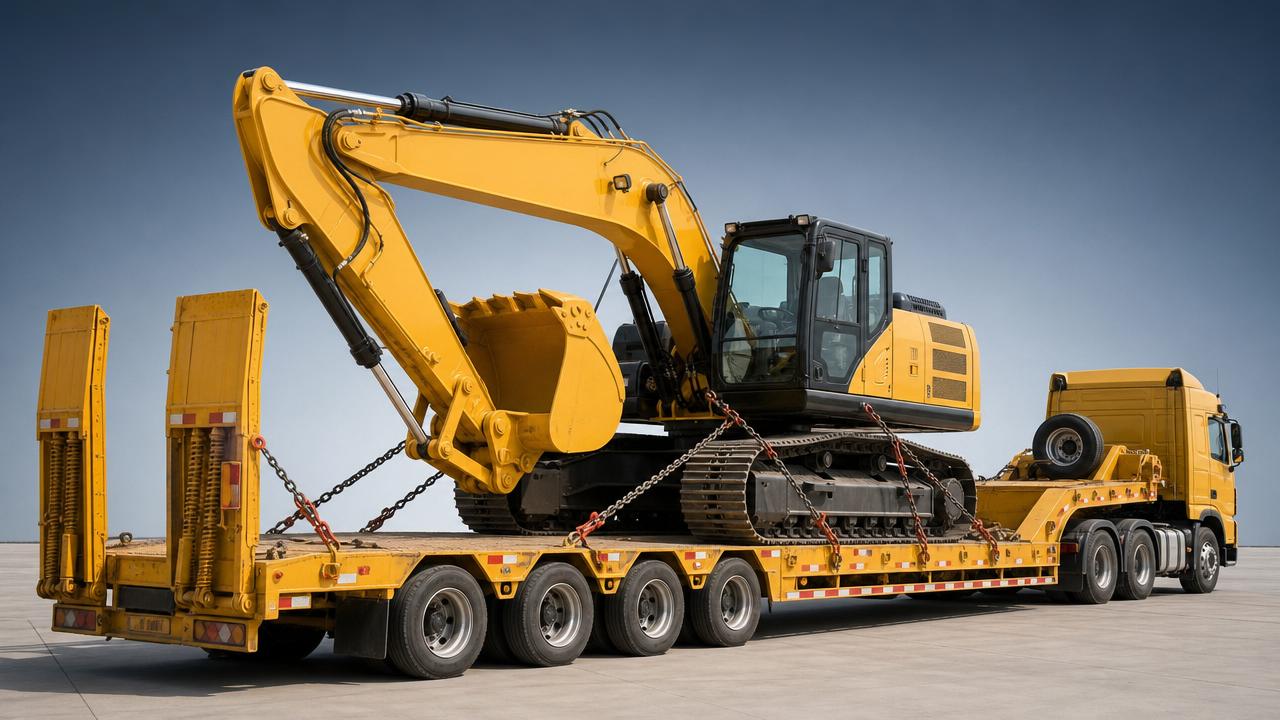
Why does Low Plate loading go wrong so often?
A Low Plate trailer looks simple to load, but the risk points are rarely obvious at first glance.
Small errors during positioning, securing, or ramp use can quickly affect balance, braking distance, and road stability.
That matters even more in engineering vehicle transport, where machines are heavy, tall, and often have uneven axle loads.
In practice, many incidents are not caused by the trailer itself.
They come from rushed planning, weak inspection, and assumptions about weight distribution that turn out to be wrong.
A Low Plate is designed for demanding transport, but safe performance depends on matching the load to the deck, axle group, ramps, and tie-down points.
When exporters and fleet operators handle cross-border delivery, those details become more critical.
Vehicle preparation, documentation, route limits, and loading checks all need to line up before the trip starts.
That is one reason experienced commercial vehicle suppliers put strong emphasis on pre-shipment inspection and loading guidance, not only on inventory or delivery speed.
Which Low Plate loading mistakes create the biggest safety risks?
The most common problems are easy to describe, but harder to control consistently on busy transport schedules.
Here are the mistakes that cause the highest operational risk on a Low Plate trailer:
- Uneven weight placement, especially when the machine sits too far forward or too far back.
- Ignoring axle load limits while focusing only on total gross weight.
- Loading on weak or uneven ground, which changes ramp angle and trailer stability.
- Using insufficient chains, straps, or anchor points for the machine type.
- Failing to lower booms, buckets, or attachments into a travel-safe position.
- Skipping a final walk-around after tightening the securing system.
A repeated mistake with Low Plate transport is treating every machine as if it behaves the same during loading.
Excavators, rollers, loaders, and tracked equipment all shift weight differently.
The center of gravity can move fast, especially while climbing the ramps.
Another overlooked issue is deck contamination.
Mud, oil, loose gravel, or ice reduce tire and track grip, increasing the chance of side slip.
A quick comparison helps identify where the real danger starts
How can you tell if weight distribution on a Low Plate is unsafe?
This is where many transport plans fail.
People may confirm the machine fits the deck, but they do not verify whether the weight sits correctly across the trailer and tractor combination.
A Low Plate can become unstable even when the total weight appears compliant.
Warning signs usually show up before departure if someone checks carefully:
- The gooseneck looks excessively compressed or too light.
- Rear axles carry visibly more load than planned.
- The machine is offset from the trailer centerline.
- Suspension height differs sharply from side to side.
- The trailer leans during loading, not only after travel starts.
For engineering vehicles, attachments can distort balance more than expected.
A bucket, arm, blade, or counterweight may shift the center of gravity several hundred millimeters from the ideal position.
That may sound minor, but on a Low Plate it directly affects axle loading and steering behavior.
A safer approach is to use measured loading plans, not visual judgment alone.
When a transport partner supplies different trailer specifications, checking deck length, rated capacity, and load share by axle should be routine.
This is particularly useful in export operations, where machine configuration and compliance requirements may vary by destination.
Are securing mistakes just as dangerous as bad positioning?
Yes, and sometimes more dangerous.
A correctly positioned machine can still shift if the securing method does not match its shape, weight, or travel conditions.
With a Low Plate, the deck sits lower than standard trailers, but that does not remove the need for proper restraint angles and preload.
Common securing errors include mixing worn chains with new ones, using tie-down points not rated for transport loads, and tightening without rechecking after a short movement.
Another issue is relying on too few restraint directions.
A machine must be controlled against forward, rearward, sideways, and upward movement.
If one direction is weak, emergency braking or road vibration will expose it.
More careful teams also secure movable components separately.
Booms, arms, hydraulic attachments, and ramps should never be left dependent on hydraulic pressure alone.
Mechanical restraint is still necessary.
Where international shipment is involved, equipment often passes through multiple handling points.
That makes consistent securing standards even more important than in single-route domestic delivery.
What should be checked before a Low Plate trailer is loaded?
A good loading result usually starts before the machine touches the ramps.
Pre-loading checks reduce uncertainty and prevent last-minute improvisation.
The most practical inspection points include:
- Confirm actual machine operating weight, not brochure weight.
- Measure overall height, width, and attachment position.
- Inspect deck condition, anti-slip surface, and anchor points.
- Verify ramp angle fits the machine’s approach and breakover limits.
- Check tire pressure or track condition before climbing.
- Prepare wheel chocks, chains, binders, and blocking materials in advance.
Need-to-know paperwork also matters.
Height restrictions, bridge limits, escort requirements, and customs documents can affect how the machine must be positioned on the Low Plate.
In real export work, integrated coordination saves time and reduces repeated handling.
That is why some commercial vehicle exporters support the full chain, from vehicle selection and customization to logistics and clearance.
For example, companies with established 4S networks, stable inventory, and experience with FOTON, SHACMAN, and SINOTRUK equipment often have better control over specification accuracy and dispatch readiness.
How do safer loading practices reduce long-term cost, not just accidents?
This question is worth asking because Low Plate loading problems rarely end with one visible incident.
Even when no crash happens, poor loading can create hidden costs across the transport cycle.
Typical losses include premature tire wear, deck damage, bent ramps, chain failure, machine paint or hydraulic damage, delivery delays, and compliance penalties.
Repeated loading errors also weaken trust in the transport process.
That becomes expensive when project schedules depend on engineering vehicles arriving ready for use.
A more disciplined Low Plate loading system usually includes standard load plans, inspection records, equipment-specific securing instructions, and post-loading verification.
It is not about adding paperwork for its own sake.
It is about reducing avoidable variation.
Where supply chains involve domestic delivery, port transfer, and overseas shipment, that consistency becomes even more valuable.
Reliable partners are usually the ones that combine vehicle availability with quality control, documentation support, and practical loading knowledge.
That combination helps keep transport decisions grounded in safety rather than guesswork.
A final question: what is the best next step if Low Plate safety needs improvement?
Start by reviewing recent loads that felt routine.
Routine jobs often hide the most repeated mistakes.
Check whether machine weights were verified, whether axle loads were estimated correctly, and whether securing points matched the equipment design.
Then compare trailer specification, route limits, and loading method as one system, not three separate tasks.
If Low Plate transport is part of wider vehicle export or project delivery, it also helps to confirm documentation flow, logistics timing, and after-delivery support early.
The safest operations usually come from better preparation, clearer standards, and stronger coordination before the wheels start moving.
Search Starts Here