
News
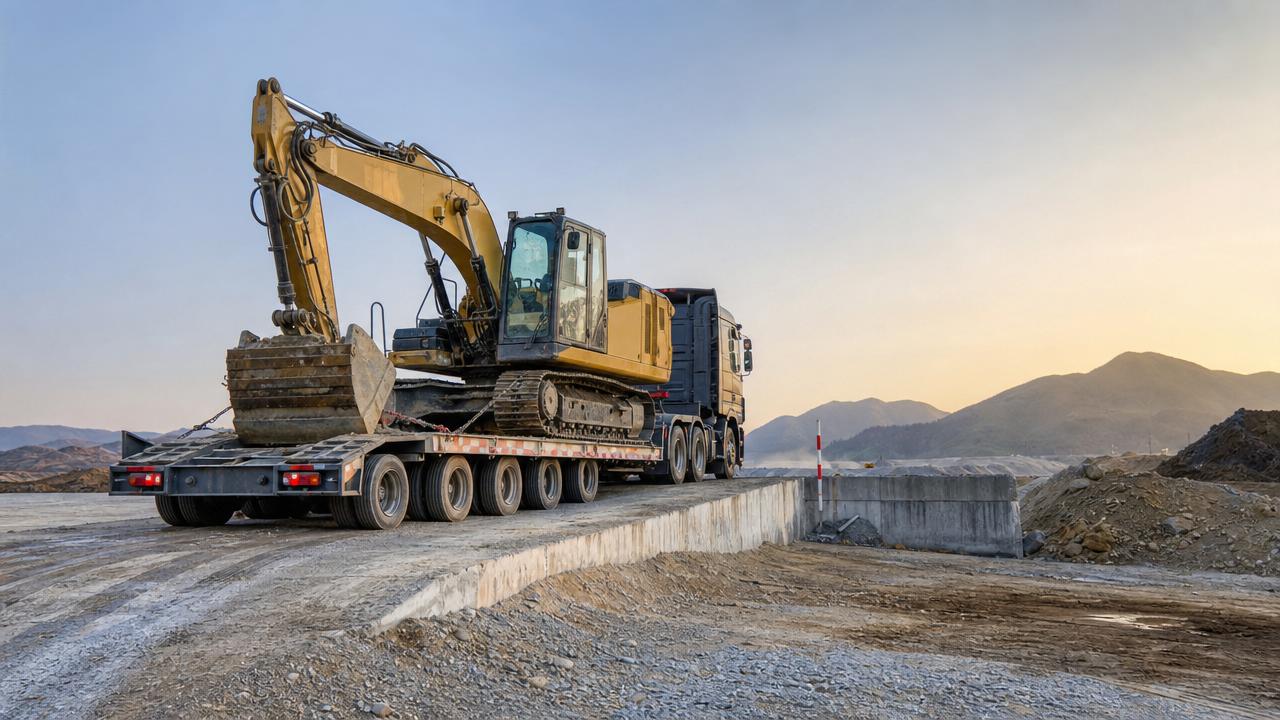
In equipment transport, choosing a Low Plate trailer without fully evaluating ground clearance can create expensive setbacks. These mistakes often lead to bottoming out, route changes, cargo instability and repair costs.
Ground clearance is not only a trailer specification. It directly affects loading angles, passing ability, suspension protection and safe movement across mixed road surfaces.
For heavy machinery logistics, a Low Plate must match cargo dimensions, axle load, terrain profile and road obstacles. A poor match reduces transport efficiency even when payload capacity looks sufficient.
This article explains the most common Low Plate ground clearance mistakes, practical checks before dispatch and ways to improve transport reliability in engineering vehicle operations.
Why clearance decisions should be checked step by step
Many transport problems happen because teams focus first on deck height and carrying capacity. They may overlook breakover angle, approach angle, suspension travel and the real shape of the route.
A structured review helps compare a Low Plate against the actual job. It reduces guesswork and makes technical selection easier when equipment size, road access and delivery timing are all critical.
In engineering vehicle transport, road conditions change quickly. Construction entrances, temporary ramps, bridges and uneven jobsite surfaces can all challenge Low Plate clearance.
Key points to check before selecting a Low Plate
- Measure the minimum deck-to-ground clearance under full load, not only the unloaded figure, because suspension compression can significantly reduce actual passing ability.
- Check approach, departure and breakover angles together, since a Low Plate may clear flat roads but still scrape at ramps, crests or uneven entrances.
- Review the loaded equipment’s center of gravity and axle distribution, because poor positioning can increase frame sag and worsen Low Plate ground clearance.
- Inspect the route for speed bumps, drainage channels, bridge joints, temporary steel plates and site transitions that commonly catch low trailer sections.
- Confirm ramp angle and loading method before dispatch, especially when tracked machinery or long wheelbase equipment must climb onto the Low Plate safely.
- Verify tire size, suspension type and axle configuration, because these factors directly influence deck height, articulation range and underbody protection.
- Assess whether detachable gooseneck, hydraulic lifting or adjustable suspension features are needed to improve Low Plate access on difficult roads.
- Compare legal height limits with equipment height after loading, since raising deck height for better clearance may create compliance problems elsewhere.
The most common Low Plate ground clearance mistakes
Relying on unloaded specifications
A common mistake is using brochure numbers instead of loaded measurements. Once heavy equipment is placed on a Low Plate, the suspension settles and clearance drops immediately.
This often causes underbody contact at jobsite entrances. It is especially risky with excavators, rollers and crawler machines that concentrate weight on specific deck zones.
Ignoring breakover angle at road transitions
Some routes look acceptable on paper but include steep transition points. A Low Plate can get hung up in the middle when crossing crowned roads or raised access lanes.
The center section is often the most vulnerable area. If breakover angle is too small, transport stops even before reaching the main road.
Focusing only on low deck height
Low deck height helps with legal transport height. However, choosing the lowest possible Low Plate without route analysis can create more clearance trouble than it solves.
A slightly higher configuration may deliver better real-world performance. The best choice balances legal height, loading ease and safe road passage.
Missing ramp and loading clearance issues
Ground clearance problems also appear during loading. If the ramp angle is too sharp, low equipment frames or attachments may strike before the machine is fully positioned.
This is common when transporting pavers, asphalt equipment and machines with long front overhangs. Ramp support blocks may be required to soften the angle.
Overlooking road surface variability
A route may include highways, rural roads and unfinished site access within one trip. A Low Plate that works well on paved roads may fail on loose, uneven or washed surfaces.
Clearance assessment should include the worst segment, not the average segment. Heavy transport safety depends on the most difficult point on the route.
Application notes for different transport scenarios
Excavators and crawler equipment
Tracked machines apply high point loads and often sit low when booms are positioned compactly. On a Low Plate, this can increase localized sag and reduce center clearance.
Check track entry angle, machine balance and deck reinforcement. Route planning should also account for rough site exits and temporary steel mat crossings.
Wheel loaders and graders
These machines may have long wheelbases or protruding attachments. A Low Plate with insufficient approach management can lead to contact during loading or unloading.
Pay attention to bucket position, blade overhang and suspension response. Clearance under the gooseneck area should be confirmed before dispatch.
Road machinery and compact height-sensitive loads
For rollers, pavers and milling equipment, a Low Plate is often selected to control overall transport height. That benefit should not hide underbody clearance risk.
Evaluate whether hydraulic suspension adjustment or a detachable front section can improve loading access while keeping legal height within limits.
Remote project access roads
Mining, energy and infrastructure projects often involve ungraded roads. In these cases, Low Plate selection must prioritize obstacle crossing and frame protection.
Walk the final access section if possible. Drainage cuts, soft shoulders and temporary culverts often become the real clearance bottlenecks.
Often-missed details that increase risk
Tire wear is frequently ignored. Worn tires reduce deck height and can make a Low Plate sit lower than expected during a loaded trip.
Suspension maintenance also matters. Weak air suspension or worn mechanical components may cause uneven ride height and unpredictable contact points.
Load securement affects clearance too. If the machine shifts rearward or concentrates weight improperly, the Low Plate may lose critical ground margin.
Weather changes can alter access conditions. Rain softens shoulders and creates deeper rutting, which can lower one side of the trailer during turning or reversing.
Practical steps to improve Low Plate selection and operation
- Create a route sheet that records the lowest crossing point, steepest ramp and narrowest entrance before confirming the Low Plate configuration.
- Measure loaded clearance at several trailer points, including front neck, center deck, axle area and rear tail, rather than using one single number.
- Use loading blocks, approach mats or temporary ramp supports when needed to reduce angle changes for sensitive equipment and low-clearance trailers.
- Schedule a short trial movement after loading to observe suspension settling, tire compression and any unexpected scraping before entering the main route.
- Choose suppliers that can explain axle options, suspension designs and customization details instead of offering a standard Low Plate for every job.
Support for reliable heavy transport planning
Reliable trailer selection depends on both product range and export service capability. Shandong Livol Truck International Trade Co., Ltd. provides commercial vehicle solutions with strong supply stability and practical coordination support.
Based in Shandong, China, the company is an authorized dealer for FOTON, SHACMAN and SINOTRUK. It operates authorized 4S stores and maintains inventory for efficient delivery.
Its export team supports vehicle selection, customization, documentation, customs clearance and logistics. This helps reduce delays when a Low Plate or other engineering transport solution must match complex project conditions.
Final points before the next transport move
Low Plate trailer performance depends on more than payload rating. Ground clearance must be judged against route geometry, loading angles, machine shape and real operating conditions.
Before the next shipment, verify loaded clearance, route obstacles, suspension condition and loading method in one coordinated review. That simple discipline prevents many common transport failures.
When the Low Plate is matched correctly, equipment transport becomes safer, more predictable and more cost-efficient. The right decision starts with careful measurement, not assumption.
Search Starts Here