
News
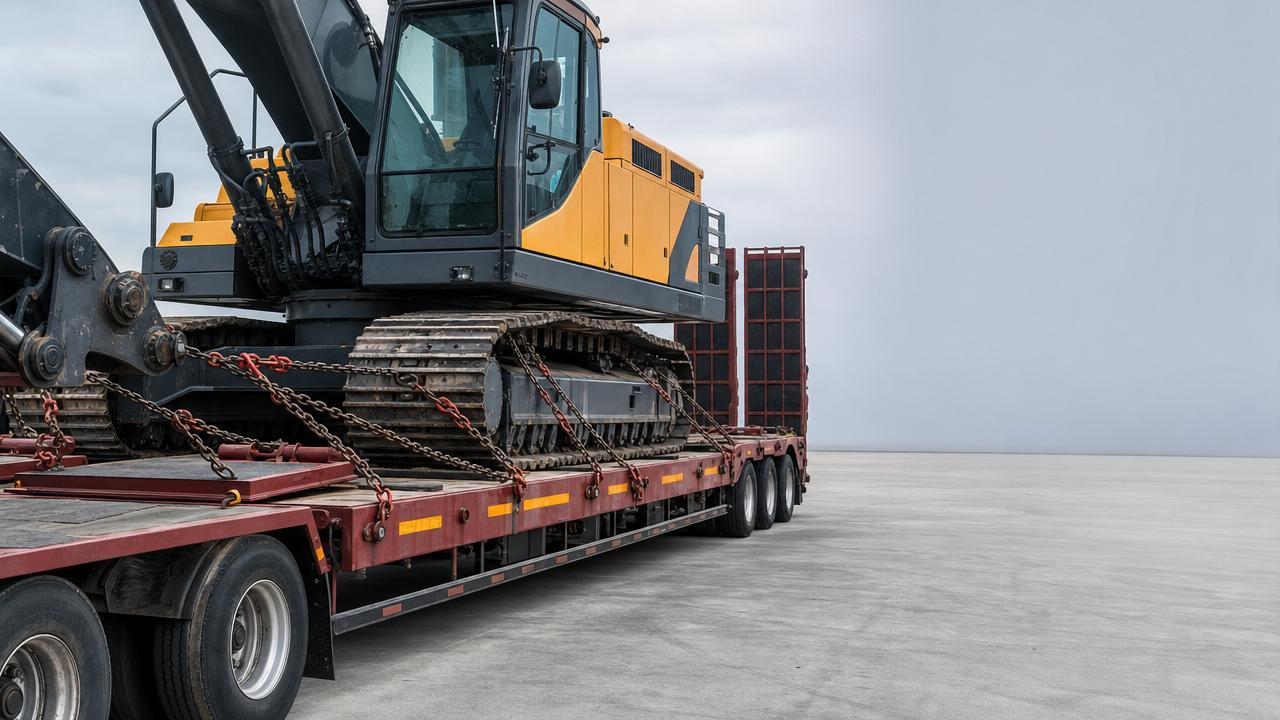
Low Plate Trailer: Common Loading Risks and How to Avoid Them
Low Plate trailer loading can expose quality control and safety managers to serious risks, from load shift and axle overload to deck damage and compliance failures.
Understanding these hazards is essential for protecting equipment, people, and delivery schedules.
This guide explains the most common Low Plate loading risks and the practical controls that reduce them in day-to-day operations.
Why Low Plate Loading Risks Deserve More Attention
A Low Plate trailer is built for heavy, tall, or irregular cargo.
That low deck improves transport height control, but it also tightens loading tolerances.
Small mistakes in placement, support, or restraint can quickly become major safety events.
In actual operations, the bigger issue is not one dramatic error.
It is usually several minor loading decisions that combine into instability, structural stress, or legal non-compliance.
1. Uneven Weight Distribution on a Low Plate
Uneven weight distribution is one of the most common Low Plate loading failures.
It often starts when cargo is placed by convenience rather than by axle calculation.
The result may include overloaded axles, poor steering response, and unstable braking.
On a Low Plate, center-of-gravity management matters just as much as total payload.
Warning signs usually include:
- Visible trailer lean during loading
- Tire compression differences between sides
- Axle group loads beyond route limits
- Cargo positioned too far forward or rearward
How to avoid it:
- Confirm cargo weight, dimensions, and load points before the trailer arrives.
- Use an axle load plan, not visual judgment.
- Check side-to-side balance during staged loading.
- Recalculate after adding support blocks, accessories, or attachments.
2. Load Shift During Transit
A stable load at the yard is not always stable on the road.
Low Plate cargo faces vibration, cornering forces, sudden braking, and road slope changes.
If restraint methods do not match cargo shape and friction conditions, load shift becomes likely.
This risk is more obvious with equipment that has tracks, wheels, uneven bases, or movable parts.
Common causes include:
- Insufficient lashing points
- Wrong chain angle or strap selection
- Dirty or oily deck surfaces
- No blocking for rolling movement
Practical controls:
- Match tie-down type to cargo mass, shape, and restraint direction.
- Inspect chains, binders, and anchor points before each job.
- Use anti-slip materials where contact surfaces reduce friction.
- Secure movable components separately from the main body.
- Perform a short-distance recheck after departure.
3. Deck Damage and Structural Stress
A Low Plate can carry demanding loads, but deck strength is not unlimited.
Concentrated pressure from narrow tracks, steel edges, or unsupported feet can damage the platform.
Over time, repeated misuse may lead to cracking, bending, or weakened cross-members.
This also affects long-term quality control because hidden structural fatigue is easy to miss.
Typical loading mistakes are:
- Point loads placed outside rated support areas
- No timber mats or spreader plates
- Impact loading from fast equipment movement
- Using damaged ramps or bent deck sections
Prevention measures:
- Review deck load limits and concentrated load capacity before loading.
- Use mats or steel plates to spread localized force.
- Control loading speed, especially for tracked machinery.
- Inspect the Low Plate structure after heavy or unusual jobs.
4. Ramp and Loading Angle Hazards
Ramp incidents are common when operators focus only on getting equipment onto the Low Plate quickly.
A poor loading angle can cause grounding, slippage, bottom contact, or sudden lateral drift.
Wet surfaces, uneven ground, and poor ramp alignment make the risk much worse.
To lower this risk:
- Choose level, compact ground before setting the Low Plate.
- Confirm ramp locking condition and alignment.
- Check approach angle against equipment clearance.
- Use spotters with clear hand signals and stop authority.
- Suspend loading when visibility or traction is poor.
5. Height, Width, and Route Compliance Failures
A Low Plate is often selected to manage height-sensitive cargo.
Even so, compliance failures still happen when dimensions are estimated instead of measured.
Attachments, temporary fixtures, and packaging can push the load beyond legal limits.
That may lead to permit issues, route changes, escort requirements, or delivery delays.
A stronger control process includes:
In short, measure every loaded Low Plate setup as a final condition, not as a design assumption.
6. Weak Pre-Loading Communication
Many Low Plate problems begin before the equipment reaches the yard.
Missing cargo data, unclear lifting points, and incomplete route details create avoidable loading pressure.
When teams work from partial information, they improvise.
And improvised Low Plate loading is where control starts to slip.
A better process is simple:
- Collect verified cargo drawings, weight sheets, and support-point data.
- Confirm the exact Low Plate specification before dispatch.
- Share loading sequence, restraint plan, and route conditions with all parties.
- Use a written checklist and sign-off before release.
How to Build a Safer Low Plate Loading Standard
The most effective Low Plate risk control is standardization.
Not every load is identical, but the decision process should be consistent.
A workable standard usually covers:
- Trailer suitability review
- Load distribution calculation
- Deck and ramp inspection
- Restraint selection and verification
- Dimension and permit confirmation
- Departure and in-transit checks
From a practical perspective, consistency lowers both incident rates and dispute risk.
It also makes supplier evaluation and internal quality audits much easier.
Choosing a Reliable Low Plate Export and Supply Partner
For international projects, trailer quality and supply reliability directly affect loading safety.
A dependable supplier should understand both vehicle performance and export execution.
Shandong Livol Truck International Trade Co., Ltd., based in Shandong, China, brings that combination.
The company is a professional commercial vehicle exporter with strong industry capability and global trade experience.
As the authorized domestic and overseas dealer for FOTON, SHACMAN, and SINOTRUK, it offers stable access to trusted commercial vehicle resources.
Its authorized 4S network across China and strong inventory support faster delivery and steadier supply planning.
With an experienced export team, the company supports vehicle selection, customization, documentation, customs clearance, and logistics coordination.
That kind of end-to-end support helps reduce communication gaps that often lead to Low Plate loading and delivery problems.
Final Takeaway
Safe Low Plate loading is not only about meeting payload numbers.
It depends on weight balance, restraint quality, deck protection, route compliance, and disciplined communication.
When these controls are built into everyday practice, risk drops and transport reliability improves.
If current Low Plate operations still rely on experience alone, this is the right time to tighten the process.
Start with one loading checklist, one axle plan, and one final verification step, then scale that discipline across every shipment.
Search Starts Here