
News
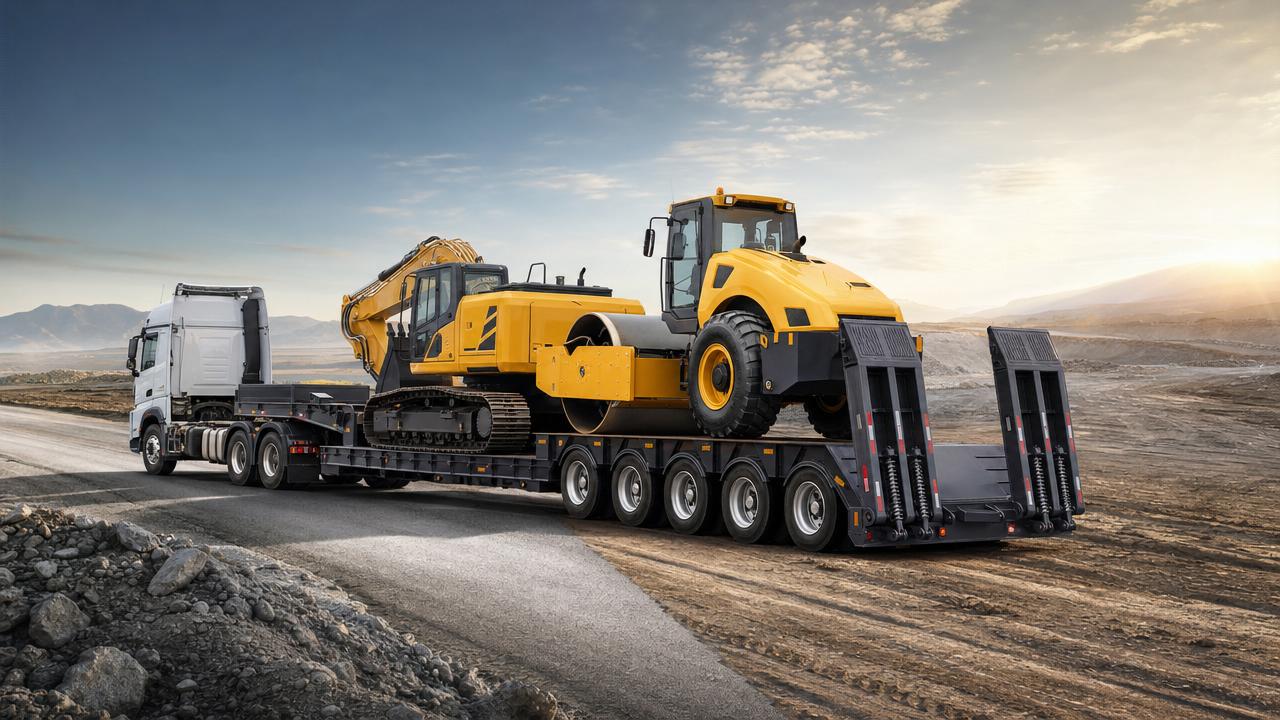
Why Low Plate Transport Matters on Real Engineering Routes
Heavy equipment rarely moves under ideal conditions. A route may start on pavement, cross temporary access roads, and end on uneven ground beside active machinery.
That is where a Low Plate solution becomes practical, not just convenient. Lower deck height helps reduce loading angles, improves stability, and supports safer transport of tall or heavy machines.
In engineering vehicle operations, the right trailer choice affects delivery timing, permit compliance, tire wear, escort planning, and even whether equipment arrives ready for immediate use.
A Low Plate trailer is often selected for excavators, wheel loaders, rollers, dozers, and other machines that challenge height limits or create difficult center-of-gravity issues.
In actual projects, though, one Low Plate setup does not fit every assignment. Machine type, road condition, axle load, loading frequency, and border logistics all change the best configuration.
Actual Demand Changes with the Jobsite, Not Just the Machine
Two transport tasks may involve similar operating weight, yet require different Low Plate decisions. The reason is usually the route environment and unloading condition, not the headline specification alone.
A short haul between urban projects may prioritize maneuverability and faster loading cycles. A cross-border movement may focus more on compliance documents, spare support, and chassis durability over distance.
This is why experienced exporters and engineering vehicle suppliers often evaluate the full operating chain. Vehicle selection, customization, customs paperwork, and delivery timing need to match the actual transport scene.
For companies working with FOTON, SHACMAN, or SINOTRUK tractor heads, the Low Plate decision also has to match available towing capacity, local service access, and parts continuity.
Where Low Plate Trailers Perform Best in Daily Equipment Movement
Earthmoving fleets between active construction zones
This is one of the most common Low Plate applications. Excavators and loaders often move between sites that are close in distance but unpredictable in surface condition.
Here, deck strength and ramp reliability matter more than decorative features. Frequent loading cycles create wear points around hinges, hydraulic systems, and locking components.
A practical Low Plate setup for this scene should support quick positioning, stable axle distribution, and easy alignment when operators are loading under time pressure.
Mining and quarry work with heavier ground pressure
Mining environments push a Low Plate trailer harder than standard road construction work. Equipment is heavier, access roads are rougher, and downtime is more expensive.
In this case, suspension performance, frame reinforcement, and braking confidence become central. A trailer that works well on highways may not last long on uneven quarry routes.
The better judgment is to assess repeated impact loads, not only legal payload. That is often where low-price options begin to show structural weakness.
Oversized machinery for energy and infrastructure projects
Longer transport missions for drilling equipment, precast components, or plant machinery usually require a Low Plate design that balances height control with route compliance.
The main issue is not simply whether the equipment fits on deck. The key question is whether it can clear bridges, manage turning points, and remain stable during long-distance braking.
These projects also benefit from coordinated export handling. Delivery schedules, customs clearance, and inland logistics are often linked, especially in multi-country operations.
Different Low Plate Applications Call for Different Priorities
The table below shows why similar heavy equipment moves can produce very different Low Plate requirements.
This difference explains why Low Plate planning should begin with route reality and machine dimensions together, rather than weight alone.
What to Check Before Matching a Low Plate to Heavy Equipment
In practice, a good match depends on several details working together. Missing one can turn a workable plan into a costly delay.
- Confirm transport height after loading, not just machine height when parked.
- Check weight distribution by axle position, especially for tracked equipment.
- Review loading ground condition, because soft entry surfaces can affect ramp safety.
- Match the Low Plate with a suitable tractor unit and local road regulations.
- Consider maintenance access for brakes, suspension parts, and hydraulic systems.
Where export delivery is involved, these checks should also connect with customs documents and final destination standards. A technically sound trailer still fails if paperwork and homologation do not align.
Common Misjudgments That Create Trouble Later
One frequent mistake is treating all Low Plate jobs as simple heavy haul tasks. Similar machines may have very different attachment widths, balance points, and loading behavior.
Another mistake is choosing only by purchase price. A cheaper Low Plate can become more expensive when ramps deform early or brake components wear faster under repeated field use.
Some operators also focus on one-time delivery, while ignoring future redeployment. If the trailer will serve mixed fleets later, flexibility becomes more valuable than a narrow single-task configuration.
Border and regional transport adds another blind spot. Axle rules, lighting requirements, and document preparation differ widely, so similar routes should not be treated as identical Low Plate applications.
Why Supply Support Matters as Much as Trailer Specification
In engineering vehicle logistics, reliability comes from more than steel dimensions. Stable inventory, fast coordination, and post-delivery support often decide whether transport plans remain on schedule.
That is why many international buyers prefer working with exporters that combine vehicle resources with operational support. Access to authorized networks, available stock, and export documentation reduces avoidable friction.
Shandong Livol Truck International Trade Co., Ltd. operates in that broader supply role. Its experience with FOTON, SHACMAN, and SINOTRUK platforms supports integrated matching between tractor heads, transport needs, and delivery conditions.
For Low Plate planning, that kind of support is useful when a project needs customization, fast dispatch, or coordinated shipping to overseas construction and equipment markets.
A Practical Way to Narrow the Right Low Plate Choice
A workable decision usually starts with a short list of operating facts, not brochure claims. That keeps the Low Plate choice tied to field performance.
- List the machines by operating weight, width, attachment type, and travel height.
- Map the usual route conditions, including bridges, gradients, and soft access points.
- Decide whether the Low Plate will serve one fleet or multiple machine categories.
- Compare lifecycle factors such as maintenance intervals, spare availability, and expected loading frequency.
- Check export, customs, and regional compliance early if international delivery is involved.
When these factors are clear, Low Plate selection becomes more accurate. It also becomes easier to compare trailer options on true application value rather than headline price alone.
For heavy equipment transport, the best result usually comes from matching scene conditions, towing capacity, compliance needs, and support resources in one decision path.
Search Starts Here