
News
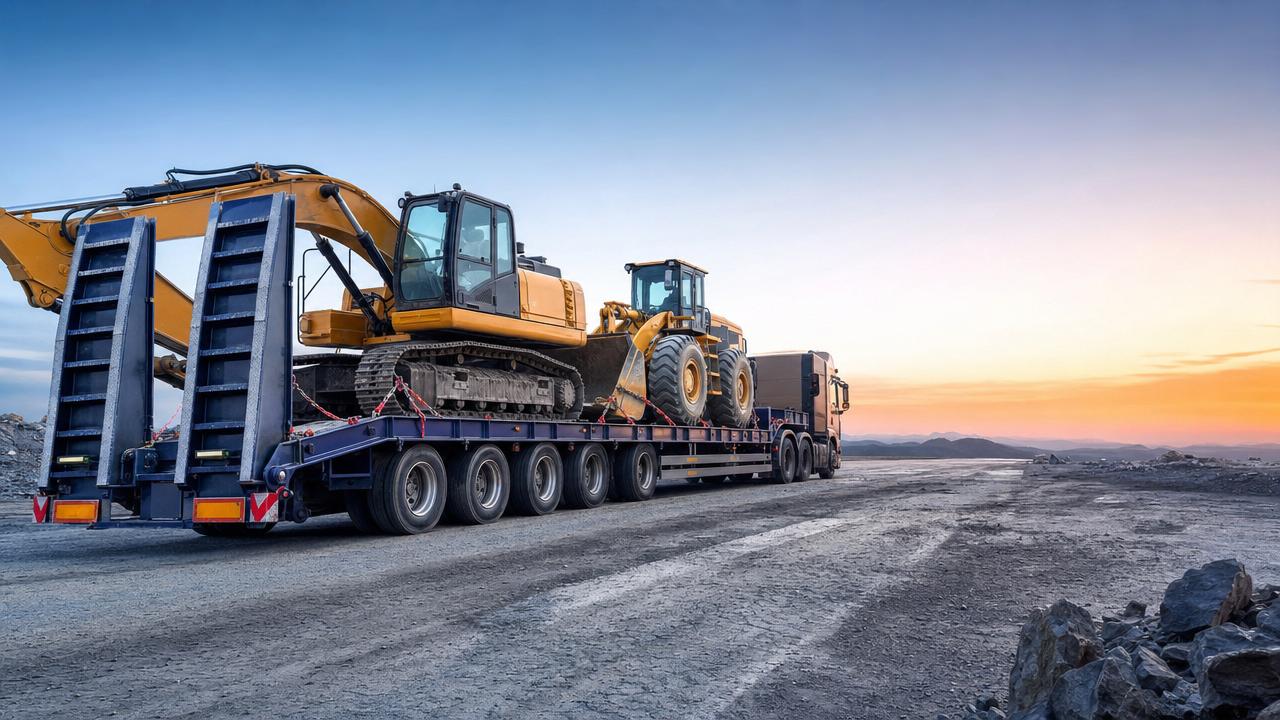
Low Plate demand is rising with heavier, larger engineering equipment
For project managers and engineering leaders, choosing the right Low Plate trailer is essential for moving heavy equipment safely, efficiently, and on schedule.
From excavators and loaders to oversized construction machinery, Low Plate applications now shape transport stability, site coordination, and overall cost control.
Across construction, mining, infrastructure, and energy projects, equipment is becoming heavier, wider, and more specialized.
That shift is pushing Low Plate transport from a basic logistics tool into a strategic engineering decision.
With strong commercial vehicle resources and export experience, Shandong Livol Truck International Trade Co., Ltd. supports global customers with reliable transport solutions for demanding engineering applications.
Low Plate applications are moving beyond simple point-to-point hauling
The traditional role of a Low Plate trailer was straightforward: carry heavy machines from one site to another.
Today, the role is broader and more technical.
A modern Low Plate often supports multi-site deployment, cross-border transport, rough-road access, and strict compliance with axle load rules.
In many projects, transport windows are shorter, site access is tighter, and penalties for delay are higher.
As a result, Low Plate selection now affects crane scheduling, labor utilization, equipment uptime, and fuel planning.
This change is especially visible in road construction, quarry operations, bridge work, and renewable energy installation.
In these sectors, transport equipment must match machine dimensions, terrain conditions, and local route restrictions.
Several industry signals explain why Low Plate requirements are changing
The growth of heavier engineering vehicles is only one part of the story.
A stronger trend comes from the need to reduce handling risk while improving deployment speed.
These signals show why Low Plate applications are becoming more specialized instead of more generic.
The shift is also operational, not only structural
Many transport failures do not start with trailer overload.
They start with poor route planning, incorrect ramp angles, weak tie-down points, or unstable center-of-gravity control.
That is why current Low Plate planning includes more than payload figures.
It includes machine geometry, loading sequence, road condition, and site unloading limitations.
Low Plate applications now differ sharply by equipment category
Not every heavy machine creates the same transport challenge.
Low Plate selection should reflect the real operating profile of the equipment being moved.
- Excavators often require stable track placement and attention to boom positioning.
- Wheel loaders need secure wheel chocking and careful deck length matching.
- Bulldozers create concentrated weight zones that test axle balance.
- Road rollers need anti-slip loading support and vibration-sensitive securing.
- Mining machines may require reinforced Low Plate structures for severe conditions.
This is where application knowledge matters.
A Low Plate built for one machine type may perform poorly with another, even at similar rated capacity.
Oversized machinery is driving new configuration preferences
More projects now involve oversized concrete equipment, drilling rigs, and specialized plant modules.
For these loads, Low Plate applications increasingly favor lower deck structures, wider platforms, and optimized axle layouts.
The goal is not only legal transport.
The goal is safer movement through uneven roads, narrow site entrances, and variable ground conditions.
The impact of Low Plate decisions reaches multiple engineering functions
A well-matched Low Plate can reduce downtime, shorten mobilization, and improve equipment protection during transit.
A poor match can create delays, maintenance issues, and safety exposure across the project chain.
In other words, Low Plate performance affects more than transport teams.
It influences the reliability of the entire engineering workflow.
What deserves closer attention when evaluating Low Plate solutions
The current market rewards detailed evaluation rather than simple price comparison.
Several checkpoints can improve the quality of a Low Plate decision.
- Check actual machine dimensions, not only operating weight.
- Confirm axle arrangement against local road and permit requirements.
- Review deck height for bridge clearance and loading safety.
- Examine ramp design for tracked and wheeled equipment compatibility.
- Verify lashing points, frame strength, and steel quality.
- Consider terrain, weather, and road surface in target operating regions.
- Plan spare parts, service response, and delivery lead time.
These points are especially important for export orders and multi-country projects.
Specification errors often become expensive after shipment, not before it.
Why integrated supply support matters more in export projects
A Low Plate purchase often connects with tractors, customs documents, inspection requirements, and delivery timing.
Shandong Livol Truck International Trade Co., Ltd. brings value through integrated commercial vehicle export capability.
Based in Shandong, China, the company is an authorized dealer for FOTON, SHACMAN, and SINOTRUK.
Its nationwide 4S network, stable inventory, and export team help support consistent supply and faster delivery cycles.
That support is practical when a Low Plate solution must align with tractor heads, customization, logistics, and after-sales response.
Practical responses can strengthen Low Plate transport performance over time
The best response is not chasing the biggest trailer or the lowest upfront quote.
It is building a transport specification that fits real engineering conditions.
- Map equipment types by weight, width, and loading pattern.
- Match Low Plate configuration to the most demanding frequent load.
- Validate route limits before finalizing deck and axle design.
- Request customization when standard specifications create operational gaps.
- Link trailer planning with delivery schedule and service coverage.
This method improves long-term efficiency and lowers avoidable transport risk.
It also creates clearer expectations for operators, logistics partners, and site teams.
Low Plate choices made today will shape future heavy equipment mobility
Heavy equipment transport is becoming more regulated, more specialized, and more time-sensitive.
In that environment, Low Plate applications deserve early planning and technical review.
The right Low Plate supports safer movement, stronger schedule control, and better asset utilization across engineering projects.
For businesses needing dependable trailer and commercial vehicle export support, Shandong Livol Truck International Trade Co., Ltd. offers vehicle resources, customization capability, documentation assistance, logistics coordination, and professional after-sales service.
If a project requires a more suitable Low Plate solution for excavators, loaders, or oversized machinery, the next step is clear.
Review operating conditions, confirm transport dimensions, and connect with an experienced export partner to define the right configuration.
Search Starts Here