
News
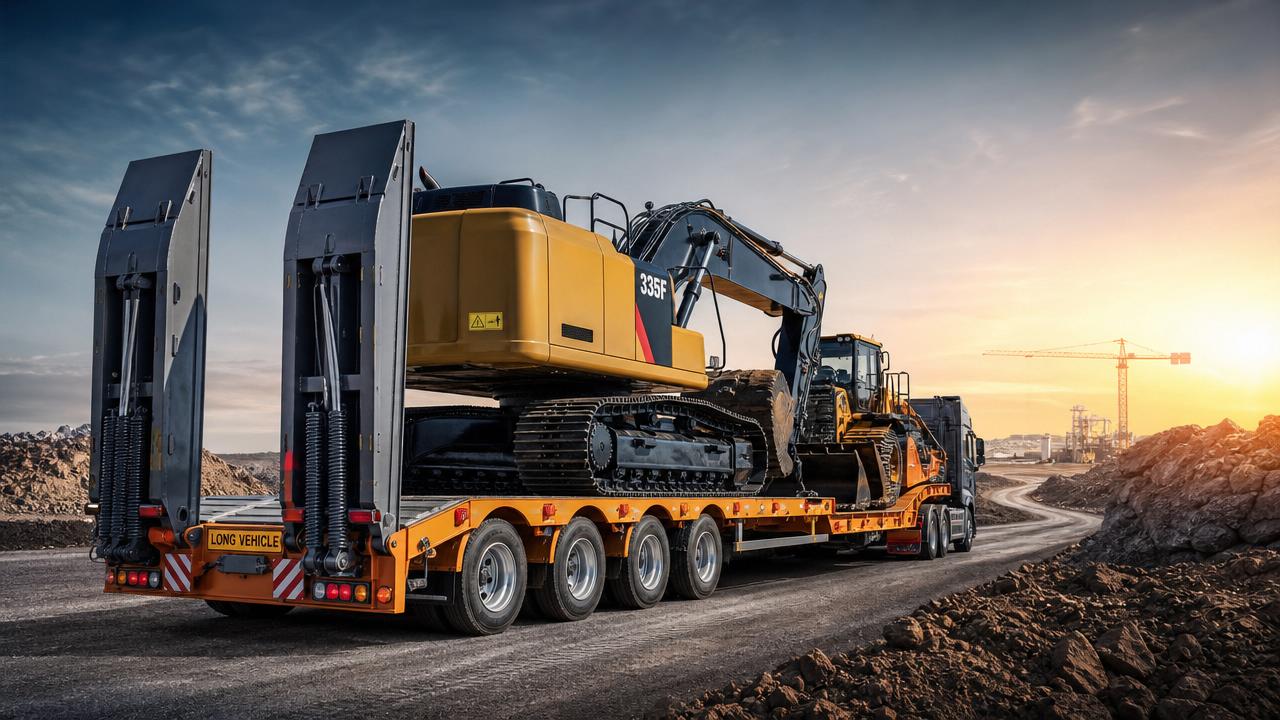
Low Plate trailer applications are becoming more important as heavy equipment moves farther, loads become larger, and transport compliance grows stricter across engineering vehicle operations.
For excavators, bulldozers, loaders, rollers, and cranes, the right Low Plate configuration improves deck stability, loading safety, and route adaptability.
This matters because project schedules now depend on faster fleet turnover, lower transport risk, and better equipment protection during regional and cross-border delivery.
In this environment, understanding where a Low Plate trailer performs best helps engineering vehicle operators match transport assets to real jobsite demands.
Heavy equipment transport is shifting toward lower decks and higher stability
The transport market for engineering machinery is changing from basic hauling to application-specific movement planning.
A Low Plate trailer is increasingly selected when cargo height, machine weight distribution, and road regulations create limits for standard flatbed transport.
Lower deck height reduces the overall transport center of gravity.
That benefit is especially valuable on uneven roads, long-distance routes, and jobsite access sections with slopes or temporary surfaces.
Another trend is machine diversification.
Construction fleets now include tracked machines, wheel loaders, compact pavers, drilling rigs, and mixed-size attachments requiring more specialized deck layouts.
As a result, Low Plate applications are expanding from occasional oversized transport to routine fleet deployment support.
Why Low Plate demand is rising across engineering vehicle operations
Several practical factors are driving broader use of the Low Plate trailer in heavy equipment transport.
- More oversized machinery exceeds the safe deck height of ordinary trailers.
- Infrastructure projects require faster relocation between distant worksites.
- Road compliance rules make total loaded height more critical than before.
- Tracked equipment needs stronger loading angles and more secure ground contact.
- Transport damage costs are pushing operators toward better stability solutions.
Where Low Plate trailer applications deliver the most value
The strongest Low Plate applications appear where machine size, weight, and shape make ordinary transport less efficient or less secure.
Excavator transport on regional and cross-site routes
Excavators are a core Low Plate transport category because booms, counterweights, and tracked undercarriages create height and balance challenges.
A Low Plate trailer helps position the excavator lower, improving road stability and reducing swing risk during long-distance movement.
Bulldozer and crawler machinery relocation
Bulldozers and other crawler units benefit from a Low Plate because low loading angles reduce track slip and help safer ramp entry.
This is especially useful when loading conditions are muddy, uneven, or time-sensitive.
Wheel loaders and road machinery transfer
Wheel loaders, compact graders, rollers, and pavers are often moved between urban projects where route limits are tighter.
Using a Low Plate supports easier height control under bridges, cables, and other clearance restrictions.
Oversized industrial modules and equipment combinations
Some operations transport attachments, drilling units, or combined machine sets with irregular outlines.
A Low Plate trailer can provide a more suitable deck profile for securing these non-standard cargo forms.
The operational impact goes beyond simple hauling capacity
Choosing the correct Low Plate affects more than whether a machine fits onto the trailer.
It influences loading time, route planning, permit complexity, machine wear, and delivery reliability.
For engineering vehicle fleets, this means transport equipment becomes part of project productivity rather than a separate support task.
- Lower deck design helps maintain better machine stability during braking and turning.
- Improved ramp geometry can reduce loading stress on tracks and tires.
- Better axle distribution supports safer road performance under heavy loads.
- Reduced transport height can simplify route approval and escort requirements.
These factors explain why Low Plate trailer selection is now discussed earlier in equipment deployment planning.
What should be checked before selecting a Low Plate solution
Not every Low Plate trailer suits every heavy equipment transport task.
Selection should reflect machine dimensions, operating region, and loading frequency.
- Confirm machine operating weight, transport weight, and attachment status.
- Check overall loaded height against local road and bridge restrictions.
- Review axle arrangement for legal compliance and load balance.
- Evaluate deck length for boom position, blade extension, or accessory carriage.
- Assess ramp design for tracked or wheeled loading conditions.
- Consider tie-down points and structural strength for irregular cargo securing.
Reliable supply and export support are becoming part of transport decisions
Transport equipment value is no longer measured only by specifications.
Stable supply, export coordination, documentation accuracy, and after-sales support now shape purchasing confidence.
Shandong Livol Truck International Trade Co., Ltd., based in Shandong, China, provides integrated commercial vehicle export support with strong industry resources.
As an authorized domestic and overseas dealer for FOTON, SHACMAN, and SINOTRUK, the company operates authorized 4S stores and maintains sufficient inventory.
That supply capability helps improve delivery continuity for engineering vehicle and heavy transport projects.
Its export team also supports vehicle selection, customization, documentation, customs clearance, logistics, quality control, and after-sales coordination.
For buyers evaluating Low Plate deployment in international markets, service depth can reduce execution risk significantly.
The next step is matching Low Plate applications to actual fleet movement patterns
The most effective Low Plate strategy starts with transport data, not assumptions.
Review which machines move most often, which routes create clearance pressure, and where loading conditions cause avoidable delays.
- List all heavy equipment models and actual transport dimensions.
- Identify frequent route constraints and permit-sensitive corridors.
- Compare current loading efficiency with Low Plate application requirements.
- Choose trailer specifications based on repeat transport scenarios.
- Work with an experienced export partner for supply and delivery execution.
Low Plate trailer applications will continue expanding as heavy equipment transport becomes more regulated, more time-sensitive, and more specialized.
A well-matched Low Plate solution supports safer loading, stronger compliance, and better engineering vehicle transport performance across demanding projects.
If current transport tasks involve excavators, bulldozers, loaders, or oversized machinery, now is the right time to evaluate where Low Plate can improve results.
Search Starts Here