
News
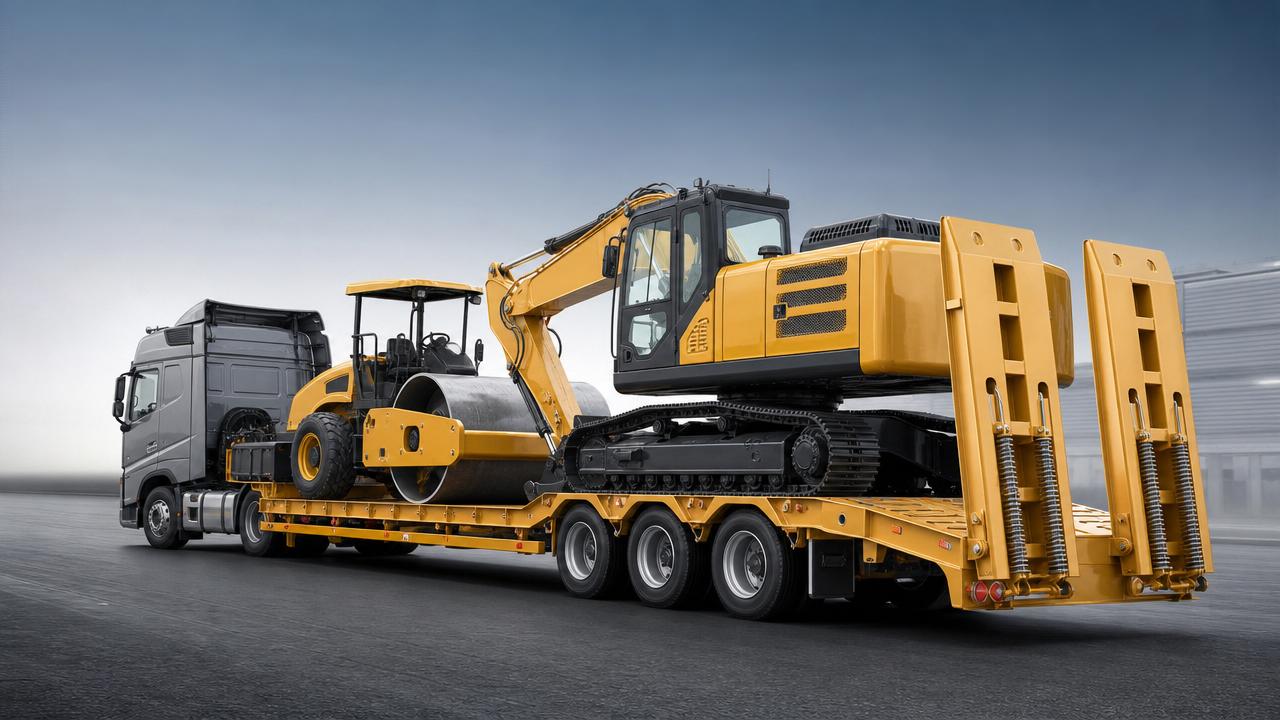
In heavy equipment transfer projects, choosing the right Low Plate trailer is essential for safety, efficiency, and cost control. For project managers handling complex construction and engineering logistics, understanding where Low Plate trailers perform best can reduce transport risks and improve scheduling. This article explores key applications, practical advantages, and selection insights to support smarter heavy equipment movement across demanding project sites.
Why is a Low Plate trailer critical in heavy equipment transfer projects?
A Low Plate trailer is designed for transporting heavy, tall, and oversized machinery that cannot move efficiently on public roads by itself. In engineering vehicle operations, it is widely used for excavators, wheel loaders, bulldozers, rollers, cranes, and other project equipment.
For project managers, the value of a Low Plate solution is not only in carrying capacity. It also helps control route restrictions, loading efficiency, equipment stability, and the total transport cycle between warehouse yards, ports, and project sites.
Compared with standard flatbed transport, a Low Plate trailer usually offers a lower deck height, better center-of-gravity control, and easier loading for tracked or wheeled machines. These characteristics are especially important when equipment transfer must meet strict deadlines or difficult site access conditions.
- Lower deck height helps reduce total transport height and improves compliance with bridge and road clearance limits.
- Heavy-duty structure supports concentrated axle loads from engineering equipment with steel tracks or uneven weight distribution.
- Rear ramp loading makes machine boarding faster and reduces dependence on external cranes during site transfers.
- Better stability during braking and cornering lowers the risk of equipment shift and project delay.
What problems does it solve for project managers?
The first problem is schedule pressure. Heavy equipment often needs to move between multiple work zones, temporary yards, and border or port logistics points. A properly matched Low Plate trailer shortens loading time and reduces rehandling.
The second problem is risk control. If the trailer deck is too high, too short, or structurally mismatched, the result may be route rejection, poor balance, tire overload, or unsafe ramp angles. These issues directly affect project continuity.
Which Low Plate applications are most common on engineering vehicle projects?
Not every transfer task requires the same trailer setup. The best Low Plate application depends on machine dimensions, jobsite terrain, road restrictions, and transfer frequency. Project managers should evaluate actual movement scenarios rather than only rated tonnage.
1. Excavator and loader relocation between active sites
This is one of the most frequent Low Plate uses. Excavators and loaders are often shifted between road construction, quarry, municipal, and infrastructure works. These movements demand fast loading, secure tie-down points, and reliable suspension support over mixed road conditions.
2. Transport of bulldozers and rollers for earthwork projects
Bulldozers and compactors generate high localized loads, especially on tracked contact surfaces. A Low Plate trailer with reinforced deck structure and suitable axle arrangement is better suited to these machines than a basic cargo trailer.
3. Port-to-site transfer of newly procured engineering vehicles
Imported or exported construction equipment often needs to move from factory or port holding areas to inland project sites. In this stage, Low Plate trailers are valuable because they simplify loading coordination and reduce the number of separate handling steps.
4. Cross-border and regional logistics for infrastructure packages
For international contractors and regional fleet operators, a Low Plate trailer is often part of a larger heavy logistics plan. Height limits, customs documents, and road permit requirements vary, so transport equipment must support both practical loading and compliant movement.
The table below helps identify which Low Plate application usually matches common engineering vehicle transfer tasks.
This comparison shows that the best Low Plate application is always linked to transport distance, machine type, and route limits. A project manager who defines those three factors early usually avoids costly mismatches later.
How does a Low Plate compare with other trailer options?
In practice, buyers often compare a Low Plate trailer with standard flatbeds, high-deck cargo trailers, or detachable gooseneck solutions. The right choice depends on whether the priority is simple cargo transport, frequent machine relocation, or extra-heavy specialized hauling.
For most engineering vehicle fleets, the Low Plate sits in a practical middle position. It offers better machinery loading capability than a normal trailer while remaining more straightforward to deploy than highly specialized heavy-haul combinations.
The following table compares common transport options used in engineering equipment logistics.
For many contractors, the Low Plate trailer offers the strongest balance between cost, loading practicality, and route adaptability. It is especially useful when the fleet includes different machine types and project schedules change frequently.
What technical points should you check before buying a Low Plate trailer?
A trailer that looks similar on paper may perform very differently in field conditions. Project managers should focus on structural details, not only price or nominal load rating. This is where many procurement mistakes begin.
Deck height and loading angle
Lower deck height helps reduce total transport height and improves route flexibility. Ramp angle matters just as much. A steep angle can create loading risk for low-clearance equipment or machines with long wheelbase geometry.
Axle configuration and suspension
The number of axles, spacing, and suspension type affect load distribution, tire wear, and road stability. A Low Plate used for regular excavator movement may need a different axle setup than one carrying compactors or dozers across regional highways.
Deck reinforcement and tie-down layout
Tracked machinery places concentrated pressure on the deck. Reinforced structural sections and well-positioned lashing points help prevent deck fatigue and secure the machine during braking, uneven roads, or emergency maneuvers.
Brake system and lighting compliance
For export and cross-border operations, braking performance and lighting layout should align with destination market requirements and common transport safety practices. This is especially important for long-distance engineering vehicle dispatch.
- Confirm the operating weight, transport weight, and dimensional envelope of each machine to be carried.
- Check whether the machine will self-load via ramps or require external lifting support.
- Review road class, bridge clearance, and legal axle distribution in the destination area.
- Ask for details on frame structure, landing gear, kingpin arrangement, and consumable parts support.
How should project managers choose the right Low Plate specification?
A useful selection method starts with the equipment list, not the trailer brochure. If your project moves different machines every week, you need a Low Plate specification with enough flexibility for changing loads and loading methods.
If your transport profile is stable, such as repeated movement of one excavator class between two sites, it may be better to optimize around that machine’s weight, track width, and operating clearance. This often lowers lifecycle operating cost.
A practical selection checklist
- List the heaviest and tallest machine that will use the Low Plate trailer during the next 12 to 24 months.
- Estimate loading frequency. High-frequency internal transfers justify stronger ramp, deck, and suspension specifications.
- Define the main route type: urban roads, highways, quarry roads, port areas, or mixed regional transport.
- Check destination compliance needs, especially if the trailer will be exported or used in international project supply chains.
- Review spare parts access and service responsiveness before placing the purchase order.
The table below summarizes common selection factors for a Low Plate trailer in engineering vehicle projects.
This approach keeps the Low Plate purchase decision tied to real project outcomes: reduced downtime, safer loading, fewer route issues, and better fleet utilization.
What cost factors and alternatives should be considered?
Purchase price is only one part of the decision. In engineering vehicle logistics, the true cost of a Low Plate trailer includes dispatch efficiency, maintenance intervals, consumable wear, and the cost of delays caused by poor trailer matching.
A lower-cost trailer may seem attractive at the procurement stage, but if it increases loading time, requires route compromises, or causes faster deck wear, the total operating cost can become much higher over the project lifecycle.
- Initial acquisition cost should be weighed against structural durability and expected dispatch frequency.
- Fuel consumption is influenced by total combination weight, axle arrangement, and route terrain.
- Maintenance cost depends on suspension, brakes, tires, and how often the trailer runs on rough access roads.
- Delay cost can exceed hardware savings when project equipment arrives late to critical work fronts.
When is another solution better?
If your equipment is exceptionally heavy or irregular in shape, a specialized heavy-haul solution may be more appropriate. If you mainly move general freight and only occasionally carry light machinery, a standard trailer may cover part of the demand more economically.
However, for mixed engineering vehicle fleets and active infrastructure projects, the Low Plate often remains the most practical and scalable solution.
What compliance and logistics details are often overlooked?
Many project delays come from overlooked logistics details rather than from the trailer itself. A Low Plate trailer may be technically suitable but still create problems if documentation, route permits, customs data, or delivery planning are incomplete.
For export-oriented buyers, it is important to work with a supplier that understands not only commercial vehicles, but also full-process trade execution. That includes vehicle selection, customization, shipping coordination, customs support, and after-sales communication.
Common compliance checkpoints
- Overall dimensions and axle distribution should align with local road transport rules.
- Lighting, reflective markings, and braking layout should match destination market expectations.
- Packing, shipment timing, and inland delivery handover should be planned before factory dispatch.
- Spare parts and service contact channels should be prepared for field operation, not arranged after arrival.
This is where Shandong Livol Truck International Trade Co., Ltd. offers practical value. Based in Shandong, China, the company combines commercial vehicle supply capability with export execution experience. As an authorized domestic and overseas dealer for FOTON, SHACMAN, and SINOTRUK, and with a network of authorized 4S stores and available inventory, it can support stable supply and faster coordination for engineering transport needs.
For project managers under delivery pressure, that matters. It means discussions can go beyond basic quotation and move into actual solution planning, including trailer matching, vehicle sourcing, customization, documents, customs clearance, and logistics arrangements.
Low Plate trailer FAQ for project managers
How do I know whether a Low Plate is suitable for my equipment?
Start with transport weight, machine dimensions, and loading method. If the equipment is tall, heavy, tracked, or frequently moved between sites, a Low Plate is usually more suitable than a general cargo trailer. The final decision should also consider route restrictions and ramp angle requirements.
What should I prioritize: rated capacity or deck design?
Both matter, but deck design often decides real-world usability. A trailer can have sufficient nominal capacity but still perform poorly if the loading angle is too steep, the deck is too high, or tie-down points are poorly placed. For a Low Plate, structure and geometry are as important as tonnage.
Is a Low Plate trailer useful for mixed fleet operations?
Yes, provided the specification is selected with enough range for the heaviest and largest machines in the fleet. Many contractors use one Low Plate trailer to support several machine classes, but this requires careful attention to axle load, usable deck length, and securement flexibility.
What are the most common purchasing mistakes?
The most common mistakes are choosing by price alone, underestimating machine transport height, ignoring deck reinforcement needs for tracked equipment, and failing to confirm local compliance rules. Another frequent issue is buying from a supplier that cannot support export documents or after-sales communication.
Why choose us for Low Plate and engineering vehicle transport solutions?
For project managers, a supplier should do more than provide a trailer list. The real need is a workable transport solution that fits equipment type, delivery timeline, export process, and project execution pressure. That is the area where Shandong Livol Truck International Trade Co., Ltd. can support your team.
- Authorized access to major Chinese commercial vehicle resources including FOTON, SHACMAN, and SINOTRUK.
- Broad inventory and authorized 4S store network to improve supply stability and reduce waiting time.
- Professional export team able to coordinate selection, customization, documentation, customs clearance, and logistics.
- Support focused on practical issues such as parameter confirmation, transport matching, delivery schedule, and after-sales communication.
If you are planning a Low Plate purchase or evaluating heavy equipment transfer options, you can contact us to discuss trailer parameters, equipment matching, delivery cycle, customization scope, destination compliance requirements, and quotation planning. Sharing your equipment list, route conditions, and project timeline early will help build a more accurate and efficient transport solution.
Search Starts Here