
News
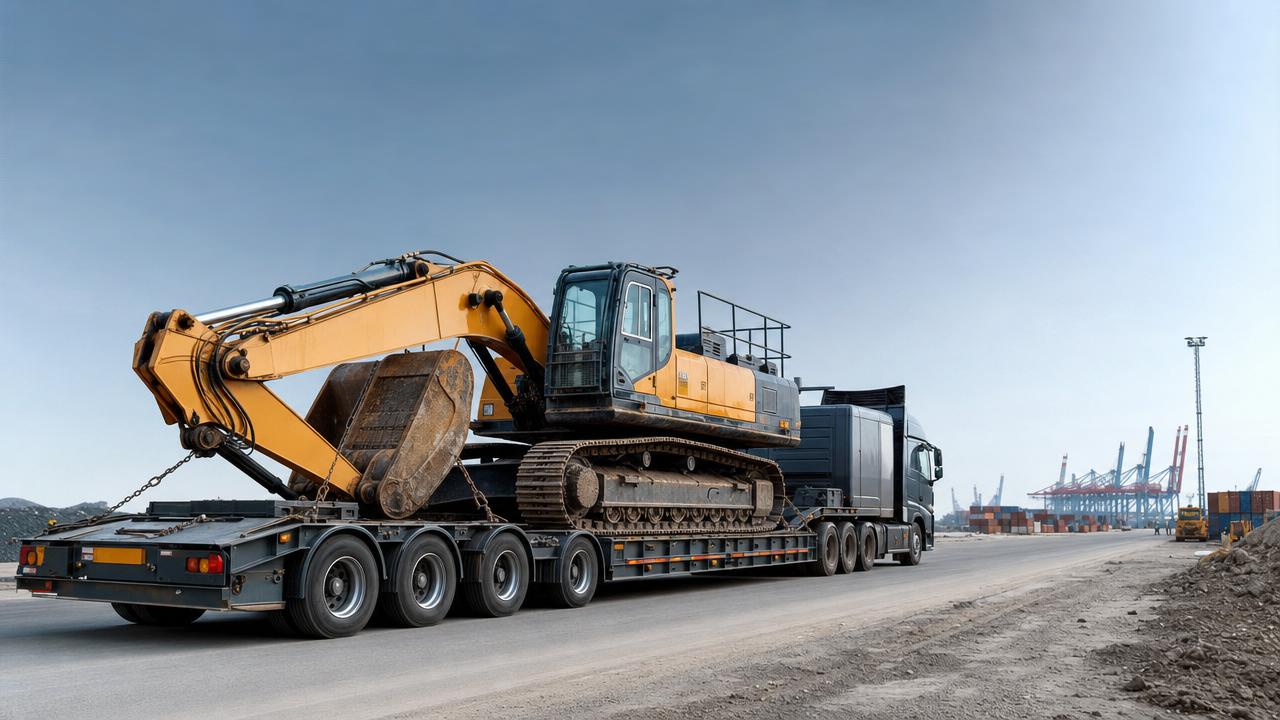
For project managers handling excavator and heavy equipment transport, choosing the right Low Plate trailer can directly affect safety, efficiency, and delivery timelines.
From construction sites to long-distance logistics, Low Plate applications support oversized machinery with better loading stability and route adaptability.
This article examines changing transport demands, major application scenarios, and practical selection ideas for engineering vehicle operations.
Low Plate demand is rising with larger machines and tighter project schedules
Heavy equipment moves are becoming more complex across infrastructure, mining, municipal work, and energy development.
Excavators now arrive in wider size ranges, while crawler machines, rollers, loaders, and drilling equipment require safer ground clearance control.
At the same time, road regulations, bridge limits, and site access restrictions are forcing transport planning to become more precise.
This is where Low Plate trailer solutions show clear value.
A Low Plate reduces deck height, improves loading angles, and helps large machines pass under overhead obstacles more easily.
For engineering vehicle fleets, that means fewer route compromises and smoother delivery coordination.
The market shift is not only about moving heavier units.
It is also about reducing downtime, improving compliance, and protecting machine condition during repeated relocation cycles.
Where Low Plate applications perform best in engineering equipment transport
The strongest Low Plate applications appear in operations where height, weight, and loading stability must be balanced together.
Excavator relocation between active job sites
Excavators are among the most common Low Plate loads.
The lower deck helps transport tracked excavators with improved center-of-gravity control.
This is especially useful when moving medium and large excavators across uneven access roads.
Mining and quarry equipment transfer
Mining operations often require repeated movement of crushers, loaders, support machinery, and crawler equipment.
A Low Plate trailer supports heavy axle loads while offering practical loading geometry for rugged field conditions.
Road building and municipal construction
Pavers, rollers, graders, and compactors frequently move between short-term project zones.
Low Plate transport improves turnaround efficiency and reduces repositioning delays during compressed urban schedules.
Long-distance logistics for export and regional delivery
For cross-border or port-to-site movement, Low Plate units provide better compatibility with various machine sizes.
That flexibility matters when equipment must move from storage yards to inland destinations without excessive transshipment.
Several forces are pushing Low Plate trailer use into wider roles
The expansion of Low Plate applications is not accidental.
It is driven by equipment design changes, project execution pressure, and transport risk management needs.
The operational impact goes beyond transport alone
Choosing the right Low Plate affects more than the trailer segment of a project.
It influences mobilization timing, machine availability, fuel use, route planning, and even on-site sequencing.
A poor trailer match can create delays at ramps, increase escort requirements, or force disassembly before shipping.
A well-matched Low Plate can reduce those hidden costs.
- Lower loading angles help tracked machines board more safely.
- Better weight distribution can support tire life and towing stability.
- Reduced transport height may simplify permit applications on some routes.
- Faster loading supports tighter daily equipment movement plans.
- Improved machine security lowers the risk of vibration-related wear.
These gains are especially valuable in engineering vehicle fleets serving multiple projects across varying terrain.
Low Plate selection is becoming a more technical decision
Not every Low Plate trailer fits every heavy equipment move.
Selection now depends on machine dimensions, transport frequency, road conditions, and compliance limits.
Key specification areas to review
- Rated payload capacity for excavators and mixed equipment loads
- Deck height and deck length for total machine footprint
- Axle arrangement based on local road and bridge requirements
- Ramp design for crawler, wheeled, or mixed machine loading
- Suspension durability for paved roads and rough site entries
- Tie-down points for safe restraint under repeated operations
A Low Plate used mainly for excavators may need a different layout than one serving road rollers or drilling rigs.
That is why application-specific matching is becoming more important than broad capacity claims.
What to watch when Low Plate trailers support export-oriented equipment supply
Global equipment supply chains increasingly require transport solutions that connect factory inventory, inland depots, ports, and final sites.
In that environment, a dependable Low Plate supports both domestic repositioning and overseas delivery preparation.
Shandong Livol Truck International Trade Co., Ltd., based in Shandong, China, supports this wider transport need through strong commercial vehicle export capability.
As an authorized dealer for FOTON, SHACMAN, and SINOTRUK, the company combines stable supply with practical export coordination.
Its professional team handles vehicle selection, customization, documentation, customs clearance, and logistics support.
For heavy equipment transport projects, this integrated approach can help align tractor units and Low Plate trailer requirements more efficiently.
The most important focus areas are shifting from price to lifecycle suitability
A low upfront price does not guarantee a strong transport result.
Current demand favors Low Plate solutions that balance payload, durability, compliance, and service support over time.
- Match the Low Plate to real machine dimensions, not estimated categories.
- Review route constraints before finalizing axle and deck configuration.
- Check ramp strength and loading angle for tracked equipment regularly.
- Prioritize structural quality where repeated site-to-site use is expected.
- Confirm spare parts and after-sales responsiveness for long service life.
- Consider future fleet growth when choosing capacity and compatibility.
These points help prevent under-specification and reduce later operating friction.
A practical response plan helps turn Low Plate capability into project advantage
Low Plate is becoming a strategic transport tool for heavy equipment movement
The role of the Low Plate is expanding as engineering projects demand safer, faster, and more compliant machinery transport.
Its value is strongest in excavator moves, mining support, road construction logistics, and export-linked equipment delivery.
When selected carefully, a Low Plate does more than carry equipment.
It supports scheduling reliability, route flexibility, and lower transport risk across the engineering vehicle chain.
For operations evaluating future heavy equipment mobility, now is the right time to review existing trailer capability and align it with real project demands.
If a stronger transport solution is needed, working with an experienced commercial vehicle export partner can help move from specification planning to dependable delivery.
Search Starts Here