News
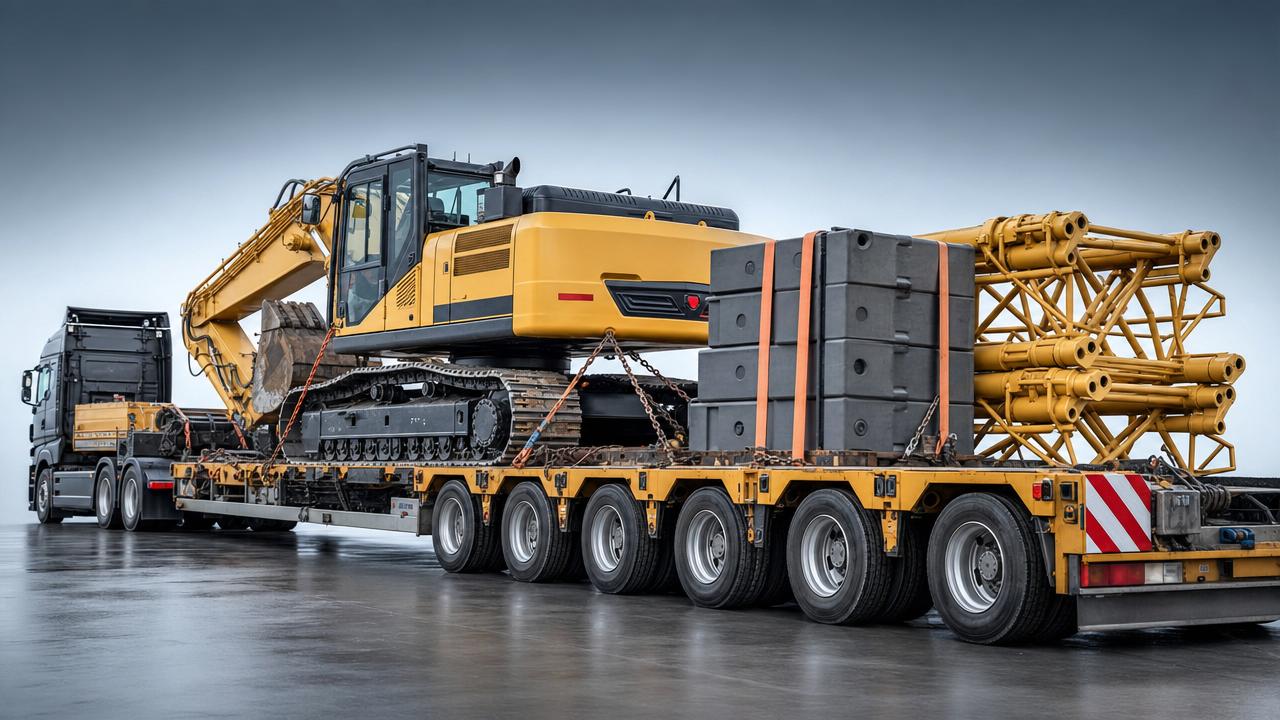
For project managers and engineering leaders moving excavators and cranes, choosing the right Low Plate trailer is critical to safety, efficiency, and cost control. Designed for heavy equipment transport, Low Plate trailers help handle oversized machinery across construction, mining, and infrastructure projects. This article explores their key applications and shows how reliable vehicle export support can improve delivery speed, compliance, and project performance.
Why does Low Plate transport matter so much in heavy equipment projects?
In engineering vehicle operations, transport is not a side task. It directly affects equipment utilization, site readiness, labor scheduling, and contract milestones. When an excavator or crane arrives late, an entire project chain can slow down.
A Low Plate trailer is widely used for moving heavy, tall, and large-footprint machinery that cannot be loaded efficiently onto conventional flatbed solutions. Its lower deck height reduces overall transport height and improves stability during long-distance hauling.
For project managers, the real issue is not only whether a trailer can carry the load. The key questions are whether it fits route restrictions, supports fast loading, protects the equipment, and matches the delivery timeline.
- Lower loading height helps transport excavators and crane components under bridge and road clearance limits.
- A reinforced structure supports concentrated axle loads common in tracked machines and lifting equipment.
- Better ramp geometry makes loading safer, especially when machines need to self-drive onto the deck.
- Improved operational flexibility helps contractors redeploy machines between job sites with less downtime.
What is a Low Plate trailer in practical project terms?
In practical use, a Low Plate trailer is a heavy-duty transport platform built with a low cargo deck, strong frame structure, and loading features suited to construction machinery. It is commonly selected for excavators, crawler cranes, wheel loaders, rollers, and similar engineering vehicles.
Different markets may use different names such as low bed trailer or lowboy trailer, but the core project value is the same: safer transport for oversized equipment with better compliance and easier loading.
Which Low Plate applications are most common for excavator and crane transport?
The best Low Plate application depends on machine type, travel distance, road conditions, and whether the load is complete equipment or disassembled components. Project teams should evaluate the transport mission before comparing prices.
Excavator relocation between construction sites
Medium and large excavators often move between urban civil works, road construction, quarry operations, and utility projects. A Low Plate trailer reduces loading angle, which is especially useful for tracked excavators with higher ground contact pressure.
For job sites with tight schedules, fast loading and unloading can save valuable hours. This matters when equipment must work immediately after delivery or when night transport windows are limited.
Crane transport for infrastructure and lifting projects
Crane transport is more complex because loads may include the carrier, boom sections, counterweights, hooks, and support gear. A Low Plate setup can help control deck height and balance while handling heavy point loads from crane-related components.
In bridge construction, industrial erection, and power projects, route planning is often strict. The wrong trailer type can trigger permit delays, escort needs, or transshipment costs.
Mining and remote-area equipment movement
Mining roads, temporary access routes, and undeveloped project zones require trailers that are structurally reliable and suitable for rougher conditions. In these environments, durability, suspension behavior, and tie-down layout matter as much as nominal payload.
The table below shows how Low Plate applications differ by machinery type and project context, helping engineering teams match transport tools to actual field demands.
This comparison highlights an important point: the same Low Plate category can serve different roles, but load geometry and route conditions should drive the final choice.
How does a Low Plate compare with other transport options?
Project buyers often compare a Low Plate with standard flatbed trailers, modular solutions, or self-propelled transport arrangements. The right answer depends on equipment dimensions, local regulations, and deployment frequency.
- A standard flatbed may cost less initially, but it may not handle deck height limits for tall machinery.
- A modular transport setup may suit extreme loads, but it can be excessive for routine excavator transfer.
- A Low Plate often provides the best balance between versatility, access, and operating economy for repeated heavy equipment moves.
For procurement teams evaluating transport solutions, the following table compares common options used in engineering vehicle logistics.
For many construction and mining operators, the Low Plate remains the most practical choice because it supports a broad range of equipment without the planning burden of specialized ultra-heavy transport.
What technical points should project managers check before buying?
Deck height and total transport height
The lower the deck, the easier it becomes to stay within local height restrictions. This is especially relevant when moving excavators with cabs and booms, or crane sections that already push dimensional limits.
Payload and axle distribution
Nominal capacity alone is not enough. Buyers should ask how the frame, suspension, and axles manage concentrated machine loads. Tracked equipment often creates loading patterns different from wheeled equipment.
Ramp design and loading safety
A Low Plate used for self-loading machinery should have suitable ramp angle, surface grip, and support strength. Unsafe loading is one of the fastest ways to damage both machine and trailer.
Tie-down points and structural reinforcement
Secure lashing is essential for cranes and excavators. Multiple anchor points, reinforced side sections, and practical tie-down layouts make daily operation easier and improve transport safety.
The table below summarizes common selection factors for a Low Plate trailer in engineering vehicle procurement.
A careful technical review helps prevent a common purchasing mistake: choosing a trailer based only on headline payload while ignoring real loading geometry and local transport conditions.
How can buyers balance cost, delivery speed, and project risk?
Low upfront price does not always mean lower project cost. Delayed shipment, incomplete export documents, poor trailer matching, or rework caused by non-compliant dimensions can quickly erase any apparent savings.
Project leaders should estimate total ownership and deployment cost, not only factory price. This includes transport efficiency, maintenance convenience, spare parts access, and the impact of downtime on site operations.
- Define the heaviest and tallest machine to be moved in the next 12 to 24 months.
- Check local route restrictions, permit practices, and legal axle load rules.
- Compare delivery time with project mobilization deadlines, not just quotation date.
- Ask whether customization is needed for ramps, deck length, lashing points, or suspension.
This is where a capable exporter becomes valuable. A supplier that understands engineering vehicles and export operations can reduce hidden delays between factory readiness and site arrival.
Why do export capability and supply stability matter for Low Plate procurement?
For overseas buyers, a Low Plate purchase is not only a product decision. It is also a logistics and compliance decision. Even a well-built trailer can become a project problem if documentation, customs handling, or shipment coordination fails.
Shandong Livol Truck International Trade Co., Ltd. provides a practical advantage here. Based in Shandong, China, the company works as a professional commercial vehicle exporter with strong industry knowledge and global trade experience.
As an official authorized domestic and overseas dealer for FOTON, SHACMAN, and SINOTRUK, Livol is positioned to support broader engineering vehicle fleet planning. This matters when customers need tractors, special transport vehicles, or related commercial vehicle solutions together with trailer procurement.
Its authorized 4S store network across China and sufficient inventory support more stable supply and faster dispatch. For project-driven buyers facing strict mobilization dates, stock readiness can be as important as product specification.
What service support reduces project friction?
- Vehicle and trailer selection aligned with equipment dimensions, route restrictions, and target market conditions.
- Customization support for practical operating needs such as deck layout, loading method, or transport combination.
- Documentation handling, customs coordination, and logistics planning to reduce export execution risk.
- After-sales communication that helps buyers manage deployment questions after delivery.
What compliance and operational risks are often overlooked?
Heavy equipment transport involves more than trailer capacity. Project teams should also consider route compliance, loading practice, machine securing, and local transport rules. Small oversights can lead to permit rejection, cargo damage, or schedule disruption.
Common mistakes in Low Plate planning
- Using machine operating weight as the only planning number while ignoring attachments, fuel, and accessories.
- Focusing on deck length but missing overall transport height after loading.
- Assuming one trailer can equally suit both excavator transfer and crane component transport without configuration review.
- Leaving export paperwork and shipping space booking too late in the procurement cycle.
Where standards are concerned, buyers should always align with applicable local transport regulations, axle load requirements, marking rules, and import procedures in the destination country. These points may vary by market, so early confirmation is essential.
FAQ: what do buyers ask most about Low Plate trailers?
How do I know if a Low Plate is suitable for my excavator?
Start with operating weight, transport dimensions, track or tire width, and loading method. Then compare those figures with deck height, usable deck length, ramp angle, and axle arrangement. If the excavator travels frequently between sites, loading speed and lashing convenience become especially important.
Is one Low Plate enough for both excavator and crane transport?
Sometimes yes, but not always. Excavators and crane-related loads can have very different weight distribution and securing needs. If your project mix includes both, share real machine data with the supplier before confirming the configuration.
What should I prioritize when delivery time is tight?
Prioritize available inventory, confirmed production schedule, export document readiness, and shipping coordination. A technically suitable Low Plate is only useful if it can reach the destination within the project mobilization window.
What documents or confirmations are worth checking before shipment?
Check the commercial invoice, packing details, shipping arrangement, product specification confirmation, and any destination-related import or compliance requirements. Accurate documentation helps avoid customs delays and handover disputes.
Why choose us for Low Plate and engineering vehicle export support?
If you are managing excavator or crane transport, you need more than a seller. You need a partner that understands engineering vehicle usage, procurement timing, export procedures, and practical delivery risks.
Shandong Livol Truck International Trade Co., Ltd. combines commercial vehicle industry resources, authorized brand channels, export execution experience, and responsive service support. This helps customers move from specification discussion to shipment planning with fewer gaps.
You can contact us to discuss specific Low Plate requirements, including payload and deck parameter confirmation, transport matching for excavators or crane components, customization possibilities, delivery lead time, export documentation, logistics arrangements, and quotation comparison for your target market.
If your project also requires related tractors or commercial vehicles from FOTON, SHACMAN, or SINOTRUK, our team can help evaluate a more complete transport solution. That means fewer suppliers to coordinate and a clearer path from procurement to project deployment.
Search Starts Here