
News
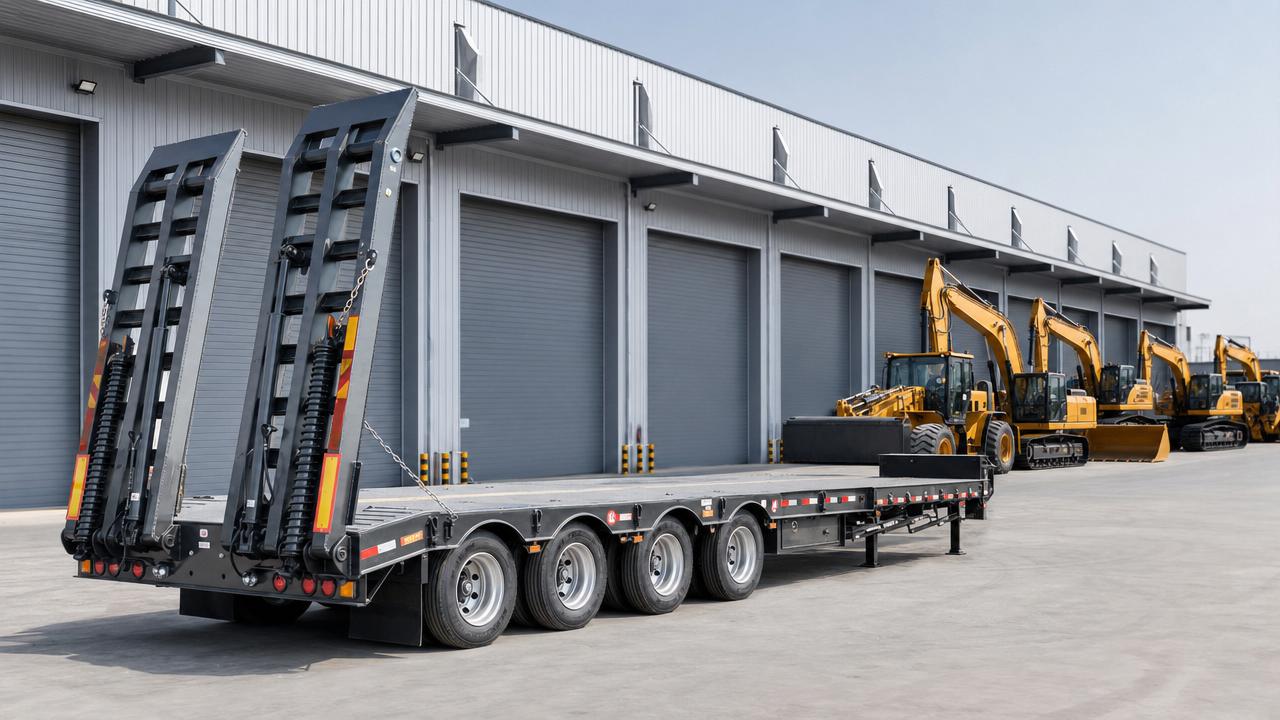
In heavy haul operations, keeping a Low Plate trailer in peak condition is essential to reduce downtime, improve safety, and protect long-term asset value. For after-sales maintenance teams, a practical Low Plate maintenance checklist helps identify wear points early, prevent costly breakdowns, and keep transport schedules on track. This guide outlines the key inspection and service priorities needed for reliable daily performance.
Why a checklist-based Low Plate maintenance routine matters first
For after-sales maintenance personnel in heavy haul operations, the biggest risk is not usually a single dramatic failure. It is the accumulation of small issues: loosened fasteners, uneven tire wear, minor hydraulic seepage, cracked welds, or delayed lubrication. A structured Low Plate checklist creates consistency across shifts, technicians, and service intervals. It also makes fault diagnosis faster because teams can separate urgent safety defects from routine wear.
In practical terms, a checklist helps maintenance teams answer three questions quickly: what must be inspected before dispatch, what requires scheduled workshop attention, and what signs suggest the Low Plate is approaching an unplanned stoppage. This is especially important for engineering vehicle fleets carrying excavators, loaders, rollers, and oversized machinery where trailer reliability directly affects project timing and road safety.
Start with these priority Low Plate inspection points before every trip
Before focusing on deeper service work, after-sales teams should verify the most failure-sensitive items that directly influence roadworthiness and loading stability. The following checklist is the daily foundation for Low Plate uptime control.
- Deck and ramp condition: Check for bent plates, surface cracking, deformation around load contact points, anti-slip wear, and ramp hinge damage. A worn Low Plate deck increases loading risk and can accelerate frame fatigue.
- Main frame and crossmembers: Inspect welded seams, stress zones near the gooseneck, suspension mounts, and rear loading section. Look for paint splitting, corrosion traces, or hairline cracks that often appear before a structural fault.
- Axles and suspension: Confirm equal ride height, no abnormal lean, no broken leaves or damaged air components, and no visible movement at mounting points. Uneven suspension behavior on a Low Plate usually signals overload history or poor load distribution.
- Tires and wheels: Measure tread depth, inspect shoulder wear, sidewall cuts, embedded metal, valve condition, and wheel nut torque marks. Uneven tire wear often points to axle misalignment or suspension issues rather than tire quality alone.
- Brake system: Check chambers, hoses, connectors, slack adjusters, drums or discs, and air leakage. A Low Plate under heavy machinery load cannot tolerate delayed brake response or heat imbalance.
- Hydraulic components: For hydraulic ramps or detachable neck systems, inspect cylinders, hoses, couplings, seals, and reservoir condition. Minor seepage can rapidly develop into loading failure.
- Electrical and lighting systems: Verify marker lamps, tail lamps, brake lights, ABS/EBS connections, harness routing, and connector corrosion. Lighting faults are simple to miss but can stop a vehicle at roadside inspection.
- Locking and securing devices: Confirm lashing points, chains, hooks, pins, toolboxes, spare wheel brackets, and ramp locks are complete and fully functional. On a Low Plate, cargo restraint points are mission-critical, not secondary accessories.
Use a clear service-interval checklist, not only a pre-trip inspection
A reliable Low Plate maintenance program should divide work into daily, weekly, monthly, and periodic overhaul tasks. This prevents teams from relying too heavily on visual walkarounds and helps schedule labor and spare parts more efficiently.
Daily checklist
Focus on visible safety items: tires, air lines, hydraulic leaks, lighting, ramp function, obvious structural damage, and fastener loss. Record any abnormal sound during loading or turning because noise often appears before visible damage on a Low Plate trailer.
Weekly checklist
Retorque critical fasteners, check wheel end temperature history, inspect brake adjustment, grease pivot points, clean electrical connectors, and review load-induced wear areas on the deck. Weekly review is the best time to catch repetitive stress patterns caused by specific cargo types.
Monthly checklist
Perform a more detailed Low Plate inspection including alignment verification, non-destructive crack review in known stress areas, suspension bushing condition, hydraulic pressure stability, and underframe corrosion mapping. Compare findings against previous service records to identify accelerated deterioration.
Quarterly or major-service checklist
At longer intervals, workshop teams should evaluate structural straightness, axle geometry, brake component wear limits, kingpin condition, landing gear operation, complete wiring health, and paint or anti-corrosion restoration. For fleets operating in mines, ports, or coastal regions, corrosion control should be moved to a higher priority.
Key judgment standards: how to decide whether a Low Plate can stay in service
A checklist becomes more useful when each item includes a service decision rule. After-sales maintenance teams should avoid vague notes such as “monitor later” unless a clear recheck deadline is defined.
- Immediate stop condition: Structural cracking in load-bearing zones, brake air loss, severe tire damage, failed ramp locking, or hydraulic malfunction during loading. These defects should remove the Low Plate from service at once.
- Short-term corrective condition: Minor oil seepage, light uneven wear, early corrosion, loose non-critical accessories, or partial lighting faults. These can sometimes allow limited operation only if local regulations, safety controls, and repair timing are clearly managed.
- Monitor-and-record condition: Cosmetic coating damage, mild deck wear, or early bushing aging without play. These items still require documentation because trend data is valuable for preventing downtime.
Low Plate maintenance points that change by operating scenario
Not every Low Plate works in the same environment. After-sales teams should adjust their maintenance checklist according to load type, route condition, climate, and trailer configuration.
Construction site and quarry use
Dust, impact, and uneven ground increase wear on suspension joints, brake components, and deck surfaces. Cleaning frequency should be higher, and technicians should inspect for stone damage, bent mudguards, and contamination around grease points.
Long-distance highway transport
High-speed heat buildup makes tire pressure control, wheel bearing condition, brake balance, and electrical reliability more critical. A Low Plate used on long routes should have stricter temperature checks after loaded runs.
Cross-border or export delivery applications
Documentation and parts readiness become part of maintenance planning. Fleets should prepare consumables, axle and brake parts lists, hydraulic seal kits, and service records in advance. For buyers sourcing engineering vehicle transport equipment globally, support quality matters as much as product quality.
Frequently missed Low Plate issues that lead to downtime later
Some failures are common not because they are complex, but because teams assume they are minor. These overlooked points often create the most disruptive downtime.
- Hidden crack propagation around repaired welds: Repaired sections should be reinspected regularly, especially if the Low Plate carries concentrated machinery loads in the same deck positions.
- Improper cargo loading distribution: Repeated front-heavy or rear-heavy loading accelerates axle, neck, and deck fatigue. Maintenance findings should be shared with operations teams, not kept inside the workshop only.
- Ramp misalignment: Even slight ramp offset can damage hinges, reduce loading safety, and strain hydraulic components.
- Corroded electrical grounds: Intermittent light or ABS faults are often traced to poor grounding rather than complete component failure.
- Lubrication inconsistency: Missed grease intervals on pivot, hinge, and suspension points create expensive wear that is preventable with disciplined routines.
Practical execution tips for after-sales maintenance teams
To make a Low Plate checklist effective, execution must be standardized. Use one inspection form across the fleet, define red-line defects clearly, and assign sign-off responsibility. Photos should be attached for structural, tire, or hydraulic abnormalities. If the same issue appears on multiple units, escalate it from repair work to root-cause review.
It is also useful to match spare parts planning with failure frequency. Fast-moving items such as hoses, seals, lamps, brake fittings, bushings, and wheel-end consumables should be stocked based on operating intensity. Maintenance teams that wait for every small part order usually experience avoidable trailer downtime.
For international fleet buyers and service partners, selecting a supplier with stable inventory, model familiarity, and export support can reduce maintenance delays significantly. Shandong Livol Truck International Trade Co., Ltd., based in Shandong, China, works as an official authorized domestic and overseas dealer for FOTON, SHACMAN, and SINOTRUK, supported by authorized 4S stores, sufficient vehicle inventory, and a professional export team. For engineering vehicle transport operations, that combination helps customers coordinate vehicle selection, customization, parts planning, documentation, customs clearance, logistics, and after-sales support more efficiently.
A simple Low Plate maintenance workflow your team can adopt
A practical workflow can be summarized as: inspect, classify, repair, verify, and record. Inspect the Low Plate using fixed checkpoints. Classify defects by stop-now, repair-soon, or monitor status. Repair with documented parts and labor notes. Verify function after repair under realistic loading conditions. Record everything to build a maintenance history that supports better planning and resale value.
Conclusion: prepare the right information before improving your Low Plate uptime
A dependable Low Plate maintenance checklist is one of the most effective tools for reducing downtime in heavy haul operations. For after-sales maintenance teams, the priority is to focus on structural integrity, suspension and axle health, tires, brakes, hydraulics, electrical systems, and cargo securing devices in a disciplined service cycle. When these checks are performed consistently and linked to clear judgment standards, breakdowns become more predictable and easier to prevent.
If your business needs to improve Low Plate reliability further, it is best to prepare several points before discussing a service or supply solution: trailer model and payload range, cargo type, route conditions, service interval expectations, common failure history, required spare parts support, delivery timeline, and budget range. With these details clarified early, it becomes much easier to confirm suitable configurations, maintenance plans, parts readiness, and long-term cooperation options.
Search Starts Here