
News
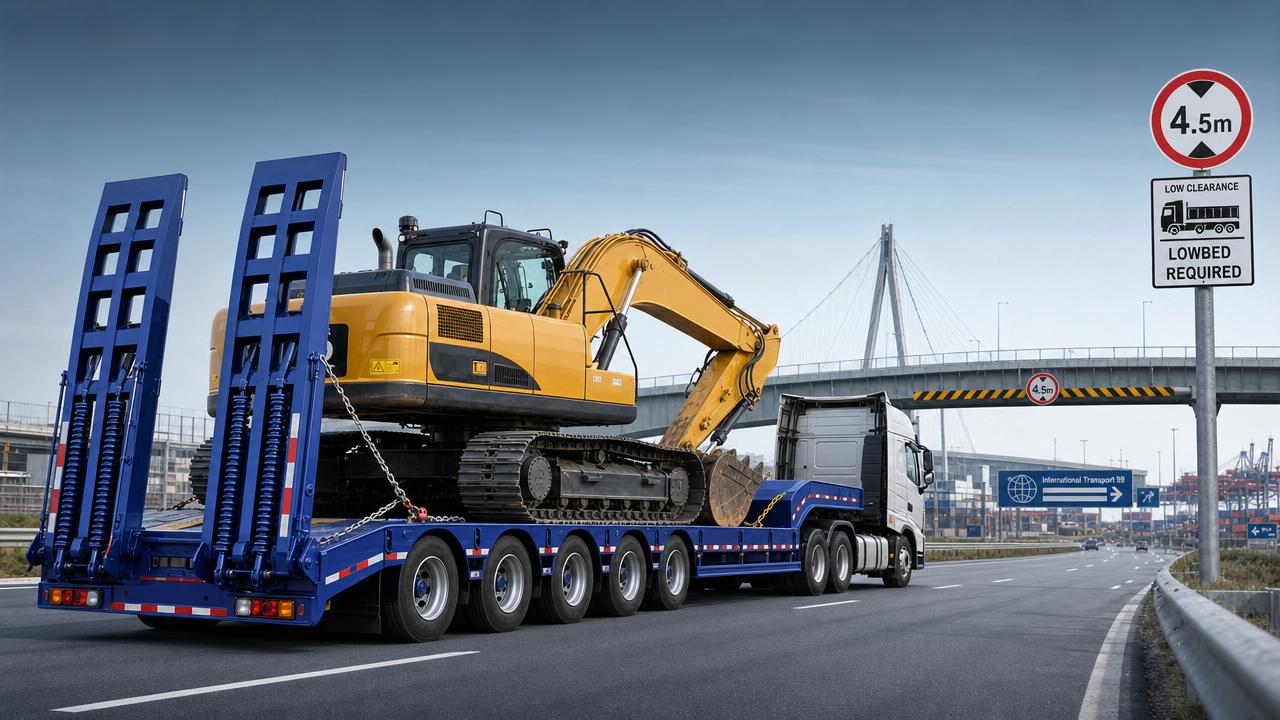
When transport projects face strict clearance requirements, choosing the right Low Plate solution can significantly improve safety, compliance, and delivery efficiency. For business evaluation professionals in the engineering vehicle sector, understanding how low plate applications reduce height limits in equipment transport is essential for making cost-effective procurement and logistics decisions. This article explores practical scenarios, key selection factors, and reliable supply capabilities that support smoother international equipment movement.
Why a checklist approach is the fastest way to assess a Low Plate solution
For business evaluation teams, equipment transport decisions are rarely about trailer price alone. A Low Plate must fit route restrictions, machine dimensions, loading methods, axle requirements, and export service capability at the same time. If even one factor is missed, the result may be permit delays, escort costs, detours, equipment damage, or failed delivery commitments.
That is why a checklist-based review is more useful than a general product description. It helps procurement, logistics, and project teams verify the practical points first: how much height reduction is actually needed, what type of engineering equipment will be moved, whether the Low Plate deck structure matches loading conditions, and whether the supplier can support documentation and international shipment without gaps.
In engineering vehicle transport, the real value of a Low Plate lies in measurable results: lower loaded height, better route access, safer center of gravity, improved compliance, and predictable lifecycle cost. The sections below are organized to support quick and structured judgment.
Priority checklist: what to confirm before selecting a Low Plate
Before comparing brands, capacities, or pricing, decision-makers should first confirm the following core items. These checkpoints determine whether a Low Plate will truly reduce transport height limits in real operating conditions.
- Measure the total transport height target. Start with equipment height, then add deck height, tire compression, securing allowance, and any removable attachments. A Low Plate only creates value when the final loaded height fits the strictest route segment.
- Check equipment weight distribution. Excavators, rollers, pavers, cranes, and drilling units place different loads on the front gooseneck, middle deck, and rear section. A Low Plate should not only carry the total weight but also support safe axle load distribution.
- Confirm deck type and loading angle. For tracked or wheeled machinery, the low deck needs the right ramp design, reinforcement layout, and anti-slip surface. Poor loading geometry can damage both trailer and equipment.
- Verify route and regulatory restrictions. Bridge limits, tunnel clearance, local transport permits, axle spacing rules, and escort requirements should be reviewed before final model selection.
- Assess operating frequency. If the Low Plate will be used in repeated cross-border or project-based transport, durability, serviceability, spare parts access, and brake system reliability become major evaluation factors.
- Review export readiness. For international buyers, the Low Plate supplier should support specification confirmation, inspection records, customs documents, packing, and shipping coordination.
How Low Plate applications reduce height limits in practical transport scenarios
A Low Plate is most effective when vertical clearance is the main project constraint. In many engineering logistics cases, the machine itself cannot be altered much, but the trailer deck height can. By lowering the cargo platform relative to standard flatbed or higher-deck transport options, a Low Plate directly creates more available clearance under bridges, gantries, tunnels, and power lines.
This matters especially for tall construction and industrial equipment such as excavators with folded booms, loaders, compactors, road maintenance units, and some modular machinery. A lower loading platform also improves stability during transit because the center of gravity remains closer to the ground. That can reduce sway risk and improve braking confidence on uneven roads or long-haul export routes.
From a commercial standpoint, successful Low Plate application may reduce the need for expensive route changes, repeated permit applications, partial dismantling of equipment, and secondary lifting operations. These cost savings often outweigh small differences in initial trailer purchase cost.
Selection criteria checklist: judging the right Low Plate configuration
1. Deck height and effective loading clearance
The first specification to review is the actual loaded deck height, not just the advertised low-profile design. Ask for the deck height under normal load conditions and compare it against the equipment’s transport height. For business evaluation, the important number is the final combined clearance, because even a small difference can determine whether the vehicle requires a special route.
2. Payload and structural reinforcement
A Low Plate used for engineering machinery should have frame strength that matches both static and dynamic loading. It is not enough to review nominal tonnage only. Confirm steel grade, reinforcement in high-stress areas, cross-beam design, and expected durability under repeated heavy loading and unloading.
3. Axle layout and legal compliance
Axle count, spacing, suspension type, and load distribution directly affect compliance. In many markets, a Low Plate can only deliver transport efficiency if its axle configuration matches local road laws. Overlooking this point can eliminate the height advantage by creating legal restrictions elsewhere.
4. Ramp design and loading safety
Tracked machinery usually requires stronger and more stable ramp support than wheeled equipment. Check ramp width, hydraulic or mechanical operation, locking reliability, and surface traction. Loading incidents often happen during the first and last minutes of transport, so this factor deserves more attention than many buyers give it.
5. Tie-down points and cargo security
A good Low Plate must include sufficient and well-positioned lashing points. Cargo securing becomes even more important when transporting tall or unevenly balanced equipment. Ask whether the platform is designed for common engineering machinery securing patterns and whether reinforced anchor locations are included.
Scenario-based review: what changes by equipment type
Low Plate selection should not be treated as one-size-fits-all. Different engineering vehicle and equipment categories create different decision priorities.
For evaluation teams managing mixed fleets, a versatile Low Plate can be commercially stronger than an extreme low-deck unit optimized for only one machine. The decision should match expected utilization rate, not only a single transport task.
Commonly overlooked risks that affect Low Plate performance
Several issues are frequently underestimated during sourcing and can reduce the real benefit of a Low Plate application.
- Ignoring removable machine parts. Booms, cabins, protective frames, and attachments may change final height and weight balance.
- Focusing only on purchase price. A cheaper Low Plate may create higher maintenance, shorter service life, or route restrictions that increase total operating cost.
- Missing local permit requirements. Height reduction does not automatically remove all transport restrictions; axle limits and cargo overhang still matter.
- Underestimating after-sales access. Spare parts, brake components, suspension service, and technical response time affect uptime in overseas markets.
- Not checking supplier export coordination ability. Engineering transport projects often fail due to delays in paperwork or shipping arrangements rather than trailer quality itself.
Execution advice: how business evaluators should compare suppliers
When moving from internal review to supplier comparison, create a structured evaluation sheet. Start by asking each supplier to quote against the same machine dimensions, payload range, route conditions, and destination market rules. This makes Low Plate proposals easier to compare on real technical value instead of sales language.
Next, review whether the supplier can support customization. In equipment transport, details such as deck length, ramp type, axle arrangement, tire specification, and braking system may need adjustment for project compatibility. A capable exporter should be able to guide these technical selections with clarity.
It is also wise to evaluate stock availability and delivery responsiveness. Projects involving engineering vehicles often work under tight mobilization schedules. A Low Plate with suitable specifications but uncertain lead time may create more commercial risk than a slightly more expensive option that is ready for fast shipment.
Why integrated export capability matters as much as the Low Plate itself
For international buyers, the best Low Plate solution is not only a technically suitable trailer but a complete supply process with low execution risk. This is where a professional exporter can create measurable value. Shandong Livol Truck International Trade Co., Ltd., based in Shandong, China, offers strong industry resources, stable supply capacity, and practical overseas trade experience for commercial vehicle procurement.
As the official authorized domestic and overseas dealer for FOTON, SHACMAN, and SINOTRUK, the company benefits from reliable product channels and broad commercial vehicle expertise. Its network of authorized 4S stores across China and sufficient vehicle inventory support stable supply and faster delivery planning. For customers evaluating Low Plate and related engineering transport solutions, this can reduce procurement uncertainty.
Equally important, the company provides full-process services including vehicle selection, customization, documentation, customs clearance, and logistics coordination. For business evaluation professionals, this integrated support helps lower transaction friction, especially when orders involve destination-specific compliance, export timing, and after-sales expectations.
Action checklist: what to prepare before requesting a Low Plate proposal
To receive an accurate recommendation and quotation, prepare these details in advance:
- Equipment type, dimensions, operating weight, and whether attachments will stay mounted during transport.
- Target routes, including strictest bridge, tunnel, or overhead clearance limitations.
- Expected loading method, such as self-propelled drive-on, crane loading, or modular handling.
- Required payload range, transport frequency, and annual usage expectations.
- Destination country regulations, homologation preferences, and documentation requirements.
- Preferred delivery schedule, budget range, and whether customization is acceptable.
Final decision guidance for Low Plate procurement
A Low Plate becomes a strong commercial choice when transport height is a real operational constraint and the trailer is matched carefully to equipment type, route conditions, and compliance requirements. For business evaluation professionals, the most effective approach is to review the project through a practical checklist: final loaded height, legal limits, payload distribution, loading safety, lifecycle durability, and export execution capability.
If your team is moving toward procurement, prioritize discussion around machine dimensions, route restrictions, required deck height, axle preferences, customization scope, delivery timeline, and documentation needs. With these points clarified early, a suitable Low Plate solution can improve project safety, reduce avoidable transport cost, and support more reliable international equipment movement.
Search Starts Here