
News
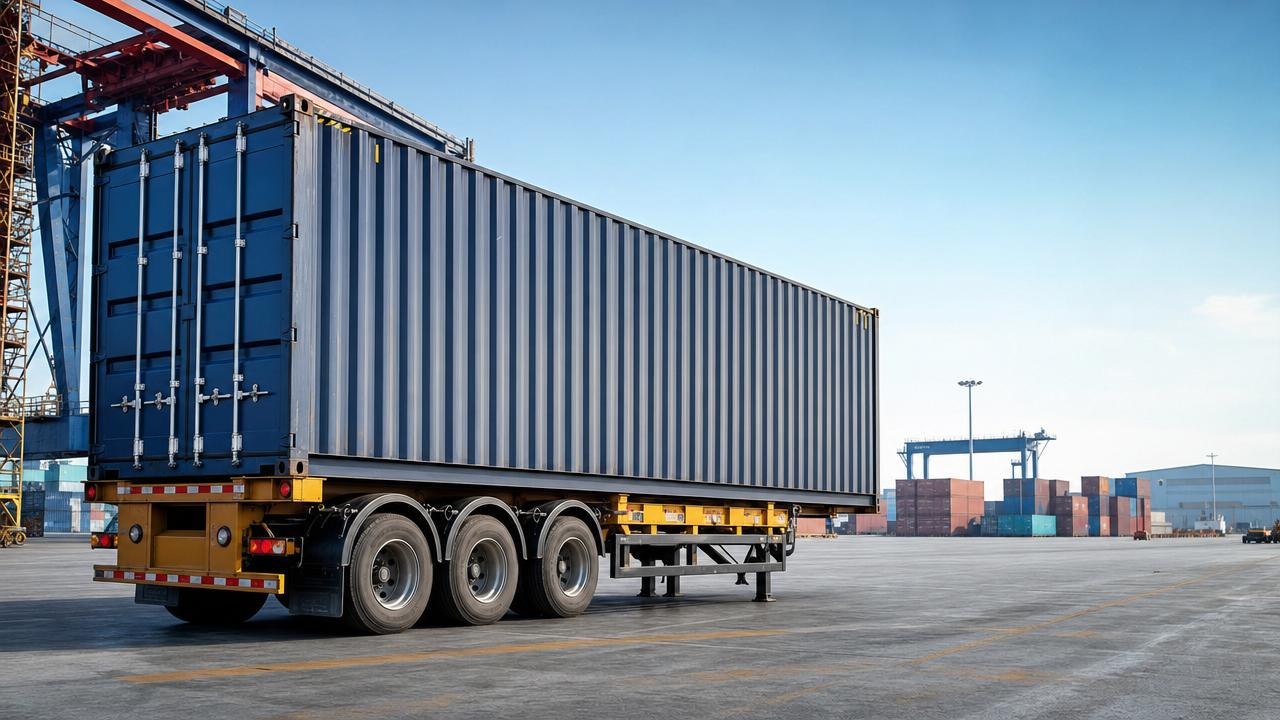
In real freight operations, every loading delay can mean higher costs, missed schedules, and reduced fleet efficiency. A Skeleton (Container) Semi-Trailer is designed to streamline container handling, improve turnaround time, and support smoother logistics performance in ports, yards, and long-haul transport. For business decision-makers, understanding how this trailer works in daily operations is key to choosing equipment that strengthens reliability and overall transport productivity.
Why decision-makers should evaluate loading delays with a checklist first
When a business reviews transport efficiency, loading delays are often blamed on labor, port congestion, or customer scheduling. Those factors matter, but equipment choice is frequently an overlooked cause. A Skeleton (Container) Semi-Trailer directly affects how quickly a container can be positioned, locked, moved, and released. That means the trailer itself can either support smooth yard flow or create repeated slowdowns across every trip.
For enterprise buyers, a checklist-based approach is more useful than a generic product overview. It helps teams focus on measurable operational points: container compatibility, chassis strength, twist lock layout, tare weight, maintenance access, and turnaround time in real loading conditions. Instead of asking whether a trailer looks acceptable on paper, the right question is whether it reduces wasted minutes at every handover point.
This matters even more in high-frequency operations such as port drayage, inland depots, multimodal transfer, and regional container distribution. In these environments, a few minutes saved per loading cycle can produce a meaningful gain in daily fleet output. Over weeks and months, that gain can improve utilization, scheduling accuracy, and customer service levels.
Core checklist: what to confirm first when assessing a Skeleton (Container) Semi-Trailer
If the goal is to reduce loading delays in real operations, decision-makers should start with the following priority checks before comparing price alone.
- Container size compatibility: Confirm whether the Skeleton (Container) Semi-Trailer is configured for 20ft, 40ft, or multiple container lengths. Mismatch here leads to repositioning delays, poor loading balance, or restricted dispatch flexibility.
- Twist lock arrangement and reliability: Fast and secure locking is essential. Operators lose time when lock positions are inconvenient, poorly aligned, or difficult to inspect.
- Chassis structural strength: The frame must handle repeated loading impacts, uneven yard surfaces, and long-haul stress without distortion that affects container placement.
- Landing gear durability: In busy yards, weak landing gear increases waiting time during coupling and uncoupling, especially under frequent loading cycles.
- Axle and suspension suitability: Trailer stability during loading and transport reduces corrective adjustments and improves confidence for crane and forklift coordination.
- Tare weight optimization: A lighter but durable structure can improve payload efficiency while still supporting rapid container handling.
- Brake and lighting system readiness: Small technical faults often remove trailers from rotation and create avoidable dispatch delays.
- Maintenance accessibility: If inspection points and service parts are difficult to access, downtime extends and fleet scheduling suffers.
A practical purchasing decision should connect these checks directly to loading speed, dispatch continuity, and total operating cost. A low-price trailer that causes recurring delays often becomes the more expensive option in real transport conditions.
How a Skeleton (Container) Semi-Trailer reduces loading delays in daily operations
1. Faster container positioning
A well-designed Skeleton (Container) Semi-Trailer provides a clear, open chassis structure that simplifies container alignment during loading. In ports and yards, this helps crane operators place containers more accurately on the first attempt. Reduced repositioning saves time, lowers handling interruptions, and limits communication errors between ground staff and lifting teams.
2. Quicker locking and release procedures
Efficient twist lock systems are one of the most direct ways to reduce loading delay. If locks are easy to access, clearly positioned, and mechanically reliable, operators can secure or release containers with less effort and fewer pauses. This is especially valuable in high-turnover operations where the same trailer may handle several container moves within a short shift.
3. Better yard maneuverability
In crowded logistics environments, maneuverability affects loading rhythm. A Skeleton (Container) Semi-Trailer designed with proper axle layout, turning performance, and chassis balance can enter loading zones more smoothly. That reduces waiting caused by repeated parking corrections, difficult docking, or unstable positioning under cranes.
4. Lower risk of equipment-related stoppages
Loading delays are not always caused at the loading point itself. They can start earlier when a trailer is held back for brake issues, damaged locks, weak landing gear, or frame concerns. A reliable Skeleton (Container) Semi-Trailer minimizes these interruptions by supporting consistent daily use with fewer technical failures.
5. Improved compatibility with multimodal workflows
Where road transport connects with ports, depots, rail yards, or inland terminals, transfer speed matters. The right Skeleton (Container) Semi-Trailer supports standardized container movement, which helps businesses coordinate more efficiently across transport stages. Better compatibility means less waiting between parties and fewer disruptions when containers change hands.
Comparison guide: which operational factors most affect delay reduction
The table below highlights the key judgment points decision-makers should compare when evaluating whether a Skeleton (Container) Semi-Trailer will improve loading performance.
Scenario-based checks: what different operations should prioritize
Port and terminal operators
For port-related use, loading speed depends heavily on trailer positioning accuracy, lock durability, and fast interchange between tractor and trailer. Businesses in this segment should prioritize repeated-cycle reliability, anti-corrosion protection, and compatibility with intensive daily movement.
Regional container transport fleets
For regional haulage, the Skeleton (Container) Semi-Trailer should balance loading efficiency with road performance. Suspension quality, brake reliability, tire wear behavior, and legal payload compliance are critical. Delays often come not from the yard alone, but from poor overall trailer readiness across continuous dispatch schedules.
Inland depots and industrial customers
Operations away from major ports may face rougher roads, variable loading infrastructure, and fewer backup units. In these cases, structural durability and ease of maintenance become even more important. A Skeleton (Container) Semi-Trailer that performs well in less controlled conditions can prevent loading queues caused by unplanned repairs or fitment issues.
Commonly overlooked factors that still cause loading delays
Even experienced buyers sometimes focus too much on visible specifications and miss the practical details that affect turnaround time. The following risk points deserve special attention.
- Ignoring real loading environment conditions: A trailer that performs well on smooth demonstration grounds may behave differently in uneven yards, muddy sites, or congested terminals.
- Overlooking lock operating convenience: If drivers or yard staff need extra time to access and confirm locks, every loading cycle slows down.
- Choosing purely on initial purchase price: Lower upfront cost may mean higher downtime, shorter service life, or more frequent repairs.
- Underestimating after-sales support: Parts supply delays can remove a trailer from active service far longer than expected.
- Failing to standardize across the fleet: Mixed specifications can complicate dispatch planning, maintenance routines, and driver familiarity.
Execution advice: how to evaluate before placing an order
To make a sound equipment decision, business buyers should prepare a simple internal review process before final selection of a Skeleton (Container) Semi-Trailer. This avoids buying based only on brochure specifications.
- Map your most common container sizes, route conditions, loading methods, and daily trip frequency.
- Define what “delay reduction” means in measurable terms, such as minutes saved per loading event or additional trips per trailer per week.
- Check whether the trailer design matches your yard equipment, operating procedures, and driver experience level.
- Review maintenance intervals, spare parts access, and service response commitments before confirming volume orders.
- Ask for detailed configuration options if your operation includes mixed container tasks or difficult road conditions.
For buyers working in international supply chains, supplier stability is also important. Shandong Livol Truck International Trade Co., Ltd., based in Shandong, China, supports global customers with commercial vehicle selection, customization, documentation, customs clearance, logistics coordination, quality control, and after-sales service. As an authorized dealer for FOTON, SHACMAN, and SINOTRUK with strong inventory support and extensive export experience, the company is positioned to help customers evaluate equipment solutions with a practical, operations-focused perspective.
Final decision checklist for business buyers
Before moving forward, decision-makers should confirm five final points: whether the Skeleton (Container) Semi-Trailer matches actual container types, whether it can shorten loading and release time in the intended work environment, whether maintenance support is reliable, whether the total cost aligns with fleet productivity goals, and whether the supplier can support delivery, customization, and long-term service.
If your business is evaluating a Skeleton (Container) Semi-Trailer for port transport, inland logistics, or container fleet expansion, the next step should be a focused discussion around operating scenarios, required specifications, loading frequency, road conditions, budget range, delivery timeline, and after-sales expectations. Clarifying these points early will make it easier to select a trailer solution that truly reduces loading delays instead of merely appearing cost-effective at purchase stage.
Search Starts Here