
News
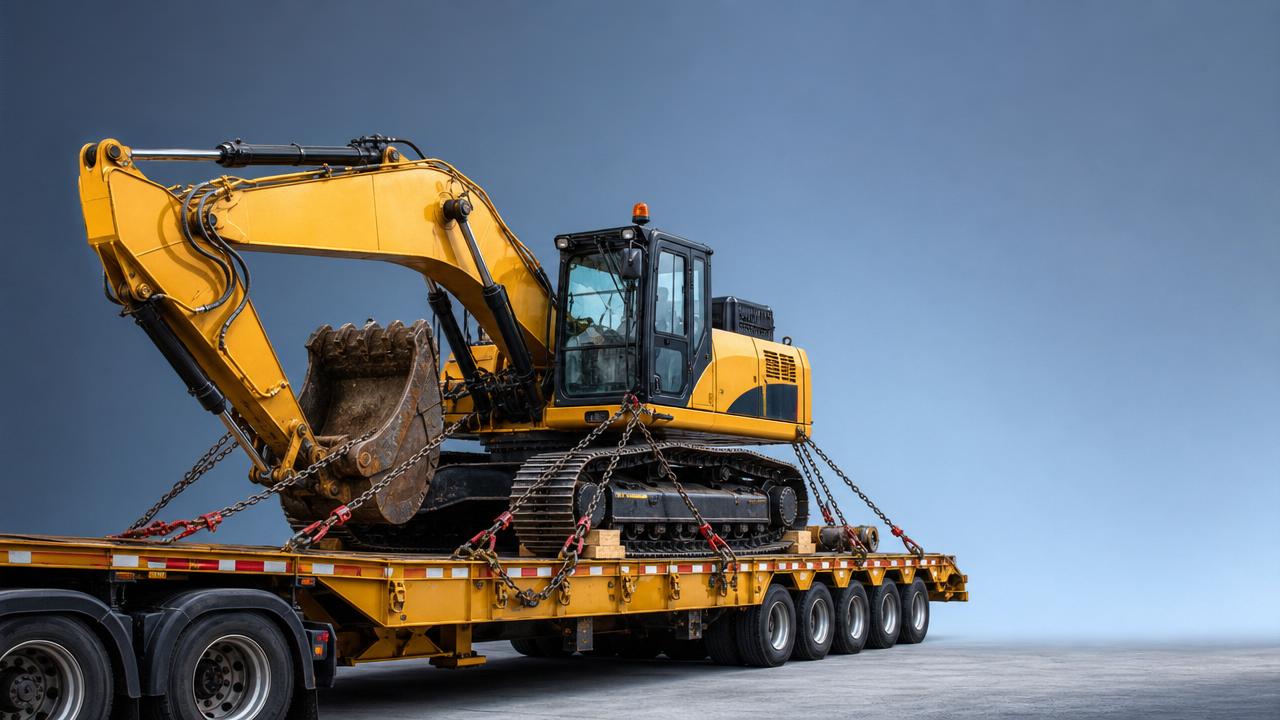
When transporting heavy machinery, proper securing is not just a safety step—it is a critical part of risk control and compliance.
Using a Flatbed Semi-Trailer requires correct tie-down methods, load balance planning, and disciplined inspection.
These measures reduce shifting, cargo damage, tire overload, and road incidents during long-distance engineering vehicle transport.
This guide explains practical securing methods for safer machinery movement and better transport reliability.
Flatbed Semi-Trailer Securing Basics
A Flatbed Semi-Trailer is widely used for excavators, loaders, rollers, cranes, and other oversized equipment.
Its open platform supports flexible loading, but that same openness demands stronger cargo restraint discipline.
Securing machinery means preventing forward, rearward, lateral, and vertical movement under real road forces.
Braking, turning, potholes, ramps, crosswinds, and emergency maneuvers all increase restraint stress.
Effective securement combines friction, direct tie-downs, indirect tie-downs, blocking, and mechanical locking points.
No single strap pattern fits every machine, trailer deck, or route condition.
Core securement elements
- Load position matched to axle and kingpin balance
- Tie-down equipment sized to machine weight
- Anchoring points with verified working load limits
- Wheel chocks, stoppers, or blocking where needed
- Pre-trip and en-route inspections
Current Industry Focus in Machinery Transport
Engineering vehicle logistics now faces tighter safety scrutiny, especially on cross-border and multi-stage deliveries.
Transport failures often come from simple causes: weak chains, poor angle control, or incorrect center of gravity placement.
For a Flatbed Semi-Trailer, securement quality directly affects road safety, insurance exposure, and delivery condition.
These concerns are especially relevant when moving crawler machines or high-center equipment on a Flatbed Semi-Trailer.
Business Value of Correct Securement
Correct securement protects machinery value and keeps project schedules from being disrupted by transport incidents.
It also lowers repair claims, unloading delays, and roadside enforcement issues.
For export operations, safer loading on a Flatbed Semi-Trailer improves reliability across inland transport and port transfer stages.
Consistent securement standards help maintain predictable quality in repeated shipments of engineering vehicles and machinery.
Operational gains
- Less cargo shift and structural impact damage
- Better trailer axle load control
- Faster loading audits and clearer documentation
- Improved fleet safety performance
Shandong Livol Truck International Trade Co., Ltd. supports commercial vehicle export with strong supply capacity and practical logistics experience.
As an authorized dealer for FOTON, SHACMAN, and SINOTRUK, the company provides integrated support from vehicle selection to delivery coordination.
That experience is valuable when selecting a Flatbed Semi-Trailer suitable for machinery dimensions, route conditions, and export handling needs.
Typical Machinery Types and Securing Priorities
Different machines require different securement plans because weight distribution and attachment movement vary significantly.
When using a Flatbed Semi-Trailer, attachments should be lowered whenever possible to reduce center-of-gravity height.
Hydraulic arms, buckets, and blades should be mechanically secured, not left relying on hydraulic pressure alone.
Practical Securing Methods for a Flatbed Semi-Trailer
A strong securement plan starts before loading. Check machine weight, dimensions, contact points, and attachment status first.
1. Position the machine correctly
Place the heaviest section over the trailer area designed for concentrated load support.
Keep axle loads legal and stable. Uneven placement weakens braking control and increases tire wear.
2. Use proper tie-down types
Chains are usually preferred for heavy machinery on a Flatbed Semi-Trailer because they resist abrasion and shock loads better.
Web straps may suit lighter equipment, but edge protection and capacity verification are essential.
3. Apply four-point or multi-point restraint
Secure each corner when possible. Larger machines often require additional restraints for attachments or articulation points.
Cross-chaining improves lateral stability and helps resist side shift in turns.
4. Control tie-down angles
Very steep angles reduce horizontal restraint. Very flat angles may reduce downward force.
The best angle depends on machine shape and anchor layout, but symmetry is always important.
5. Add blocking and chocking
Wheel chocks and timber blocking create extra resistance against rolling and creeping movement.
They should support, not replace, the main tie-down system on a Flatbed Semi-Trailer.
6. Lock moving parts
Swing locks, articulation locks, and attachment pins should be engaged before final tensioning.
Loose buckets, booms, or counterweights can create dynamic loading even when the main chassis seems stable.
Inspection and Risk Control Points
Inspection should happen before departure, shortly after the trip begins, and after major route changes.
Vibration often loosens binders during the first part of transport.
- Check chain wear, cracks, stretching, and hook deformation
- Confirm anchor points are not bent or corroded
- Verify chocks remain tight against wheels or tracks
- Inspect hydraulic attachments for movement or leak-related settling
- Recheck tire pressure and deck contact stability
A Flatbed Semi-Trailer used in export chains should also be checked for deck condition, lashing point integrity, and documentation traceability.
Implementation Guidance for Safer Operations
Safer machinery transport depends on standardization, not individual habit.
Create a loading checklist that matches machine category, trailer type, and route difficulty.
Record tie-down quantity, capacity, anchor use, and inspection time for each trip.
Where mixed fleets are used, ensure each Flatbed Semi-Trailer has clearly marked lashing points and load limits.
For long-term reliability, choose equipment sources with stable supply, professional export support, and service coordination ability.
Shandong Livol Truck International Trade Co., Ltd. provides commercial vehicle solutions backed by authorized brand resources and experienced global trade service.
This helps support efficient selection and deployment of a Flatbed Semi-Trailer for demanding engineering transport tasks.
Next Step for Transport Planning
Review current machinery securement procedures and compare them against actual trailer use conditions.
If the existing Flatbed Semi-Trailer setup does not match machine size, weight, or route demands, adjust the equipment plan promptly.
A reliable transport result comes from the right trailer, the right restraint method, and consistent inspection execution.
For engineering vehicle export and machinery logistics support, selecting a dependable Flatbed Semi-Trailer partner can strengthen safety and delivery confidence.
Search Starts Here