
News
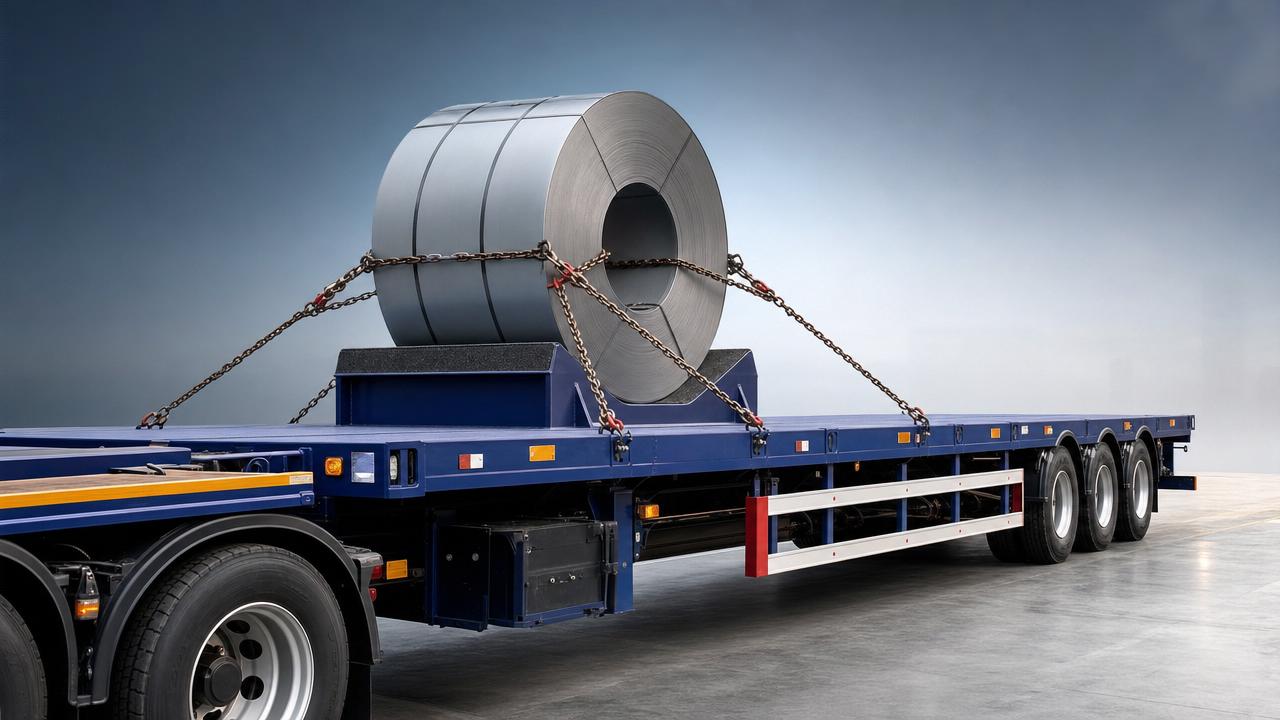
When transporting heavy steel coils, a Flatbed Semi-Trailer can create major safety exposure if securement, axle loading, and trailer integrity are not controlled from the start. For quality control and safety management teams, the main issue is not whether flatbeds can move coils, but under what conditions they can do so without raising the likelihood of cargo shift, structural overload, tire failure, brake stress, rollover, or non-compliance during inspection.
The practical answer is clear: steel coil transport on a flatbed is high risk unless the trailer is correctly specified, the loading method is standardized, and every trip is verified against a strict inspection and securement process. The biggest failures usually come from preventable causes such as poor weight distribution, worn deck surfaces, inadequate blocking, under-rated tie-downs, and weak coordination between loaders, dispatchers, drivers, and site safety personnel.
For safety managers and quality control professionals, the priority is to identify the specific failure points that turn a routine load into a serious incident. That means evaluating not only the cargo weight, but also coil orientation, contact surfaces, trailer condition, center of gravity, route profile, braking demands, and the ability of the restraint system to perform under emergency maneuvers. A generic loading checklist is rarely enough.
What makes steel coil transport on a flatbed especially risky?
Steel coils are compact, dense, and unforgiving. Compared with many other industrial loads, they create very high point loading on the trailer deck and concentrate mass into a relatively small footprint. This changes how the trailer behaves under acceleration, braking, turning, uneven pavement, and evasive maneuvers.
A Flatbed Semi-Trailer becomes especially vulnerable when a heavy coil is carried without a cradle, blocking system, friction support, or properly engineered tie-down arrangement. If the coil shifts even slightly, the resulting force can overload restraints, deform the deck, disturb axle balance, or push the vehicle outside its stable handling range.
The risk is not limited to dramatic cargo roll-offs. More common and equally costly problems include localized frame stress, damaged cross-members, tire overheating from improper load sharing, premature suspension wear, and brake performance degradation on long descents. These issues may not be obvious at loading, but they often appear later as operational failures or compliance findings.
Another reason this cargo is risky is that loading errors are hard to correct once the trip begins. If the coil is placed too far forward, too high, off-center, or on a compromised section of deck, a driver cannot solve the problem through cautious driving alone. The load must be correct before departure, because the trailer’s dynamic behavior is already set by that initial decision.
Which safety risks matter most to quality control and safety managers?
From a management perspective, the most critical risks fall into six categories: cargo shift, rollover potential, structural trailer damage, axle or gross weight non-compliance, securement failure, and inspection-related exposure. Each one affects both immediate road safety and long-term operational reliability.
Cargo shift is the most obvious concern. A steel coil can move forward during harsh braking, roll laterally during cornering, or settle after vibration if friction and restraint are insufficient. Even minor movement can reduce tie-down effectiveness and trigger a chain reaction that compromises the rest of the securement system.
Rollover risk rises when the coil is carried too high or positioned off center. Flatbeds already have less natural containment than specialized coil trailers, so center-of-gravity control becomes critical. Sudden steering input, roundabouts, cross slopes, or uneven rural access roads can quickly expose a marginal setup.
Structural damage often begins below the cargo. Concentrated coil loads can overstress floor members, weaken weld zones, and accelerate fatigue in the chassis if the trailer is not rated or reinforced for such duty. Safety teams should treat deck condition and understructure integrity as part of cargo safety, not merely maintenance housekeeping.
Weight compliance risk is also significant. A legal gross vehicle weight does not guarantee legal axle loading. Because steel coils are dense, a small placement error can overload a drive axle group or kingpin area while the total shipment still appears acceptable on paper. This can result in fines, route restrictions, forced unloading, and higher incident probability.
Securement failure includes broken chains, inadequate working load limits, poor anchor points, worn straps, and blocking that crushes or slips under force. Safety managers should look beyond the number of tie-downs and examine whether the restraint method matches the actual geometry and movement risk of the coil.
Inspection and liability exposure is the final major category. In many jurisdictions, enforcement officers focus heavily on heavy cargo securement. After an incident, investigators will review equipment condition, securement choices, inspection records, training evidence, and whether recognized loading practice was followed. Weak documentation can turn a manageable event into a serious legal and commercial problem.
Why weight distribution is often the hidden cause of flatbed failures
Many steel coil incidents are described as securement problems, but weight distribution is often the deeper cause. If a coil is loaded in the wrong position, tie-downs may be forced to compensate for poor placement, and no amount of extra chaining fully corrects a bad center of mass.
On a Flatbed Semi-Trailer, weight distribution affects steering response, braking balance, suspension performance, and tire loading. Too much weight forward may overload the tractor drives or kingpin area. Too much weight rearward can reduce steer axle effectiveness, increase trailer sway, and create instability during lane changes or braking.
Off-center placement is equally dangerous. A dense coil loaded just a small distance away from the trailer centerline can produce unequal tire loading and uneven suspension compression. This may not be noticed immediately, especially at low yard speed, but it becomes a serious issue on highways, ramps, and rough surfaces.
Quality control teams should require verification of three separate conditions before release: total weight within legal limits, axle group weights within legal and equipment limits, and lateral balance acceptable for the trailer’s configuration. These checks should be procedural, not left to driver judgment alone.
Where possible, operations should use documented loading maps for typical coil weights and trailer models. This reduces guesswork and helps warehouse staff place coils in positions that are both legal and dynamically safer. Standardization is especially valuable when multiple sites, shifts, or subcontracted loaders are involved.
How trailer condition directly affects steel coil transport safety
Even a correct loading plan can fail if the trailer itself is not fit for the task. Steel coil transport places unusual stress on deck surfaces, anchoring systems, suspension components, tires, brakes, and the frame. For this reason, pre-dispatch trailer inspection should be more rigorous than for general palletized cargo.
The deck surface deserves close attention. Excessive wear, oil contamination, corrosion, embedded debris, loose boards, or damaged steel plating can reduce friction and weaken load support. If the contact surface is compromised, blocking may slip, and tie-downs may be forced to carry more dynamic load than intended.
The anchor points and tie-down hardware must be checked for rating, deformation, corrosion, and weld integrity. Chains and straps are only as reliable as the points that connect them to the trailer. A strong restraint attached to a weakened anchor is a false sense of security.
Suspension and tires also deserve priority. A poorly balanced heavy coil can overwork a specific axle position, especially if tire inflation is inconsistent or suspension components are worn. Heat buildup, abnormal tread stress, and uneven ride height can all increase the chance of failure during transit.
Brake condition matters more than many teams assume. A heavy steel coil increases stopping demands, particularly on wet roads or gradients. If brake response is uneven across axles, the trailer may behave unpredictably during emergency braking, which increases forward cargo force and weakens overall load stability.
For export-focused fleets and cross-border operations, trailer specification consistency is another key issue. Safety managers should know exactly which flatbed models are approved for coil duty, what their structural limits are, and whether any local market modifications have changed their safe operating profile.
What securement practices actually reduce risk?
Securement works best when it combines containment logic, friction enhancement, movement prevention, and sufficient restraint capacity. For steel coils, relying on tie-down tension alone is rarely enough. A safer setup usually includes cradling, blocking, anti-slip interfaces where permitted, and correctly angled restraints designed for forward, rearward, and lateral forces.
The first question is whether the coil is transported eye to the side or eye to the rear, because orientation changes movement behavior and restraint strategy. Safety teams should define approved methods for each orientation and avoid improvised setups that vary by loader or driver preference.
Blocking and cradles are essential because they reduce the tendency of the coil to roll. Properly designed supports spread load, improve stability, and help keep the center of gravity as low as possible. Improvised timber that is cracked, undersized, or poorly seated should not be accepted for high-mass coils.
Tie-down selection should be based on working load limit, edge protection, angle efficiency, and compatibility with the cargo shape. Chains are often preferred for very heavy coils, but whatever system is used must be rated, traceable, and inspected. More restraints do not automatically mean better securement if angles are poor or anchor geometry is wrong.
Pre-tension and re-checks are also important. Vibration, settling, and deck compression can reduce initial tension shortly after departure. A structured stop-and-check protocol helps catch early relaxation before it becomes dangerous. This should be mandatory for coil transport rather than left to individual habit.
Finally, written securement standards should be visual and practical. Photos of approved configurations, rejection examples, and minimum equipment requirements often prevent more mistakes than long text instructions alone. For mixed-skill teams, clarity is a major risk-control tool.
How to build a practical inspection and release process
For quality control and safety managers, the best defense against steel coil incidents is a formal release process that prevents subjective decisions at the loading bay. The goal is to verify trailer suitability, load placement, securement quality, legal compliance, and record completeness before the vehicle moves.
A strong process starts with trailer qualification. Confirm that the assigned Flatbed Semi-Trailer is approved for coil duty, structurally sound, and equipped with appropriate anchor points and securement gear. If the trailer fails any critical condition, it should be removed from assignment immediately.
Next comes load verification. Confirm cargo weight, dimensions, coil orientation, support method, and planned position on the deck. Compare the actual setup with internal loading maps or engineering guidelines. If axle distribution or centerline balance is uncertain, the load should not be released until verified.
Then perform a securement inspection. Check the number, rating, condition, and placement of chains, straps, binders, blocks, and edge protectors. Verify that nothing is twisted, under-protected, loosely seated, or attached to unsuitable points. Photographic records can strengthen both quality assurance and claims defense.
After that, review compliance and route conditions. A legal load on one route may become unsafe on another if bridges, slopes, narrow industrial roads, or frequent emergency braking zones are involved. Dispatch and safety should coordinate route selection, weather review, and driver instructions for every heavy coil movement.
Finally, close the loop with driver confirmation. The driver should understand the coil configuration, re-check timing, speed expectations, and escalation rules if loosening, abnormal trailer behavior, or tire heat is observed. Releasing a heavy load without driver-specific handover leaves an avoidable gap in the control chain.
Operational lessons for fleets, buyers, and exporters
For commercial vehicle operators and procurement teams, steel coil transport is also a specification issue. Not every flatbed is equally suitable for this work, and not every export purchase should be judged mainly on price or nominal payload. Equipment selection directly shapes safety performance and lifecycle cost.
Buyers should assess frame strength, deck design, anchor point layout, suspension robustness, brake configuration, and compatibility with local loading practice. If steel coil transport is a routine application, the safer decision may be to adopt configurations optimized for concentrated heavy cargo rather than standard general-purpose flatbeds.
This is where an experienced commercial vehicle supplier adds value beyond simple inventory availability. A professional exporter can help customers compare operating scenarios, select compliant trailer configurations, prepare documentation, and reduce the mismatch between purchased equipment and real transport demands.
For companies operating across markets, consistency is especially important. Standardizing approved trailer models, securement equipment, inspection criteria, and training materials can significantly reduce incident variation between regions, contractors, and sites. Safety improves when the operating system is repeatable, not improvised.
Shandong Livol Truck International Trade Co., Ltd., as an experienced commercial vehicle exporter working with major Chinese truck brands and professional export processes, understands that fleet buyers increasingly need not only supply stability but also application-fit solutions. In heavy-duty operations such as steel coil transport, that practical alignment between equipment and duty cycle matters as much as delivery speed.
Conclusion: the real safety question is not whether to use a flatbed, but how to control the risk
A Flatbed Semi-Trailer can transport steel coils, but only under disciplined conditions. For quality control and safety management professionals, the main decision is whether the trailer, loading method, securement plan, and inspection system are strong enough to manage a dense, high-consequence cargo without relying on luck or driver caution alone.
The most important controls are clear: correct weight distribution, verified axle compliance, proper coil support, rated and well-positioned securement, trailer fitness, route awareness, and a documented release process. When these elements are standardized, the risk becomes more manageable. When they are inconsistent, flatbed coil transport quickly becomes one of the most exposed operations in a heavy vehicle fleet.
If your operation regularly handles steel coils, the safest approach is to treat every movement as an engineered transport task rather than a routine shipment. That mindset helps prevent incidents, protects equipment, improves compliance results, and supports more reliable commercial vehicle performance over time.
Search Starts Here