
News
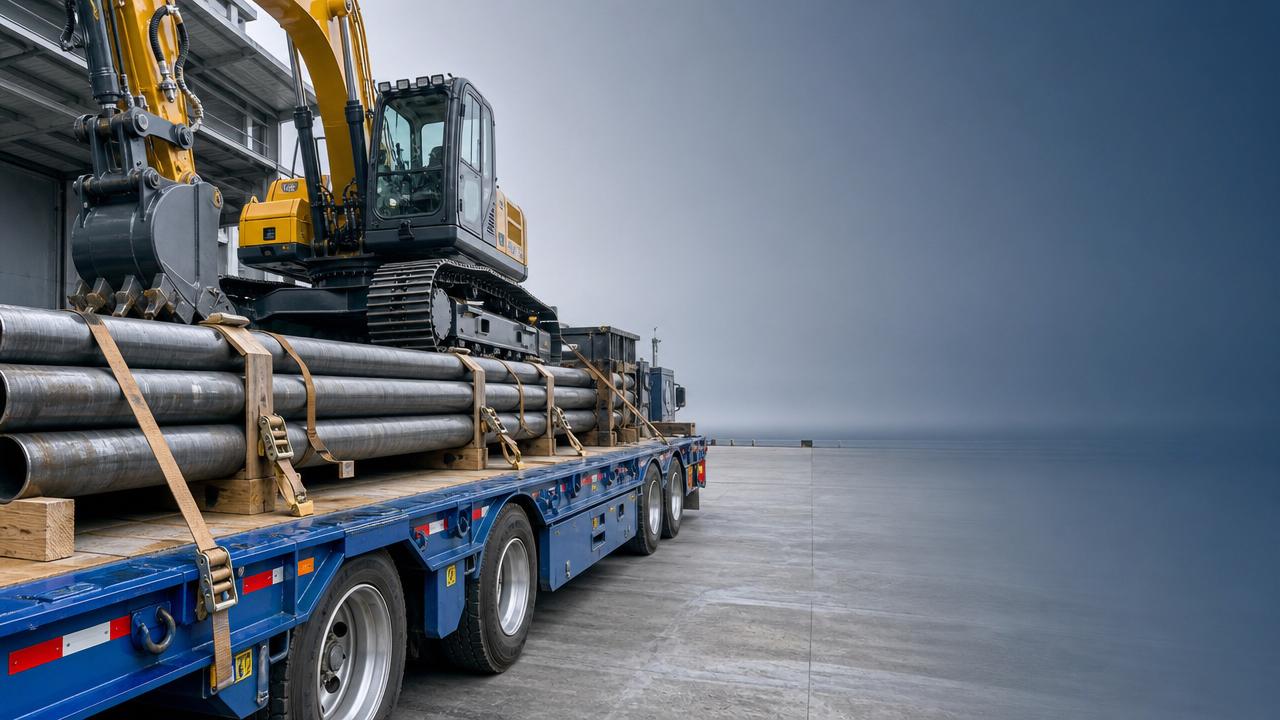
Why Flatbed Semi-Trailer Loading Errors Still Happen in Daily Transport
Loading a Flatbed Semi-Trailer often looks routine until the cargo shifts, the axle weight fails inspection, or the delivery arrives damaged.
In engineering vehicle transport, small loading mistakes quickly become expensive. Downtime, reloading, road penalties, and damaged equipment usually start with one wrong assumption.
The main issue is not lack of effort. It is treating different loads as if they behave the same on the same Flatbed Semi-Trailer.
A steel bundle, a compact loader, and palletized components create very different center-of-gravity, friction, and tie-down demands.
In real operations, the safer approach is to judge the loading method by cargo shape, road conditions, trip distance, and unloading sequence.
That is also why exporters and supply teams handling FOTON, SHACMAN, and SINOTRUK related transport usually pay close attention to vehicle configuration, loading preparation, and documentation before dispatch.
The First Misjudgment Usually Starts Before the Cargo Moves
Many Flatbed Semi-Trailer problems begin at planning, not on the road. The trailer may be suitable in size, yet still unsuitable in structure.
A common mistake is checking only deck length and payload rating. That misses deck strength, lashing point position, tire condition, and suspension response.
This matters more in engineering vehicle logistics, where cargo often has concentrated weight rather than evenly distributed mass.
Another overlooked point is route reality. A Flatbed Semi-Trailer loaded for smooth highway travel may become unstable on port ramps, rough access roads, or repeated braking zones.
- Ignoring deck condition, including worn timber, oil contamination, or bent cross-members.
- Using tie-down gear based on habit instead of cargo weight, edge shape, and movement risk.
- Assuming loading equipment can place the cargo accurately without checking approach angle or clearance.
- Treating domestic short-haul loading standards as sufficient for export or multimodal transport.
When Machinery Is Loaded, Weight Distribution Becomes the Real Test
Engineering machinery creates one of the most demanding Flatbed Semi-Trailer loading situations because the visible size can hide uneven weight concentration.
Excavators, loaders, and road equipment rarely sit with balanced mass from front to rear. The heaviest section may be offset or elevated.
A frequent mistake is placing machinery by visual center rather than actual axle load effect. The trailer looks balanced, but steering and braking performance suffer.
Another mistake is failing to lower working attachments fully. Raised booms, buckets, or arms increase movement and wind exposure during travel.
In practice, heavy equipment on a Flatbed Semi-Trailer should be positioned after checking axle group limits, neck load, and deck contact points.
The safest loading decision is often a small position adjustment, not a larger trailer change.
What usually gets missed with self-propelled equipment
- Tracks or tires are not cleaned, reducing friction on the Flatbed Semi-Trailer deck.
- Parking brakes are trusted without secondary blocking.
- Attachment articulation points are not secured against bounce.
- Tie-down angles are too shallow to control vertical movement.
Steel, Pipes, and Long Cargo Create Different Risks Than Equipment
Long materials behave differently on a Flatbed Semi-Trailer because the issue is often forward slide or rolling, not just total weight.
Steel coils, pipes, beams, and fabricated sections need restraint that matches shape. Using the same strap logic for all of them leads to trouble.
For round or smooth cargo, friction alone is never enough. Chocks, blocking, and cradle support matter more than many operators expect.
Long cargo also amplifies deck flex. If support points are too far apart, the cargo may bend, vibrate, or damage its own finish.
This is where a Flatbed Semi-Trailer loading plan should consider not only securement force, but also the contact geometry between cargo and deck.
Mixed Loads Look Efficient but Often Increase Flatbed Semi-Trailer Risk
Mixed loading is common when delivery schedules are tight. It can improve utilization, but it also creates some of the easiest mistakes to miss.
The problem is compatibility. Cargo with different shapes, hardness, and unloading priorities may interfere with each other during the trip.
A Flatbed Semi-Trailer loaded with machinery parts beside pallet cargo may seem practical. Yet vibration from one item can loosen another.
More importantly, the first unloading stop may require moving securement on cargo that still needs full restraint for later travel.
In actual operations, the better method is to load by unloading sequence and movement compatibility, not only by available deck space.
Useful checks before combining loads
- Confirm whether one cargo piece can crush packaging or deform lighter goods.
- Check whether tie-down access remains available after the first stop.
- Separate clean cargo from oily, abrasive, or sharp-edged items.
- Allow enough inspection space around the Flatbed Semi-Trailer load.
Short Haul and Export Delivery Do Not Need the Same Loading Logic
A short regional trip may tolerate minor packaging weakness that a port transfer or overseas route will expose immediately.
That difference is often underestimated when a Flatbed Semi-Trailer is loaded for international delivery or multimodal movement.
Export-related transport usually adds waiting time, repeated handling, customs checks, and weather exposure. Securement must remain reliable for longer than the road segment alone.
This is why experienced logistics teams do more than dispatch vehicles. They align trailer selection, cargo preparation, paperwork consistency, and loading verification together.
For businesses managing commercial vehicle exports from China, that coordination reduces avoidable claims and border delays just as much as strong equipment does.
Different Conditions Change What the Flatbed Semi-Trailer Must Handle
The same cargo may require different loading decisions depending on weather, road grade, and site access.
Rain lowers deck friction. Desert dust hides strap wear. Mountain routes increase forward force during braking and downhill control.
At construction access roads, the Flatbed Semi-Trailer may twist more than expected, especially with uneven surfaces and frequent low-speed correction.
The mistake here is assuming legal securement equals practical securement. Compliance matters, but site conditions often demand extra caution.
Common Flatbed Semi-Trailer Mistakes That Are Easy to Rationalize
Some loading errors persist because they seem efficient in the moment. That is why they are repeated.
One example is choosing fewer tie-down points to save loading time. Another is placing cargo slightly off plan to speed forklift movement.
There is also a tendency to trust familiar cargo patterns without checking whether the current Flatbed Semi-Trailer has the same deck height or lashing layout.
What looks like a minor variation often changes the restraint angle enough to weaken the whole setup.
- Using damaged straps because visible cuts seem small.
- Skipping edge protectors on sharp fabricated parts.
- Failing to retighten after the first movement period.
- Loading for convenience of placement, not stability in transit.
A Better Loading Routine Starts With Fewer Assumptions
A reliable Flatbed Semi-Trailer loading routine does not need to be complicated. It needs to be consistent and based on real conditions.
Start by defining the actual cargo behavior, not just the shipment name. Then verify deck condition, support points, securement capacity, and route demands.
If the load involves engineering vehicles, long steel, or export movement, add a second review for weight distribution and handling sequence.
Where supply chains depend on stable vehicle availability and coordinated export execution, a stronger process usually delivers better results than simply adding more restraints.
The next practical step is to build a loading checklist around recurring scenarios, compare trailer suitability across routes, and review the points where cargo type changes the rule.
That approach makes each Flatbed Semi-Trailer trip safer, easier to inspect, and far less likely to fail when conditions become less predictable.
Search Starts Here