News
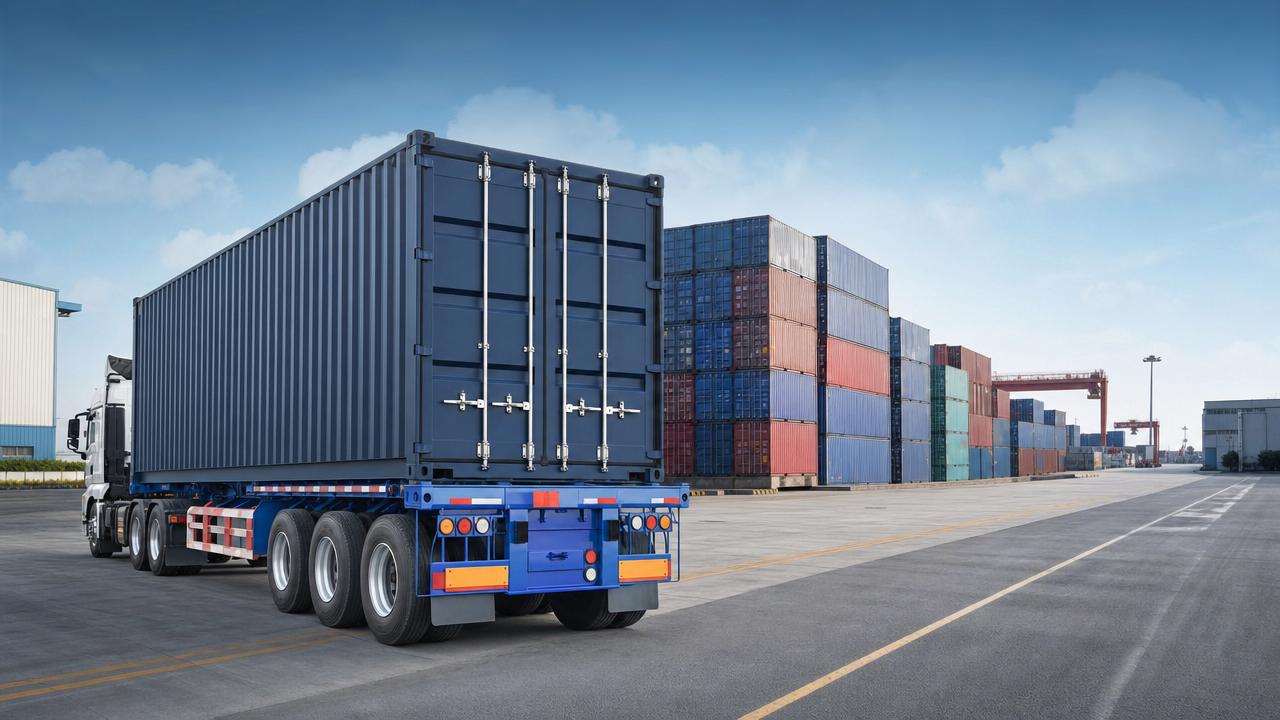
For logistics-focused business leaders, improving container turnover is a direct path to lower operating costs and higher fleet efficiency. This real-world case shows how a Skeleton (Container) Semi-Trailer helped accelerate loading, transfer and return cycles in actual transport operations. By combining practical performance insights with export-ready vehicle expertise, it offers valuable reference for companies seeking more reliable and cost-effective container transport solutions.
Container transport is being judged less by tonnage and more by turnaround speed
Across port logistics, inland drayage, industrial park delivery and cross-border freight, one change is becoming clearer: operators are no longer evaluating transport assets only by payload capacity or purchase price. They are increasingly measuring value by cycle time, yard dwell reduction and how quickly equipment can return to the next booking. In this context, the Skeleton (Container) Semi-Trailer has become more than a basic chassis. It is now part of a broader operating strategy aimed at faster asset circulation.
This shift matters because transport networks are under pressure from tighter delivery windows, more volatile freight flows and higher expectations for schedule reliability. A delay of a few hours in container handoff can ripple through warehousing, vessel cut-off timing and customer delivery commitments. As a result, fleet managers and procurement leaders are looking more closely at equipment that shortens non-driving time, simplifies container handling and supports stable dispatch performance.
A real-world operating case involving a Skeleton (Container) Semi-Trailer illustrates this trend well. The value did not come from dramatic technological complexity. It came from practical fit: the trailer structure matched the transport task, reduced unnecessary waiting during loading and unloading, and improved the speed of empty return for the next cycle.
What changed in the field: a practical case of faster container turnover
In the case observed, a regional logistics operator was handling repeated movements between a container yard, a manufacturing site and a nearby consolidation point. The previous trailer arrangement could complete the task, but the process was slow in practice. Positioning, locking, unloading coordination and return dispatch all consumed more time than management expected. The business problem was not only transport cost per trip. It was low daily rotation per vehicle.
After shifting to a Skeleton (Container) Semi-Trailer configuration better suited to standardized container transport, the operator saw improvement in three areas. First, loading and release became more straightforward because the trailer frame was purpose-built for container handling rather than adapted from a more general cargo scenario. Second, transfer between points became more predictable because dispatchers could plan around a more consistent loading sequence. Third, the empty return stage accelerated, which had a strong effect on total daily equipment utilization.
The key lesson is that turnover gains often come from reducing friction in routine operational links. Business leaders sometimes focus on route optimization software or labor scheduling, but trailer selection itself can create or remove daily delay. When a Skeleton (Container) Semi-Trailer matches the container workflow, it supports repeatability, and repeatability is what enables scalable logistics performance.
Observed before-and-after operational changes
Why this trend is gaining strength now
The increasing attention on Skeleton (Container) Semi-Trailer solutions is not happening in isolation. It reflects several industry signals that are reshaping purchasing and fleet planning decisions.
One driver is the growing importance of standardized container movement across multiple transport nodes. As supply chains become more synchronized, the tolerance for irregular handling time decreases. Another driver is rising pressure on total operating cost. Fuel, labor, financing and downtime all push management to seek more cycles from the same equipment base. A third factor is customer expectation. Shippers and industrial buyers increasingly care about schedule adherence and visibility, not just freight rates.
There is also a procurement-side change. Buyers are asking more detailed questions about use case fit, frame durability, configuration options, supply reliability and after-sales support. They want a trailer that performs not only on paper but within real route conditions, local regulations and maintenance realities. That makes exporter capability and delivery support more relevant than before.
Main forces pushing the market toward higher-turnover trailer choices
Who is affected most by this shift toward faster turnover equipment
The impact of adopting a Skeleton (Container) Semi-Trailer is not limited to transport departments alone. Different business functions experience the change in different ways, and that is why the topic deserves executive attention.
For logistics operators, the direct benefit is improved asset utilization. More efficient container cycling can translate into better trip planning, reduced congestion exposure and stronger profitability per vehicle. For procurement teams, the shift means evaluation criteria should include operational fit and lifecycle service support, not just upfront cost. For plant and warehouse managers, smoother handoff reduces dock pressure and helps maintain internal production flow. For company leadership, the broader gain is resilience: faster turnover increases flexibility when demand surges or schedules change unexpectedly.
Impact by stakeholder
What decision-makers should examine beyond the trailer itself
A common mistake is to treat a Skeleton (Container) Semi-Trailer as a simple commodity. In reality, business results depend on how well the trailer fits route frequency, container type, road condition, local compliance and maintenance support. Leaders should therefore assess the full operating environment before making a purchasing decision.
This is where supplier capability becomes strategically important. Shandong Livol Truck International Trade Co., Ltd., based in Shandong, China, serves global buyers as a professional and reliable commercial vehicle exporter with strong industry strength and rich international trade experience. As the official authorized domestic and overseas dealer for FOTON, SHACMAN and SINOTRUK, the company combines access to major commercial vehicle resources with a broad authorized 4S store network and sufficient inventory for stable supply and fast delivery.
For overseas buyers, this matters because trailer procurement is rarely only about the product. It is about whether the supplier can support vehicle selection, customization, documentation, customs clearance, logistics coordination and after-sales response. In a market where timing affects revenue, supply continuity and execution reliability can be just as important as technical specifications.
Signals that suggest demand for Skeleton (Container) Semi-Trailer solutions will remain firm
Several signals suggest that this equipment category will remain relevant for businesses seeking efficient engineering vehicle and commercial transport operations. The first is continued investment in port connectivity and inland logistics corridors. The second is the spread of more disciplined appointment-based loading systems, which reward operators that can meet tighter time windows. The third is the growing emphasis on fleet productivity in both private logistics and contract transport models.
Another important sign is the move toward integrated sourcing decisions. Buyers are increasingly combining tractors, semi-trailers and service support into a more unified fleet strategy. That benefits exporters and suppliers able to provide practical recommendations rather than isolated product quotations. In this environment, a Skeleton (Container) Semi-Trailer is often considered alongside uptime planning, maintenance readiness and route-specific adaptation.
The implication for business leaders is clear: future competitiveness may depend less on owning more equipment and more on selecting the right equipment mix for higher turnover and lower friction.
How companies should respond: practical judgment before expansion
Companies considering a Skeleton (Container) Semi-Trailer should begin with route reality rather than brochure comparison. Review how much time is currently lost in queueing, positioning, loading release, gate handling and empty return. If repeated delay is concentrated in these links, then faster container turnover may be achievable through more suitable trailer deployment.
Next, assess whether your transport pattern is stable enough to benefit from a standardized container chassis approach. Frequent factory-to-yard runs, port drayage, depot repositioning and intermodal shuttle work are especially relevant scenarios. Then evaluate the supplier’s export execution capacity. Delayed documents, weak customization control or poor service communication can erase the efficiency gain that the right trailer would otherwise create.
Recommended decision checklist
FAQ: key business questions about Skeleton (Container) Semi-Trailer adoption
Is a Skeleton (Container) Semi-Trailer suitable only for ports?
No. Port drayage is a major application, but inland factory logistics, container depot transfers, consolidation hubs and cross-border shuttle routes can also benefit when the workflow depends on repeat container movement and quick release.
What is the main business value compared with a more general trailer setup?
The strongest value is usually operational efficiency. A Skeleton (Container) Semi-Trailer can help reduce handling friction, improve cycle predictability and increase the number of effective movements completed in a working period.
What should overseas buyers prioritize when selecting a supplier?
They should look at product fit, inventory stability, customization ability, export documentation experience, logistics coordination and after-sales support. These factors influence whether the equipment delivers results on schedule and in actual use.
Final judgment: faster turnover is becoming a strategic metric, not just an operational detail
The broader industry direction is clear. In container transport, speed of circulation is becoming a more important competitive factor than many businesses previously recognized. The real-world case discussed here shows that a Skeleton (Container) Semi-Trailer can contribute meaningful gains when used in the right route structure and supported by a capable supply partner.
For decision-makers in engineering vehicle and commercial transport operations, the next step is not simply to ask whether this trailer type is popular. The better questions are these: where is your current turnover time being lost, which routes would benefit most from standardized container handling, and whether your supplier can support full-process delivery with confidence. If your business is now evaluating those questions, it may be the right time to review a Skeleton (Container) Semi-Trailer solution in a more strategic way.
Search Starts Here