
News
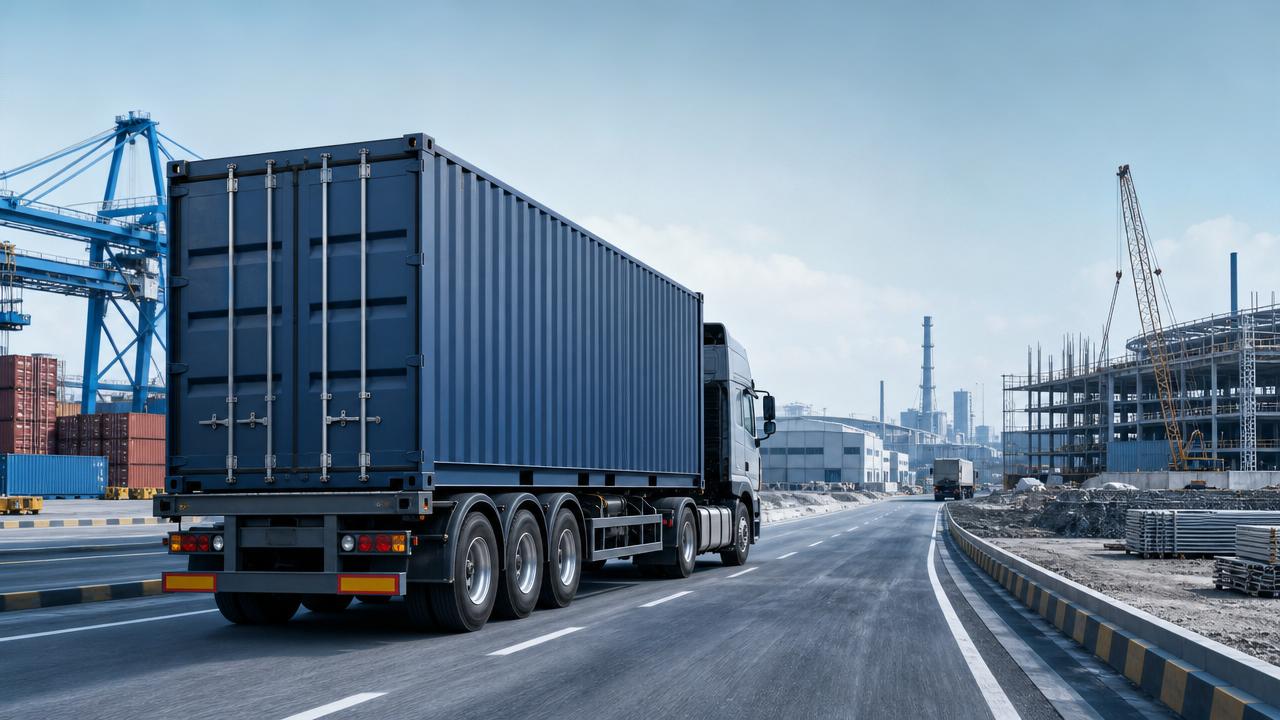
In complex engineering logistics, a Skeleton (Container) Semi-Trailer can make multi-stop transport far more efficient, flexible and cost-effective. This real delivery case shows how project managers can improve container movement across multiple destinations while maintaining schedule control and cargo safety. It also reflects how a reliable commercial vehicle export partner supports demanding transport tasks with practical solutions and dependable service.
Understanding the role of a Skeleton (Container) Semi-Trailer
A Skeleton (Container) Semi-Trailer is a chassis-type transport solution designed to carry standard containers securely and efficiently. Instead of using a full box body or flat deck, it uses a reinforced frame with container locking points, making loading and unloading faster and reducing dead weight. In engineering logistics, this matters because project cargo often needs to move between ports, temporary storage areas, fabrication yards and job sites without unnecessary handling.
For project managers and engineering project leaders, the value of a Skeleton (Container) Semi-Trailer is not only in basic transport capacity. Its real strength lies in route adaptability, equipment compatibility and predictable turnaround time. When multiple destinations are involved, a well-matched trailer can support tighter project timelines, better container rotation and lower operating risk across the transport chain.
Why multi-stop container transport matters in engineering projects
Engineering projects rarely move cargo in a simple point-to-point pattern. Equipment, spare parts, steel components, tools and packaged systems may arrive in containers but need to be delivered to several work zones in sequence. This is common in infrastructure construction, energy projects, mining development, industrial plant installation and large municipal works. In such environments, transport planning must balance site access, unloading conditions, deadline pressure and cargo security.
A multi-stop route creates pressure in several areas. First, each stop may have different ground conditions and unloading resources. Second, delays at one point can affect the entire chain. Third, containers must remain secure even when roads are rough or schedules are compressed. This is why many project teams increasingly rely on a Skeleton (Container) Semi-Trailer as a stable and efficient engineering vehicle solution for structured container movement.
A real delivery case: multi-stop transport for an engineering supply program
In one actual export-supported delivery case, a customer involved in a regional engineering development program needed to move containerized materials from a port logistics zone to three separate inland destinations. The cargo included mechanical spare parts, electrical cabinets, packaged pipeline accessories and maintenance tools. Each destination served a different function: one was a main construction site, one was a satellite installation point and one was a temporary warehouse for phased release.
The main challenge was not total distance alone. The customer required tight schedule control, because installation teams were waiting on specific parts at different times. The route also included mixed road conditions, with one stop located on a standard paved corridor, another accessible through a narrower industrial road and the final point near an active work area with more frequent stop-and-go movement. Using a Skeleton (Container) Semi-Trailer allowed the transport operator to maintain container stability while simplifying dock and site handling.
Before dispatch, the transport plan was reviewed around four priorities: container size compatibility, axle load distribution, stop sequence and unloading readiness at each point. This planning stage proved essential. Rather than treating the trip as a single delivery, the team mapped the route as a staged project movement, assigning arrival windows, confirming contact persons and checking lifting equipment availability in advance.
How the trailer supported efficiency across multiple destinations
The selected Skeleton (Container) Semi-Trailer contributed to operational efficiency in several practical ways. Its structural design reduced unnecessary vehicle weight, which helped fuel performance and improved payload efficiency. More importantly, the container locking system reduced cargo movement risk during repeated starts, braking events and directional changes across the route. This was especially important because some of the cargo contained precision electrical and mechanical components sensitive to shock and handling errors.
At the first stop, unloading priority cargo from the container could be done without complications caused by an enclosed vehicle structure. At the second stop, schedule reliability became the main issue. Because the trailer had remained stable through the first leg, there was no need for time-consuming repositioning or extra cargo checks beyond routine inspection. At the third stop, where site coordination was less mature, the transport team still benefited from the straightforward container handling format, which reduced confusion between transport and site staff.
Industry overview: where this transport method creates value
The use of a Skeleton (Container) Semi-Trailer is widely relevant in engineering vehicle operations because many project-based industries now prefer containerized shipment for control, protection and documentation consistency. The trailer becomes a bridge between international logistics and local execution, helping turn imported or regionally consolidated cargo into site-ready delivery flows.
Key benefits for project managers and engineering decision-makers
From a project management perspective, the value of a Skeleton (Container) Semi-Trailer can be understood through control rather than only transport capacity. First, it improves visibility. Containers are standardized, easier to identify and simpler to link with shipping documents, customs records and site receiving plans. Second, it supports phased release. Not every container must be unloaded at a single point, which makes material allocation more practical.
Third, it reduces handling complexity. Every extra transfer raises the risk of damage, delay or loss. By using a container-ready semi-trailer, the logistics chain becomes cleaner and less dependent on improvised site arrangements. Fourth, it strengthens schedule discipline. Multi-stop transport can be organized as a controlled sequence rather than a loosely managed road movement. For engineering leaders working against installation milestones, this makes a measurable difference.
Application categories in real project logistics
Not every project uses a Skeleton (Container) Semi-Trailer in the same way. The application method depends on delivery logic, site maturity and cargo profile. The table below outlines common categories that project teams can use when evaluating fit.
Practical considerations before choosing this transport solution
Although a Skeleton (Container) Semi-Trailer is highly effective, successful use still depends on planning discipline. Project teams should first confirm the container formats involved, including length, weight profile and handling method. A mismatch between trailer configuration and operational need can reduce efficiency or create site bottlenecks. Managers should also check whether delivery points have suitable unloading access, turning space and support equipment.
Route design is equally important. A multi-stop delivery should be planned around cargo priority, not simply geographic order. In many engineering projects, the most urgent materials are not always for the nearest stop. Documentation control must also be considered, especially in export-linked movements where customs, delivery confirmation and internal project records need to align. Finally, maintenance readiness matters. A well-built trailer is only valuable when supported by proper inspection, parts availability and dependable service response.
The value of a reliable export and vehicle supply partner
For international buyers and project operators, equipment selection is only one part of the result. Delivery reliability also depends on the strength of the commercial vehicle supplier. Shandong Livol Truck International Trade Co., Ltd., based in Shandong, China, provides this support through authorized access to leading Chinese commercial vehicle brands including FOTON, SHACMAN and SINOTRUK. With a broad domestic 4S network, sufficient stock resources and export experience, the company can support engineering customers who need stable supply and fast response.
This matters in projects where schedule pressure is high and transport conditions are demanding. A professional exporter can help customers evaluate trailer suitability, coordinate customization, manage documentation, support customs clearance and organize logistics in a more controlled way. In the real delivery case described above, this type of full-process support is what transforms a standard trailer purchase into an operational solution. For project leaders, the difference is practical: fewer gaps between planning and execution.
Conclusion: from concept to controlled execution
A Skeleton (Container) Semi-Trailer is more than a basic container carrier. In engineering logistics, it is a useful tool for turning complex multi-stop transport into a more structured, safer and more efficient operation. The real delivery case shows that when route planning, cargo sequencing and site coordination are handled properly, this trailer type can support stronger schedule control and lower operational friction.
For project managers, the key takeaway is clear: choose transport equipment based on how the project actually moves, not only on nominal capacity. If your operation involves containerized materials, phased site delivery and tight execution windows, a Skeleton (Container) Semi-Trailer deserves serious attention. Working with an experienced commercial vehicle export partner can further improve outcomes by connecting the right engineering vehicle solution with reliable supply, professional service and practical logistics support.
Search Starts Here